Artwork
Ramakali Ragini
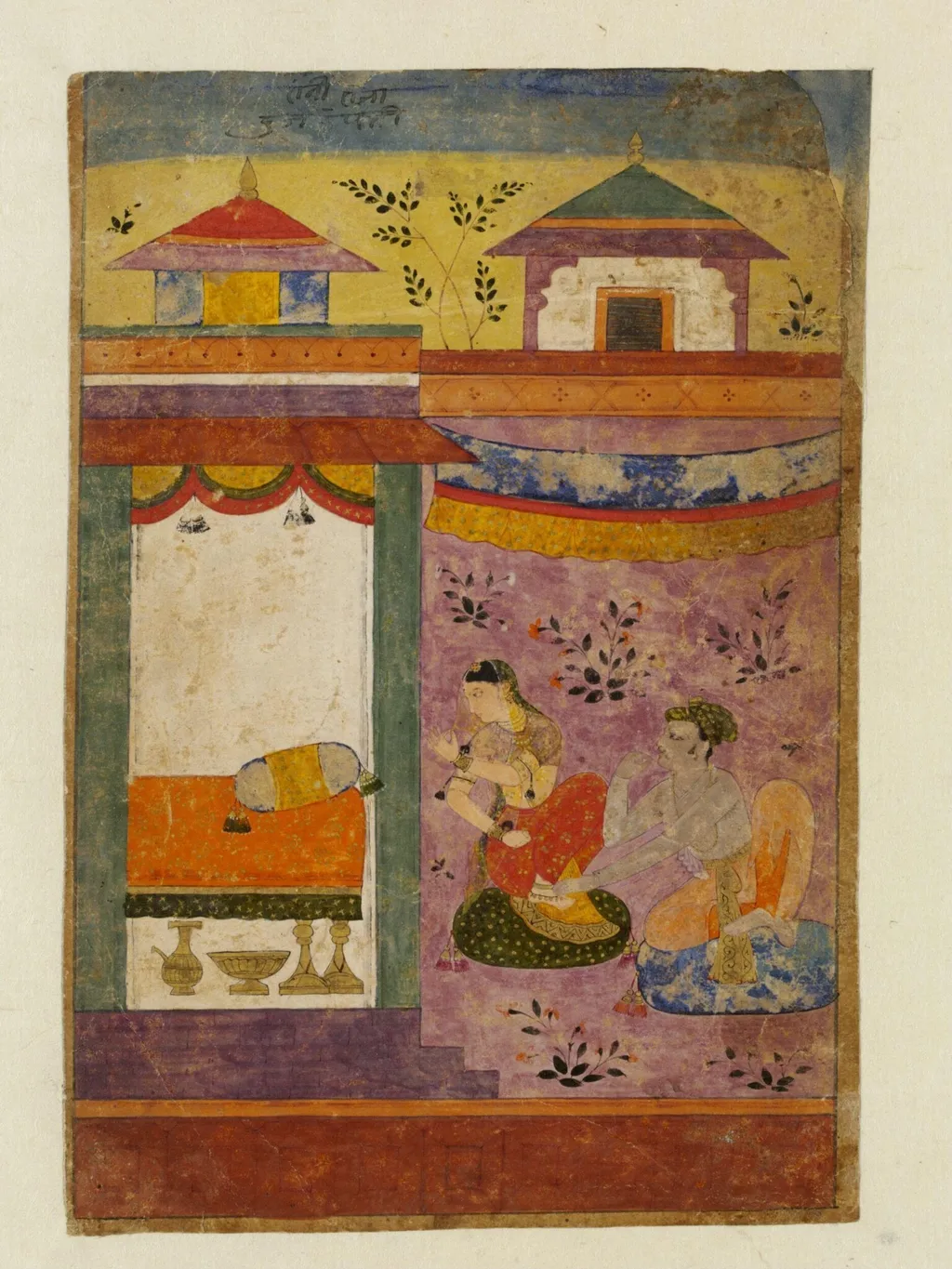
Ramakali Ragini is a paint painting by the Baroque artist Unknown. It dates from 1640 and is held in the collection of the Victoria and Albert Museum.
About this work
Overview
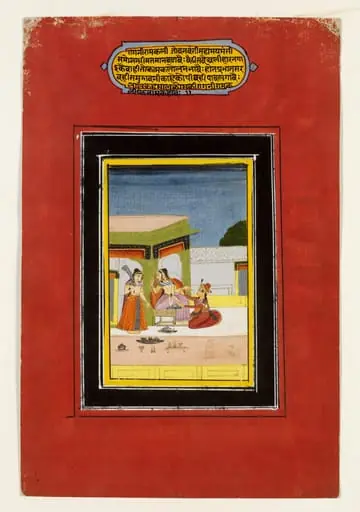
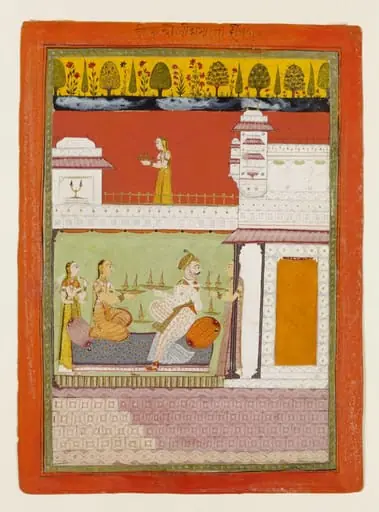
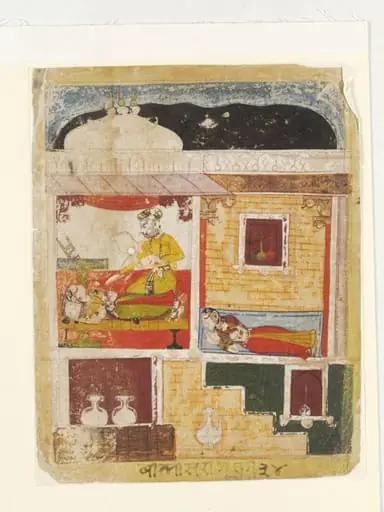
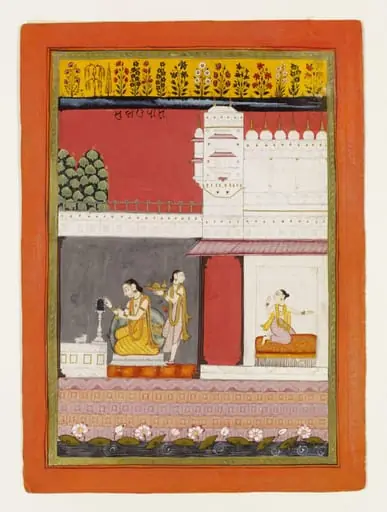
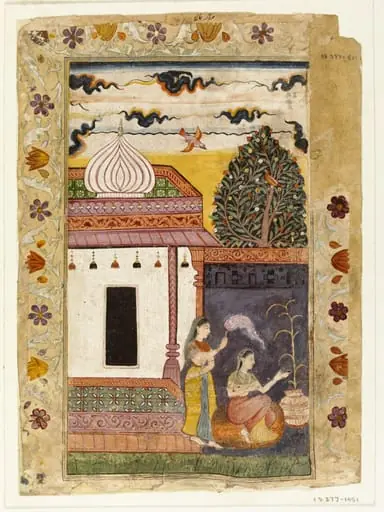
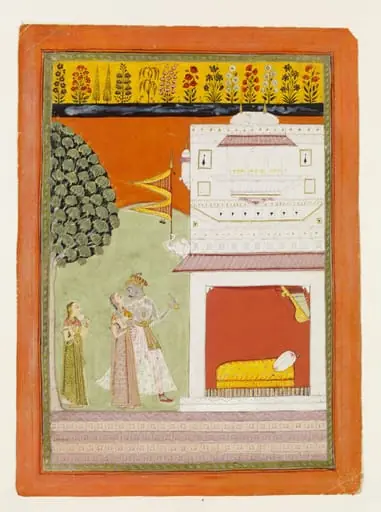
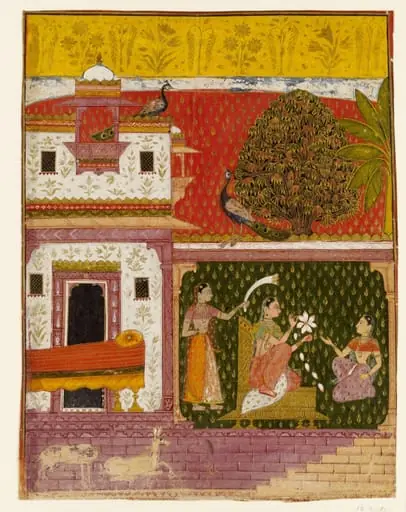
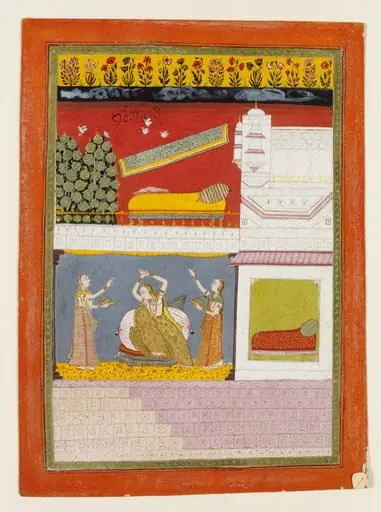
This opaque watercolour on paper illustrates a scene from the Ramakali Ragini, a melodic mode in North Indian classical music.
This opaque watercolour on paper illustrates a scene from the Ramakali Ragini, a melodic mode in North Indian classical music. The composition centers on two figures seated beneath a red canopy, surrounded by a stylized architectural setting. The use of flat planes, vivid hues, and minimal shading reflects the conventions of Pahari painting, emphasizing symbolic representation over naturalistic depth.
Subject & Meaning
The figures—a prince and a lady—engaged in quiet activities, suggest a moment of contemplation or leisure within a royal setting. The book and fan imply refinement and domestic serenity, while the curtained doorway hints at private space beyond. The scene is not a narrative but an evocation of mood, aligning with the melancholic and introspective character associated with the Ramakali Ragini musical mode.
Technique & Style
Rendered in opaque watercolour, the painting employs bold, unmodulated colours—crimson, emerald, and violet—with crisp, clean outlines. Forms are simplified, and perspective is flattened, rejecting chiaroscuro in favor of decorative clarity. The architecture and landscape are rendered as symbolic elements rather than spatially coherent environments, characteristic of the Pahari school’s aesthetic priorities.
History & Provenance
Created in the early 18th century, likely in the Kangra or Guler region of the Punjab Hills, this work belongs to a series of Ragamala paintings commissioned by local rulers. Such albums linked musical modes to visual imagery, serving both devotional and courtly functions. Its survival suggests it was preserved within royal collections, possibly as part of a larger illustrated manuscript tradition.
Context
Ragamala paintings emerged as a distinct genre in northern India during the 16th to 18th centuries, blending poetic, musical, and visual traditions. Unlike European Baroque art, which emphasized drama and movement, these works prioritized stillness and emotional resonance. The Ramakali Ragini scene reflects a cultural framework where music, emotion, and imagery were interwoven in spiritual and aristocratic life.
Legacy
This painting contributes to a broader corpus of Indian miniature art that preserved regional aesthetics amid evolving political landscapes. While later colonial and modern movements shifted artistic priorities, such works remain vital references for understanding pre-colonial Indian visual culture and its integration of sensory experience into artistic expression.
Artist & collection

 Domestic Scene
 Giacomo and Cardinal Marco, investing Andrea, Abbot of San Zeno, with his Benefice
 The Nymph of Fontainebleau
 Portrait of a Woman
 Madonna and Child with Saints in the Enclosed Garden
 Venus and Minerva
 Family Group of Four on Sofa
 Wall painting from Room H of the Villa of P. Fannius Synistor at Boscoreale