Artwork
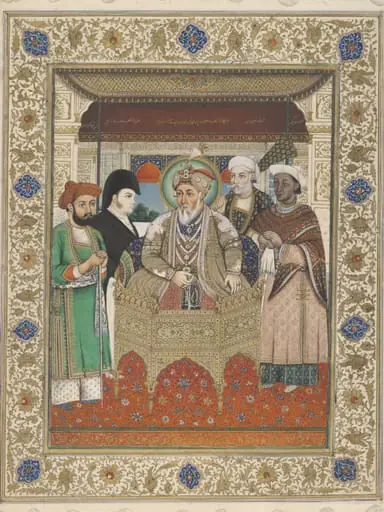
Dost Muhammad (d.1863), Amir of Afghanistan, with his three sons, Muhammad Akram Khan, Haidar Khan and Abdul Ghani Khan, seated on a carpet
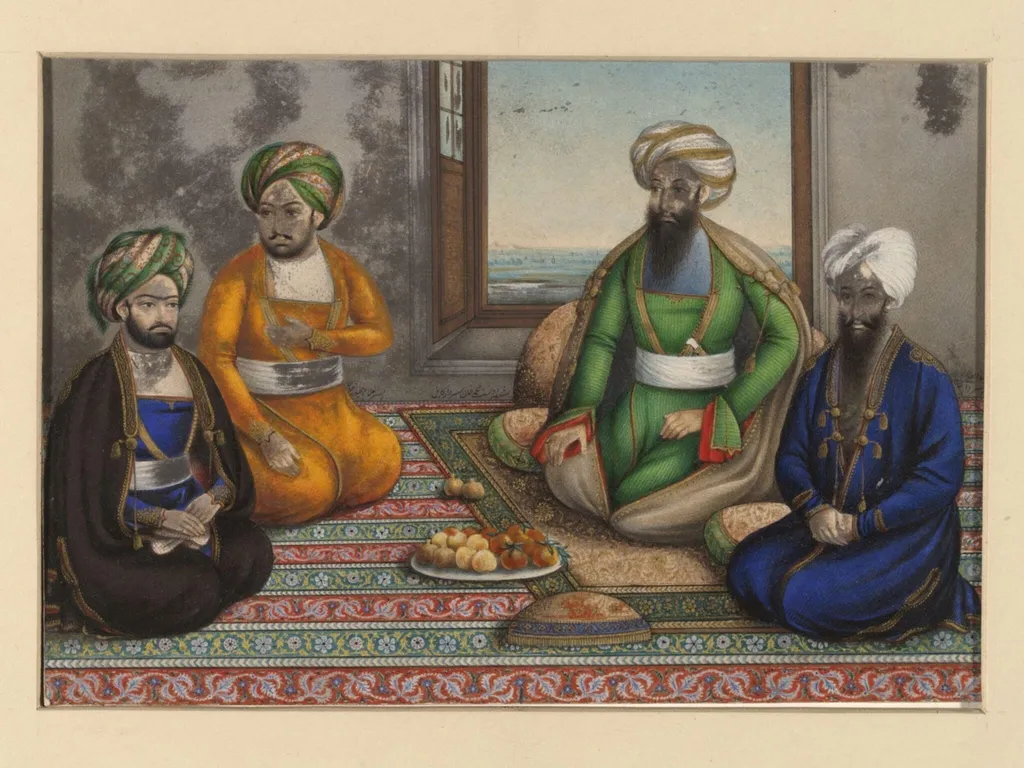
Dost Muhammad (d.1863), Amir of Afghanistan, with his three sons, Muhammad Akram Khan, Haidar Khan and Abdul Ghani Khan, seated on a carpet is a paint painting by the Romanticist artist Unknown. It dates from 1840 and is held in the collection of the Victoria and Albert Museum.
About this work
Overview
The painting presents a seated group portrait of Dost Muhammad, the Amir of Afghanistan who ruled until his death in 1863, together with his three sons—Muhammad Akram Khan, Haidar Khan and Abdul Ghani Khan. All four figures are positioned cross‑legged on a richly patterned carpet, set before a window that opens onto a distant watery landscape.
Subject & Meaning
Dost Muhammad occupies the central position, distinguished by a green robe, a white headband and a book resting on his lap, indicating his authority and scholarly interests. Flanking him are his younger sons, each in vivid orange, black and blue garments, their attire less elaborate but still formal, suggesting a lineage of succession and familial continuity within the Afghan ruling house.
Technique & Style
The work employs a detailed, realistic approach to clothing and texture, rendering the intricate designs of the carpet’s red‑and‑blue borders and the subtle play of light from the window. The figures are rendered in flat, saturated colors typical of 19th‑century court portraiture, while the background water scene provides a muted spatial contrast that frames the domestic setting.
History & Provenance
Created in the mid‑19th century, the painting likely served a diplomatic or commemorative purpose, documenting the Amir’s household at the end of his reign. Its provenance traces through private collections before entering a public institution, where it now contributes to the visual record of Afghan political history and royal portraiture.
Artist & collection

 Domestic Scene
 Giacomo and Cardinal Marco, investing Andrea, Abbot of San Zeno, with his Benefice
 The Nymph of Fontainebleau
 Portrait of a Woman
 Madonna and Child with Saints in the Enclosed Garden
 Venus and Minerva
 Family Group of Four on Sofa
 Wall painting from Room H of the Villa of P. Fannius Synistor at Boscoreale
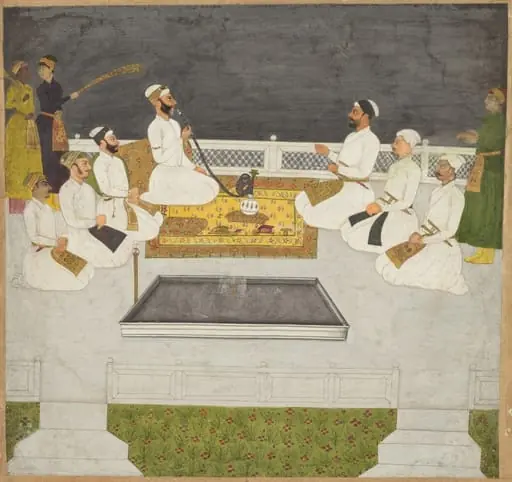 Husain Ali Khan Entertaining His Brothers (The Sayyid Brothers)
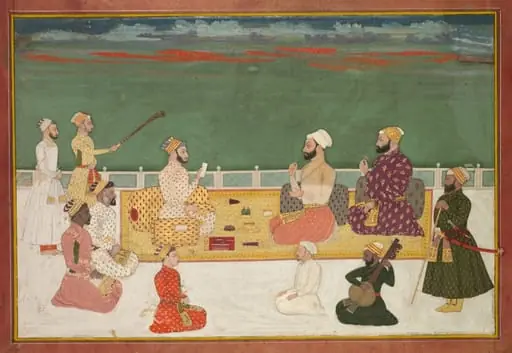 A Ruler Presents a Document to Visiting Nobles
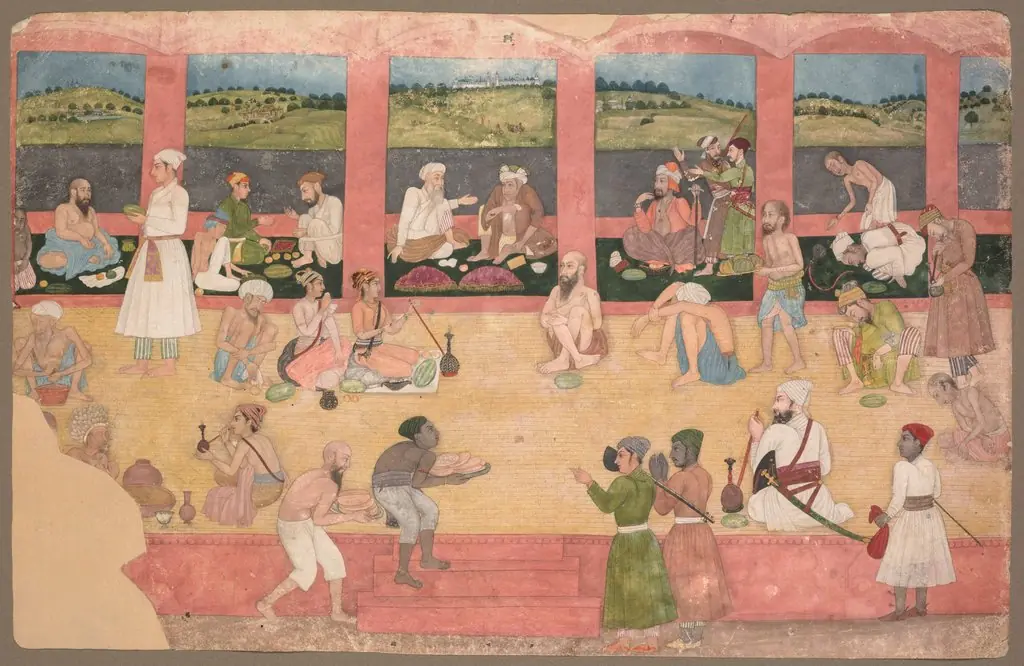 Opium Smokers Served Fruit and Bread
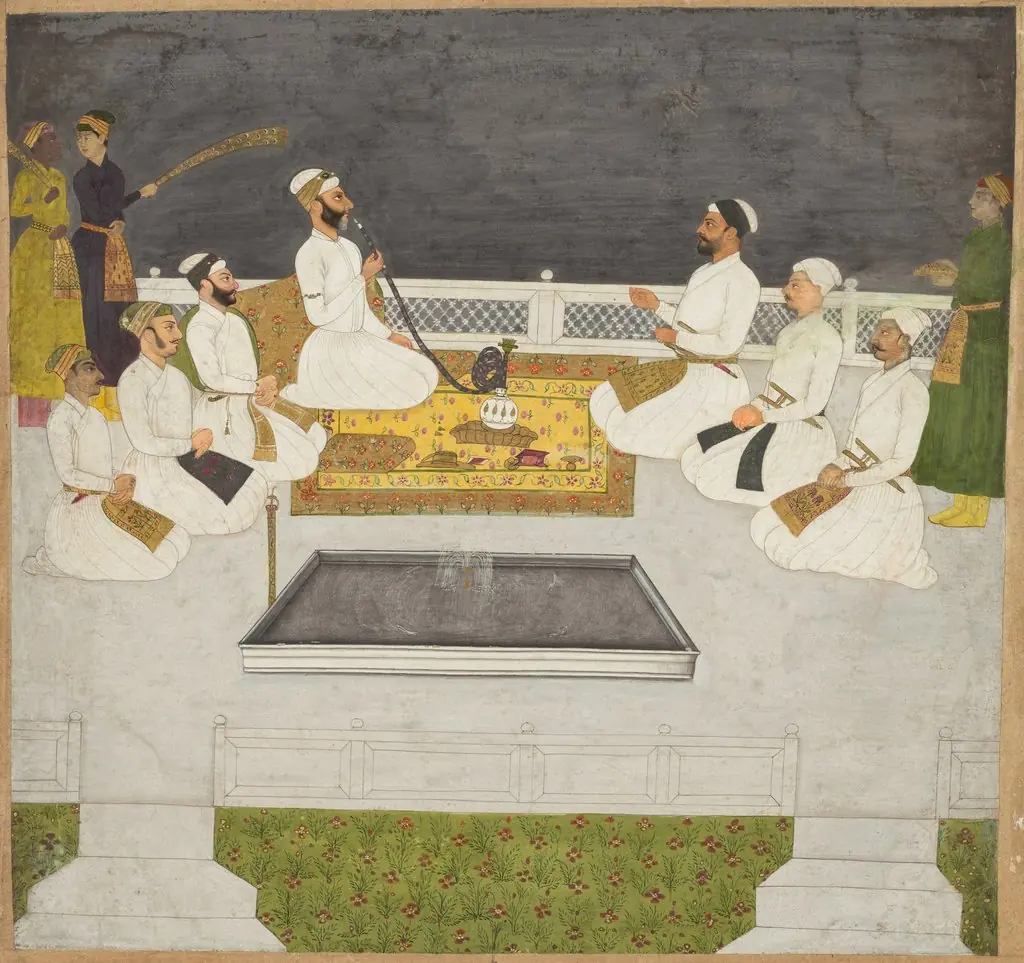 Husain Ali Khan Entertaining His Brothers (The Sayyid Brothers)
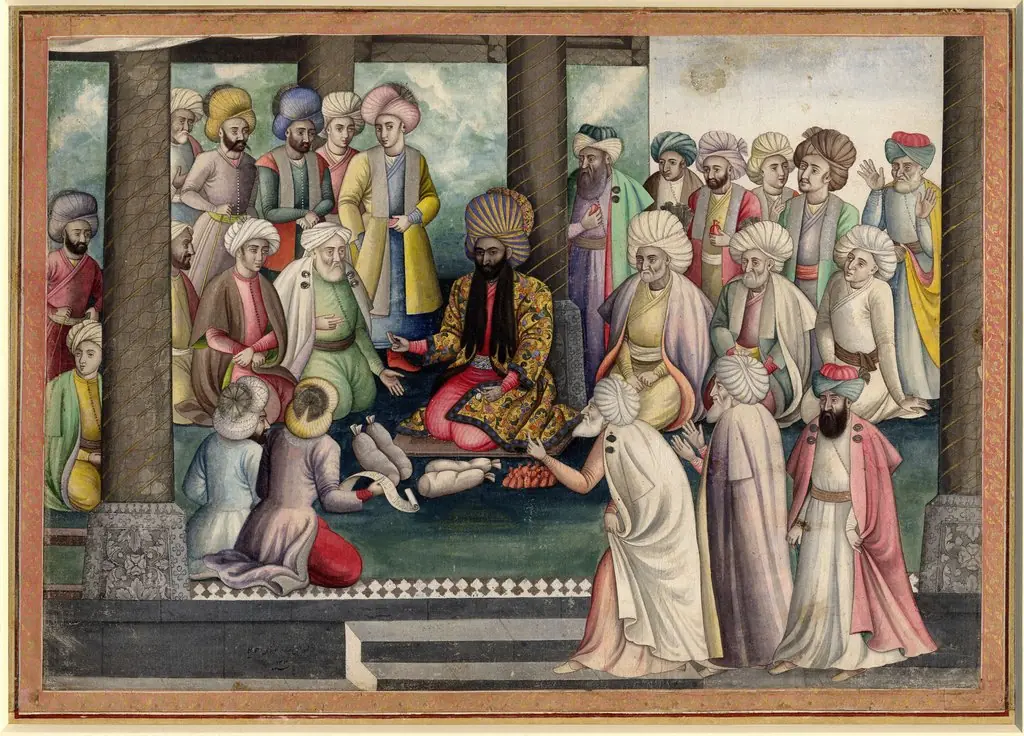 Distribution of Presents for the New Year by Shah Sultan Husayn
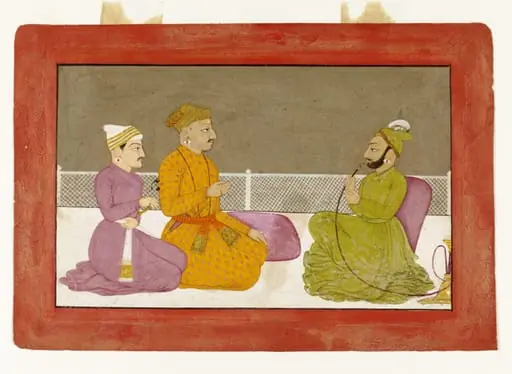 Raja Bhupal Dev of Jasrota, Raja Dalip Singh and Raja Daya Dhat
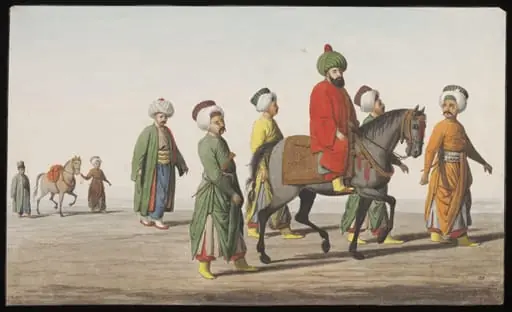 Kaymakam, or Govenor of Istanbul
 Portrait of Akbar II with Sir Charles Theophilus Metcalf and court dignitaries