Artwork
Drieluik
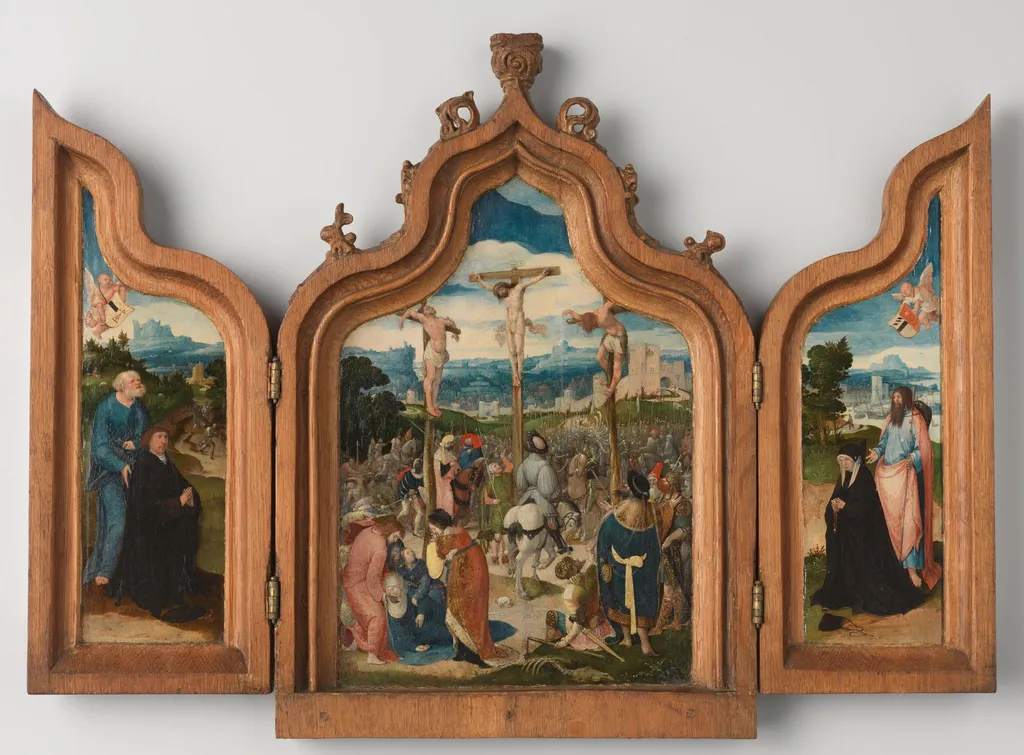
Drieluik is an unspecified painting by the Northern Renaissance artist Unknown. It dates from 1525 and is held in the collection of the Rijksmuseum. This triptych consists of three hinged wooden panels, designed for private devotion rather than public worship.
About this work
Overview
This triptych consists of three hinged wooden panels, designed for private devotion rather than public worship.
This triptych consists of three hinged wooden panels, designed for private devotion rather than public worship. The central panel portrays the Crucifixion, while the side panels feature the kneeling donors, dressed in dark garments, positioned directly beside the sacred scene. Their inclusion within the immediate vicinity of Christ’s sacrifice reflects a personal, intimate mode of religious engagement uncommon in contemporary altarpieces.
Subject & Meaning
The central image of Christ on the cross anchors the composition, evoking the core event of Christian redemption. The donors, depicted in prayerful stillness, are not merely observers but participants in the moment of sacrifice. Their placement suggests a spiritual identification with Christ’s suffering, transforming the painting into a devotional tool for personal contemplation and moral reflection.
Technique & Style
The figures are rendered with restrained realism, their forms defined by subtle modeling and quiet tonal shifts. The background remains minimally detailed, focusing attention on the emotional gravity of the scene. The donors’ black garments contrast with the pale flesh and blood of Christ, heightening the visual and symbolic tension between earthly mortality and divine sacrifice.
History & Provenance
Commissioned for domestic use, the triptych reflects the growing trend among wealthy laypeople to own religious imagery for private prayer in the late medieval period. Its survival suggests it remained in the family’s possession for generations, likely passed down as both a spiritual object and a marker of status and piety.
Context
While church altarpieces typically relegated donors to marginal spaces or smaller scales, this work integrates them into the sacred narrative at human scale. This shift signals a broader cultural movement in which personal devotion became more immediate and immersive, blurring the boundary between the worshipper and the divine event.
Legacy
The painting exemplifies a transitional moment in Northern European art, where private piety reshaped religious imagery. Its direct inclusion of patrons into the Crucifixion scene influenced later devotional works, reinforcing the idea that salvation was not only a historical event but a lived, personal experience.
Artist & collection

 Domestic Scene
 Giacomo and Cardinal Marco, investing Andrea, Abbot of San Zeno, with his Benefice
 The Nymph of Fontainebleau
 Portrait of a Woman
 Madonna and Child with Saints in the Enclosed Garden
 Venus and Minerva
 Family Group of Four on Sofa
 Wall painting from Room H of the Villa of P. Fannius Synistor at Boscoreale
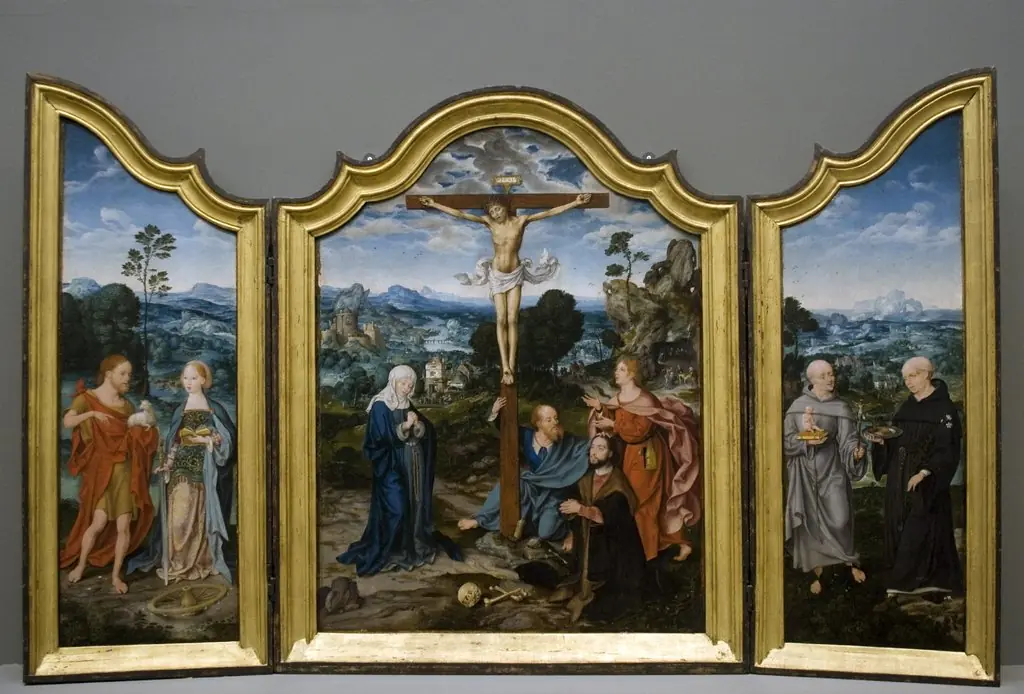 The Crucifixion with Saints and a Donor
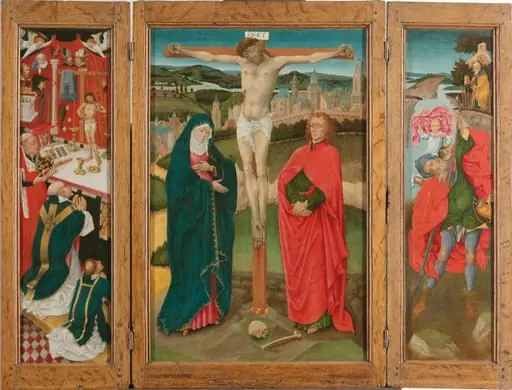 Drieluik met de kruisiging
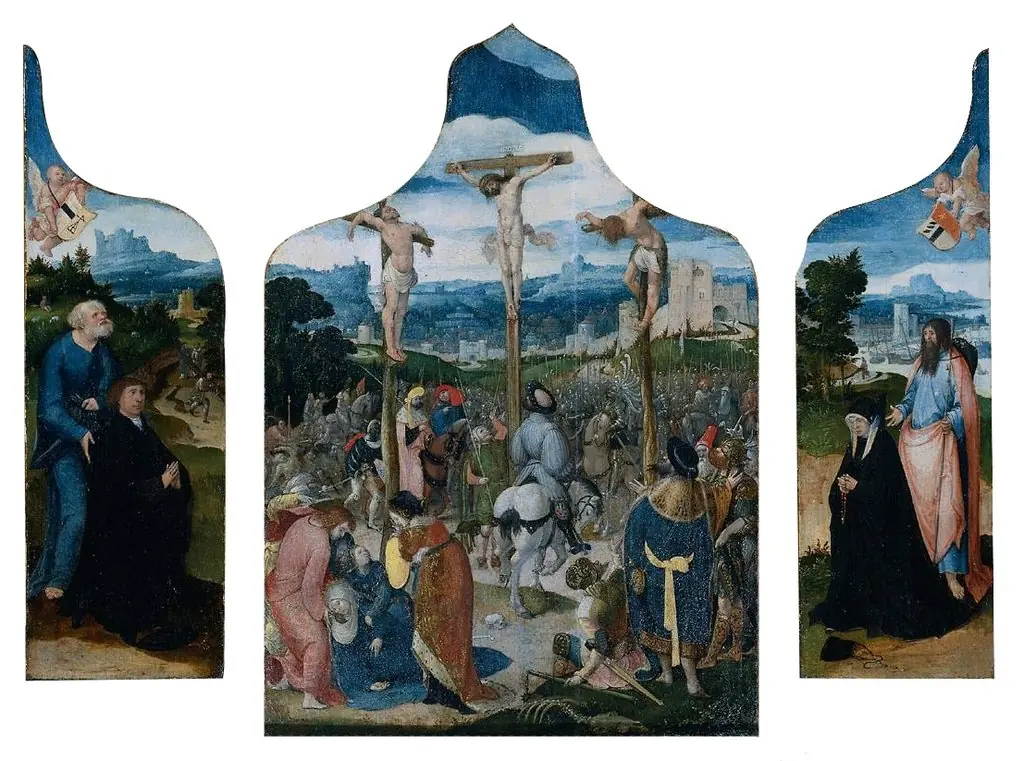 Triptych with the Crucifixion (centre panel), St Peter and a Male Donor (inner left wing), St James and a Female Donor (inner right wing), St Christopher and the Christ Child on the Road of Life (outer wings)
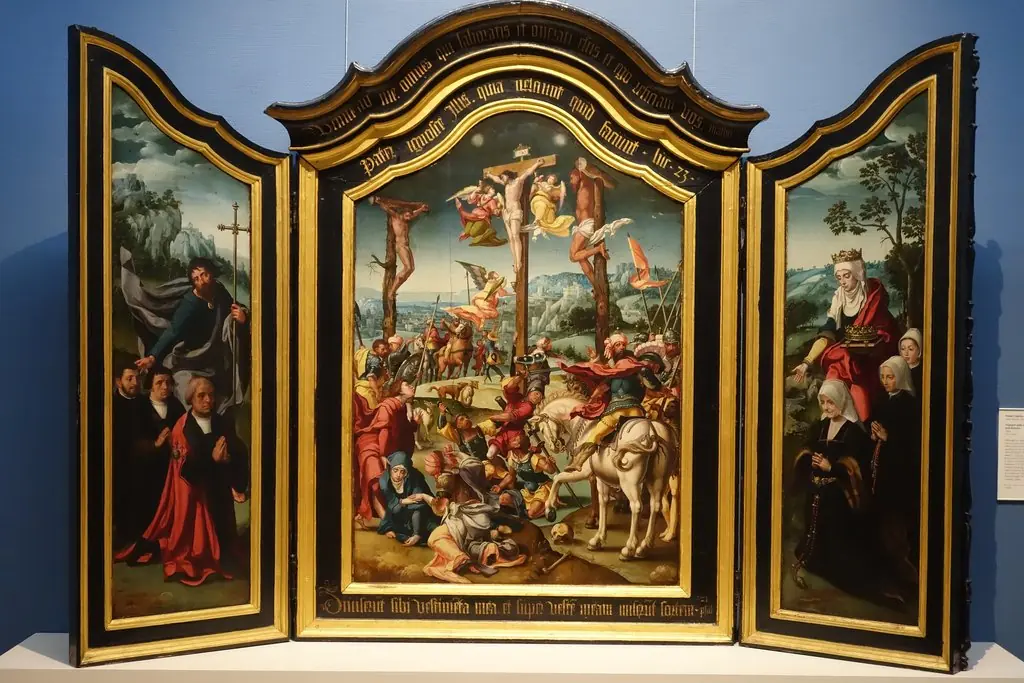 Triptych with the Crucifixion and Donors
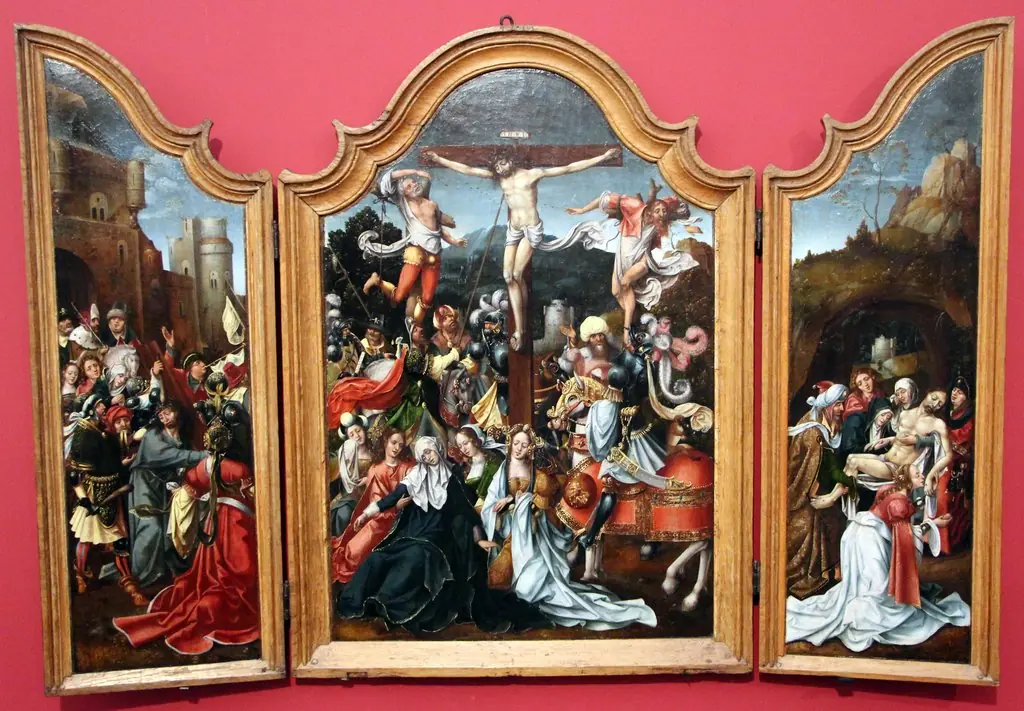 Triptych with the Crucifixion
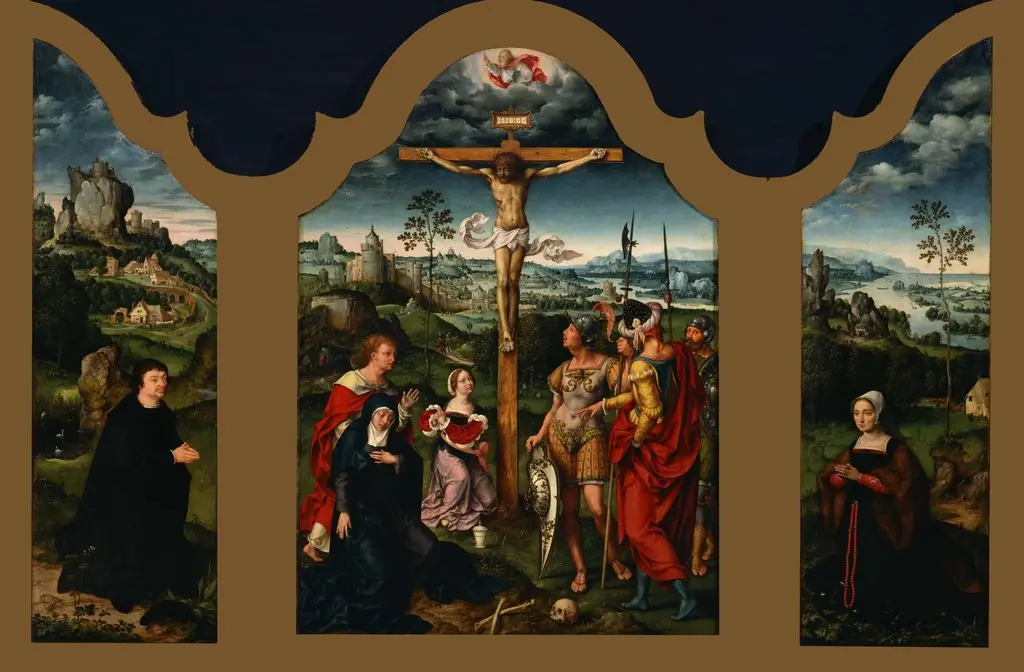 Triptych: The Crucifixion Flanked by the Kneeling Donor and His Wife
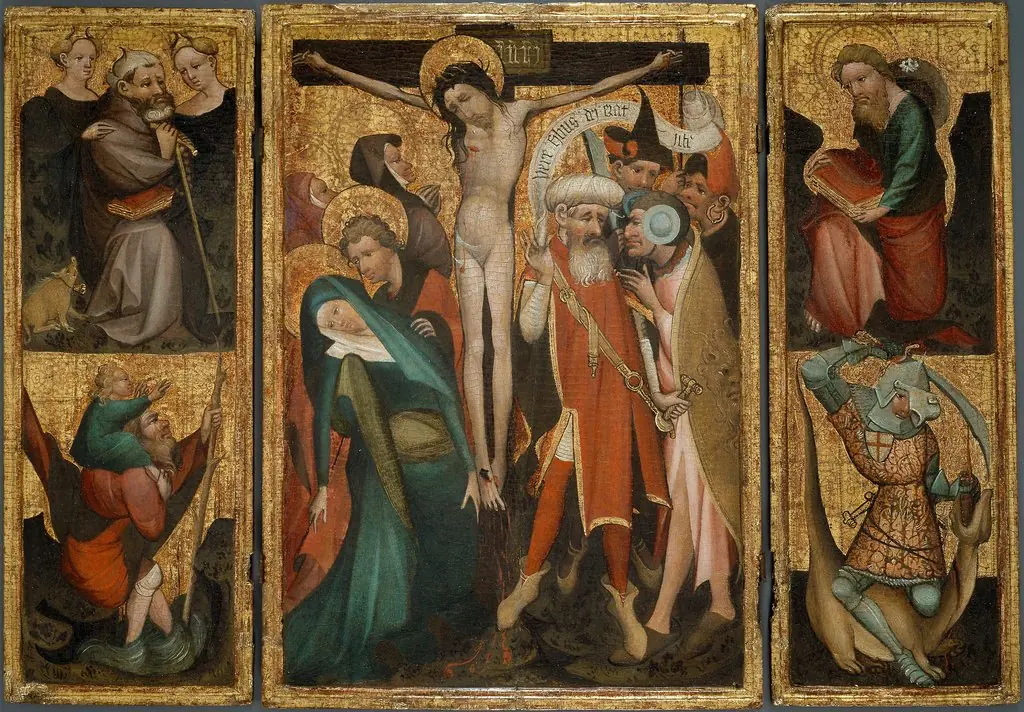 Triptych of the Crucifixion with Saints Anthony, Christopher, James and George
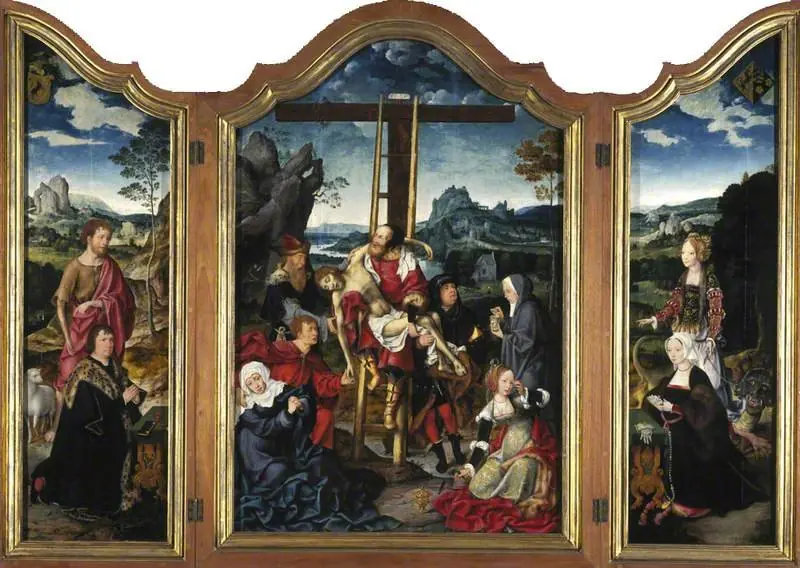 Triptych. Centre: the Deposition from the Cross; Left wing: St John the Baptist with a Donor; Right wing: St Margaret of Antioch with a Donatrix
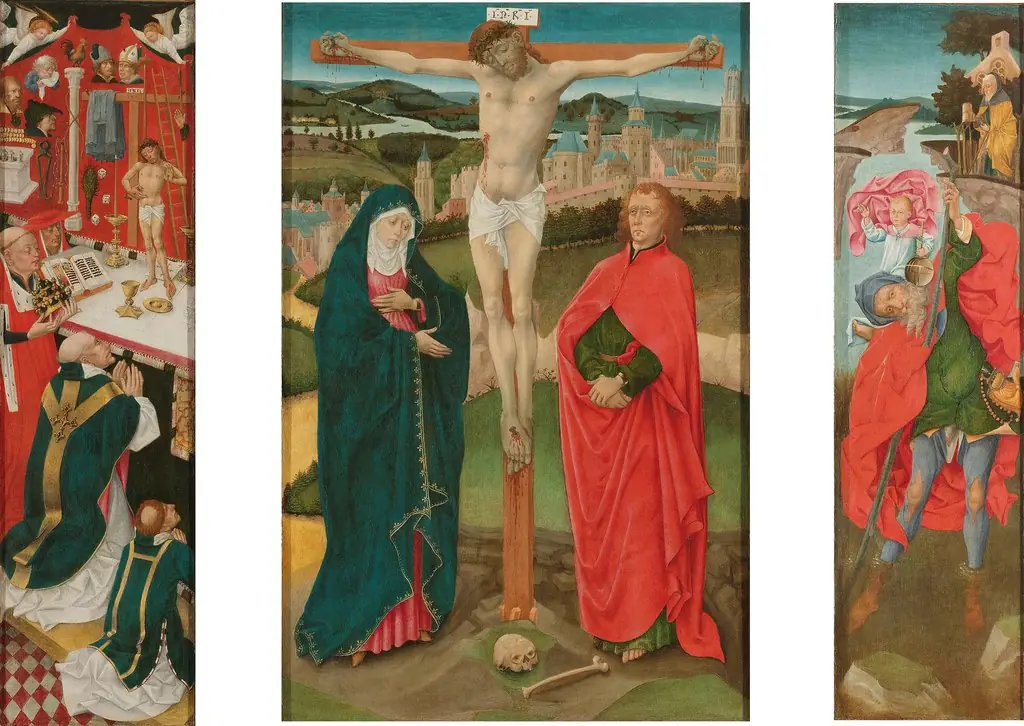 Triptych with the Crucifixion
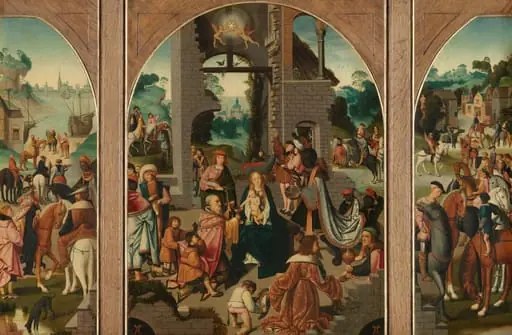 Triptych with Adoration of the Magi (center and inner wings), Saint Antony Abbot (left, outer wing) and Saint Adrian (right, outer wing)
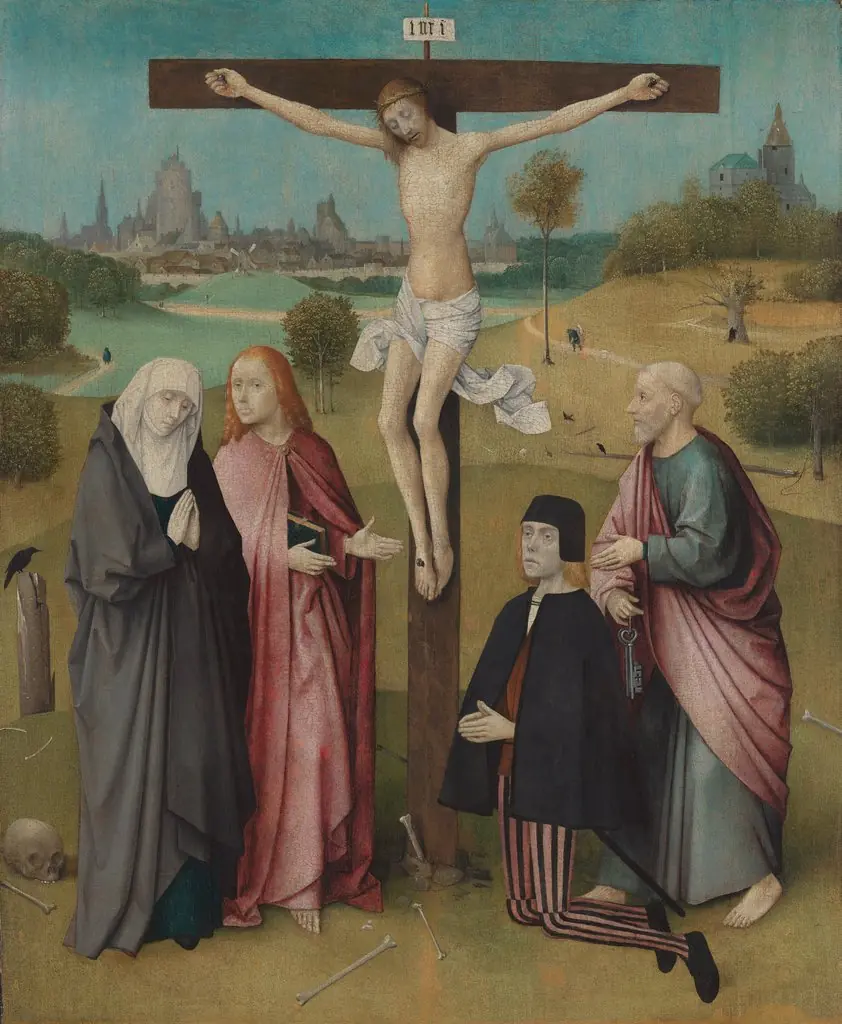 Crucifixion with a Donor