Artwork
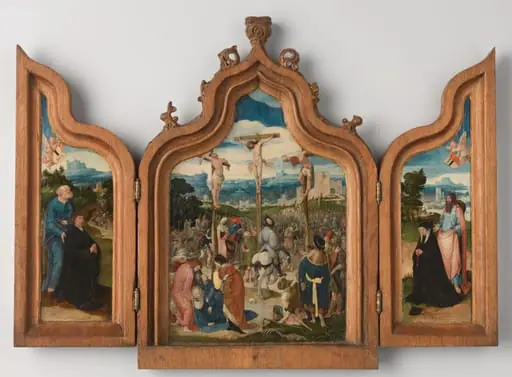
Triptych with the Crucifixion (centre panel), St Peter and a Male Donor (inner left wing), St James and a Female Donor (inner right wing), St Christopher and the Christ Child on the Road of Life (outer wings)
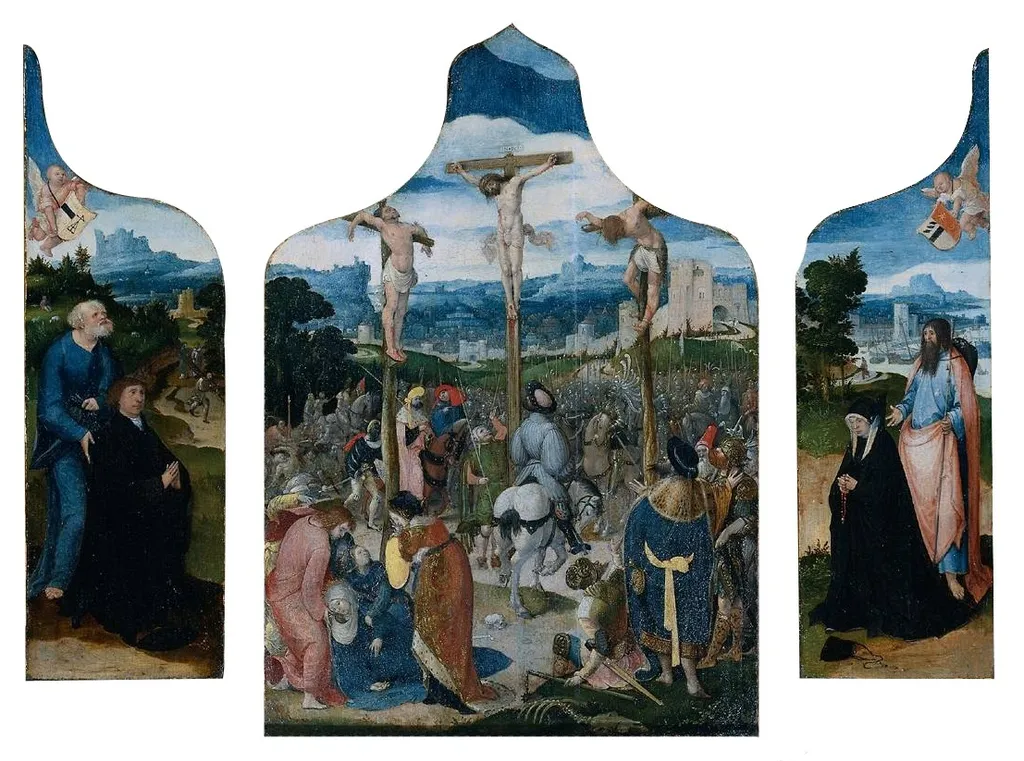
Triptych with the Crucifixion (centre panel), St Peter and a Male Donor (inner left wing), St James and a Female Donor (inner right wing), St Christopher and the Christ Child on the Road of Life (outer wings) is an oil painting by the Northern Renaissance artist Pseudo Jan Wellens de Cock. It dates from 1525 and is held in the collection of the Rijksmuseum.
About this work
Overview
This triptych, created by Pseudo Jan Wellens de Cock in 1525, is a religious oil painting composed of three main panels and two outer wings. The work is currently part of the Rijksmuseum's collection.
Subject & Meaning
The central panel depicts the Crucifixion with three figures on crosses, varying in state from dead to alive, set against a dramatic, towering landscape.
The central panel depicts the Crucifixion with three figures on crosses, varying in state from dead to alive, set against a dramatic, towering landscape. The inner wings contrast this somber scene with quieter, devotional moments: St Peter converses with a male donor on the left, while St James accompanies a female donor on the right. The outer wings (when open) reveal St Christopher carrying the Christ Child, symbolizing the 'Road of Life'.
Technique & Style
The painting utilizes chiaroscuro to dramatic effect, emphasizing contrasts between light and dark to heighten the emotional impact of each scene. Notably, the Crucifixion panel employs scale to underscore the magnitude of the event, rendering the crowd beneath the crosses diminutive in comparison.
History & Provenance
Created in 1525 by Pseudo Jan Wellens de Cock, the triptych's history prior to its acquisition by the Rijksmuseum is not detailed here. It is currently housed at the Rijksmuseum.
Context
As a religious triptych from 1525, this work reflects the continued importance of devotional art in the early 16th century, blending traditional Christian themes with the emerging artistic techniques of the time, such as chiaroscuro.
Legacy
While specific influences or direct artistic lineage are not highlighted in the provided details, the triptych represents a preserved example of early 16th-century religious art, contributing to the broader understanding of Netherlandish painting traditions during this period.
Artist & collection
Artist
This group painted biblical scenes in the 1520s around Antwerp. Their *Triptych with the Crucifixion* shows Jesus on the cross between saints, while *Lot and his daughters* tells a story from Genesis. Look for their…

 Drieluik
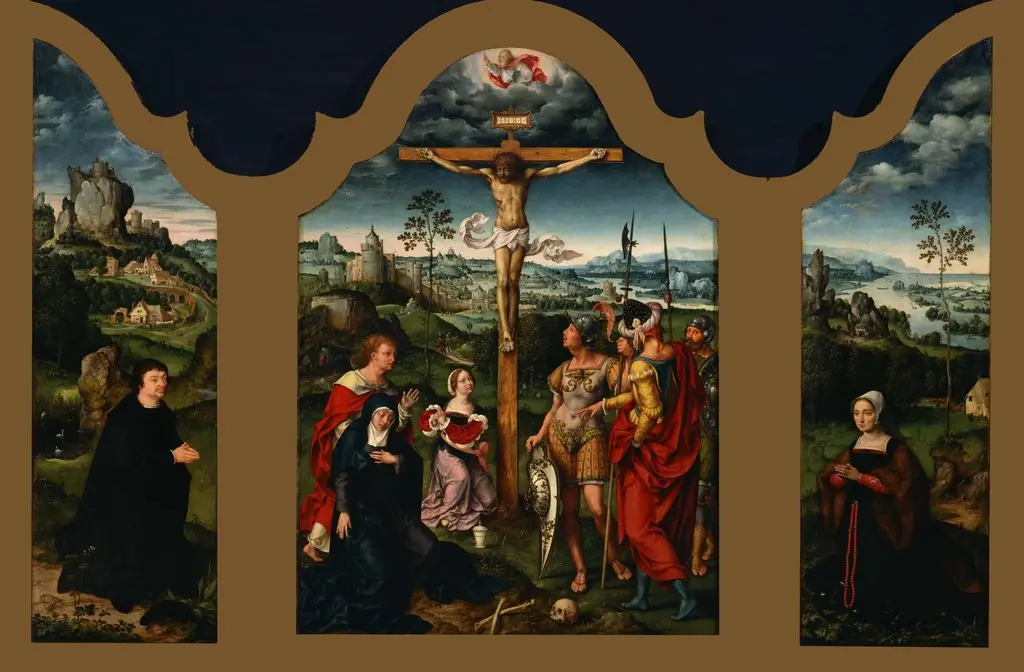 Triptych: The Crucifixion Flanked by the Kneeling Donor and His Wife
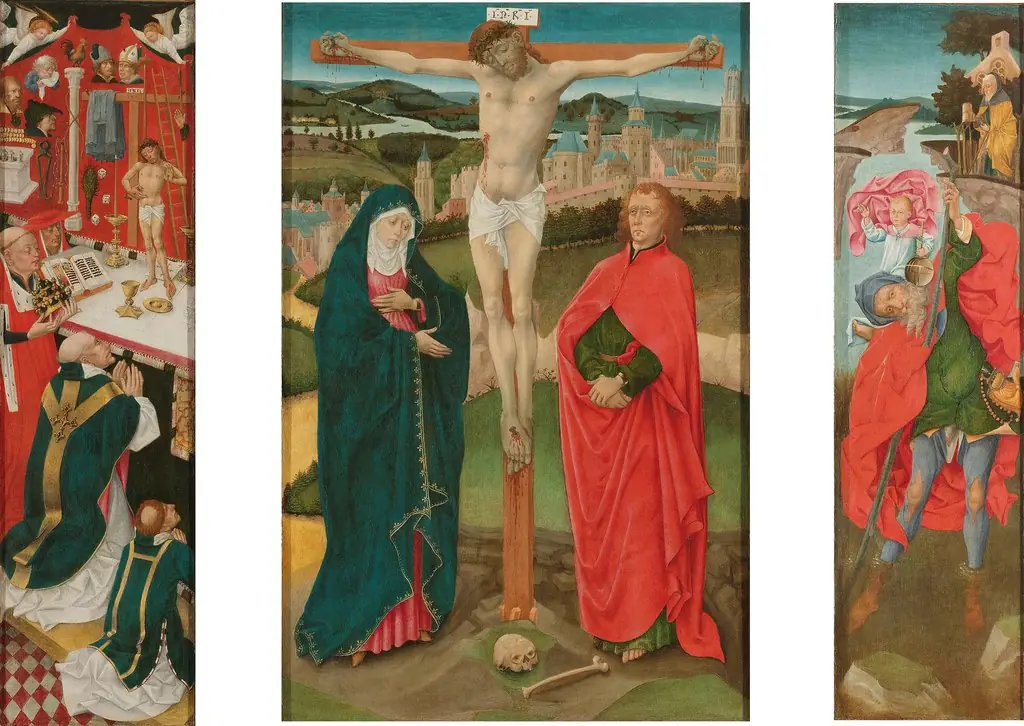 Triptych with the Crucifixion
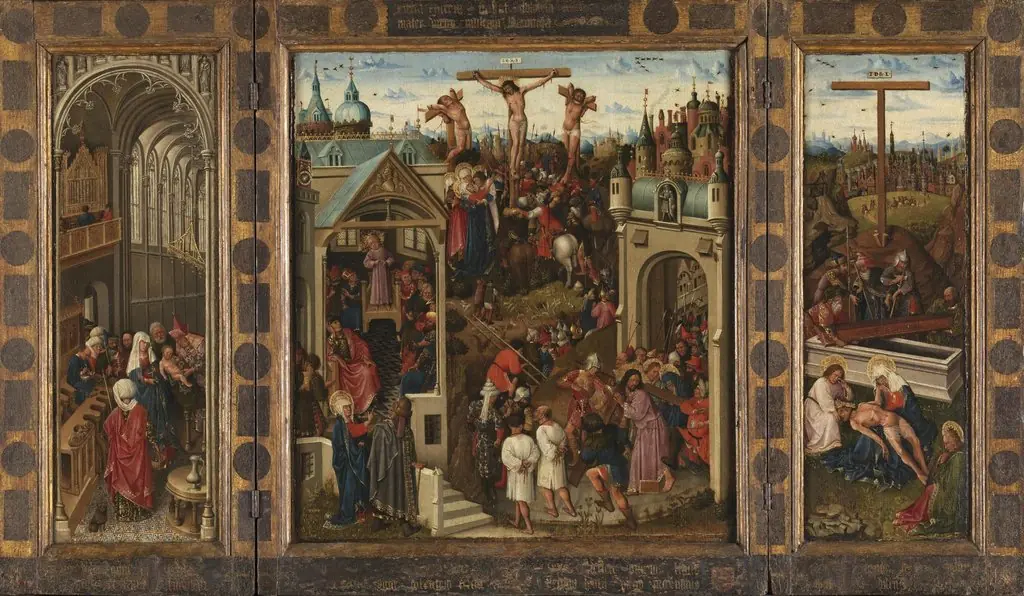 Triptych with Scenes from the Life of Christ
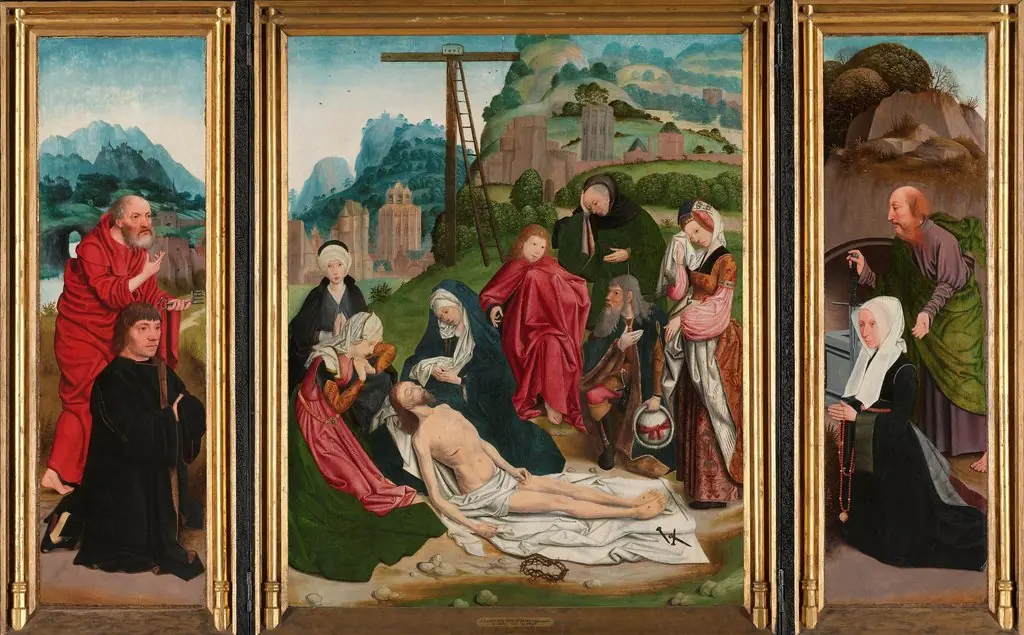 Triptych with the Lamentation (centre panel), the donor with St Peter (inner left wing), the donor’s wife with St Paul (inner right wing) and the donors’ coats of arms (outer wings)
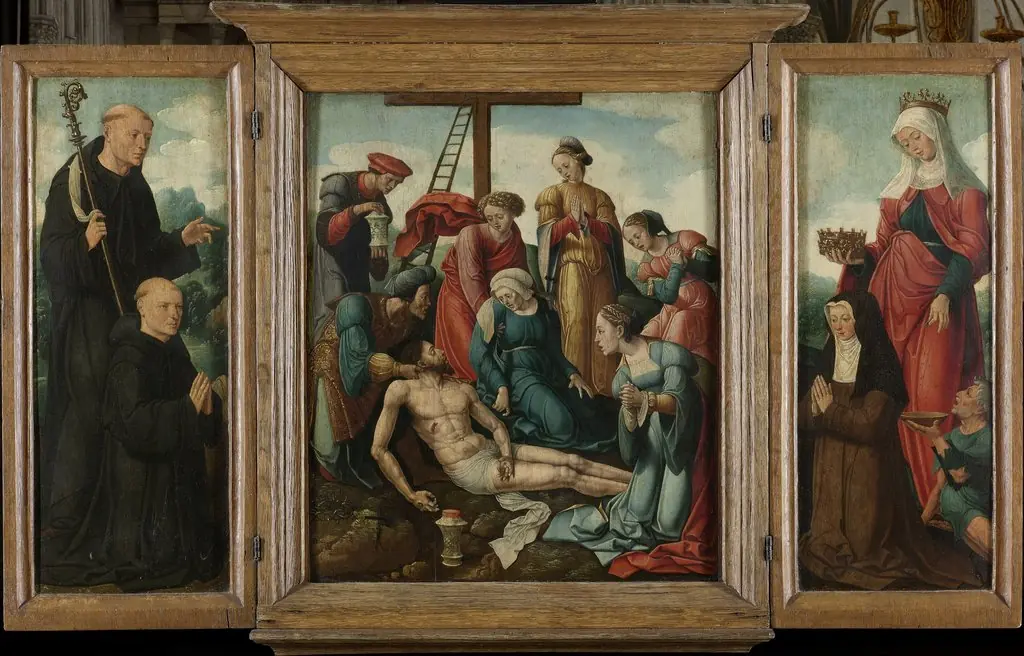 Triptych with the Lamentation of Christ (centre panel), the donor with St Benedict (inner left wing) and the donatrix with St Elizabeth of Thuringia (inner right wing)
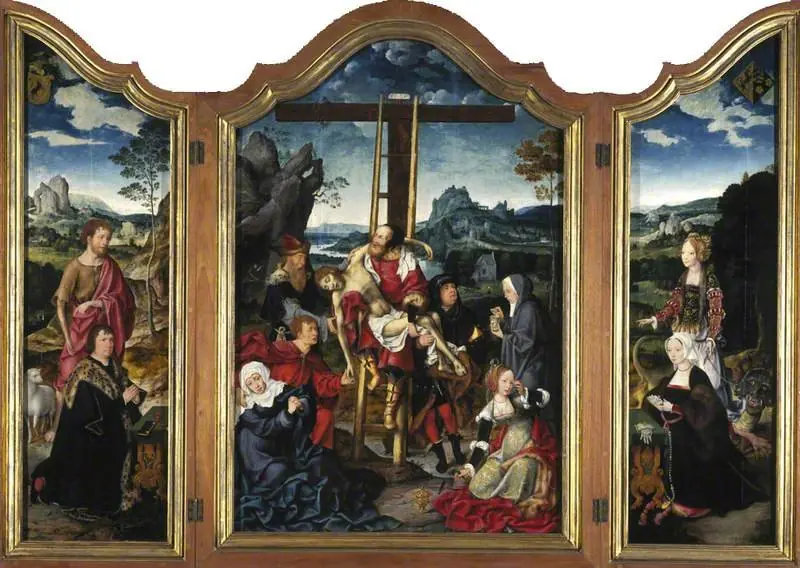 Triptych. Centre: the Deposition from the Cross; Left wing: St John the Baptist with a Donor; Right wing: St Margaret of Antioch with a Donatrix
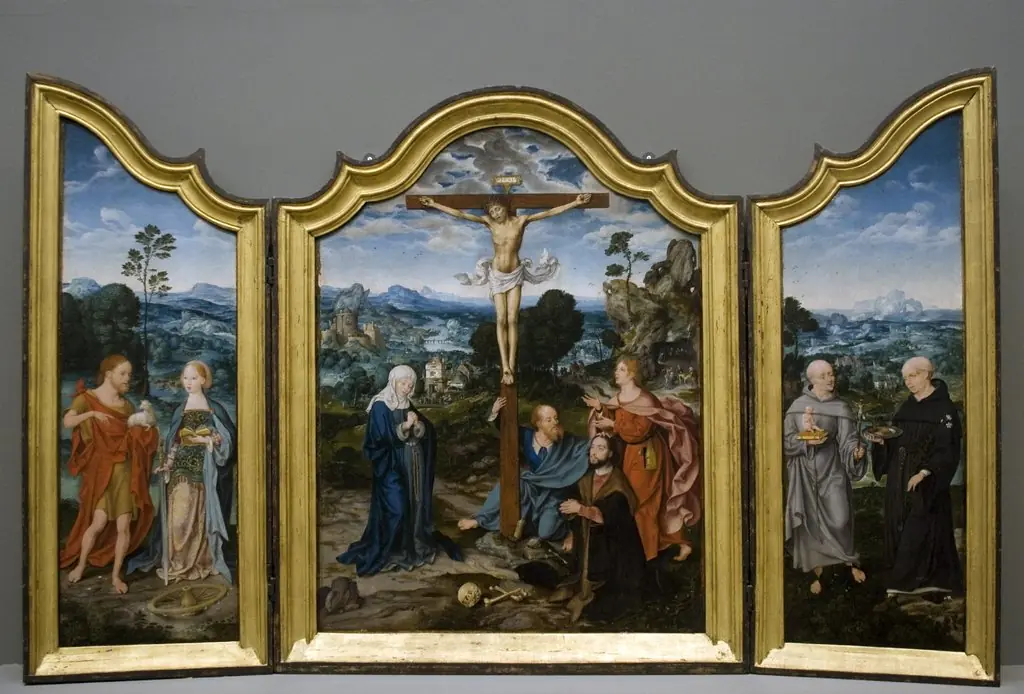 The Crucifixion with Saints and a Donor