Artwork
Durga and Ganesh
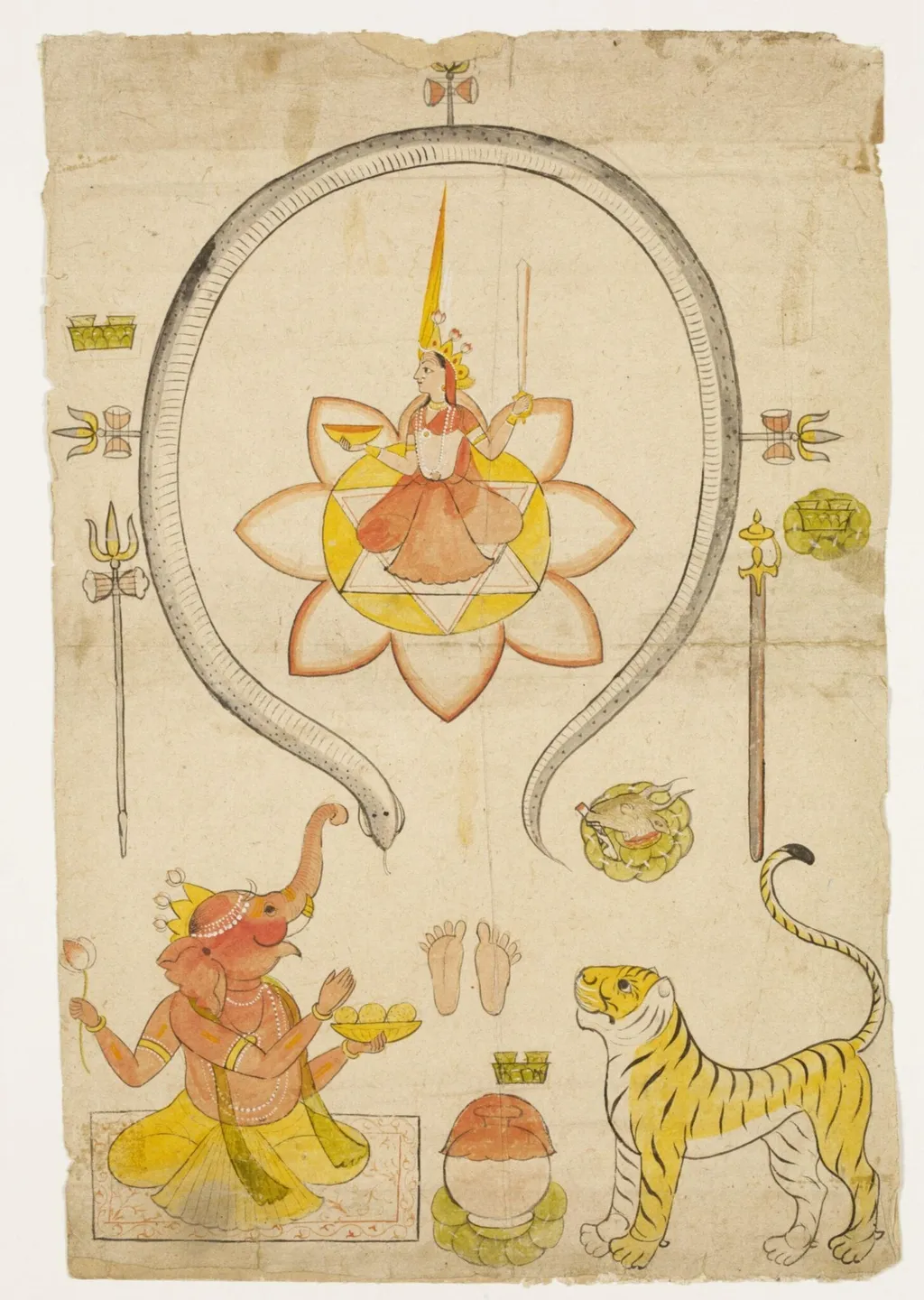
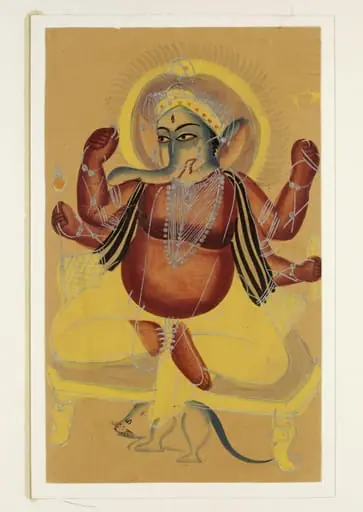
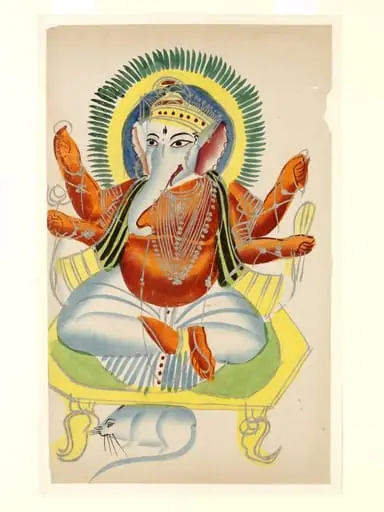
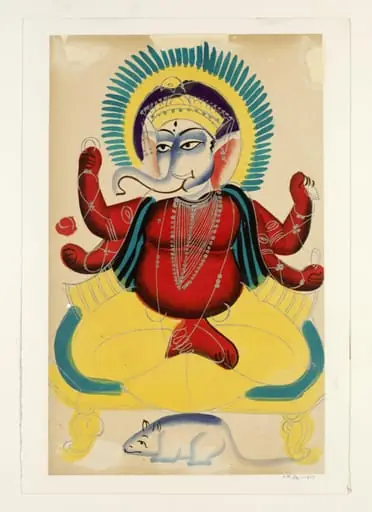
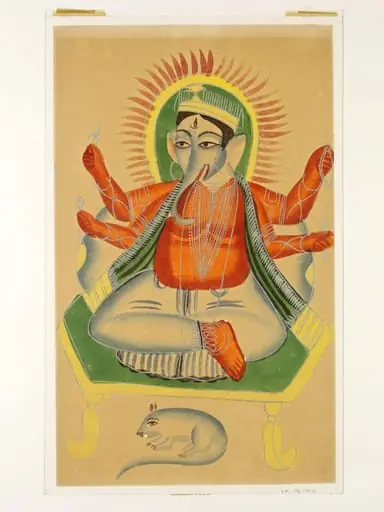
Durga and Ganesh is a paint painting by the Mughal Painting artist Unknown. It dates from 1750 and is held in the collection of the Victoria and Albert Museum. Created around 1750, this work is an ink and watercolor composition on paper.
About this work
Overview
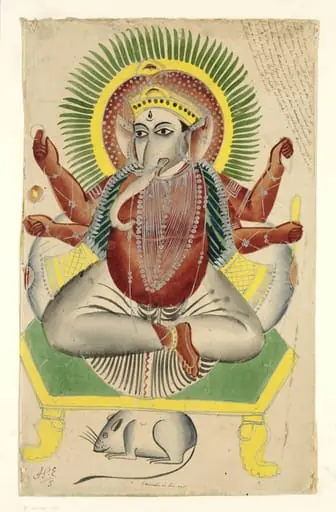
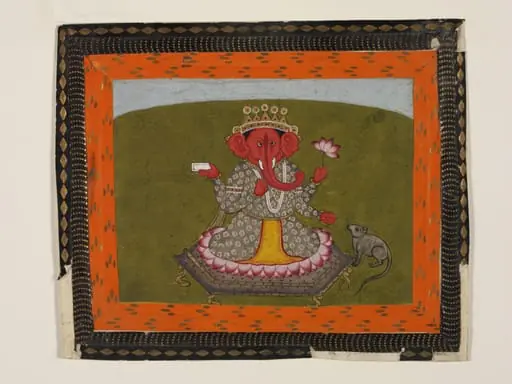
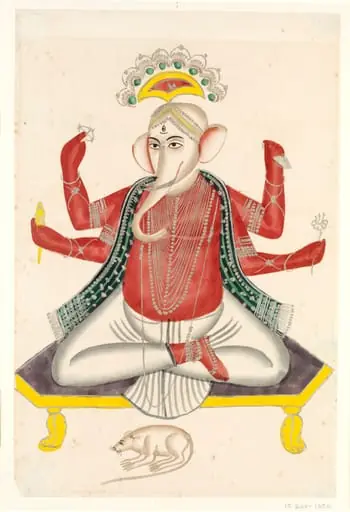
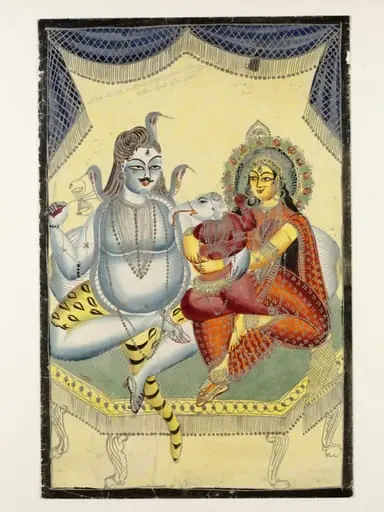
Created around 1750, this work is an ink and watercolor composition on paper. It portrays a Hindu deity scene with vivid pigments and clear line work, reminiscent of narrative illustrations. The central figure is a four‑armed goddess seated within a circular motif, accompanied by a tiger and a blue‑skinned elephant deity.
Subject & Meaning
The principal figure is Durga, the warrior goddess, shown with a sword and a ceremonial bowl, symbols of protection and abundance. Beside her, the elephant-headed Ganesh kneels, holding a flower and a pot, representing auspiciousness and nourishment. The tiger, Durga’s traditional mount, underscores her martial power.
Technique & Style
Executed with ink outlines filled with watercolor washes, the piece employs bright, flat colors and simplified contours. The composition balances decorative motifs—such as a floating snake, a disembodied foot, and an additional bowl—with the central narrative, giving the image a storybook quality typical of 18th‑century Indian devotional art.
History & Provenance
The painting originates from the mid‑18th century Indian subcontinent, a period when religious illustrations were produced for private devotion and instruction. It entered the collection of the Victoria and Albert Museum, where it is catalogued among other South Asian devotional works.
Context
Durga and Ganesh are prominent figures in Hindu mythology, often depicted together in festivals and rituals. The inclusion of the chakra motif and lotus seat reflects symbolic associations with cosmic order and purity, aligning the work with contemporary visual conventions for sacred narratives.
Artist & collection

 Domestic Scene
 Giacomo and Cardinal Marco, investing Andrea, Abbot of San Zeno, with his Benefice
 The Nymph of Fontainebleau
 Portrait of a Woman
 Madonna and Child with Saints in the Enclosed Garden
 Venus and Minerva
 Family Group of Four on Sofa
 Wall painting from Room H of the Villa of P. Fannius Synistor at Boscoreale