Artwork
Ganesh
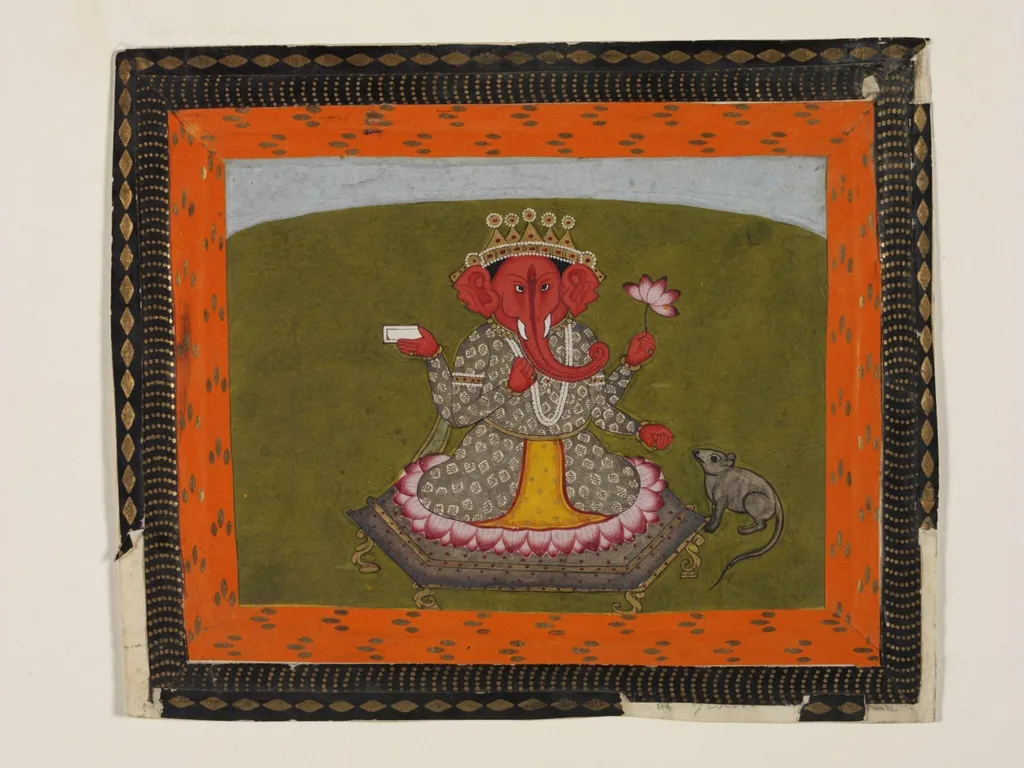
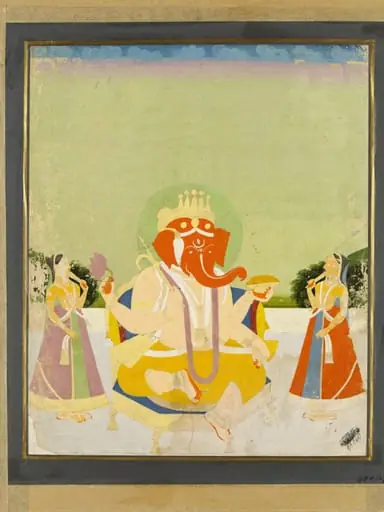
Ganesh is a paint painting by the Mughal Painting artist Unknown. It dates from 1760 and is held in the collection of the Victoria and Albert Museum. Created in 1760, this work is an opaque water‑colour painting on paper enriched with gold leaf.
About this work
Overview
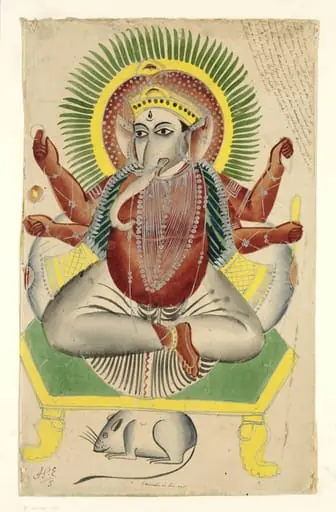
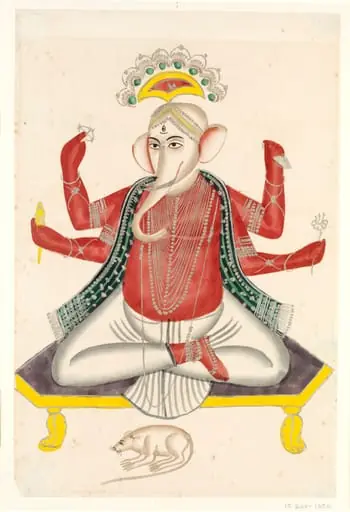
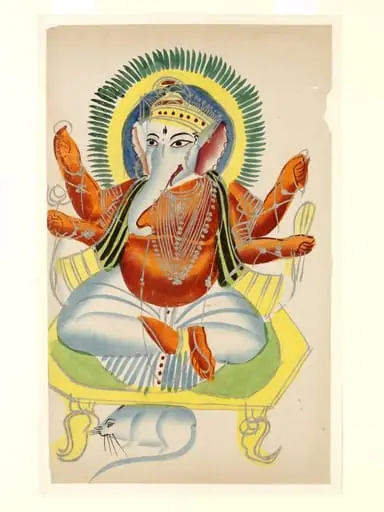
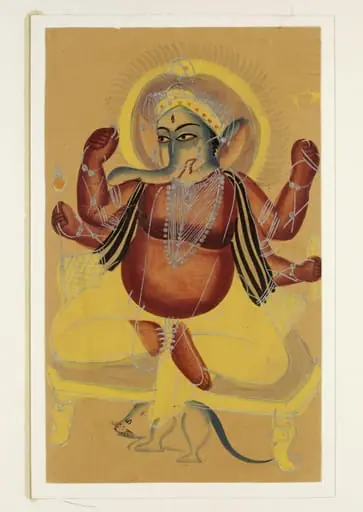
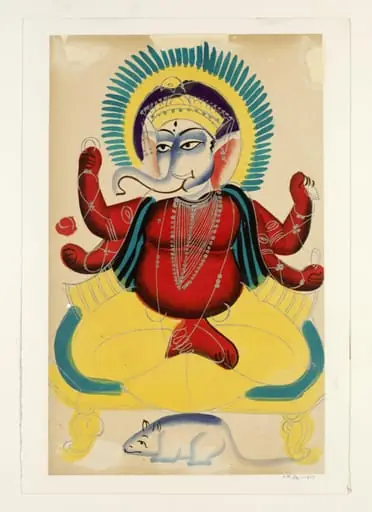
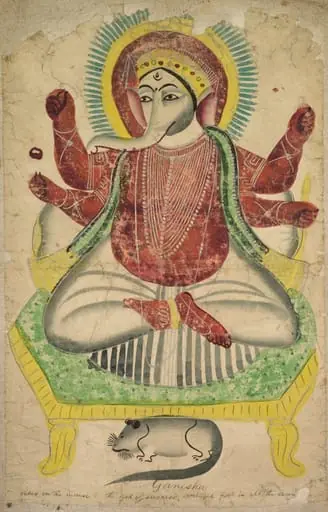
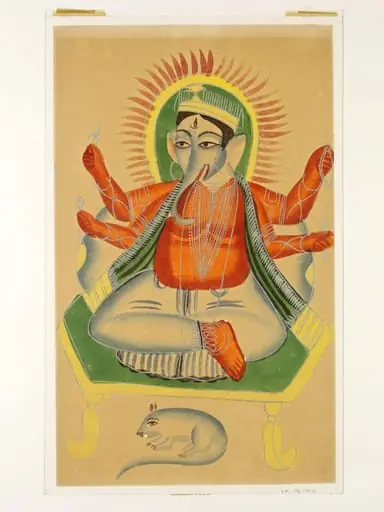
Created in 1760, this work is an opaque water‑colour painting on paper enriched with gold leaf. It portrays the Hindu god Ganesh, seated upon a lotus blossom, accompanied by his traditional rat vehicle. The piece is catalogued under reference RP 57/68 after its transfer from the museum’s Department of Engraving, Illustration & Design.
Subject & Meaning
Ganesh, recognizable by his elephant head and crown, is shown holding a pink lotus while a small grey mouse stands at his feet. The lotus throne and the presence of the mouse reference his role as remover of obstacles and his mythological companionship with the rat, symbols of purity and humility in Hindu iconography.
Technique & Style
The artist employed opaque water‑colour pigments combined with applied gold, producing vivid reds, pinks and greens that contrast against a dark border. The detailed patterned costume and the delicate rendering of the lotus and animal figures reflect a decorative aesthetic typical of 18th‑century Indian court paintings.
History & Provenance
Originally part of the museum’s Department of Engraving, Illustration & Design collection, the painting was later re‑catalogued within the broader holdings of the institution. Its accession record notes the 1760 date and the use of gold, indicating a likely origin in a regional Indian workshop serving devotional patrons.
Context
Ganesh imagery was widely reproduced in the 18th century for both private worship and elite patronage. The use of luxurious materials such as gold leaf and bright pigments aligns the work with ceremonial objects intended to convey spiritual auspice and social status.
Artist & collection

 Domestic Scene
 Giacomo and Cardinal Marco, investing Andrea, Abbot of San Zeno, with his Benefice
 The Nymph of Fontainebleau
 Portrait of a Woman
 Madonna and Child with Saints in the Enclosed Garden
 Venus and Minerva
 Family Group of Four on Sofa
 Wall painting from Room H of the Villa of P. Fannius Synistor at Boscoreale