Artwork
The Goddess Annihilates the Demon Raktabija, from a Devi-Mahatmya
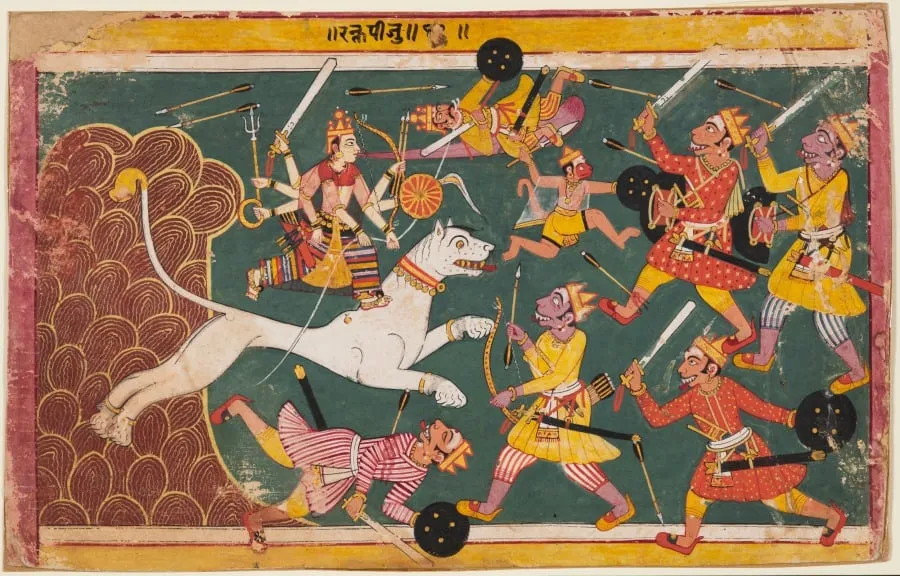
The Goddess Annihilates the Demon Raktabija, from a Devi-Mahatmya is an unspecified painting by the Baroque artist Unknown. It dates from 1640 and is held in the collection of the Cleveland Museum of Art. The painting depicts a scene from the Devi‑Mahatmya in which the goddess Kali confronts the demon Raktabija.
About this work
Overview
The painting depicts a scene from the Devi‑Mahatmya in which the goddess Kali confronts the demon Raktabija. The demon, granted the power that each drop of his spilled blood spawns a new copy of himself, is shown being subdued as Kali extends a long red tongue to intercept the blood, preventing further regeneration.
Subject & Meaning
Central to the composition is Kali’s multi‑armed figure, poised atop the dying Raktabija. By catching the blood before it reaches the ground, she symbolically halts the proliferation of evil, illustrating the triumph of divine intervention over a seemingly endless threat. The act of licking the blood underscores her role as both destroyer and protector.
Technique & Style
Executed with vivid pigments, the work employs a dynamic arrangement of figures and swirling motion to convey the intensity of the battle. The bright color palette, particularly the striking reds of the tongue and blood, contrasts with darker tones of the goddess’s form, creating visual tension that emphasizes the myth’s dramatic climax.
Context
The painting originates from the central Indian artistic tradition of Madhya Pradesh, specifically the Malwa region, where such devotional narratives were commonly rendered on walls and scrolls. It reflects the local emphasis on vivid storytelling in religious art, serving both as a visual aid for worship and as a didactic illustration of the goddess’s power.
Artist & collection

 Domestic Scene
 Giacomo and Cardinal Marco, investing Andrea, Abbot of San Zeno, with his Benefice
 The Nymph of Fontainebleau
 Portrait of a Woman
 Madonna and Child with Saints in the Enclosed Garden
 Venus and Minerva
 Family Group of Four on Sofa
 Wall painting from Room H of the Villa of P. Fannius Synistor at Boscoreale
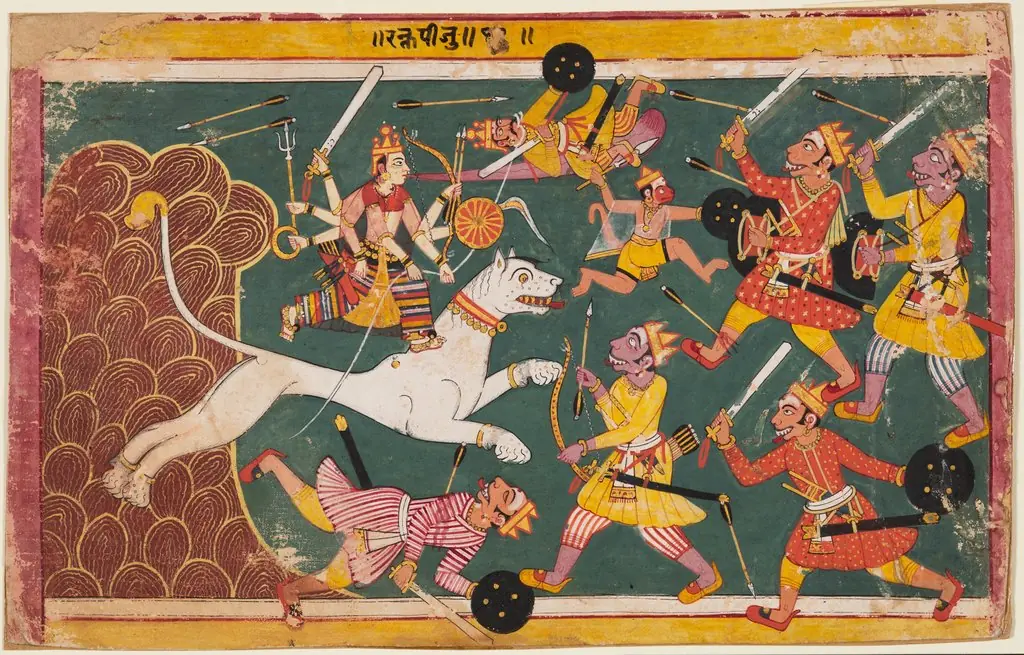 The Goddess Annihilates the Demon Raktabija, from a Devi-Mahatmya
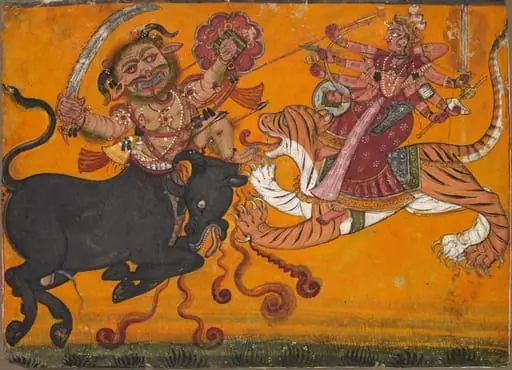 Durga Slaying Mahisha
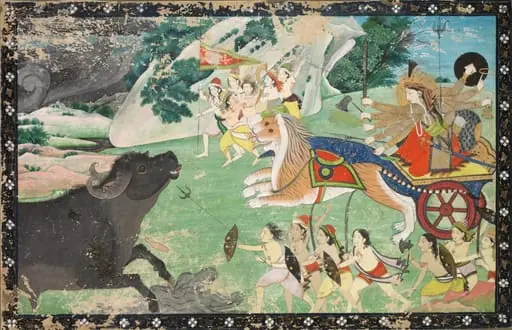 Durga Slaying Mahisha
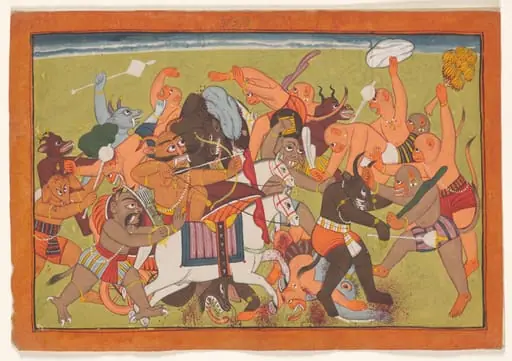 Battle between monkeys and demons, from the “Shangri” Ramayana
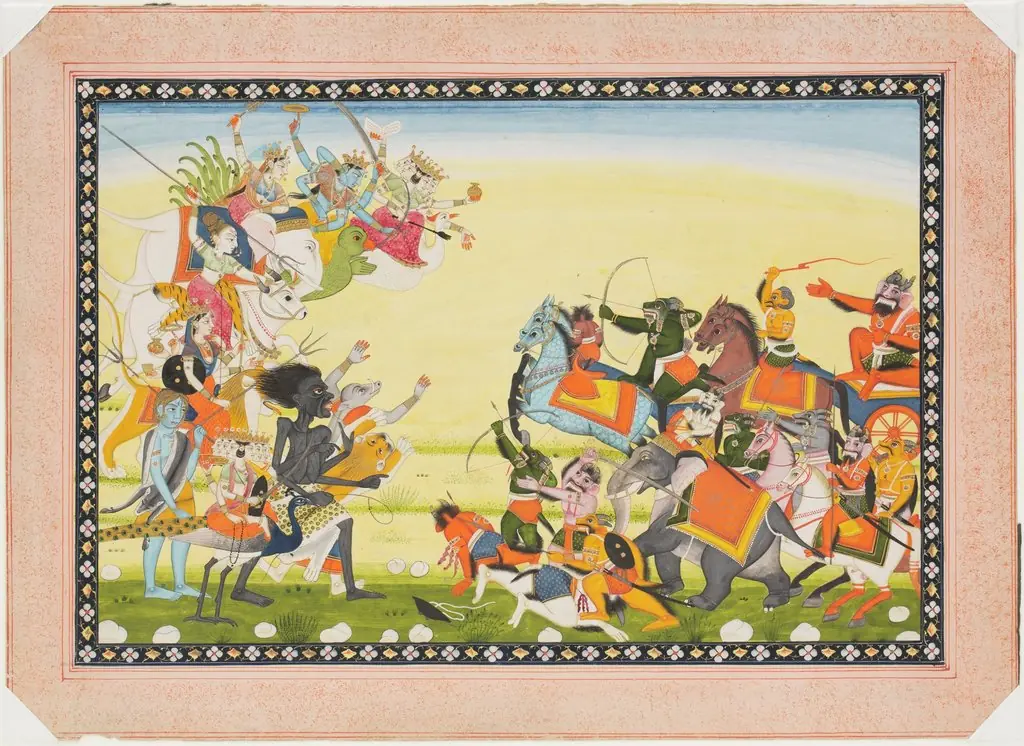 Goddesses and Demons Approaching Combat
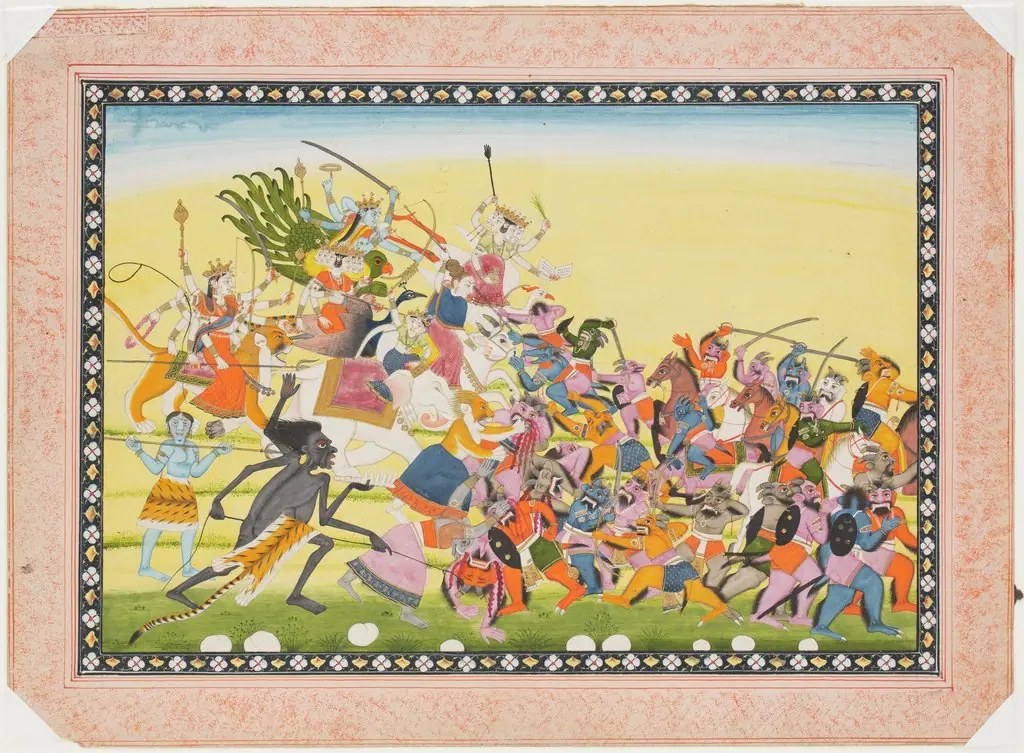 Godesses in Combat with Demons
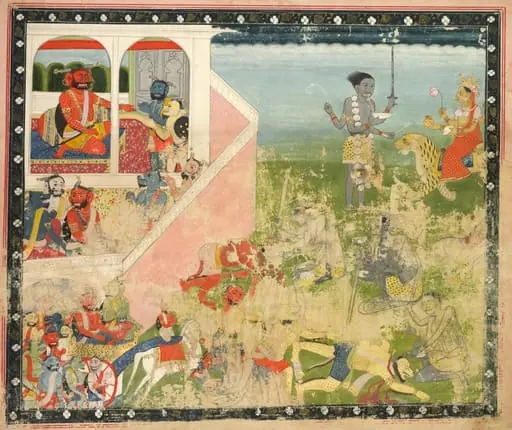 Kali and Devi attack, from a Devi Mahatmya
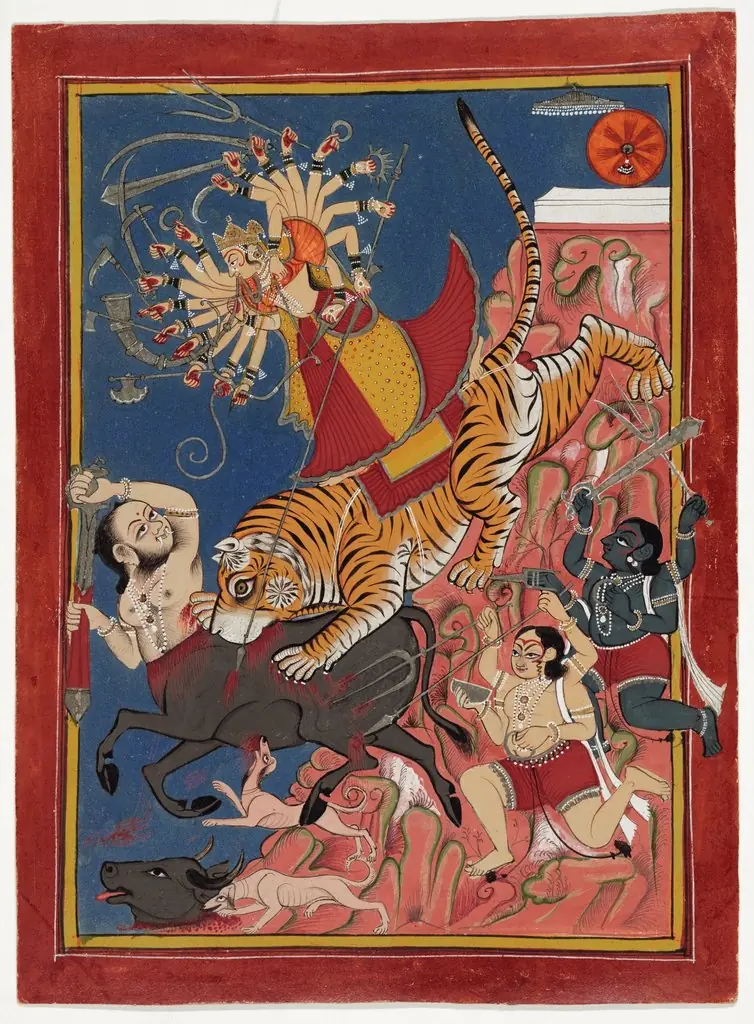 Durga Killing the Buffalo Demon
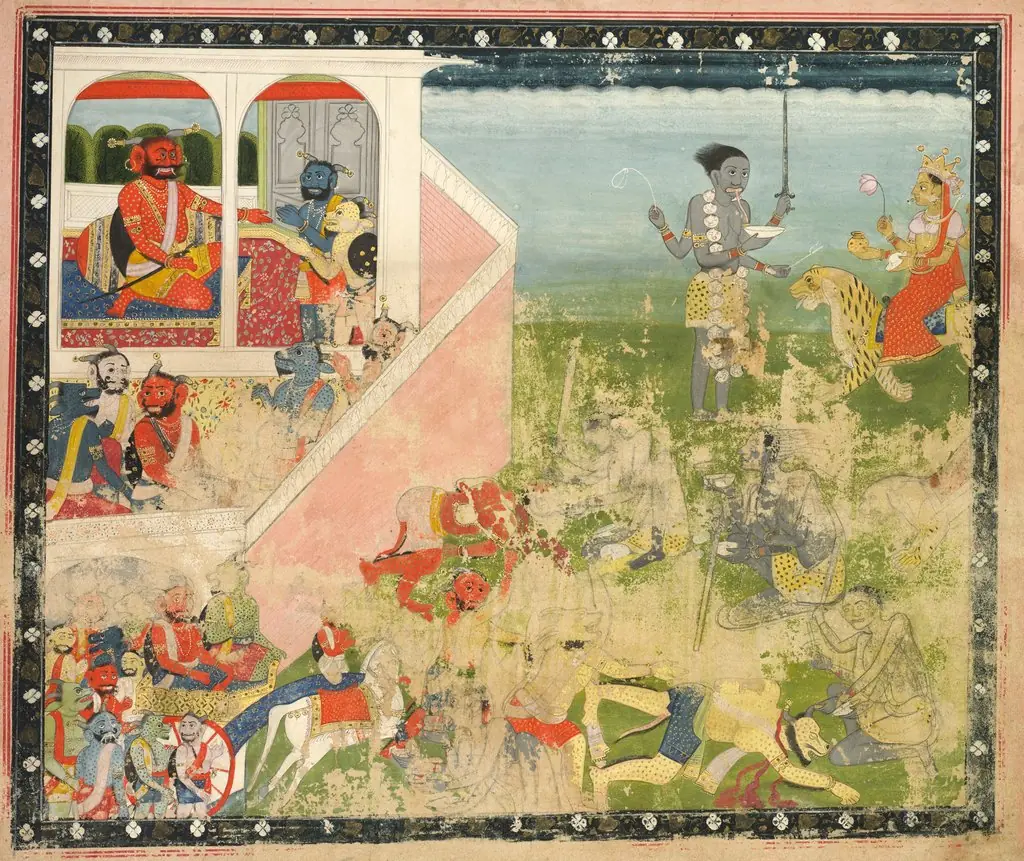 Kali and Devi Attack: Leaf from a Devi Mahatmya