Artwork
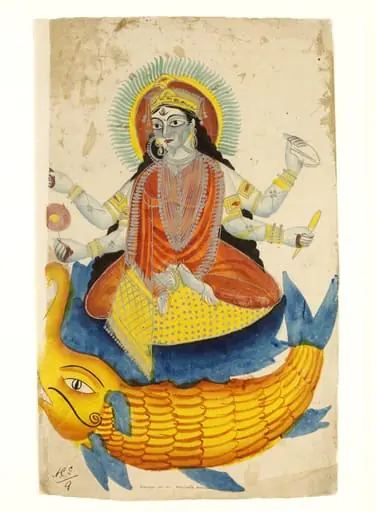
Durga as Rajarajesvari
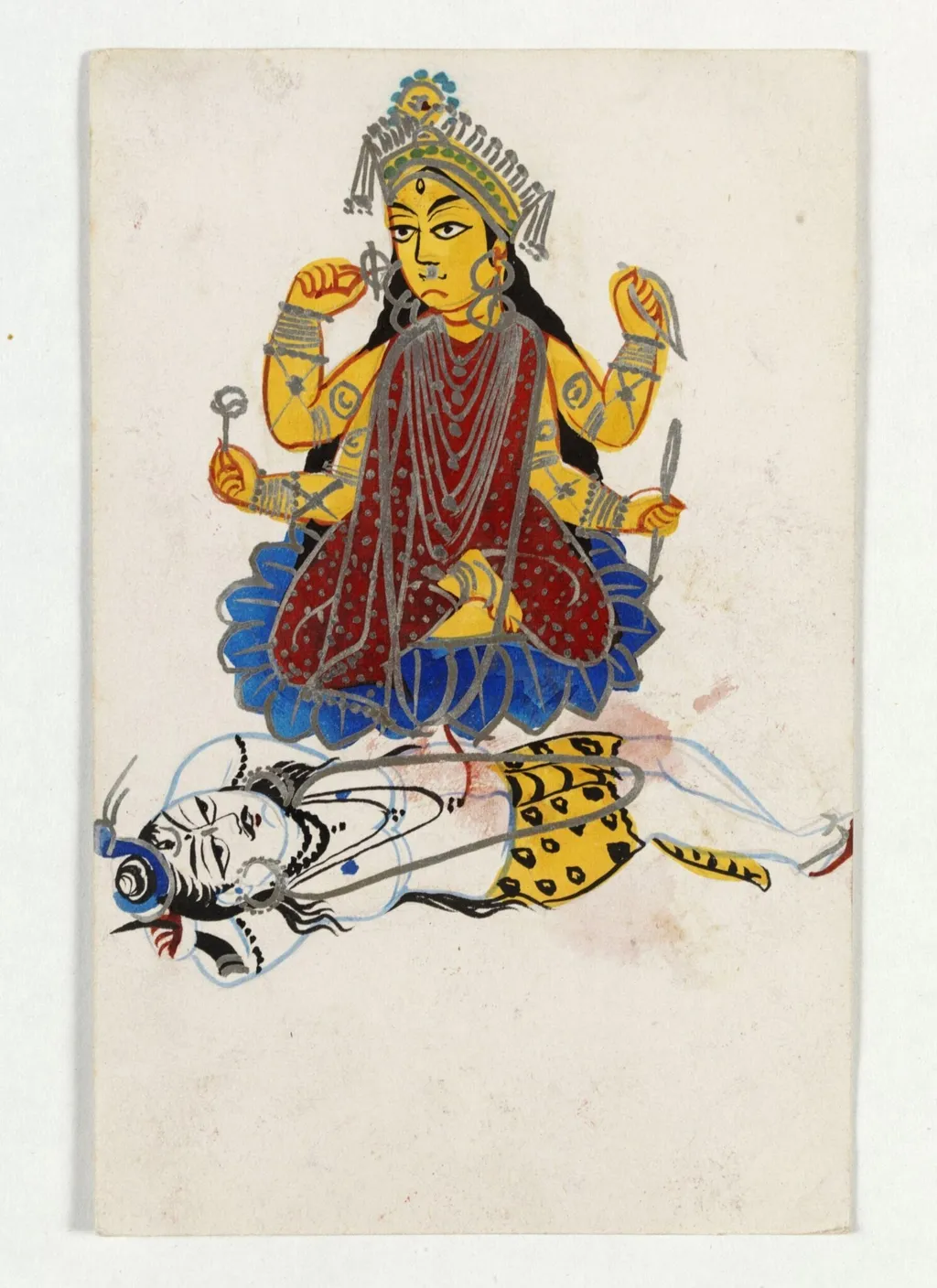
Durga as Rajarajesvari is a paint painting by the Impressionist artist Unknown. It dates from 1890 and is held in the collection of the Victoria and Albert Museum. The work is a water‑colour painting combined with tin‑alloy detailing, executed on a cardboard support.
About this work
Overview
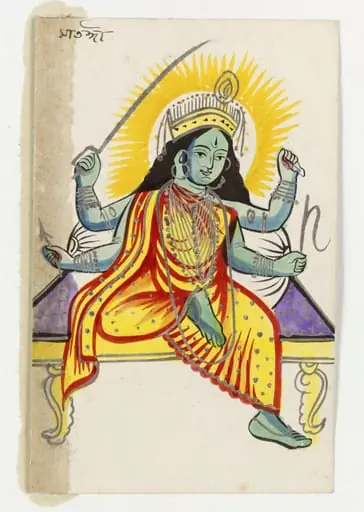
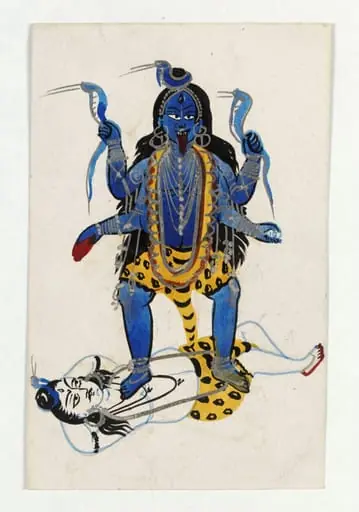
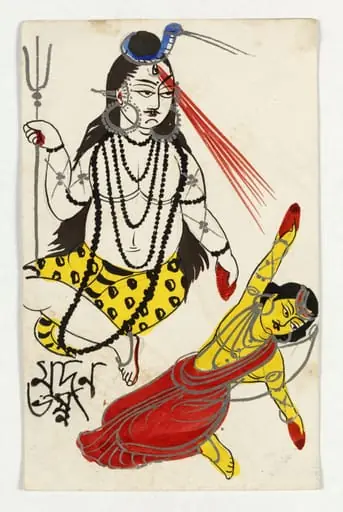
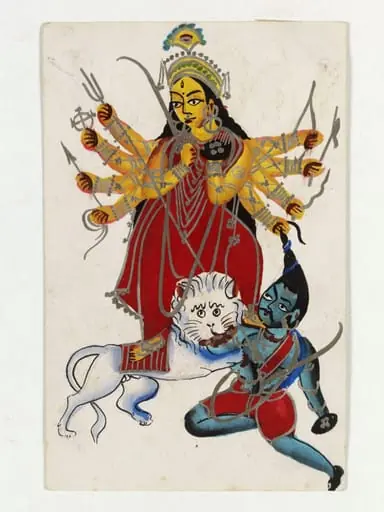
The work is a water‑colour painting combined with tin‑alloy detailing, executed on a cardboard support. It portrays the Hindu deity Durga, here identified as Rajarajesvari, with four arms and a regal crown, positioned above a reclining figure of Shiva.
Subject & Meaning
Durga is shown grasping a chakra, a conch (sankha), a lotus and a sword, symbols of power, purity and divine authority. The juxtaposition of the goddess over the supine Shiva emphasizes her role as a protective and victorious force within the mythic narrative.
Technique & Style
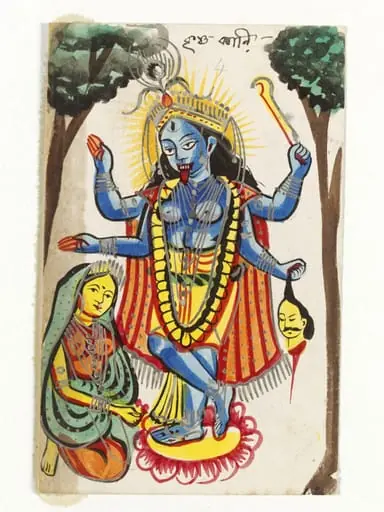
The artist employs vivid pigments and strong outlines, characteristic of Indian folk visual traditions where deities are rendered with multiple limbs and elaborate weaponry. The use of tin‑alloy accents adds a metallic sheen that highlights the divine attributes.
History & Provenance
The painting’s medium and iconography suggest it originates from a regional workshop that produced devotional images for private worship. Its current location is not specified, but similar works are held in collections such as the Victoria and Albert Museum.
Context
In Hindu visual culture, Durga as Rajarajesvari embodies the sovereign queen of the gods, often depicted triumphing over chaos. The depiction of Shiva in a vulnerable pose underscores the narrative of cosmic balance restored by the goddess’s intervention.
Artist & collection

 Domestic Scene
 Giacomo and Cardinal Marco, investing Andrea, Abbot of San Zeno, with his Benefice
 The Nymph of Fontainebleau
 Portrait of a Woman
 Madonna and Child with Saints in the Enclosed Garden
 Venus and Minerva
 Family Group of Four on Sofa
 Wall painting from Room H of the Villa of P. Fannius Synistor at Boscoreale