Artwork
Durga Slaying Mahisha
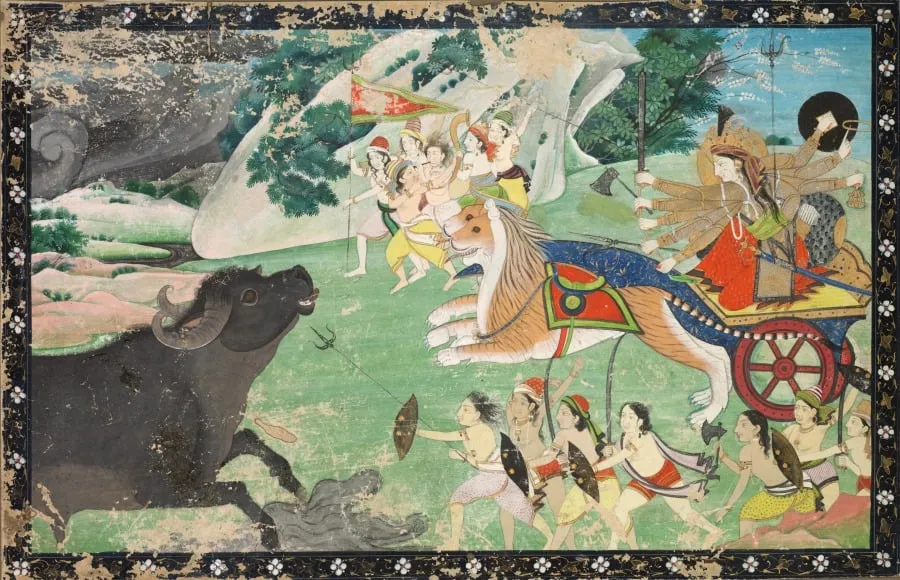
Durga Slaying Mahisha is an unspecified painting by the Patna School of Painting artist Unknown. It dates from 1830 and is held in the collection of the Cleveland Museum of Art. The work portrays the Hindu goddess Durga in her martial form, mounted in a chariot drawn by two tiger‑like beasts.
About this work
Overview
The work portrays the Hindu goddess Durga in her martial form, mounted in a chariot drawn by two tiger‑like beasts. She faces a massive buffalo demon, known as Mahisha, on a gently rising slope that suggests the foothills of the western Himalayas. The composition juxtaposes turbulent storm clouds with a clear blue sky, emphasizing the conflict between chaos and divine order.
Subject & Meaning
Drawing from the Devi Mahatmya narrative, the scene captures the moment Durga confronts the world‑ravaging buffalo demon. The goddess’s poised stance and the imminent clash symbolize the triumph of protective feminine power over destructive forces, a central theme in Hindu mythic tradition.
Technique & Style
Rendered in vivid pigments, the painting balances dynamic movement with detailed natural elements. The tigers are depicted with muscular realism, while the demon’s bulk conveys menace. Atmospheric contrast is achieved through the dark, swirling clouds behind Mahisha and the luminous sky framing Durga, creating a visual tension that guides the viewer’s eye toward the central confrontation.
History & Provenance
Created in the western Himalayan region, the piece reflects local artistic conventions that blend narrative illustration with landscape. Though the exact date and artist remain unidentified, the work entered the Cleveland Museum of Art’s collection through a mid‑20th‑century acquisition of South Asian religious paintings.
Context
The painting belongs to a broader corpus of devotional art that visualizes the goddess’s victories over various demons. Such images were traditionally used in ritual settings to invoke Durga’s protection during festivals like Navaratri, reinforcing communal identity and religious devotion.
Legacy
As an example of Himalayan devotional painting, the work informs contemporary understandings of regional iconography and narrative art practices. Its preservation in a major museum allows scholars to examine the interplay of myth, landscape, and artistic technique within South Asian visual culture.
Artist & collection

 Domestic Scene
 Giacomo and Cardinal Marco, investing Andrea, Abbot of San Zeno, with his Benefice
 The Nymph of Fontainebleau
 Portrait of a Woman
 Madonna and Child with Saints in the Enclosed Garden
 Venus and Minerva
 Family Group of Four on Sofa
 Wall painting from Room H of the Villa of P. Fannius Synistor at Boscoreale
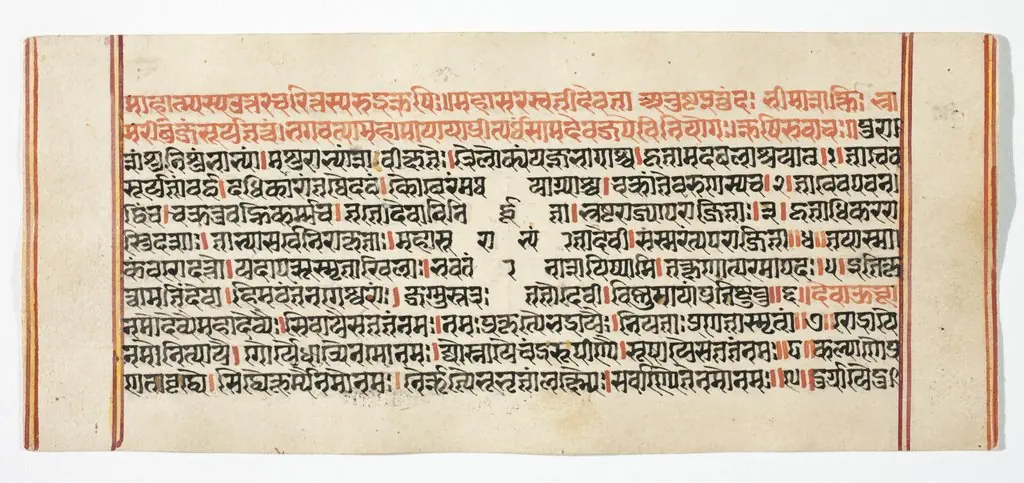 Legend of Durga
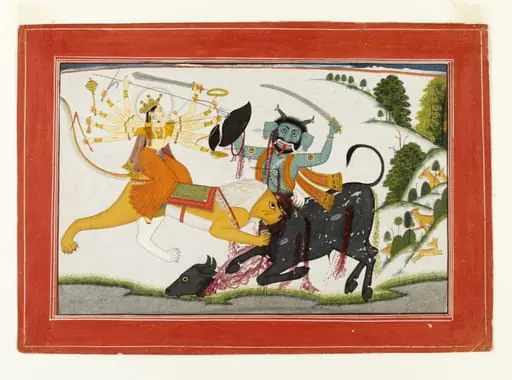 Durga and Mahishasura
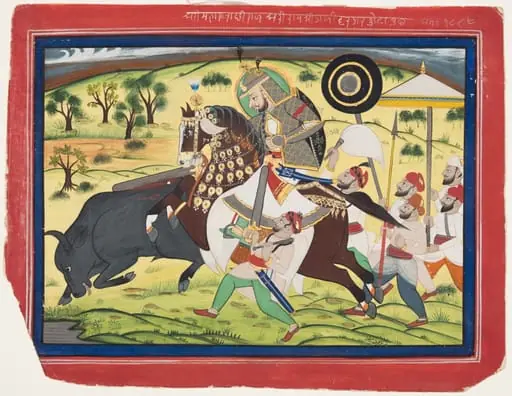 Maharao Ram Singh II of Kota (r. 1828–66) Hunting Buffalo
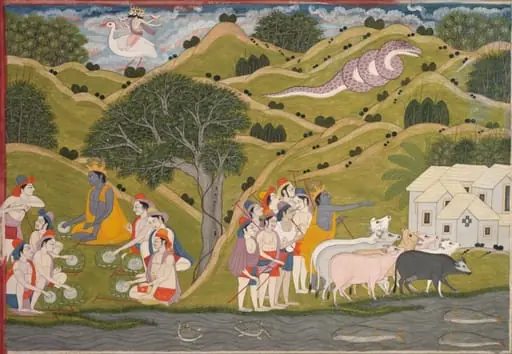 Krishna returns with the cowherds to Braj, from a Bhagavata Purana
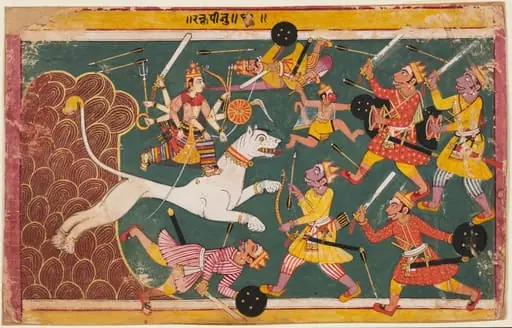 The Goddess Annihilates the Demon Raktabija, from a Devi-Mahatmya
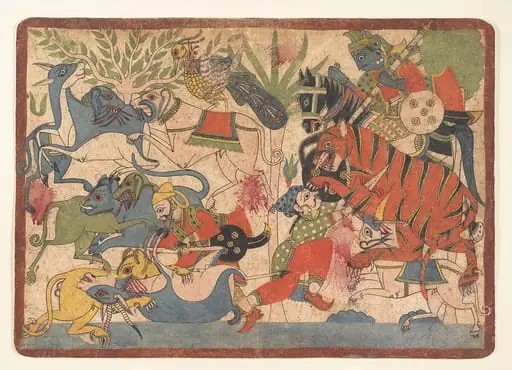 Untitled
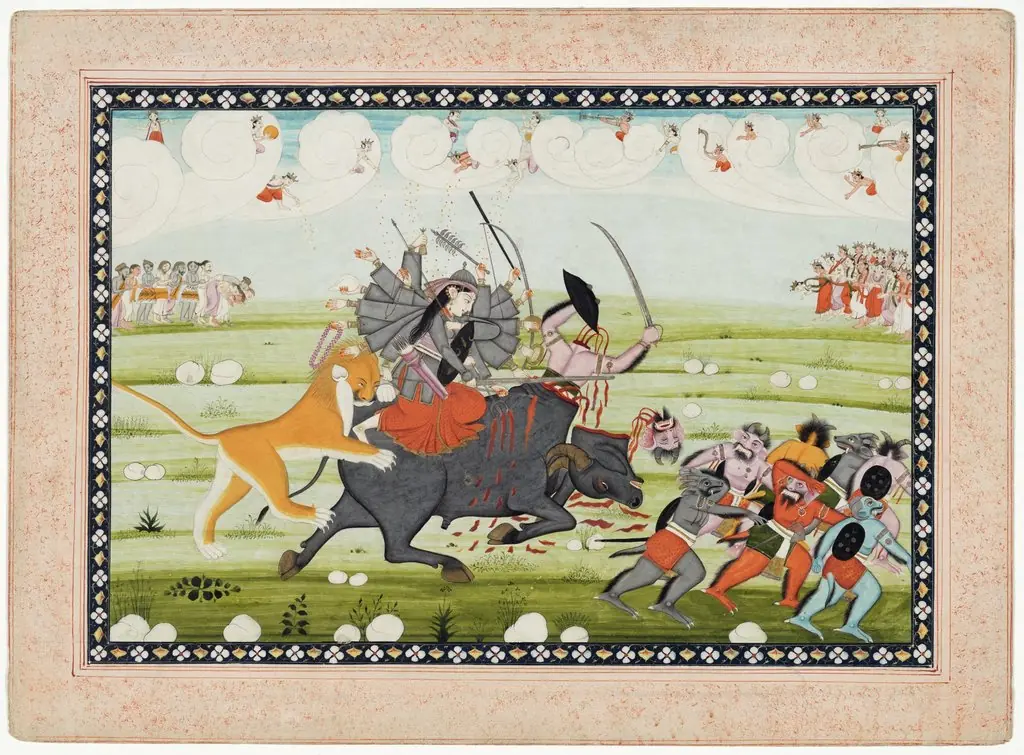 Durga, Having Decapitated Bull and Mahishasura Within, Drives off Remaining Demons while Gods in Clouds Applaud
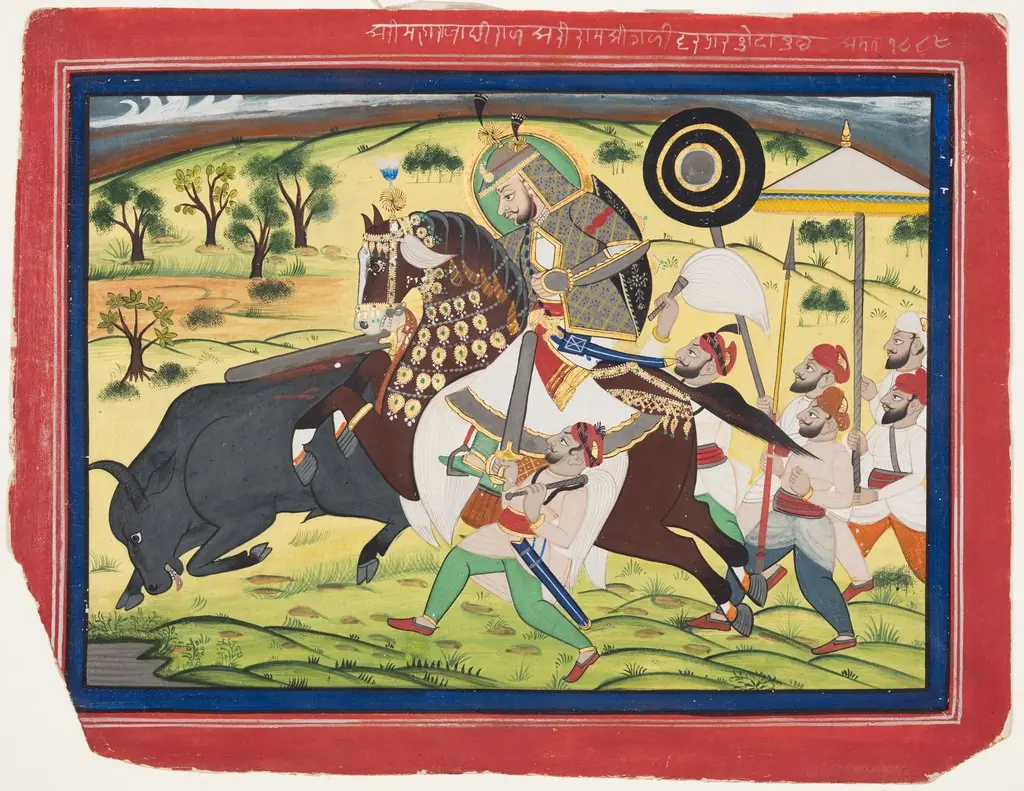 Maharao Ram Singh II of Kota (r. 1828–66) Hunting Buffalo