Artwork
Durga Slaying Mahisha
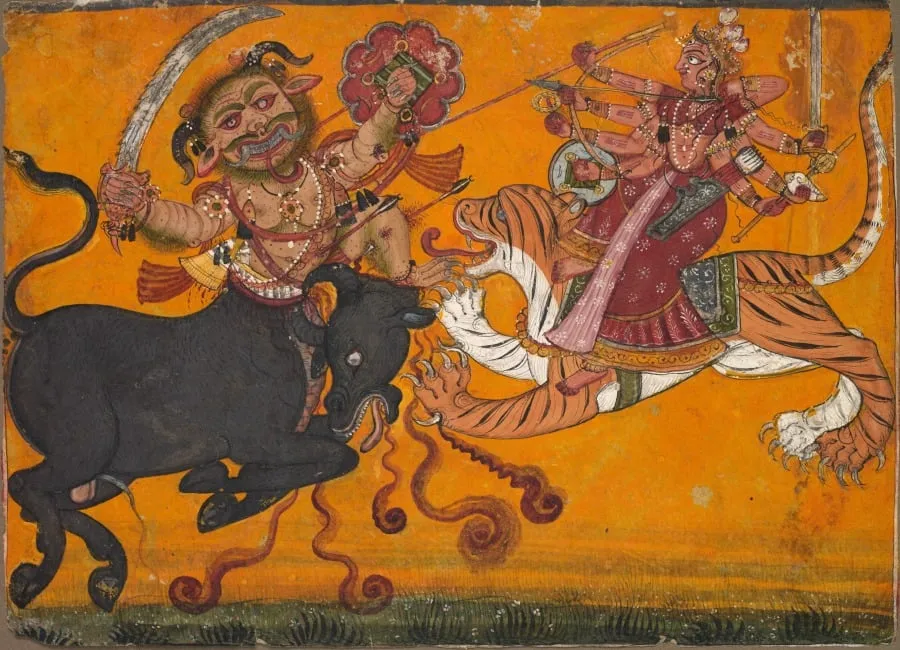
Durga Slaying Mahisha is an unspecified painting by the Baroque artist Unknown. It dates from 1705 and is held in the collection of the Cleveland Museum of Art.
About this work
Overview
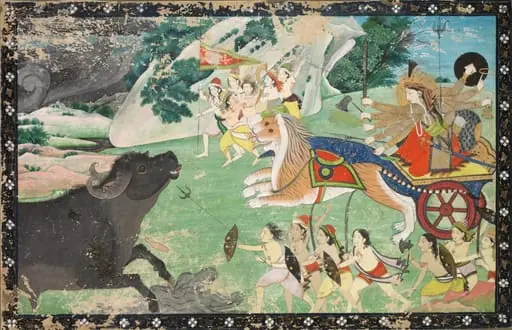
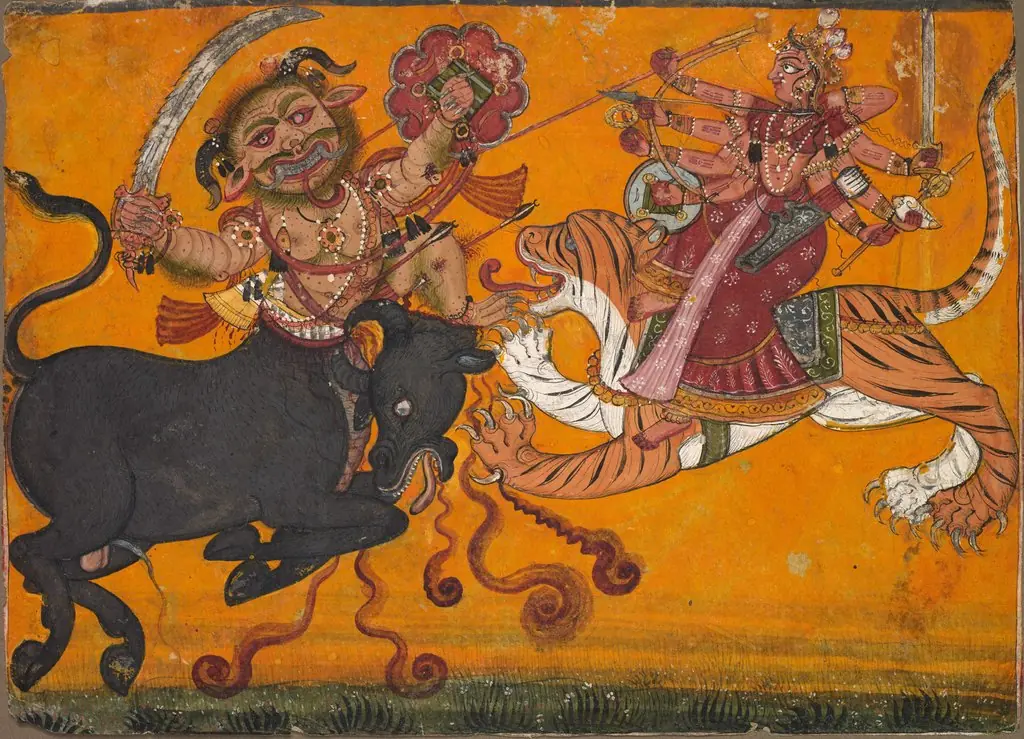
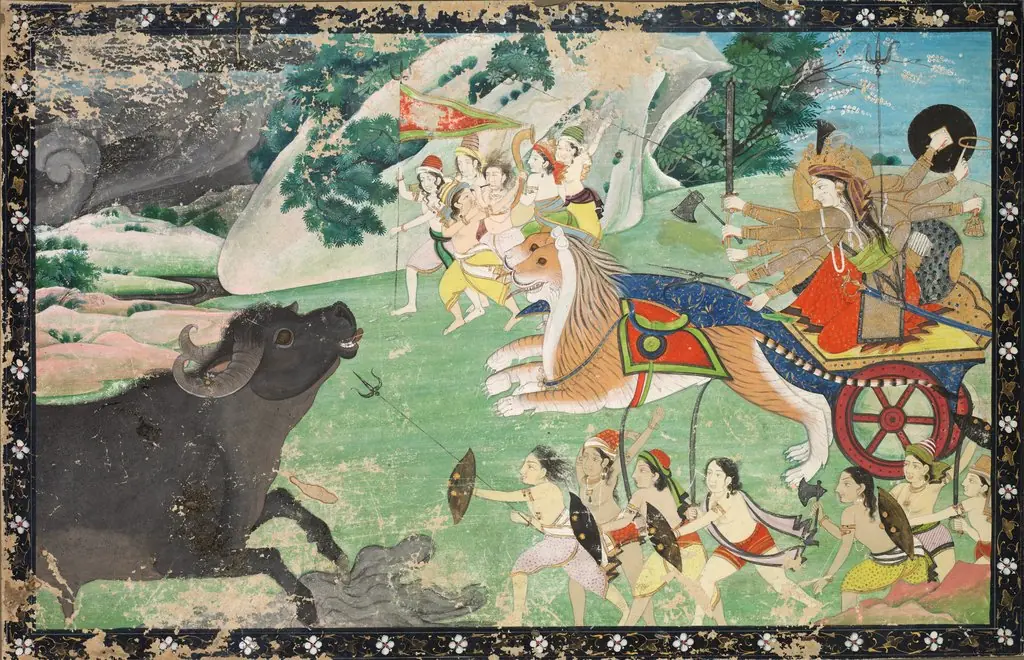
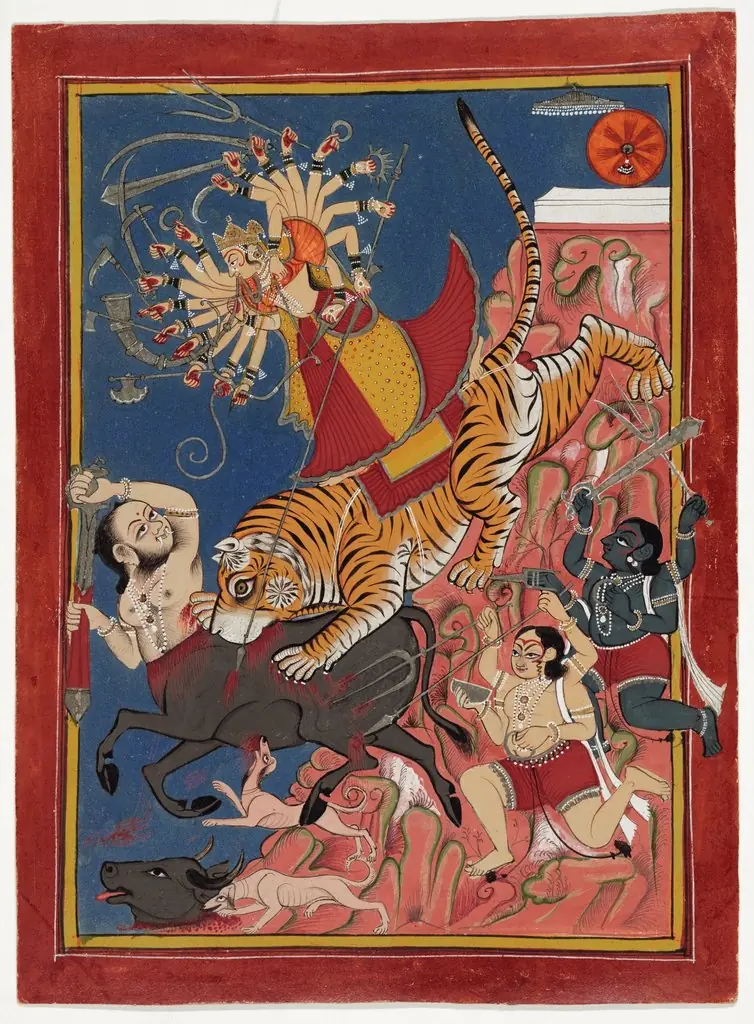
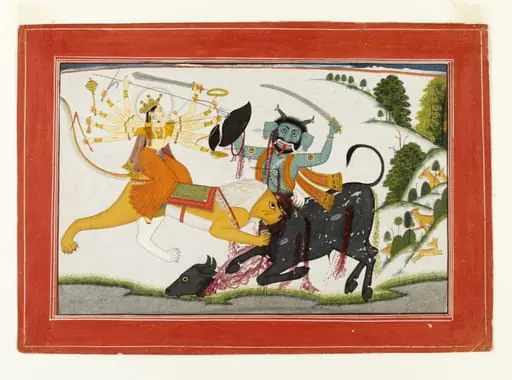
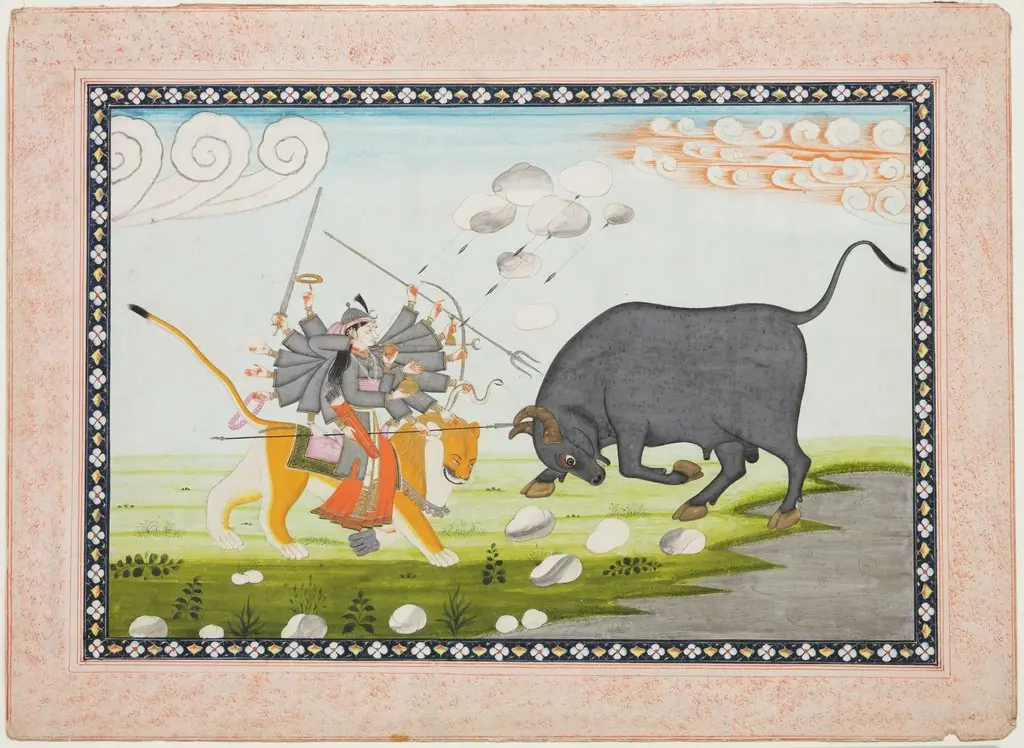
This painting, originating from the Pahari courts of northern India, portrays the Hindu goddess Durga in the act of slaying the buffalo demon Mahisha. She is shown with multiple arms, each brandishing a distinct weapon, and seated on a tiger‑like mount while beheading the creature. The composition captures the decisive moment of triumph over the demon.
Subject & Meaning
Durga embodies the collective potency of the male deities, and her victory over Mahisha symbolizes the defeat of chaotic forces. The depiction of her severed head and the emergence of the demon’s true form from its neck emphasize the goddess’s role as a protector and destroyer of evil within Hindu mythology.
Technique & Style
Executed in the characteristic Pahari style of the western Himalayas, the work employs vivid colors and intricate detailing. The arms are marked with horizontal lines that serve as sectarian identifiers, while each weapon—bow, trident, discus, shield, sword, mace, and conch—receives careful rendering, highlighting the artist’s skill in rendering complex, multi‑armed figures.
History & Provenance
The painting was produced in the foothills of the western Himalayas, a region where artists traditionally portrayed Durga’s vehicle as a tiger, reflecting local iconographic conventions. It remains a representative example of the devotional art commissioned by the Pahari kingdoms during the period.
Context
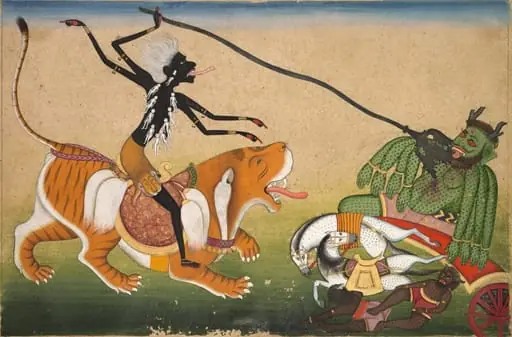
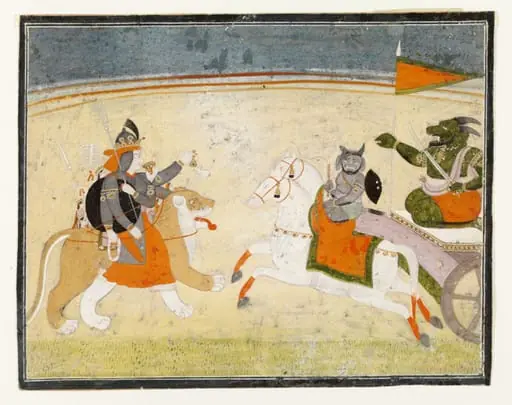
In Indian visual culture, lions and tigers function as interchangeable symbols of shakti, the divine creative energy. This work aligns with that tradition, presenting Durga’s mount as a tiger and reinforcing the association between the goddess’s martial vigor and the animal’s ferocity.
Artist & collection

 Domestic Scene
 Giacomo and Cardinal Marco, investing Andrea, Abbot of San Zeno, with his Benefice
 The Nymph of Fontainebleau
 Portrait of a Woman
 Madonna and Child with Saints in the Enclosed Garden
 Venus and Minerva
 Family Group of Four on Sofa
 Wall painting from Room H of the Villa of P. Fannius Synistor at Boscoreale