Artwork
Emperor Rafi ud-Darajat
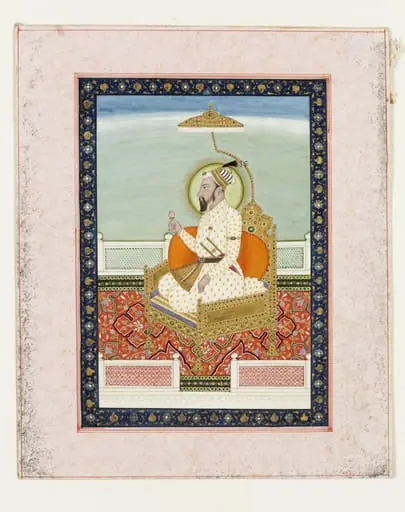
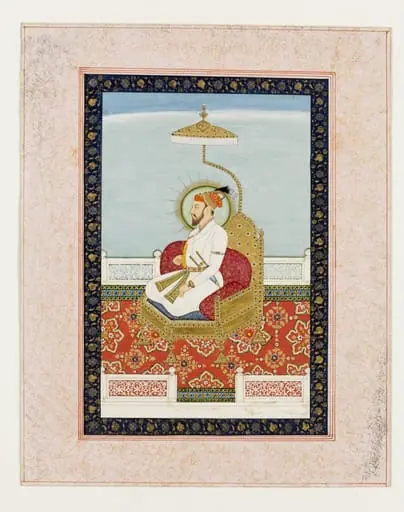
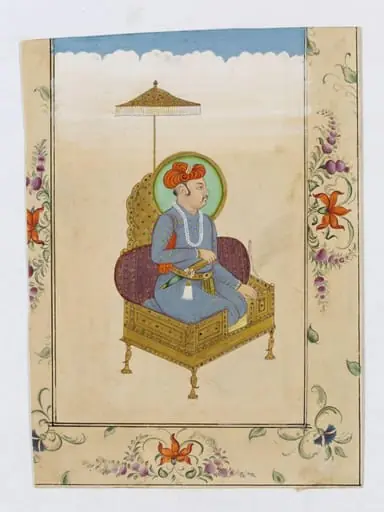
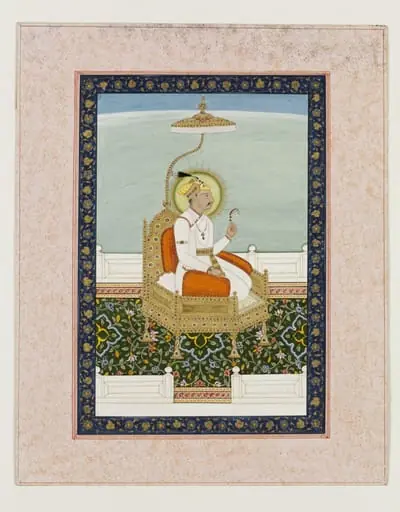
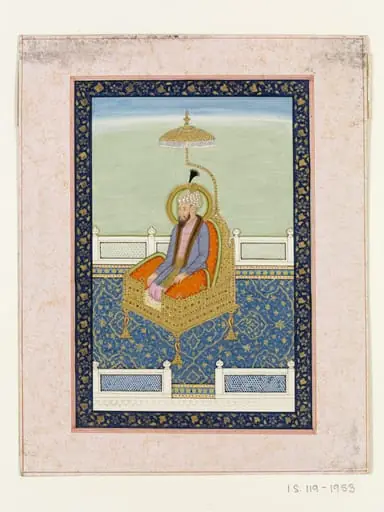
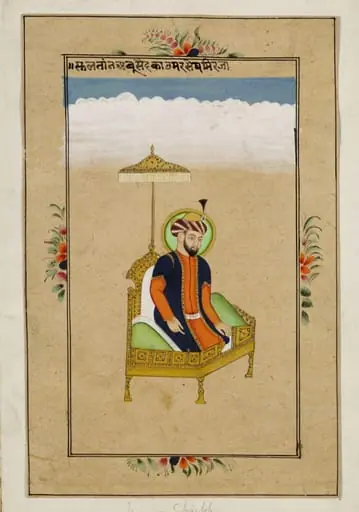
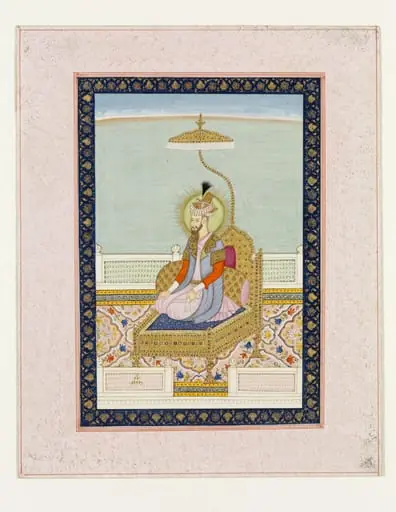
Emperor Rafi ud-Darajat is a paint painting by the Impressionist artist Unknown. It dates from 1890 and is held in the collection of the Victoria and Albert Museum. The work is a portrait of the Mughal emperor Rafi ud‑Darajat, shown seated on an ornate golden throne.
About this work
Overview
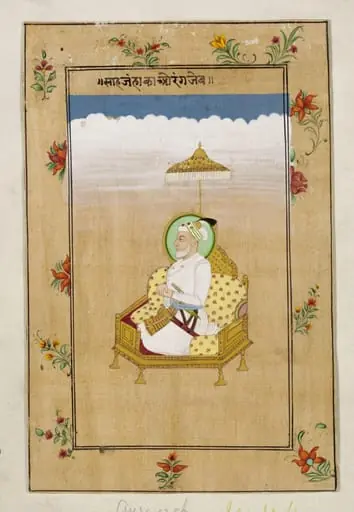
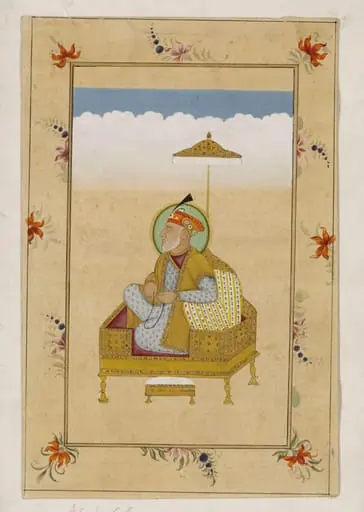
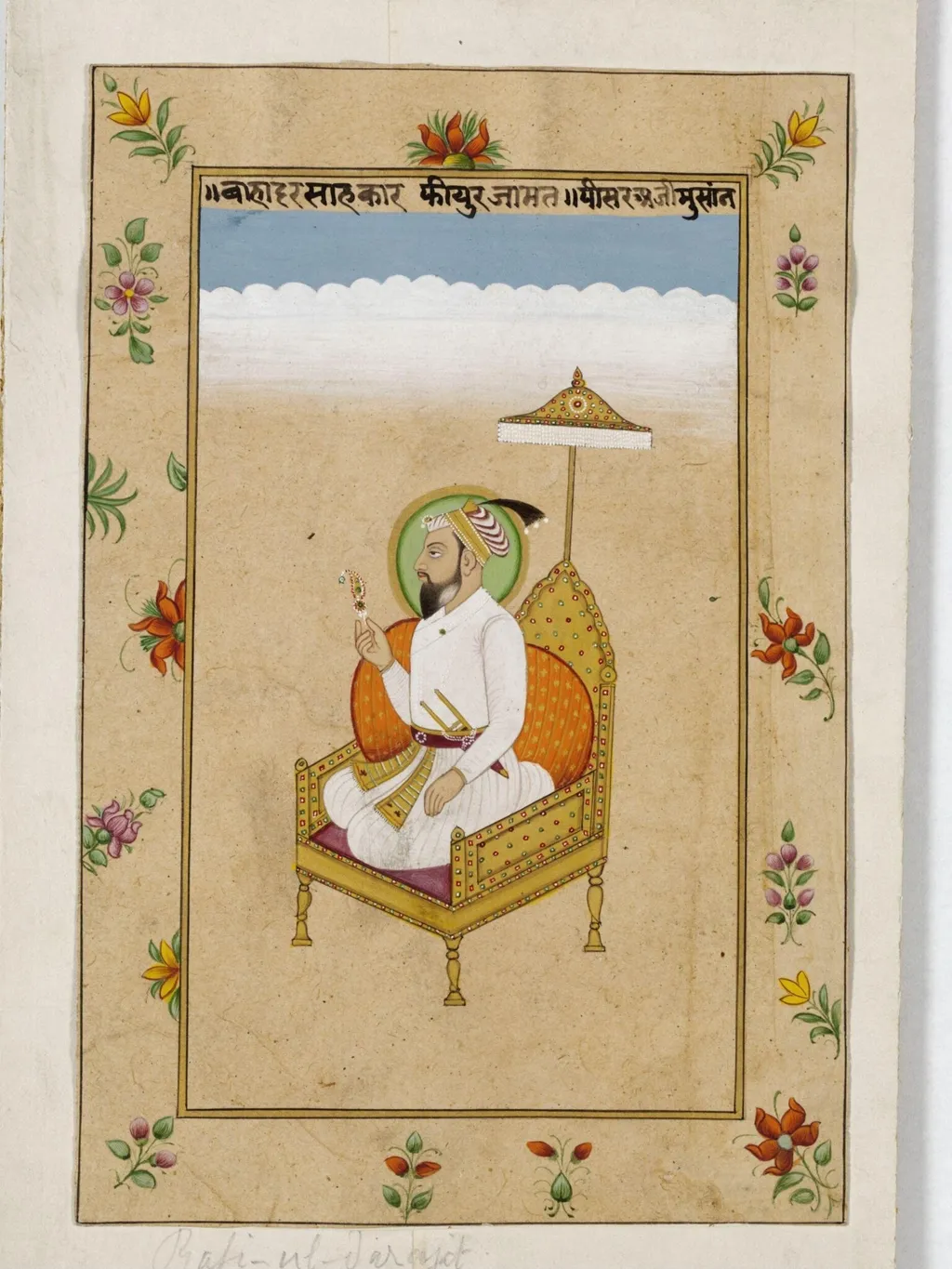
The work is a portrait of the Mughal emperor Rafi ud‑Darajat, shown seated on an ornate golden throne. He faces left, holding a decorative element of his turban, while a small canopy arches above the seat. The composition is framed by a plain sky and a decorative border of vivid floral motifs in reds, greens and yellows.
Subject & Meaning
Rafi ud‑Darajat is presented in formal regalia: white and orange robes, a green turban, and a neatly trimmed beard. One hand rests on his knee, the other holds a flower, a gesture that conveys both authority and a cultivated refinement typical of imperial portraiture in the early eighteenth‑century Mughal court.
Technique & Style
Executed in opaque watercolour combined with gold leaf on paper, the painting employs a luminous palette that highlights the gilded throne and the emperor’s garments. The delicate brushwork renders the textiles and floral border, while the gold accents reinforce the sense of royal splendor without obscuring the subtle modelling of the figure.
History & Provenance
The portrait originates from the Mughal period, likely produced in the early 1700s during Rafi ud‑Darajat’s brief reign. The script at the top, rendered in Persian‑Arabic calligraphy, identifies the sitter. The work has since entered a European collection, where it is catalogued as a representative example of court portraiture from the era.
Context
Mughal imperial portraits served to legitise the ruler’s authority and to circulate a standardized image of the sovereign across the empire. This painting follows the conventions of earlier court depictions, emphasizing the emperor’s elevated status through sumptuous materials, a throne, and symbolic accessories such as the flower.
Legacy
The piece illustrates the continuity of Mughal artistic traditions even as the empire entered a period of political instability. Its preservation and study provide insight into the visual language of power used by late Mughal patrons, informing comparative analyses of South Asian court art in global museum collections.
Artist & collection

 Domestic Scene
 Giacomo and Cardinal Marco, investing Andrea, Abbot of San Zeno, with his Benefice
 The Nymph of Fontainebleau
 Portrait of a Woman
 Madonna and Child with Saints in the Enclosed Garden
 Venus and Minerva
 Family Group of Four on Sofa
 Wall painting from Room H of the Villa of P. Fannius Synistor at Boscoreale