Artwork
Eventail brisé
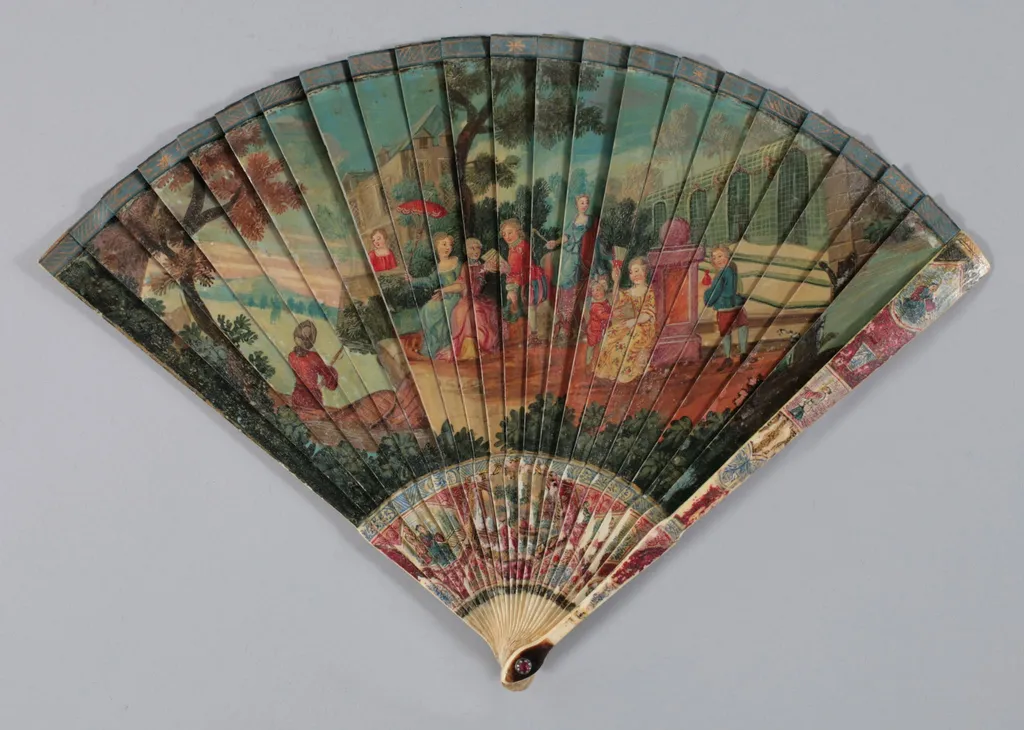
Eventail brisé is an unspecified work on paper by the Baroque artist Unknown. It dates from 1730 and is held in the collection of the Palais Galliera - Musée de la Mode de la Ville de Paris.
About this work
Overview
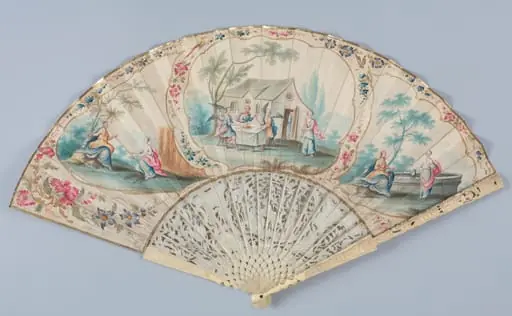
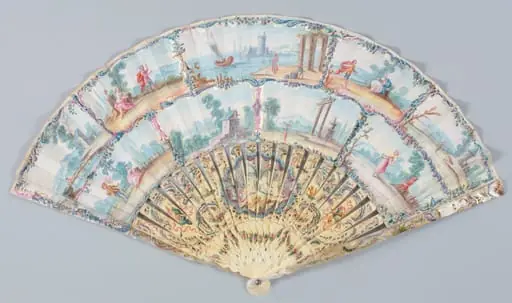
The remaining sections depict intimate outdoor scenes with figures in 18th-century attire, rendered in muted tones of green, red, and yellow.
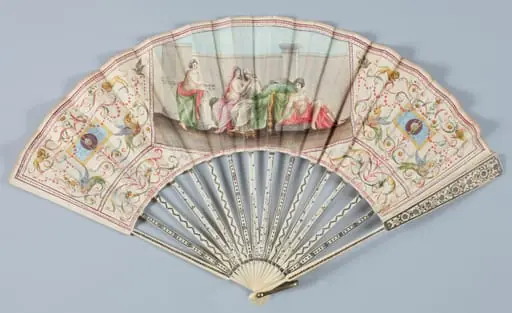
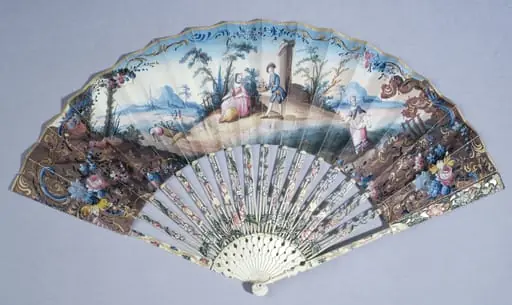
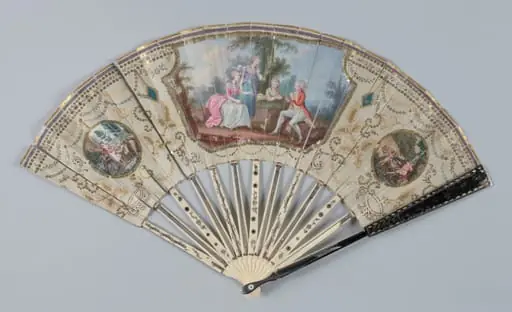
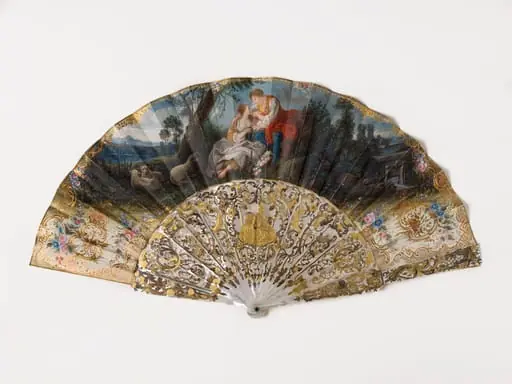
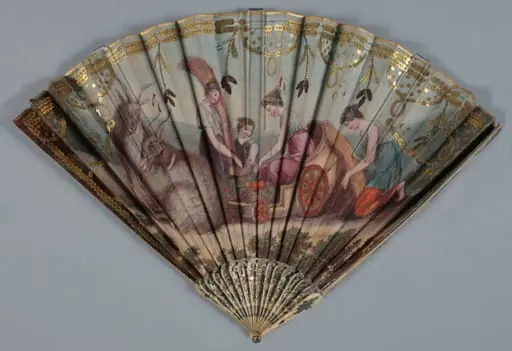
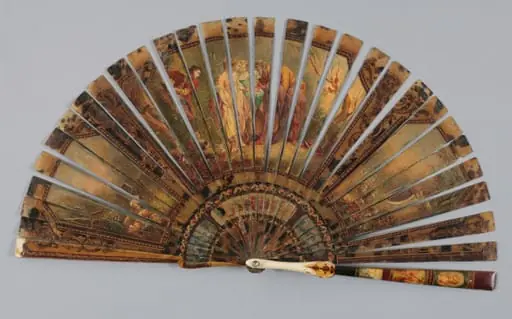
Eventail brisé is a handheld fan composed of satin panels, painted in watercolor and now incomplete. Its name, meaning 'broken fan,' reflects the absence of several panels, leaving only a fragment of its original design. The remaining sections depict intimate outdoor scenes with figures in 18th-century attire, rendered in muted tones of green, red, and yellow. The delicate washes of paint suggest a soft, transient quality, typical of watercolor technique.
Subject & Meaning
The painted panels portray leisurely figures—men in coats, women in full skirts—strolling or resting in a landscaped garden. These scenes evoke the refined pastimes of the European upper class during the 1700s, where parks served as social stages. The absence of dramatic action or narrative focus implies a quiet celebration of everyday elegance, rather than a grand historical moment.
Technique & Style
Watercolor was applied in thin, translucent layers to achieve subtle gradations of color and soft edges. The satin surface of the fan absorbed the pigment unevenly, contributing to the slightly faded, ethereal appearance. Decorative borders in blue and gold foil frame each panel, contrasting with the naturalistic scenes. The technique prioritizes delicacy over detail, aligning with the fan’s function as a personal, intimate object.
History & Provenance
The fan likely originated in France or England during the late 18th century, a period when painted fans were fashionable accessories among aristocratic women. Its incomplete state suggests it was damaged or deliberately disassembled over time. No definitive record of its original owner or maker survives, though its craftsmanship indicates it was produced by a skilled artisan, possibly for private sale.
Context
In the 18th century, fans were not merely practical tools but symbols of status and refinement. Painted fans often featured scenes drawn from contemporary life, mythology, or landscape, serving as portable art. The use of watercolor on satin reflected both technical skill and aesthetic taste, aligning with broader trends in decorative arts that valued subtlety and handcrafted detail over mass production.
Legacy
Eventail brisé stands as a quiet testament to the artistry of personal objects in pre-industrial Europe. Though incomplete, it preserves the visual language of its time—elegant, restrained, and attentive to texture and tone. Today, it offers insight into how art was integrated into daily life, not as monumental display but as intimate, handheld experience.
Artist & collection

Museum
Palais Galliera - Musée de la Mode de la Ville de Paris
Continue through works from the same source collection.
 Domestic Scene
 Giacomo and Cardinal Marco, investing Andrea, Abbot of San Zeno, with his Benefice
 The Nymph of Fontainebleau
 Portrait of a Woman
 Madonna and Child with Saints in the Enclosed Garden
 Venus and Minerva
 Family Group of Four on Sofa
 Wall painting from Room H of the Villa of P. Fannius Synistor at Boscoreale