Artwork
Eventail plié
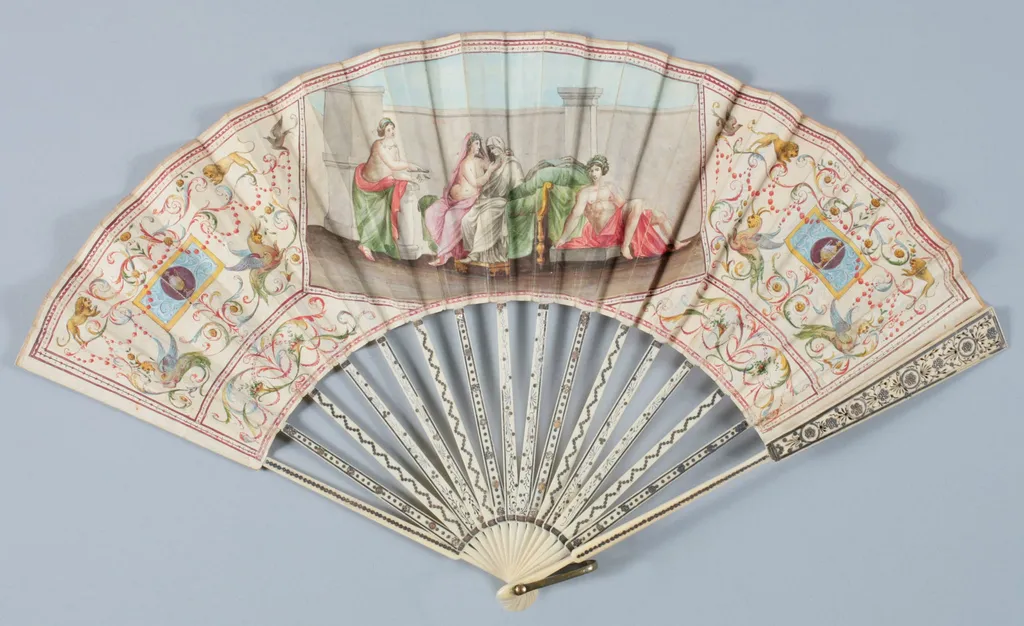
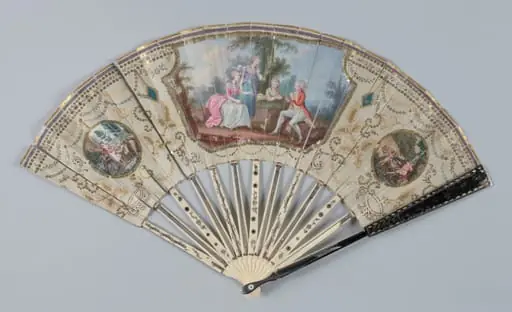
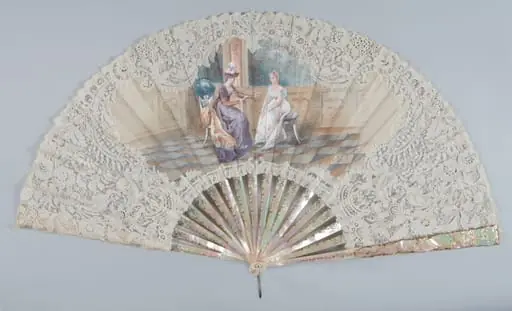
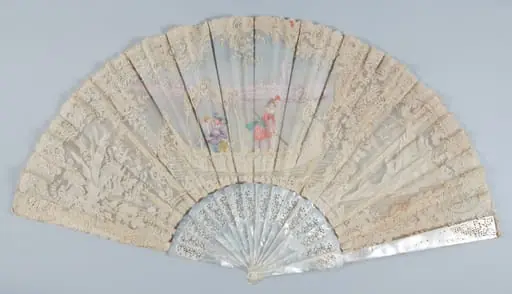
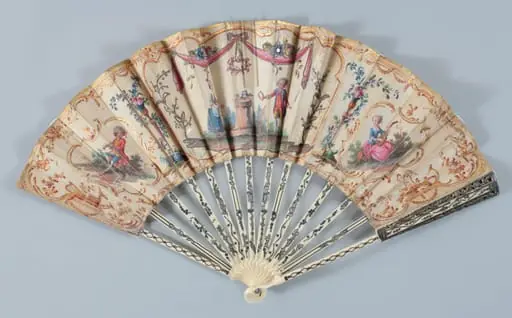
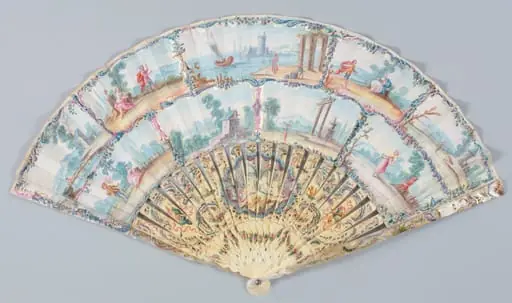
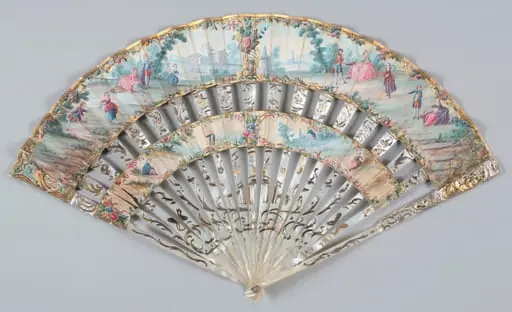
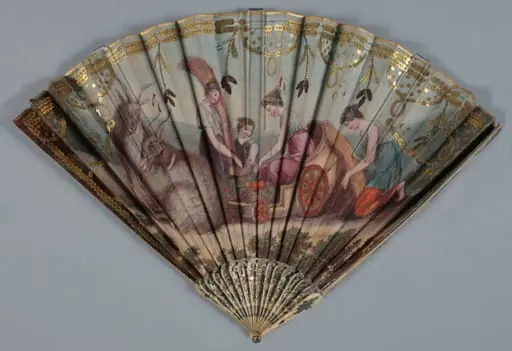
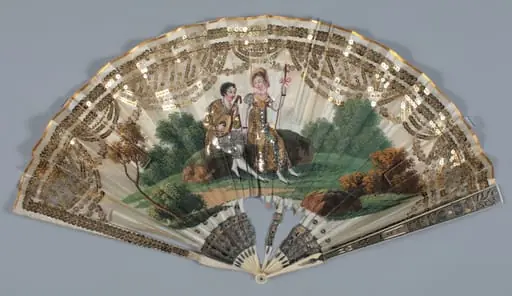
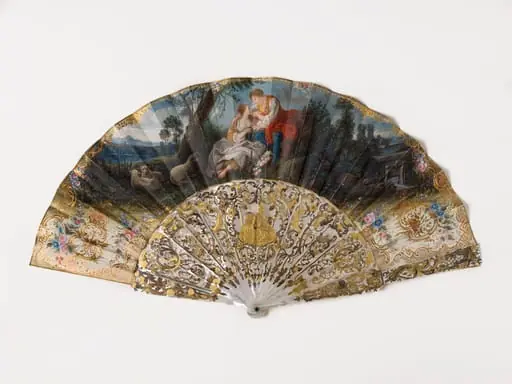
Eventail plié is an unspecified work on paper by the Rococo painting artist Unknown. It dates from 1790 and is held in the collection of the Palais Galliera - Musée de la Mode de la Ville de Paris. This folded hand fan features a painted interior scene, displayed when open.
About this work
Overview
Decorative swirls and miniature framed images border the edges, suggesting it was designed as both a functional object and a portable artistic expression.
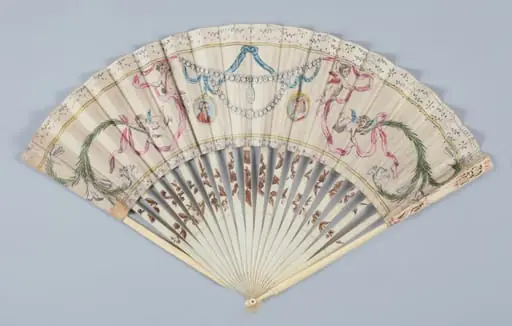
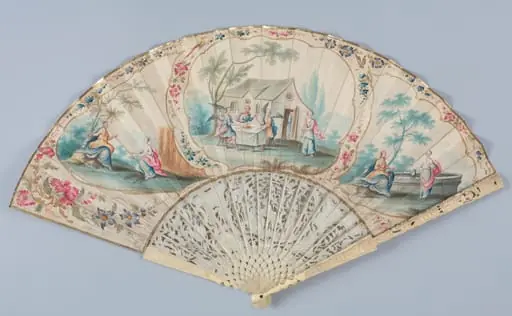
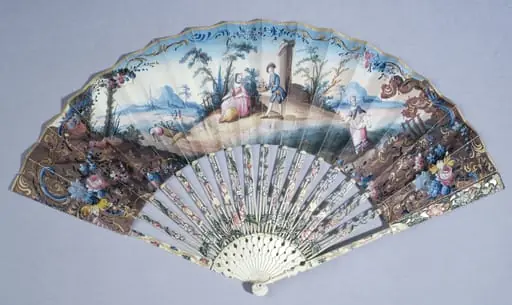
This folded hand fan features a painted interior scene, displayed when open. Crafted from carved wood with a simple terminal knob, its surface holds a delicate composition of four women in a columned interior. Soft hues of pink, green, and blue dominate, accented by gold and red details. Decorative swirls and miniature framed images border the edges, suggesting it was designed as both a functional object and a portable artistic expression.
Subject & Meaning
The scene depicts four women in a refined interior setting, one standing while holding a fan identical to this object, implying self-referential symbolism. The others are seated or kneeling, suggesting a moment of quiet contemplation or ritual. The setting, with classical columns, evokes an idealized space, possibly representing aristocratic leisure or literary themes common in East Asian courtly culture, where such fans conveyed social grace and aesthetic sensitivity.
Technique & Style
The painting employs fine brushwork and translucent layers to achieve subtle color gradations. Gold leaf and red dots highlight textures and details without overwhelming the composition. The border features repeating motifs in miniature frames, executed with precision. The wooden handle is minimally carved, emphasizing craftsmanship over ornamentation. This restrained style reflects a preference for elegance and balance, typical of refined decorative arts in certain East Asian traditions.
History & Provenance
Fans of this type were produced in East Asia during periods when portable art objects became markers of personal taste among the elite. Their construction combined paper or silk panels with carved wood, often commissioned for private use. While specific origins are unrecorded here, similar examples survive in museum collections from the 18th to 19th centuries, linked to courtly or scholarly circles where such items were exchanged as gifts or tokens of refinement.
Context
In East Asian societies, hand fans were more than cooling tools—they were cultural artifacts tied to poetry, theater, and gendered social rituals. Carried by women of status, they served as extensions of personal expression. The painted scenes often referenced classical literature or seasonal themes, aligning with broader aesthetic values that prized subtlety, harmony, and the integration of art into daily life.
Legacy
This fan exemplifies a tradition in which utility and artistry converged. Though no longer in common use, such objects remain studied for their craftsmanship and cultural symbolism. They inform contemporary understandings of how everyday items carried layered meanings, preserving visual narratives and social codes across generations through their intimate scale and meticulous detail.
Artist & collection

Museum
Palais Galliera - Musée de la Mode de la Ville de Paris
Continue through works from the same source collection.
 Domestic Scene
 Giacomo and Cardinal Marco, investing Andrea, Abbot of San Zeno, with his Benefice
 The Nymph of Fontainebleau
 Portrait of a Woman
 Madonna and Child with Saints in the Enclosed Garden
 Venus and Minerva
 Family Group of Four on Sofa
 Wall painting from Room H of the Villa of P. Fannius Synistor at Boscoreale