Artwork
Eventail brisé
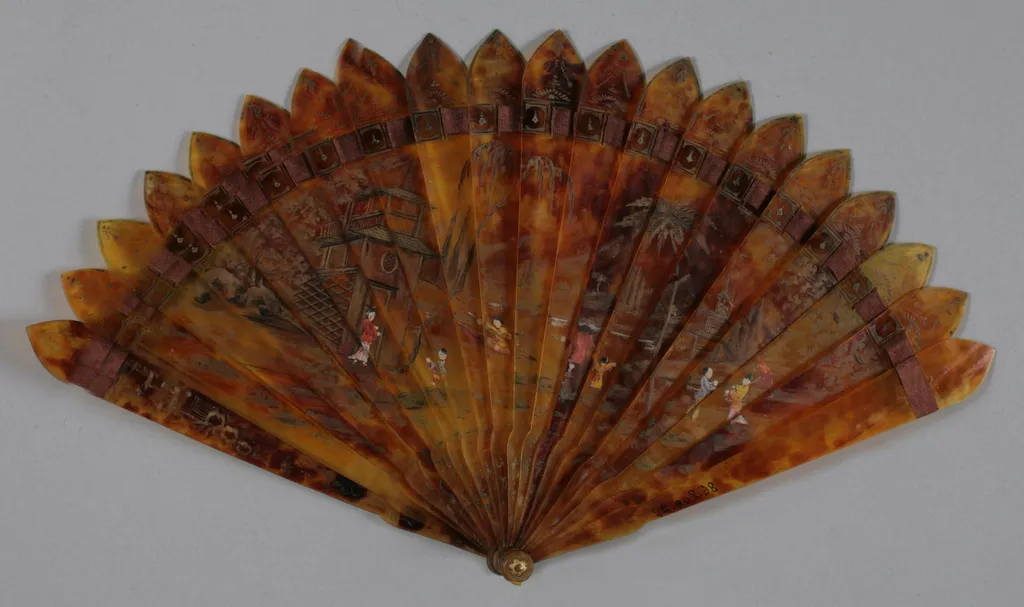
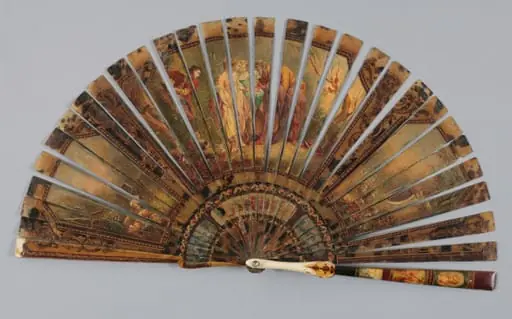
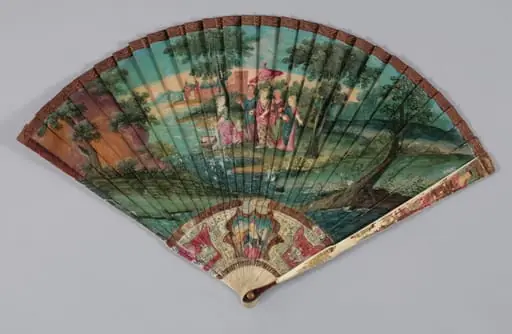
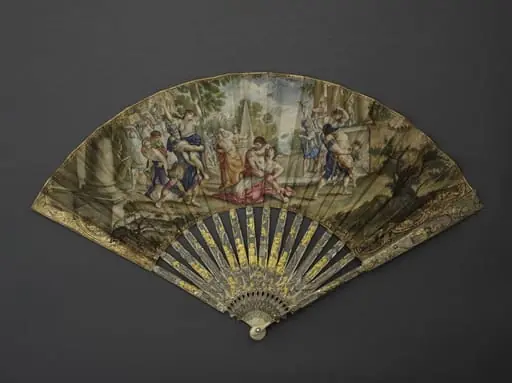
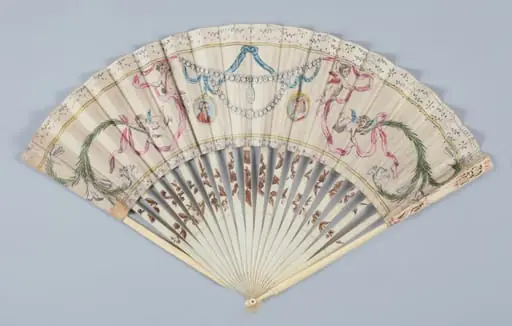
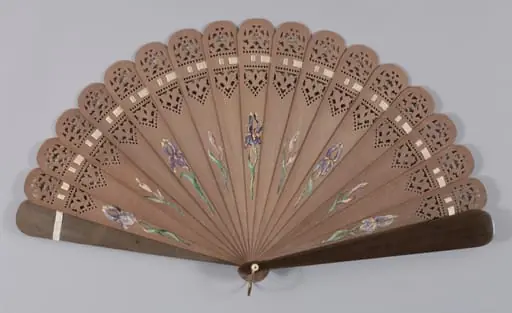
Eventail brisé is an unspecified work on paper by the Romanticist artist Unknown. It dates from 1820 and is held in the collection of the Palais Galliera - Musée de la Mode de la Ville de Paris. This folded fan, once a personal accessory, is now a fragile artifact of domestic artistry.
About this work
Overview
The paint has thinned with age, revealing the paper beneath in places, and the edges of the leaves show signs of repeated use and exposure.
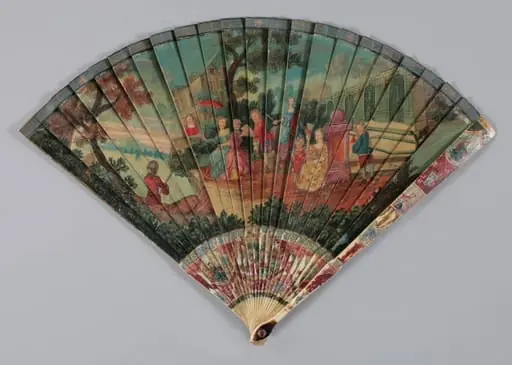
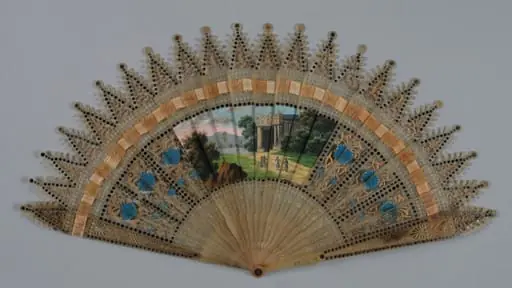
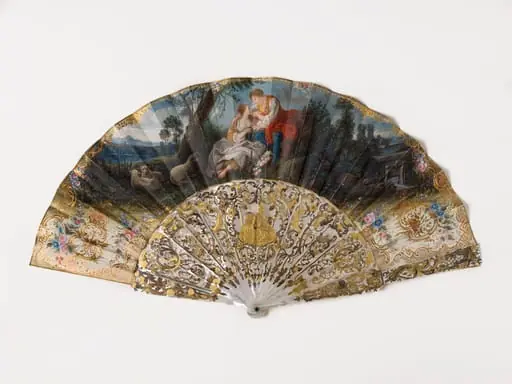
This folded fan, once a personal accessory, is now a fragile artifact of domestic artistry. Its open form reveals ten slender leaves, each bearing faintly painted scenes in muted reds, browns, and yellows. The metal handle, now worn, once held the structure together. The paint has thinned with age, revealing the paper beneath in places, and the edges of the leaves show signs of repeated use and exposure.
Subject & Meaning
Each leaf depicts modest, everyday scenes: figures in plain garments move near small dwellings with thatched roofs, surrounded by sparse trees. These vignettes suggest rural life or seasonal rituals, rendered without grandeur or narrative climax. The absence of overt symbolism points to a private, intimate purpose—perhaps a keepsake or a gift, meant to evoke quiet familiarity rather than public display.
Technique & Style
The images are executed in thin, translucent watercolor, applied with delicate brushwork that allows the paper’s texture to show through. This technique creates a soft luminosity, enhancing the sense of age and fragility. Details like rooftops and figures are simplified, suggesting observation over precision. The wear on the paint indicates the medium was not meant for permanence, but for fleeting, personal enjoyment.
History & Provenance
The fan’s condition suggests prolonged handling and exposure to light and humidity, typical of objects used in domestic settings over decades. No documented ownership or origin is recorded, but its materials and style align with 18th- or early 19th-century vernacular art from regions where paper fans were common. Its survival is likely due to accidental preservation rather than intentional collection.
Context
In its time, such fans were everyday items, often made by local artisans for personal or familial use. They reflected regional aesthetics and seasonal rhythms, distinct from the elaborate courtly fans of elite circles. Their portability and intimacy made them vessels for quiet storytelling, blending utility with subtle artistic expression in ordinary life.
Legacy
Today, the fan survives as a quiet testament to uncelebrated craftsmanship. Its faded imagery invites reflection on the lives of those who once held it, their routines, and the impermanence of domestic art. It stands as a counterpoint to grander artistic traditions, reminding viewers that meaning often resides in the small, the worn, and the overlooked.
Artist & collection
Museum
Palais Galliera - Musée de la Mode de la Ville de Paris
Continue through works from the same source collection.
 Domestic Scene
 Giacomo and Cardinal Marco, investing Andrea, Abbot of San Zeno, with his Benefice
 The Nymph of Fontainebleau
 Portrait of a Woman
 Madonna and Child with Saints in the Enclosed Garden
 Venus and Minerva
 Family Group of Four on Sofa
 Wall painting from Room H of the Villa of P. Fannius Synistor at Boscoreale