Artwork
Eventail plié
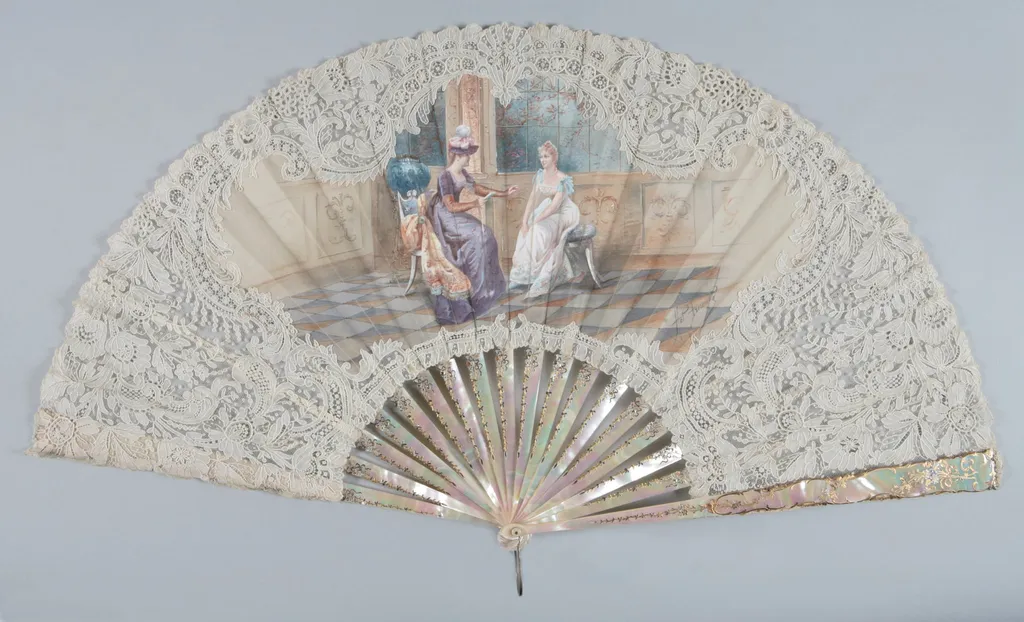
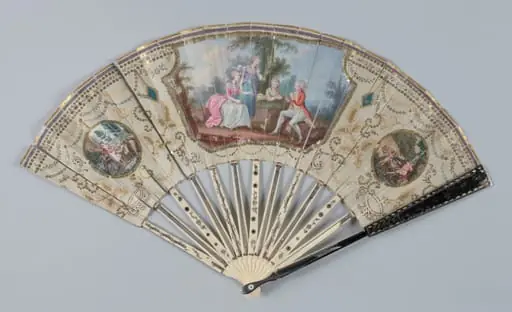
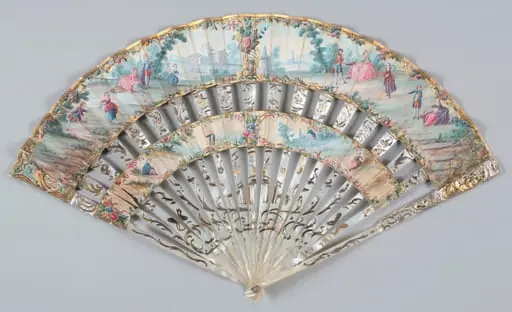
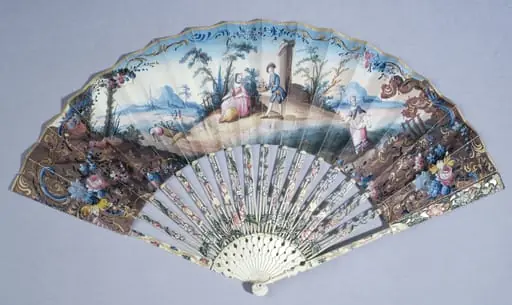
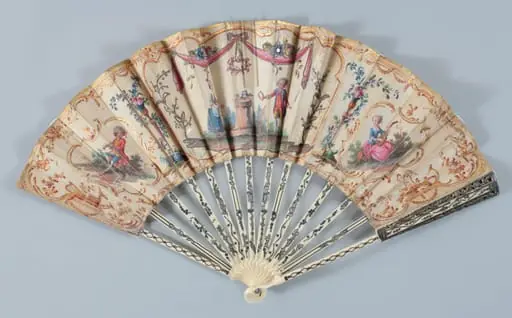
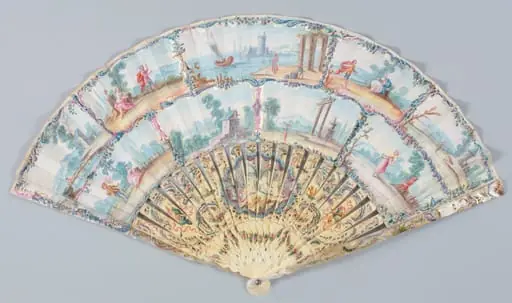
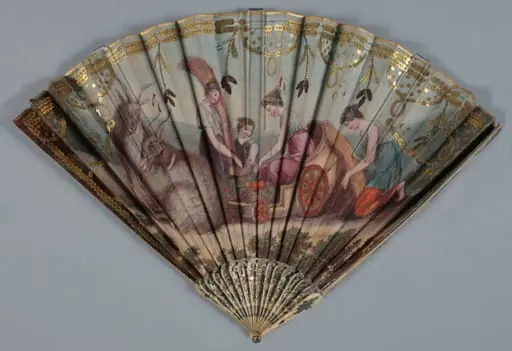
Eventail plié is an unspecified work on paper by the Impressionist artist Unknown. It dates from 1892 and is held in the collection of the Palais Galliera - Musée de la Mode de la Ville de Paris. This folded fan, crafted as a decorative object, features a delicate lace-like frame with miniature painted scenes on its surface.
About this work
Overview
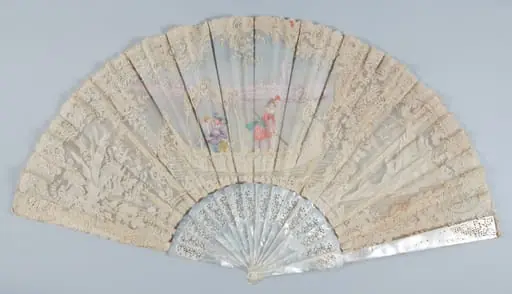
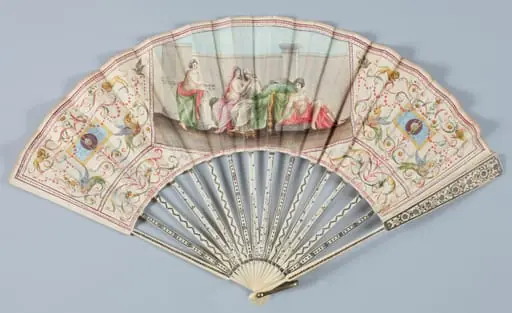
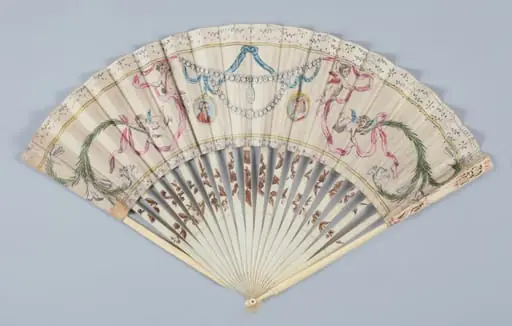
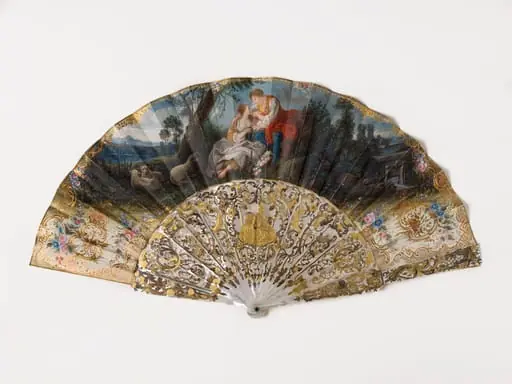
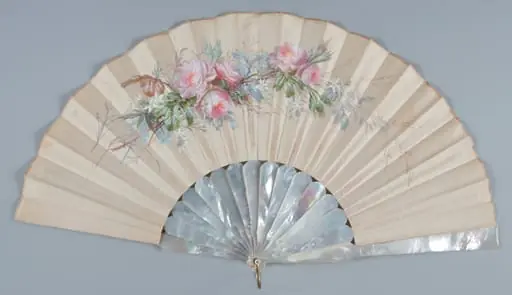
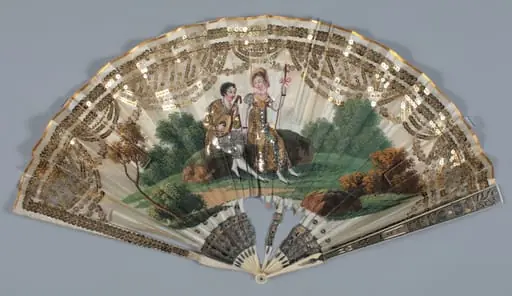
This folded fan, crafted as a decorative object, features a delicate lace-like frame with miniature painted scenes on its surface. Designed for personal use, it combines functional form with artistic detail, reflecting the 18th-century European tradition of embedding small pictorial narratives into portable accessories. The fan’s structure suggests it was made for display as much as for cooling.
Subject & Meaning
The painted scene depicts two women in an interior setting—one seated, the other standing—dressed in light fabrics, surrounded by ornate architecture. The composition evokes quiet domestic intimacy, possibly illustrating aristocratic leisure. Such imagery reinforced social ideals of refinement and feminine grace, turning the fan into a subtle vessel for cultural norms rather than mere utility.
Technique & Style
The fan’s surface employs fine brushwork to render soft, muted tones and simplified forms, mimicking the aesthetic of miniature portraiture. The lace-like border suggests handcrafted needlework, possibly integrated with the painted panel. Materials likely include paper or silk stretched over bone or wood ribs, with paint applied in thin layers to preserve delicate detail under close inspection.
History & Provenance
Fans of this type were popular in France and England during the 1700s, often commissioned by the upper classes as personal adornments. While the specific origin of this piece is undocumented, its design aligns with workshop-produced items from Parisian ateliers that specialized in combining lace, painting, and fine materials for elite consumers.
Context
In 18th-century Europe, fans were more than practical tools—they were social instruments, signaling status, mood, or even coded messages. Decorated with scenes of daily life, mythology, or landscapes, they reflected the owner’s taste and cultural literacy. The inclusion of needle lace motifs here connects to broader trends in textile arts prized for their labor-intensive precision.
Legacy
This fan exemplifies a tradition where artistry was embedded in everyday objects, blurring lines between craft and fine art.
This fan exemplifies a tradition where artistry was embedded in everyday objects, blurring lines between craft and fine art. Though largely forgotten as functional items, such fans now serve as historical artifacts, offering insight into domestic aesthetics and the role of women in material culture. Their preservation highlights the value placed on intimate, handcrafted beauty in pre-industrial society.
Artist & collection

Museum
Palais Galliera - Musée de la Mode de la Ville de Paris
Continue through works from the same source collection.
 Domestic Scene
 Giacomo and Cardinal Marco, investing Andrea, Abbot of San Zeno, with his Benefice
 The Nymph of Fontainebleau
 Portrait of a Woman
 Madonna and Child with Saints in the Enclosed Garden
 Venus and Minerva
 Family Group of Four on Sofa
 Wall painting from Room H of the Villa of P. Fannius Synistor at Boscoreale