Artwork
blid
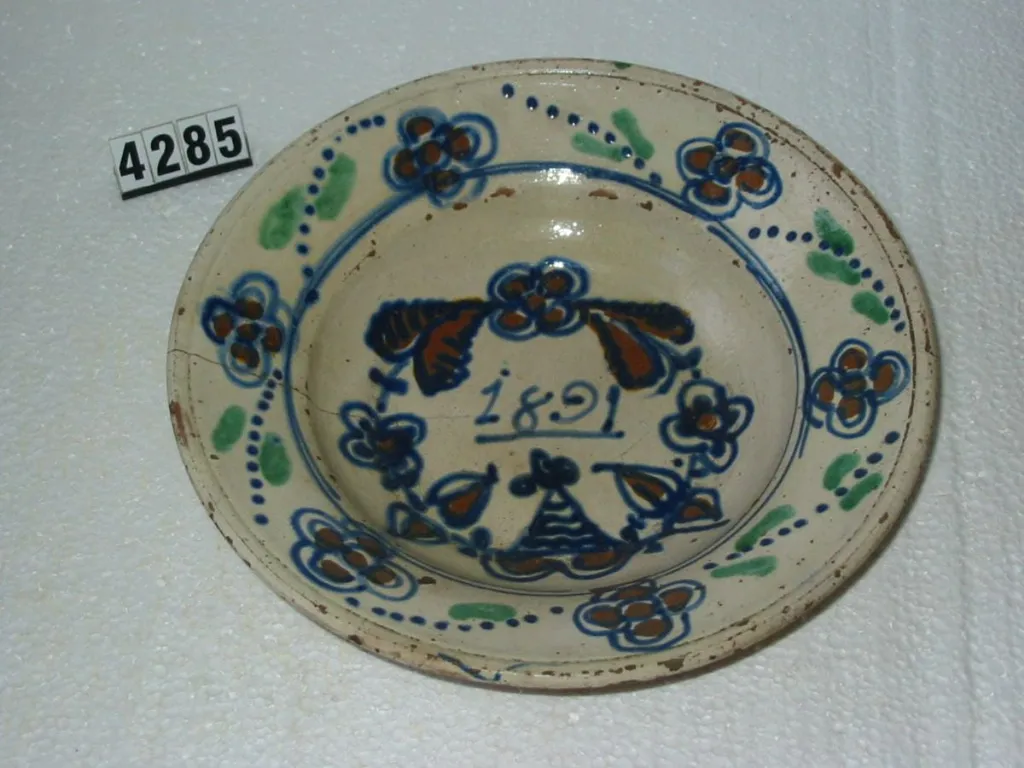
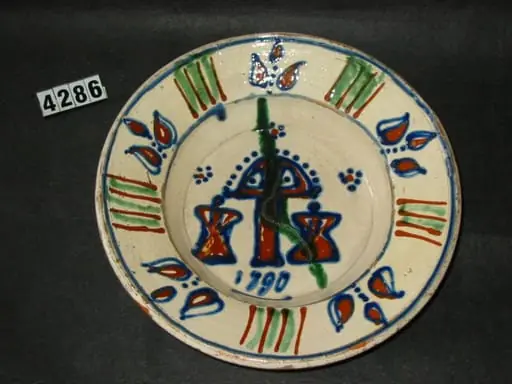
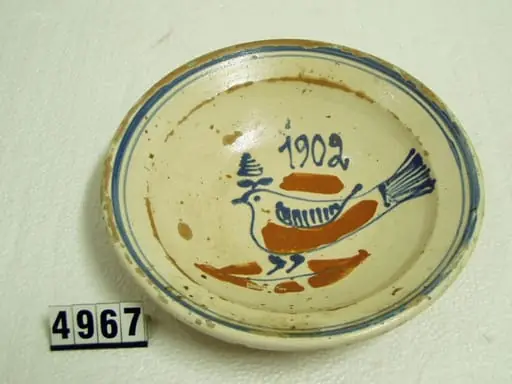
blid is a print by the Impressionist artist Unknown. It dates from 1891 and is held in the collection of the ASTRA National Museum Complex. A circular ceramic dish, dated 1891, features a modest painted scene centered on its interior.
About this work
Inside, there’s a painted scene of a small house with a chimney smoking, a tree, and a few flowers.
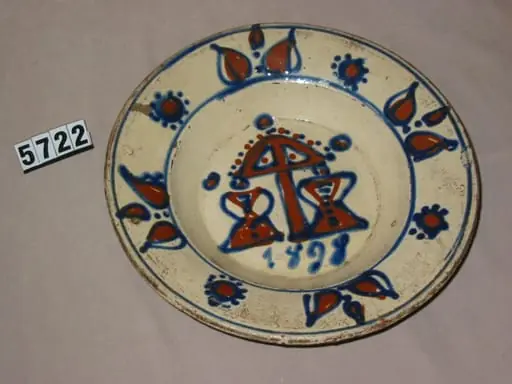
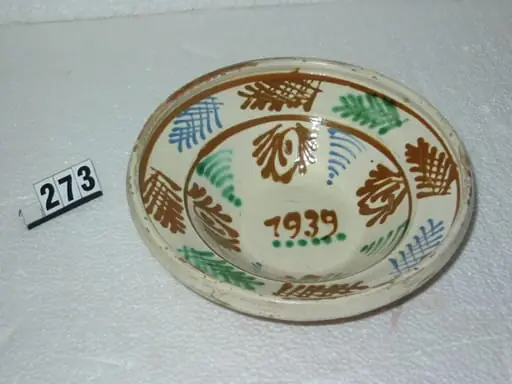
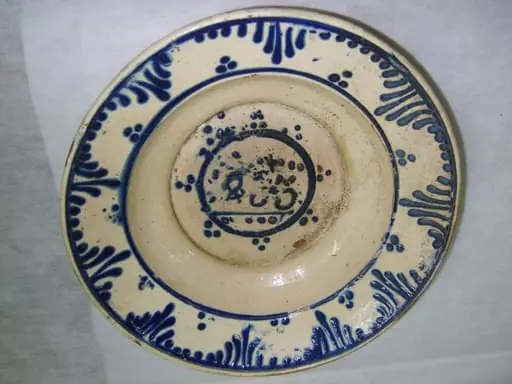
This is a round dish with a simple blue rim. Inside, there’s a painted scene of a small house with a chimney smoking, a tree, and a few flowers. The colors are mostly blue, green, and brown, with some faded spots where the paint is worn.
The year 1891 is written in the center, right above the house. The style looks simple but careful, like something hand-painted.
If you like this kind of detailed, everyday imagery, look up Realism.
Overview
A circular ceramic dish, dated 1891, features a modest painted scene centered on its interior. The rim is uniformly glazed in blue, framing a quiet domestic image: a small house with a rising chimney, a single tree, and scattered flowers. The palette is restrained—blues, greens, and browns—with areas of paint worn thin, suggesting regular use. The year is inscribed plainly above the house, anchoring the piece in time.
Subject & Meaning
The imagery depicts an unadorned rural homestead, emphasizing ordinary life rather than grandeur. The smoking chimney implies habitation and warmth, while the tree and flowers suggest a cultivated, if modest, environment. No figures are present, directing attention to the quiet persistence of daily existence. The scene reflects an interest in the dignity of commonplace settings, common in late 19th-century visual culture.
Technique & Style
The painting is executed with deliberate, unhurried brushwork, avoiding ornamental flourish. Colors are applied thinly, allowing the ceramic ground to subtly show through, especially where wear has occurred. Lines are clear but not rigid, suggesting hand-painted execution rather than mechanical reproduction. The composition is balanced yet unpretentious, prioritizing clarity over decorative complexity.
History & Provenance
Though no documented ownership history is provided, the dish’s wear patterns and dated inscription imply domestic use in the late 19th century. Its simple form and subject matter suggest it was not a high-status object, possibly made for local or household use. The inclusion of the year indicates intentional commemoration, perhaps marking a personal or seasonal event.
Context
Produced in 1891, the dish aligns with broader Realist tendencies in art and craft, where everyday scenes replaced mythological or aristocratic themes. Similar motifs appear in folk ceramics and illustrated periodicals of the era, reflecting a cultural shift toward valuing the ordinary. Its modest scale and function place it within the realm of utilitarian art, not fine art display.
Legacy
The dish endures as a quiet testament to the aesthetic value assigned to domestic life in the late 1800s. It does not seek to impress but to record—a small artifact of personal or regional identity. Its survival, despite wear, speaks to its emotional resonance for its original users, preserving a moment of unremarkable beauty.
Artist & collection

 Domestic Scene
 Giacomo and Cardinal Marco, investing Andrea, Abbot of San Zeno, with his Benefice
 The Nymph of Fontainebleau
 Portrait of a Woman
 Madonna and Child with Saints in the Enclosed Garden
 Venus and Minerva
 Family Group of Four on Sofa
 Wall painting from Room H of the Villa of P. Fannius Synistor at Boscoreale