Artwork
farfurie
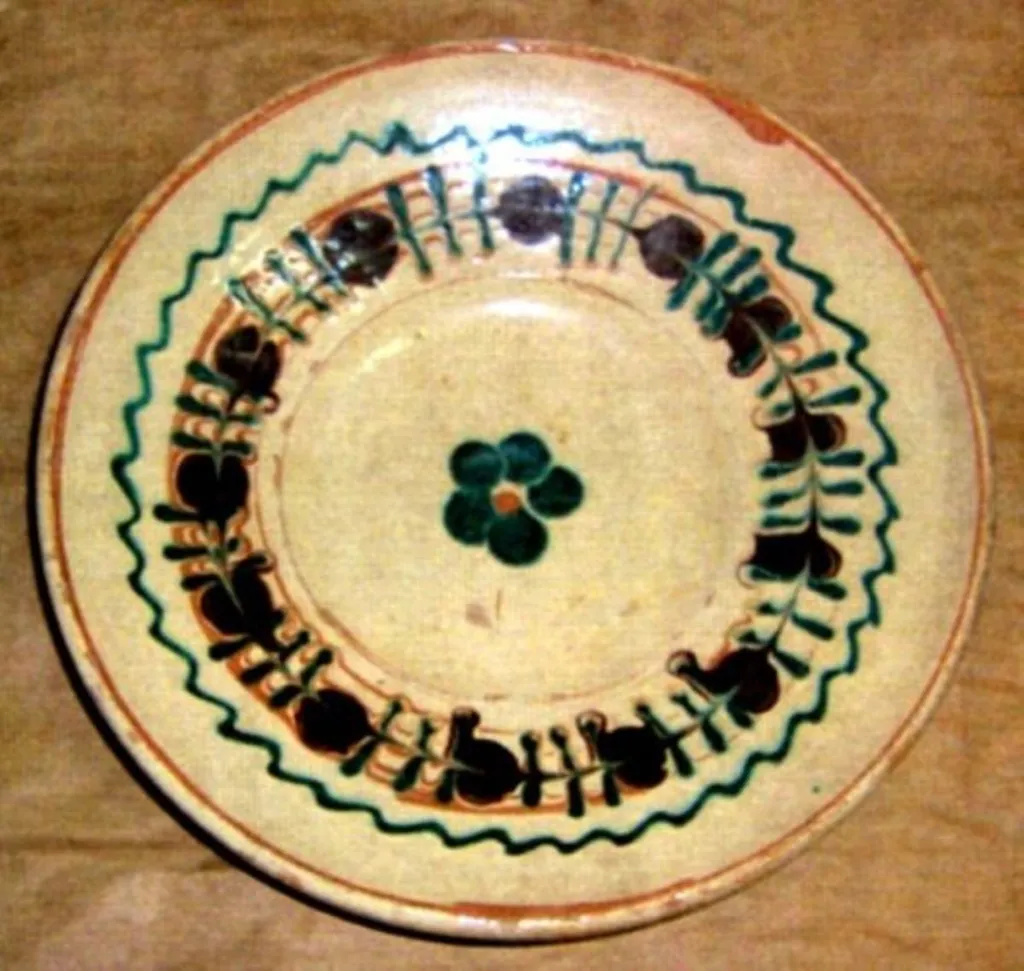
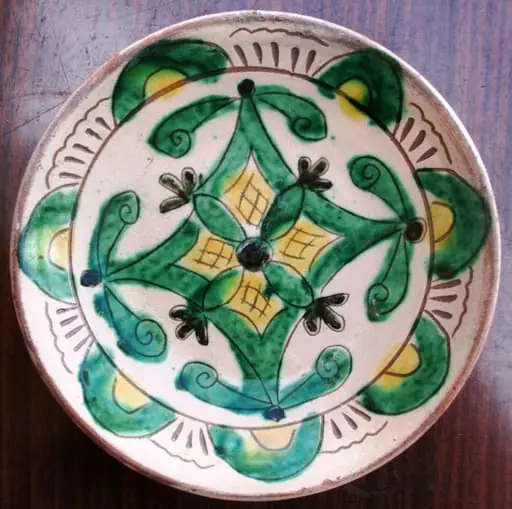
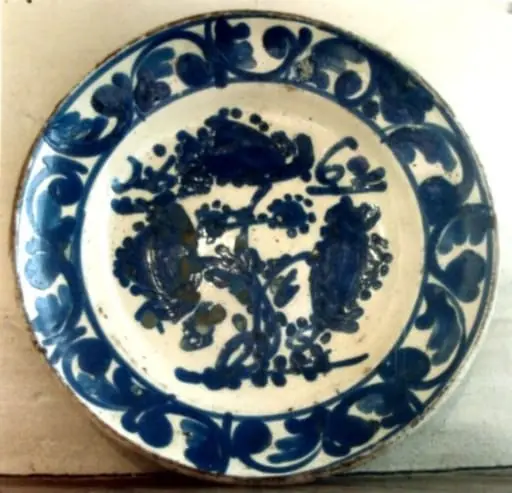
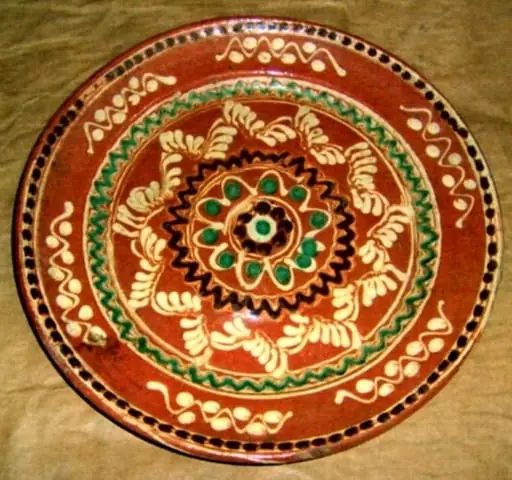
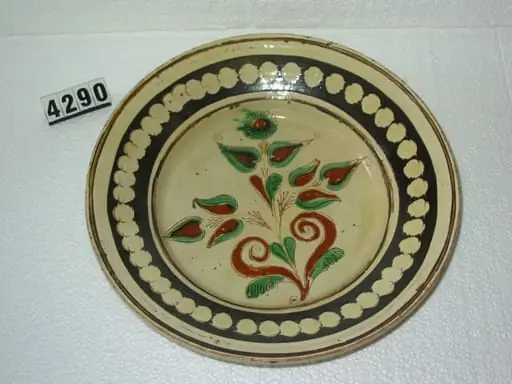
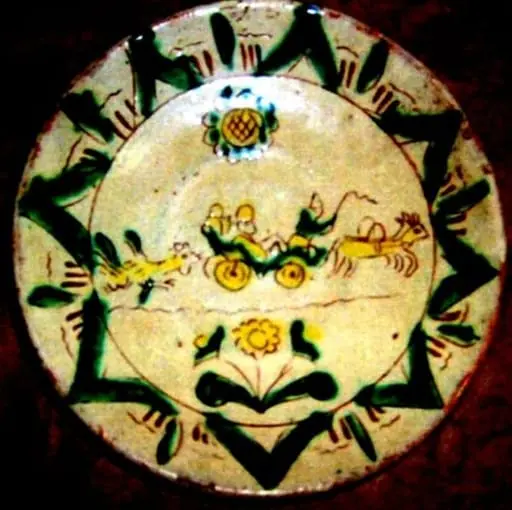
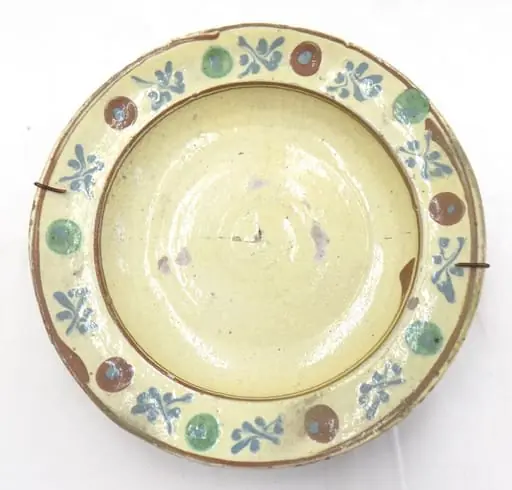
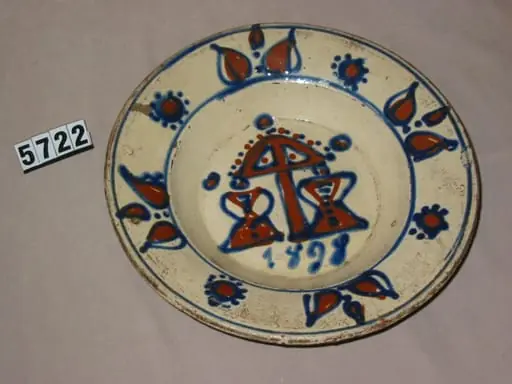
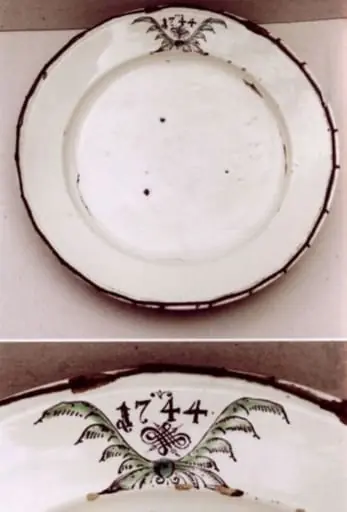
farfurie is a print by Unknown. It dates from 1978 and is held in the collection of the National Museum of Bukovina. This circular ceramic plate features a minimalist design on a pale ground, bounded by a narrow edge.
About this work
Overview
The palette is restrained—greens, browns, and muted blues—creating quiet contrast against the unadorned surface.
This circular ceramic plate features a minimalist design on a pale ground, bounded by a narrow edge. Decorative elements are sparse but deliberate: small trees with dark foliage and brown trunks, a horizontal band of red-roofed dwellings, and a central cluster of four green leaves arranged like a simple floral motif. The palette is restrained—greens, browns, and muted blues—creating quiet contrast against the unadorned surface.
Subject & Meaning
The imagery suggests a rural landscape reduced to essential forms: trees, houses, and foliage. The arrangement implies a village nestled among trees, though no narrative or human activity is depicted. The central leaf cluster may symbolize growth or natural order, but the design favors pattern over symbolism, emphasizing harmony between structure and nature without overt storytelling.
Technique & Style
The decoration is executed with clean, flat application of color, avoiding shading or texture. Forms are outlined and filled with uniform tones, creating a graphic, almost stencil-like quality. The composition is symmetrical and balanced, with horizontal bands anchoring the design. This approach reflects a decorative tradition focused on clarity and repetition rather than illusionistic depth.
History & Provenance
The plate belongs to a tradition of folk or utilitarian ceramics where ornamentation served both aesthetic and cultural functions. Its style aligns with regional pottery practices in Eastern Europe, particularly those from the 19th to early 20th centuries, where household wares were adorned with stylized natural motifs passed through generations of artisans.
Context
This piece reflects a broader European folk art tendency to abstract nature into repeatable, symbolic forms for domestic objects. Unlike fine art traditions that emphasized perspective or realism, such ceramics prioritized rhythm and recognition. Similar motifs appear in embroidery, woodcarving, and painted furniture from the same regions, indicating shared visual language across media.
Legacy
The plate exemplifies how everyday objects carried cultural aesthetics through simple, enduring forms. Its design continues to resonate in contemporary craft circles that value handwork and restrained ornament. While not widely documented in major collections, it remains a quiet representative of vernacular artistic expression in rural ceramic traditions.
Artist & collection
 Domestic Scene
 Giacomo and Cardinal Marco, investing Andrea, Abbot of San Zeno, with his Benefice
 The Nymph of Fontainebleau
 Portrait of a Woman
 Madonna and Child with Saints in the Enclosed Garden
 Venus and Minerva
 Family Group of Four on Sofa
 Wall painting from Room H of the Villa of P. Fannius Synistor at Boscoreale