Artwork
Farfurie adâncă, angobată pe suprafața interioară cu un strat de humă albă, peste care este pictat cu cornul și cu pensula decorul format din motive florale stilizate și geometrice: fundul farfuriei conține un buchet format din trei flori cu petale alungite, două de culoare verde, cea de-a treia de culoare siena arsă, și din elemente vegetale de culoare maro. Buza farfuriei este ornamentată cu linii ondulate de culoare siena arsă și verde. Suprafața ornamentată a farfuriei este acoperită cu un strat de smalț transparent. Cromatica: alb, verde, siena arsă, maro.
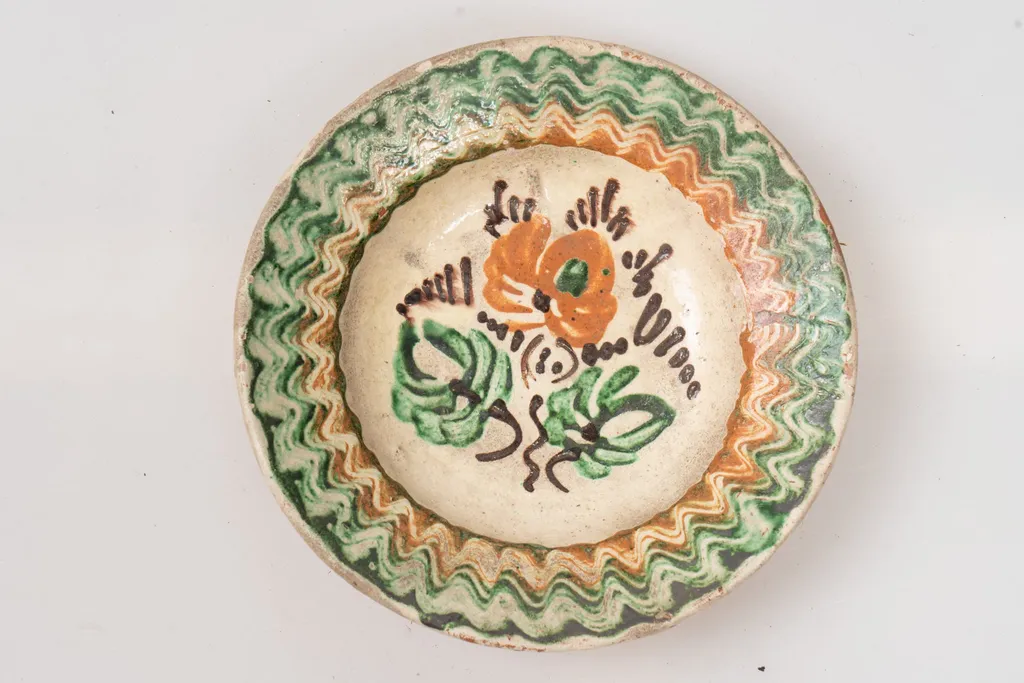
Farfurie adâncă, angobată pe suprafața interioară cu un strat de humă albă, peste care este pictat cu cornul și cu pensula decorul format din motive florale stilizate și geometrice: fundul farfuriei conține un buchet format din trei flori cu petale alungite, două de culoare verde, cea de-a treia de culoare siena arsă, și din elemente vegetale de culoare maro. Buza farfuriei este ornamentată cu linii ondulate de culoare siena arsă și verde. Suprafața ornamentată a farfuriei este acoperită cu un strat de smalț transparent. Cromatica: alb, verde, siena arsă, maro. is a print by Unknown. It dates from 1850 and is held in the collection of the Ethnographical Museum of Transylvania.
About this work
Overview
A ceramic plate with a wavy rim, crafted using traditional methods, features a white engobe interior that serves as a ground for painted decoration.
A ceramic plate with a wavy rim, crafted using traditional methods, features a white engobe interior that serves as a ground for painted decoration. The surface is sealed with a transparent glaze, preserving the muted earth-toned palette of green, burnt sienna, and brown. Its design emphasizes stylized botanical forms arranged in a central bouquet, framed by rhythmic linear patterns along the edge.
Subject & Meaning
The central motif consists of three stylized flowers—two with elongated green petals and one in burnt sienna—surrounded by slender brown vegetal elements. These forms suggest a simplified naturalism, likely rooted in regional folk symbolism. The arrangement conveys order and harmony without literal representation, reflecting a cultural preference for abstracted plant life as a sign of fertility or seasonal continuity.
Technique & Style
The decoration was applied with a brush and possibly a horn tool over a white engobe layer, then covered in clear glaze. The lines are hand-drawn, with slight irregularities indicating manual execution. The color scheme relies on natural pigments, and the wavy border repeats a single motif in alternating green and sienna, creating a visual rhythm that complements the central composition without overwhelming it.
History & Provenance
This piece belongs to a tradition of domestic ceramic ware from Eastern Europe, likely produced in rural workshops during the late 19th or early 20th century. Similar plates are held in the Museum of Ethnography, suggesting it was part of a regional style used in household settings. Its preservation implies it was valued for daily use or ceremonial display, rather than as a decorative object alone.
Context
The plate’s aesthetic aligns with folk ceramic traditions across the Carpathian region, where utilitarian objects often carried symbolic ornamentation. The use of limited, locally sourced pigments and repetitive linear patterns reflects both material constraints and a shared visual language among communities. Such items were typically made for home use, not export, reinforcing their role in everyday cultural practice.
Legacy
Though not signed or dated, the plate exemplifies a widespread craft tradition that persisted into the modern era. Its preservation in institutional collections highlights its value as a record of vernacular artistry. Contemporary ceramicists continue to reference such forms, acknowledging their quiet elegance and technical restraint as enduring influences on regional design.
Artist & collection
Museum
Ethnographical Museum of Transylvania
Continue through works from the same source collection.
 Domestic Scene
 Giacomo and Cardinal Marco, investing Andrea, Abbot of San Zeno, with his Benefice
 The Nymph of Fontainebleau
 Portrait of a Woman
 Madonna and Child with Saints in the Enclosed Garden
 Venus and Minerva
 Family Group of Four on Sofa
 Wall painting from Room H of the Villa of P. Fannius Synistor at Boscoreale
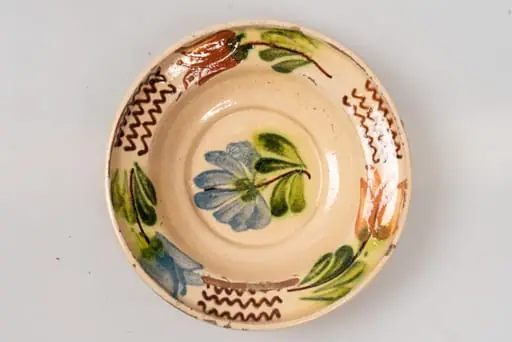 Farfurie adâncă, cu buza evazată și muchia buzei ridicată. Piesa este acoperită pe suprafața interioară cu un strat de angobă albă peste care este pictat cu pensula și cu cornul decorul format din motive florale și geometrice: fundul farfuriei conține o floare cu petale alungite de culoare albastră și frunze verzi. Alte trei flori (una cu petale de culoare albastră, a doua de culoare maro-roșcat iar cea de-a treia de culoare siena arsă), cu tulpină maro și frunze verzi, decorează buza farfuriei. Între cele trei flori, sunt pictate trei motive aproximativ identice, formate din trei linii vălurite paralele, de culoare maro. Suprafața ornamentată a farfuriei este acoperită cu un strat de smalț transparent. Cromatica: alb, verde, siena arsă, maro, maro-roșcat, albastru.
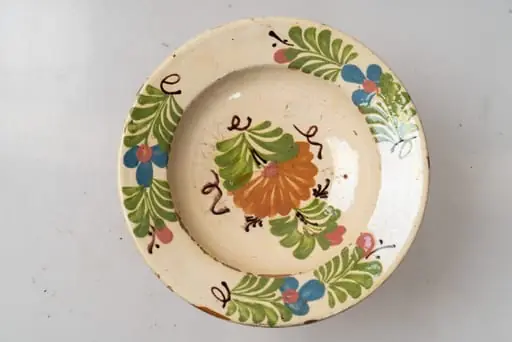 Farfurie adâncă, cu buza lată, răsfrântă; piesa este modelată din lut la roata olarului și este angobată cu humă albă pe fața interioară. Decorul este realizat prin pictare cu pensula și cu cornul și constă în motive florale și fitomorfe (o floare cu frunze și un boboc, pe centrul farfuriei și trei grupuri de flori cu frunze, pe buza farfuriei). Cromatica: alb, albastru, verde, siena naturală, roz-bej, maro. Fața ornamentată a farfuriei este acoperită cu un strat de smalț transparent.
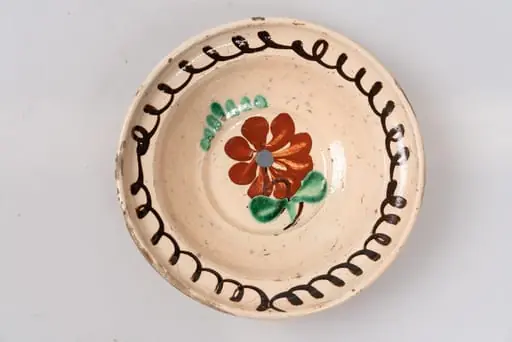 Farfurie adâncă, cu fund îngust, buza evazată cu muchia verticală; este angobată pe fața interioară cu un strat de humă albă și decorată prin pictare cu pensula și cu cornul cu motive florale, fitomorfe și geometrice: central pe fundul farfuriei este reprezentată o floare cu petale de culoare maro, cu mijlocul marcat printr-un punct gri și două frunze verzi. În partea superioară a florii, șapte linii verzi, scurte, completează decorul. Buza este ornamentată cu o linie buclată continuă, de culoare maro-închis. Cromatica: alb, verde, maro, maro-închis, gri. Suprafața ornamentată a farfuriei este acoperită cu un strat de smalț transparent.
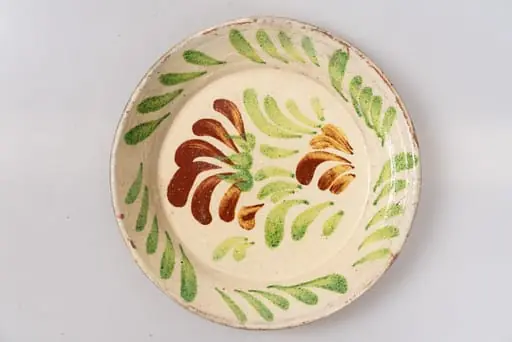 Farfurie semi-adâncă, cu fund întins, corp îngust și buză evazată; este angobată pe fața interioară cu un strat de humă albă și decorată prin pictare cu pensula cu motive florale și fitomorfe stilizate: central pe fundul farfuriei este reprezentată o floare cu petale alungite de culoare maro și frunze verzi și maro. Buza este ornamentată cu un șir de frunze verzi foarte stilizate. Cromatica: alb, verde, maro. Suprafața ornamentată a farfuriei este acoperită cu un strat de smalț transparent.
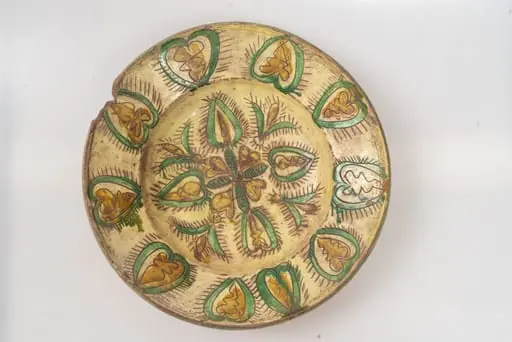 Farfurie semi-adâncă, cu buza lată evazată; este angobată pe fața interioară cu un strat de humă albă peste care este realizat prin sgrafitare și prin pictare cu pensula decorul format din motive florale și vegetale stilizate: registrul decorativ central de pe fundul farfuriei conține o floare centrală ce are pe exterior patru boboci dispuși în formă de cruce, intercalați de patru flori cu câte trei petale. Buza farfuriei este decorată cu zece motive vegetale în formă de inimă. Suprafața ornamentată a farfuriei este acoperită cu un strat de smalț transparent. Cromatica: alb, verde, galben.
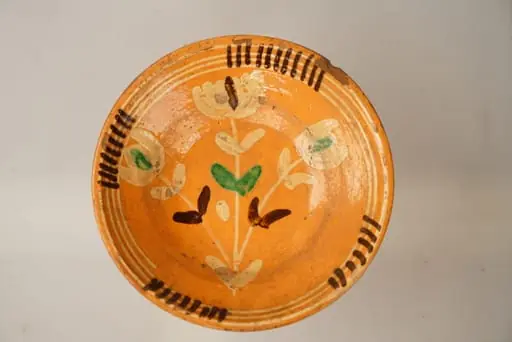 Farfurie adâncă, acoperită pe suprafața interioară cu un strat de angobă de culoare galben-ocru, peste care este pictat cu cornul și cu pensula decorul format din motive florale stilizate și geometrice: centrul farfuriei conține trei tulpini înalte cu flori de lalea de culoare albă, cu mijlocul verde și maro și frunze de culoare maro, alb și verde. Buza farfuriei este decorată cu o linie circulară spiralată de culoare albă, perpendicular pe care sunt pictate patru grupuri de linii drepte de culoare maro, așezate diametral opus în formă de cruce. Suprafața ornamentată a farfuriei este acoperită cu un strat de smalț transparent. Cromatica: alb, galben ocru, maro, verde.
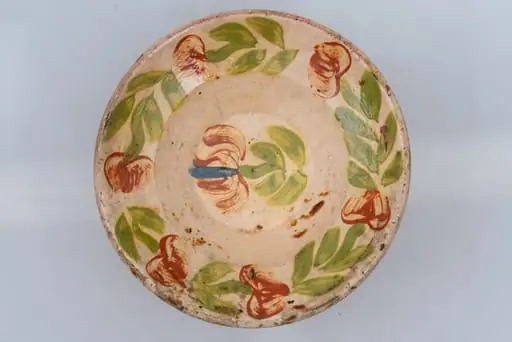 Farfurie adâncă, acoperită pe suprafața interioară cu un strat de angobă albă. Decorul este realizat prin pictare cu pensula și se compune din motive florale și fitomorfe: central pe fundul farfuriei este pictată o floare cu patru petale alungite de culoare maro deschis si o petală albastră și frunze verzi. Decorul de pe buza farfuriei se compune dintr-un șir de flori de culoare maro cu frunze verzi. Suprafața ornamentată a farfuriei este acoperită cu un strat de smalț transparent. Cromatica: alb, verde, albastru, maro-deschis.
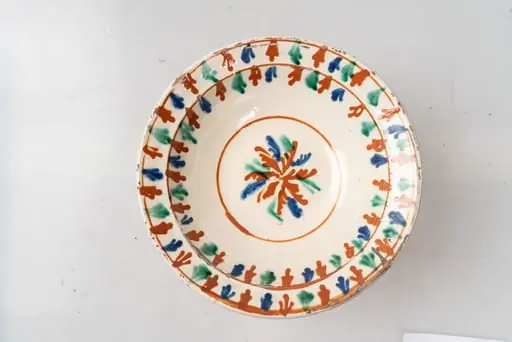 Farfurie adâncă, cu buză mai îngustă și răsfrântă; piesa este modelată la roata olarului și angobată cu humă albă pe fața interioară. Decorul este realizat prin pictare cu cornul și se compune din motive vegetale stilizate: în registrul central de pe fundul farfuriei este pictată o floare cu petale alungite de culoare albastru și siena-arsă și cu frunze verzi, înscrisă într-un cerc de culoare siena-arsă. Registrul marginal, de pe buza și bordura interioară a farfuriei, conține motive vegetale foarte stilizate (grupuri de frunze) înșiruite în două rânduri paralele de-a lungul a două linii circulare concentrice. Cromatica: alb, verde, albastru, siena-arsă. Farfurie este acoperită pe fața ornamentată cu un strat de smalț transparent.
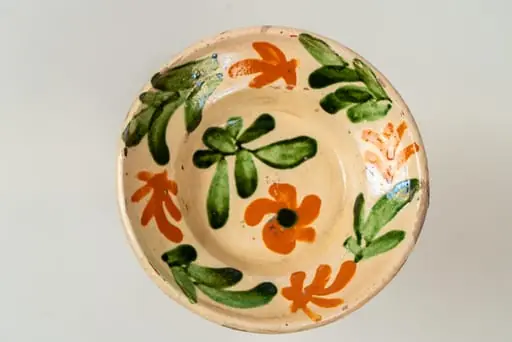 Farfurie mică, adâncă, cu buză răsfrântă. Piesa este modelată la roata olarului, angobată. Decorul este realizat prin pictare cu pensula și constă în motive decorative florale și vegetale (flori și frunze), dispuse central, pe fundul farfuriei și pe toată buza acesteia, sub formă de ghirlandă. Cromatica: alb, verde, siena naturală. Farfuria este smălțuită pe interior, cu smalț transparent.
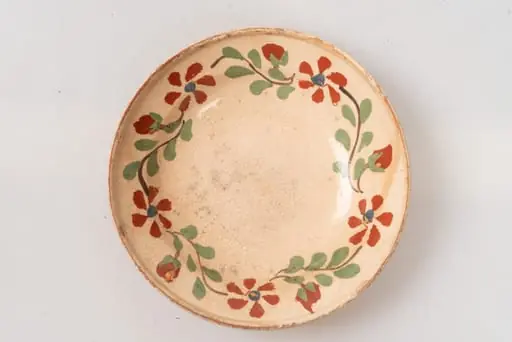 Farfurie semi-adâncă, acoperită pe suprafața interioară cu un strat de angobă albă, peste care este pictat cu pensula decorul format din motive vegetale dispuse pe buza farfuriei: o ghirlandă circulară formată din cinci flori cu petale de culoare roșu-cărămiziu și mijloc albastru, cu câte cinci boboci de aceași culoare și frunze verzi. Farfuria este acoperită pe întreaga sa suprafață cu un strat de smalț transparent. Cromatica: alb, verde, maro, roșu-cărămiziu, albastru.