Artwork
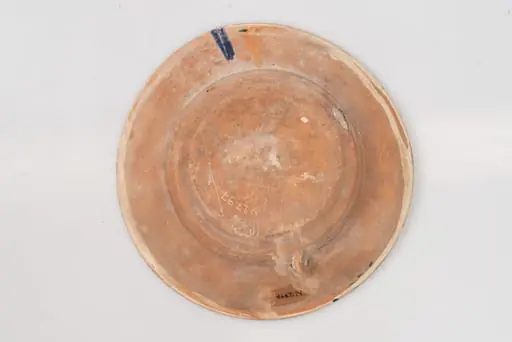
Farfurie adâncă, angobată pe fața interioară cu un strat de angobă albă și decorată prin pictare cu pensula și cu cornul cu motive florale, fitomorfe și geometrice: central pe fundul farfuriei este reprezentat, în manieră naturalistă, un buchet format din două flori cu câte trei petale de culoare maro-deschis și albastru, cu frunze verzi și elemente vegetale de culoare maro-închis. Buza este ornamentată cu un șir continuu format din romburi cu contur maro-închis, umplute cu linii hașurate verzi și separate de câte trei puncte de culoare albastră și maro. Acest registru decorativ este înscris între două linii circulare de culoare maro-închis. Cromatica: alb, verde, maro-deschis, maro-închis, albastru. Suprafața ornamentată a farfuriei este acoperită cu un strat de smalț transparent.
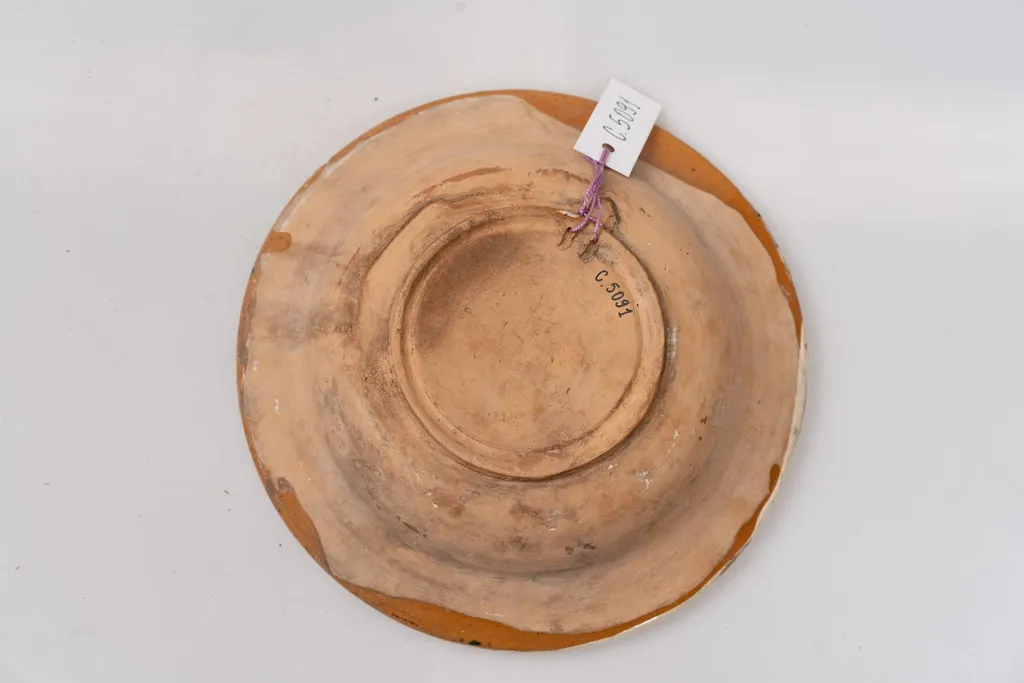
Farfurie adâncă, angobată pe fața interioară cu un strat de angobă albă și decorată prin pictare cu pensula și cu cornul cu motive florale, fitomorfe și geometrice: central pe fundul farfuriei este reprezentat, în manieră naturalistă, un buchet format din două flori cu câte trei petale de culoare maro-deschis și albastru, cu frunze verzi și elemente vegetale de culoare maro-închis. Buza este ornamentată cu un șir continuu format din romburi cu contur maro-închis, umplute cu linii hașurate verzi și separate de câte trei puncte de culoare albastră și maro. Acest registru decorativ este înscris între două linii circulare de culoare maro-închis. Cromatica: alb, verde, maro-deschis, maro-închis, albastru. Suprafața ornamentată a farfuriei este acoperită cu un strat de smalț transparent. is a print by Unknown. It dates from 1850 and is held in the collection of the Ethnographical Museum of Transylvania. The object is a circular clay plate with a broad rim, its interior surface coated in a transparent glaze.
About this work
Overview
The object is a circular clay plate with a broad rim, its interior surface coated in a transparent glaze. The lower portion of the plate is densely decorated with a white slip background over which a painted motif of floral, phytomorphic, and geometric elements is applied. The palette is limited to white, green, light brown, dark brown and blue, creating a restrained yet intricate visual effect.
Subject & Meaning
At the centre of the decorative field a naturalistic bouquet is rendered, comprising two three‑petaled flowers in muted brown‑orange and blue tones, accompanied by green leaves and darker brown vegetal accents. Encircling this focal group is a continuous band of dark‑brown rhombuses, each filled with hatched green lines and punctuated by clusters of three blue and brown dots, suggesting a rhythmic, ornamental narrative tied to traditional folk symbolism.
Technique & Style
After the painted decoration, the plate received a transparent enamel coating that both protects the surface and enhances the depth of the pigments.
The design was executed with brush and a fine horn applicator, allowing for precise line work and delicate shading. After the painted decoration, the plate received a transparent enamel coating that both protects the surface and enhances the depth of the pigments. The overall aesthetic reflects a vernacular decorative tradition, combining realistic botanical rendering with stylized geometric borders.
History & Provenance
The plate bears an attached tag with illegible lettering, indicating it may have been part of a larger collection or inventory. No artist’s name is recorded, and the piece is attributed to an anonymous maker within a regional ceramic tradition. Its provenance remains uncertain, though the style and materials suggest production in a European folk‑art context during the late 19th to early 20th century.
Artist & collection
Museum
Ethnographical Museum of Transylvania
Continue through works from the same source collection.
 Domestic Scene
 Giacomo and Cardinal Marco, investing Andrea, Abbot of San Zeno, with his Benefice
 The Nymph of Fontainebleau
 Portrait of a Woman
 Madonna and Child with Saints in the Enclosed Garden
 Venus and Minerva
 Family Group of Four on Sofa
 Wall painting from Room H of the Villa of P. Fannius Synistor at Boscoreale
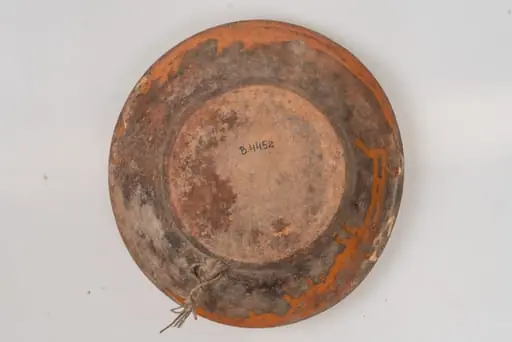 Farfurie adâncă de tip castron, cu corp tronconic și buza dreaptă, verticală. Piesa este acoperită pe suprafața interioară și pe exteriorul buzei cu un strat de angobă albă, peste care este pictat cu cornul decorul format din motive vegetale foarte stilizate: decorul de pe fundul farfuriei este păstrat doar parțial (urme de culoare maro), peretele farfuriei fiind decorat cu patru flori de culoare albastru-deschis, intercalate cu patru motive formate din linii hașurate intersectat de culoare verde, sugerând niște frunze. Două linii circulare de culoare maro, neglijent realizate, încadrează acest decor. Suprafața ornamentată a farfuriei este acoperită cu un strat de smalț transparent. Cromatica: alb, verde, maro, albastru-deschis.
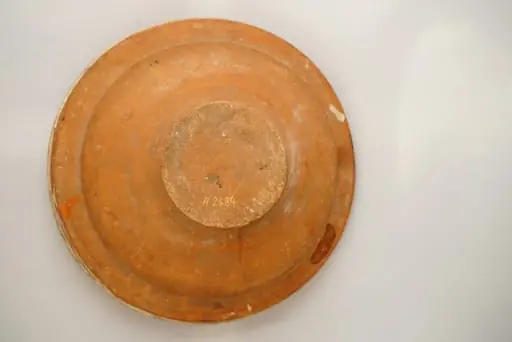 Farfurie mare, adâncă, de tip castron, cu corp tronconic, buza evazată și muchia buzei verticală; suprafața interioară a piesei este acoperită cu un strat de angobă albă, peste care este pictat cu cornul decorul monocromatic format din motive geometrice, florale și vegetale stilizate: centrul farfuriei este decorat cu un cerc format din mai multe linii subțiri maro, cerc ce conține în interior o tulpină cu o floare albastră rotundă și mai multe frunze realizate din linii subțiri; acestui decor floral i se adaugă patru grupuri de linii paralele crescătoare și descrescătoare ca mărime, dispuse sub formă de triunghi. Peretele farfuriei este decorat cu două tipuri de motive florale, cîte două din fiecare motiv și dispuse diametral opus: o tulpină cu două flori de lalea și frunze, și o tulpină cu două flori rotunde și centrul format din linii hașurate intersectat. Buza farfuriei este decorată cu un șir de motive vegetale formate din două linii sub formă de zigzag, dispuse circular, care se intersectează rezultând niște romburi, intersecția acestor linii fiind marcată cu două linii mici în formă de cruciuliță. Muchia buzei este decorată cu linii mici ondulate. Suprafața ornamentată a farfuriei este acoperită cu un strat de smalț transparent. Cromatica: alb, albastru.
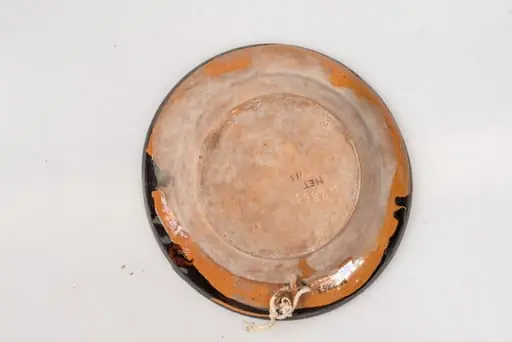 Farfurie adâncă, cu buza evazată și muchia buzei ușor ridicată; este acoperită pe suprafața interioară cu un strat de angobă maro, peste care este pictat cu pensula, cu angobă albă, decorul format din motive vegetale și florale, dispuse sub formă de ghirlandă continuă. Suprafața ornamentată a farfuriei este acoperită cu un strat de smalț transparent. Cromatica: maro, alb.
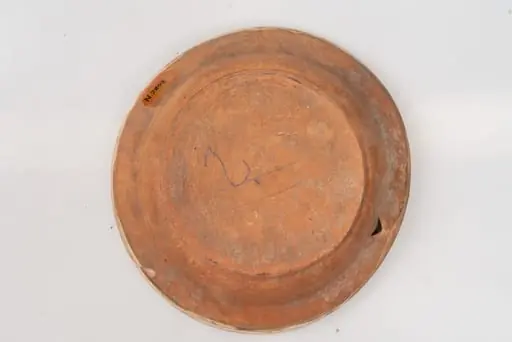 Farfurie adâncă de tip castron, acoperită pe suprafața interioară cu un strat de angobă albă, peste care este pictat cu pensula și cu cornul decorul format din motive avimorfe, vegetale și florale dispuse astfel: pe fundul vasului este pictată o pasăre albastră cu contur albastru, așezată pe o ramură cu frunze și flori, realizată în culorile albastru, verde, maro și roșu, iar peretele farfuriei este decorat cu două tipuri de motive vegetale și florale (dispuse diametral opus), în aceleași culori ca elementele vegetale de pe centrul farfuriei. Suprafața ornamentată a farfuriei este acoperită cu un strat de smalț transparent. Buza farfuriei este decorată cu linii circulare subțiri, de culoare albastră. Cromatica: alb, verde, albastru, maro, roșu.
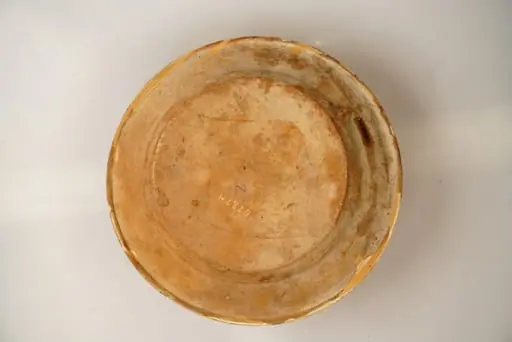 Farfurie semi-adâncă cu buza dreaptă evazată și cu muchia buzei răsfrântă spre exterior. Suprafața interioară a farfuriei este acoperită cu un strat de angobă albă peste care este realizat, prin sgrafitare în stratul de angobă și prin pictare cu pensula și cu cornul, decorul format din motive florale, vegetale și geometrice dispuse astfel: centrul farfuriei conține o tulpină cu două flori albastre rotunde, o floare cu petale alungite, de culoare verde, și frunze și elemente vegetale de culoare verde și maro. Conturul decorului din zona centrală este realizat cu o linie fină sgrafitată. Registrul decorativ marginal de pe buza farfuriei conține patru motive vegetale stilizate (boboci albaștri cu două frunze verzi), dispuse diametral opus în formă de cruce și intercalate cu patru grupuri de linii hașurate intersectat, de culoare maro. Decorul din zona buzei este încadrat între două linii circulare albastre. Suprafața ornamentată a farfuriei este acoperită cu un strat de smalț transparent. Cromatica: alb, verde, galben, maro.
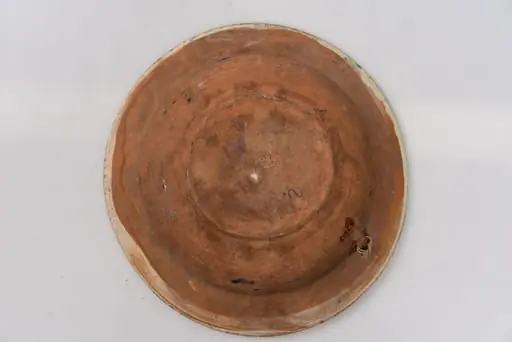 Farfurie adâncă, cu buza dreaptă, evazată; este angobată pe suprafața interioară cu un strat de humă albă, peste care este pictat cu pensula decorul monocromatic format din motive vegetale și florale stilizate: registrul decorativ central de pe fundul farfuriei conține o tulpină cu cinci flori de lalea, o floare centrală cu patru petale rotunde și frunze. Registrul decorativ marginal de pe buza farfuriei, încadrat între două linii circulare ondulate ușor, este format dintr-un șir continuu de motive formate dintr-o linie spiralată de formă ovală. Suprafața ornamentată a farfuriei este acoperită cu un strat de smalț transparent. Cromatica: alb, albastru.
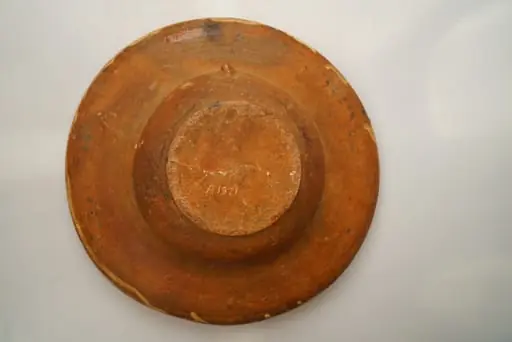 Farfurie mare adîncă, cu corp tronconic ușor rotunjit, buză lată evazată cu muchia buzei verticală; este acoperită pe suprafața interioară cu un strat de angobă albă peste care este pictat cu pensula decorul monocromatic format din motive geometrice și motive florale și vegetale stilizate, dispuse astfel: centrul farfuriei este decorat cu o floare (posibil crin) încadrată într-un cerc dublu, floare care se repetă și pe exteriorul cercului, alternată cu un motiv format din linii hașurate intersectat dispus sub formă de triunghi. Restul suprafeței corpului este decorat cu șiruri de frunze duble, orientate opus. Exteriorul buzei este decorat cu două linii circulare incizate. Suprafața ornamentată a farfuriei este acoperită cu un strat de smalț transparent. Cromatica: alb, albastru.
 Farfurie semi-adâncă, cu buza lată, evazată; este angobată pe suprafața interioară cu un strat de humă albă, peste care este pictat cu pensula decorul format din motive florale și vegetale stilizate: registrul decorativ central de pe fundul farfuriei conține o floare cu patru petale alungite albastre și patru petale/frunze verzi, încadrată într-un cerc format din două linii ondulate și intersectate, de culoare albastră. Registrul decorativ marginal de pe buza farfuriei este format dintr-o succesiune alternantă a două motive: floarea albastră de lalea și motivul brăduțului, de culoare verde. Suprafața ornamentată a farfuriei este acoperită cu un strat de smalț transparent. Cromatica: alb, verde, albastru.