Artwork
Farfurie adâncă, cu buza evazată și muchia buzei ușor ridicată; este acoperită pe suprafața interioară cu un strat de angobă maro, peste care este pictat cu pensula, cu angobă albă, decorul format din motive vegetale și florale, dispuse sub formă de ghirlandă continuă. Suprafața ornamentată a farfuriei este acoperită cu un strat de smalț transparent. Cromatica: maro, alb.
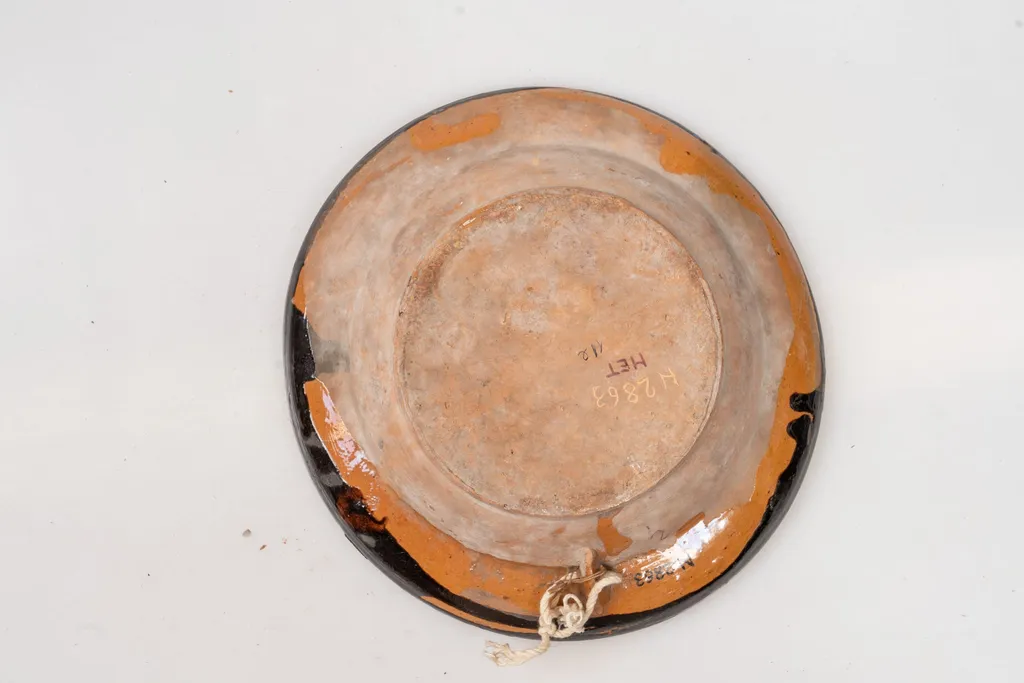
Farfurie adâncă, cu buza evazată și muchia buzei ușor ridicată; este acoperită pe suprafața interioară cu un strat de angobă maro, peste care este pictat cu pensula, cu angobă albă, decorul format din motive vegetale și florale, dispuse sub formă de ghirlandă continuă. Suprafața ornamentată a farfuriei este acoperită cu un strat de smalț transparent. Cromatica: maro, alb. is a print by Unknown. It dates from 1850 and is held in the collection of the Ethnographical Museum of Transylvania. The work depicts a deep serving plate whose rim flares outward and whose edge is gently lifted.
About this work
Overview
The work depicts a deep serving plate whose rim flares outward and whose edge is gently lifted. Its interior is first coated with a brown layer of angoba, then overpainted with white angoba applied by brush to create a continuous garland of vegetal and floral motifs. A transparent glaze finishes the decorative surface, unifying the brown and white palette.
Subject & Meaning
The composition centers on the plate itself, presenting it as both functional object and decorative canvas. The uninterrupted garland of natural motifs emphasizes a harmonious relationship between everyday utensils and the organic world, reflecting a cultural appreciation for ornamentation that integrates flora and foliage into daily life.
Technique & Style
The artist employed a two‑stage application of angoba, a traditional oil‑based medium, first laying a brown ground and then painting white designs with a fine brush. The motifs are rendered in a continuous band, suggesting a seamless decorative band. A clear glaze, applied after the paint dried, provides a glossy surface that protects the work and enhances depth.
History & Provenance
The piece is part of the collection of the Museum of Ethnography, where it is displayed as an example of decorative ceramic painting. Its acquisition details are not specified, but its presence in the museum indicates recognition of its cultural and artistic relevance within the ethnographic context.
Context
The decorative approach aligns with traditions in which utilitarian objects are embellished with stylized botanical patterns, a practice common in various folk and regional crafts. The use of angoba and glaze reflects material choices typical of the area’s ceramic painting techniques, linking the work to broader patterns of ornamental craft.
Artist & collection
Museum
Ethnographical Museum of Transylvania
Continue through works from the same source collection.
 Domestic Scene
 Giacomo and Cardinal Marco, investing Andrea, Abbot of San Zeno, with his Benefice
 The Nymph of Fontainebleau
 Portrait of a Woman
 Madonna and Child with Saints in the Enclosed Garden
 Venus and Minerva
 Family Group of Four on Sofa
 Wall painting from Room H of the Villa of P. Fannius Synistor at Boscoreale
 Farfurie adâncă de tip castron, cu corp tronconic și buza dreaptă, verticală. Piesa este acoperită pe suprafața interioară și pe exteriorul buzei cu un strat de angobă albă, peste care este pictat cu cornul decorul format din motive vegetale foarte stilizate: decorul de pe fundul farfuriei este păstrat doar parțial (urme de culoare maro), peretele farfuriei fiind decorat cu patru flori de culoare albastru-deschis, intercalate cu patru motive formate din linii hașurate intersectat de culoare verde, sugerând niște frunze. Două linii circulare de culoare maro, neglijent realizate, încadrează acest decor. Suprafața ornamentată a farfuriei este acoperită cu un strat de smalț transparent. Cromatica: alb, verde, maro, albastru-deschis.
 Farfurie adâncă, angobată pe fața interioară cu un strat de angobă albă și decorată prin pictare cu pensula și cu cornul cu motive florale, fitomorfe și geometrice: central pe fundul farfuriei este reprezentat, în manieră naturalistă, un buchet format din două flori cu câte trei petale de culoare maro-deschis și albastru, cu frunze verzi și elemente vegetale de culoare maro-închis. Buza este ornamentată cu un șir continuu format din romburi cu contur maro-închis, umplute cu linii hașurate verzi și separate de câte trei puncte de culoare albastră și maro. Acest registru decorativ este înscris între două linii circulare de culoare maro-închis. Cromatica: alb, verde, maro-deschis, maro-închis, albastru. Suprafața ornamentată a farfuriei este acoperită cu un strat de smalț transparent.
 Farfurie adâncă de tip castron, acoperită pe suprafața interioară cu un strat de angobă albă, peste care este pictat cu pensula și cu cornul decorul format din motive avimorfe, vegetale și florale dispuse astfel: pe fundul vasului este pictată o pasăre albastră cu contur albastru, așezată pe o ramură cu frunze și flori, realizată în culorile albastru, verde, maro și roșu, iar peretele farfuriei este decorat cu două tipuri de motive vegetale și florale (dispuse diametral opus), în aceleași culori ca elementele vegetale de pe centrul farfuriei. Suprafața ornamentată a farfuriei este acoperită cu un strat de smalț transparent. Buza farfuriei este decorată cu linii circulare subțiri, de culoare albastră. Cromatica: alb, verde, albastru, maro, roșu.
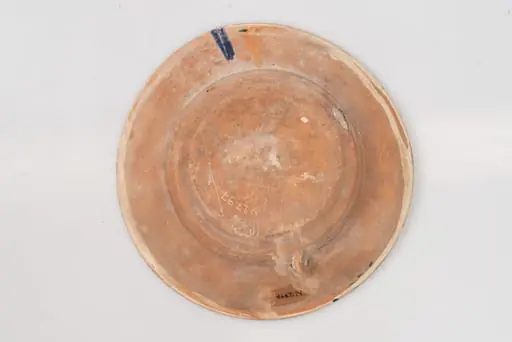 Farfurie semi-adâncă, cu buza lată, evazată; este angobată pe suprafața interioară cu un strat de humă albă, peste care este pictat cu pensula decorul format din motive florale și vegetale stilizate: registrul decorativ central de pe fundul farfuriei conține o floare cu patru petale alungite albastre și patru petale/frunze verzi, încadrată într-un cerc format din două linii ondulate și intersectate, de culoare albastră. Registrul decorativ marginal de pe buza farfuriei este format dintr-o succesiune alternantă a două motive: floarea albastră de lalea și motivul brăduțului, de culoare verde. Suprafața ornamentată a farfuriei este acoperită cu un strat de smalț transparent. Cromatica: alb, verde, albastru.
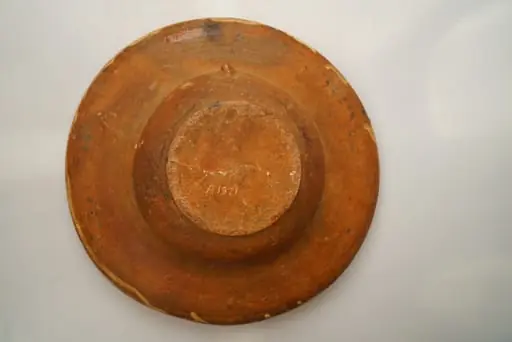 Farfurie mare adîncă, cu corp tronconic ușor rotunjit, buză lată evazată cu muchia buzei verticală; este acoperită pe suprafața interioară cu un strat de angobă albă peste care este pictat cu pensula decorul monocromatic format din motive geometrice și motive florale și vegetale stilizate, dispuse astfel: centrul farfuriei este decorat cu o floare (posibil crin) încadrată într-un cerc dublu, floare care se repetă și pe exteriorul cercului, alternată cu un motiv format din linii hașurate intersectat dispus sub formă de triunghi. Restul suprafeței corpului este decorat cu șiruri de frunze duble, orientate opus. Exteriorul buzei este decorat cu două linii circulare incizate. Suprafața ornamentată a farfuriei este acoperită cu un strat de smalț transparent. Cromatica: alb, albastru.
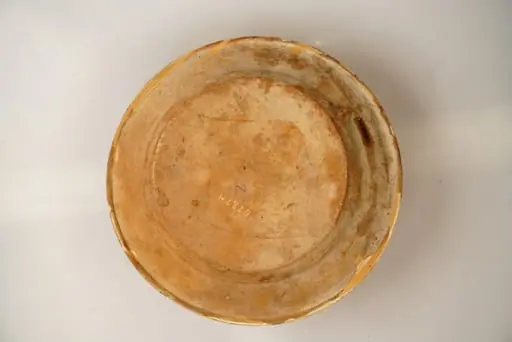 Farfurie semi-adâncă cu buza dreaptă evazată și cu muchia buzei răsfrântă spre exterior. Suprafața interioară a farfuriei este acoperită cu un strat de angobă albă peste care este realizat, prin sgrafitare în stratul de angobă și prin pictare cu pensula și cu cornul, decorul format din motive florale, vegetale și geometrice dispuse astfel: centrul farfuriei conține o tulpină cu două flori albastre rotunde, o floare cu petale alungite, de culoare verde, și frunze și elemente vegetale de culoare verde și maro. Conturul decorului din zona centrală este realizat cu o linie fină sgrafitată. Registrul decorativ marginal de pe buza farfuriei conține patru motive vegetale stilizate (boboci albaștri cu două frunze verzi), dispuse diametral opus în formă de cruce și intercalate cu patru grupuri de linii hașurate intersectat, de culoare maro. Decorul din zona buzei este încadrat între două linii circulare albastre. Suprafața ornamentată a farfuriei este acoperită cu un strat de smalț transparent. Cromatica: alb, verde, galben, maro.
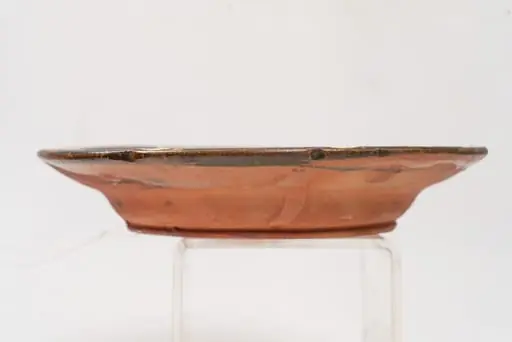 Farfurie semi-adâncă, acoperită pe suprafața interioară cu un strat de angobă de culoare verde închis, peste care este pictat cu pensula și cu cornul decorul format din motive florale stilizate și motive geometrice: registrul decorativ central, încadrat într-un cerc de culoare maro-închis, conține o tulpină și elemente vegetale formate din linii punctate, două frunze de culoare albă și trei flori, cele două laterale de culoare roșu-cărămiziu, iar cea centrală de culoare albă cu mijlocul roșu. Buza farfuriei este decorată cu un șir de semicercuri cu contur maro, lipite de muchia buzei, umplute cu culorile alb și roșu-cărămiziu și având pe exterior linii mici de culoare maro-închis. Bordura interioară a farfuriei este marcată cu o linie circulară subțire iar muchia buzei cu o dungă de culoare maro-închis. Suprafața ornamentată a farfuriei este acoperită cu un strat de smalț transparent. Cromatica: verde închis, alb, roșu-cărămiziu, maro-închis.
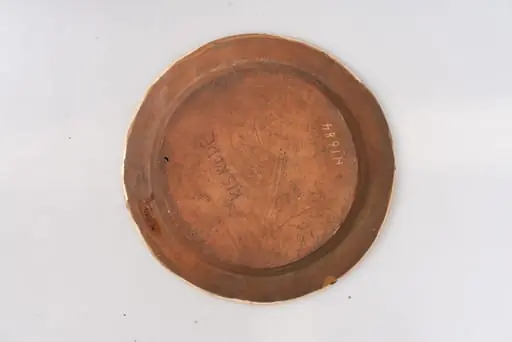 Farfurie semi-adâncă, cu fund larg, buza evazată și muchia buzei rotunjită; este acoperită pe suprafața interioară cu un strat de angobă albă, peste care este pictat cu cornul și cu pensula decorul format din motive geometrice și un motiv floral: central pe fundul farfuriei, încadrată între cinci cercuri concentrice albastre, se găsește o tulpină cu două flori albastre și o floare galbenă alungită, așezată într-o vază verde. Buza farfuriei este decorată cu multe linii circulare subțiri, de culoare albastră. Suprafața ornamentată a farfuriei este acoperită cu un strat de smalț transparent. Cromatica: alb, galben, verde, maro.
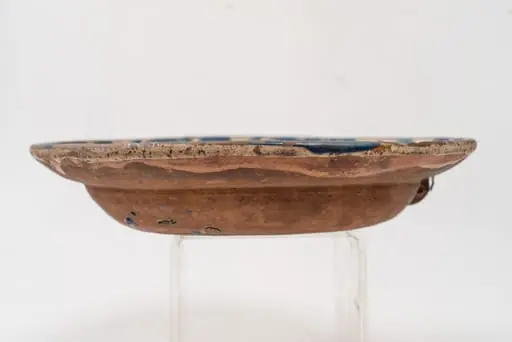 Farfurie adâncă, cu buza evazată și muchia ușor ridicată. Farfuria este angobată pe fața interioară cu un strat de humă albă, peste care este pictat cu cornul și cu pensula decorul monocromatic, format din motive florale și fitomorfe stilizate (tulpină cu cinci flori, din care patru sunt lalele, și frunze, reprezentate pe centrul farfuriei și un șir continuu format din elemente vegetale, ce decorează buza acesteia). Muchia buzei este marcată cu o dungă de culoare albastră. La baza tulpinii cu flori apare pictat cu pensula anul fabricării piesei: 1785. Cromatica: alb, albastru. Farfuria este acoperită pe fața decorată cu un strat de smalț transparent.