Artwork
Farfurie adâncă de tip castron, cu buză verticală, ușor profilată. Este angobată pe fața interioară și pe exteriorul buzei cu un strat de angobă albă. Decorul este realizat prin pictare cu cornul și se compune din trei motive pictate central pe fundul vasului, sugerând crenguțe de brad de culoare verde, dispuse în formă de triunghi și încadrate într-un cerc de culoare maro. Registrul decorativ de pe peretele vasului, imediat sub buză, se compune din patru grupuri de motive formate din linii paralele crescătoare și descrescătoare de culoare verde, încadrate între linii circulare subțiri de culoare maro. Buza vasului este decorată pe exterior cu două linii circulare realizate prin incizare, iar fundul vasului este marcat cu o dungă incizată. Cromatica: alb, verde, maro. Suprafața ornamentată este acoperită cu un strat de smalț transparent.
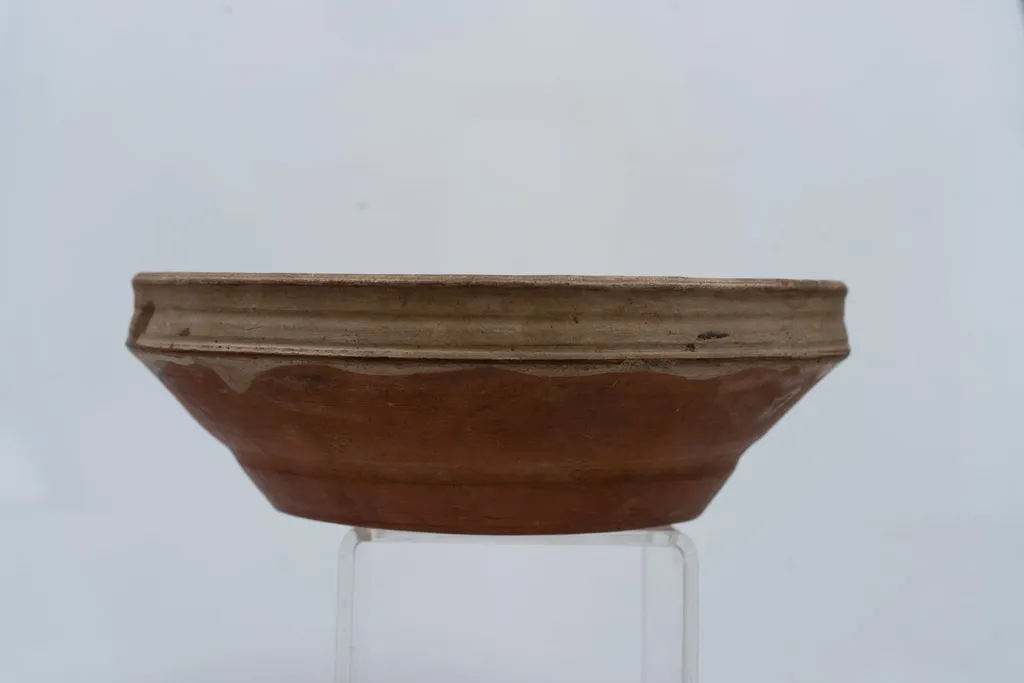
Farfurie adâncă de tip castron, cu buză verticală, ușor profilată. Este angobată pe fața interioară și pe exteriorul buzei cu un strat de angobă albă. Decorul este realizat prin pictare cu cornul și se compune din trei motive pictate central pe fundul vasului, sugerând crenguțe de brad de culoare verde, dispuse în formă de triunghi și încadrate într-un cerc de culoare maro. Registrul decorativ de pe peretele vasului, imediat sub buză, se compune din patru grupuri de motive formate din linii paralele crescătoare și descrescătoare de culoare verde, încadrate între linii circulare subțiri de culoare maro. Buza vasului este decorată pe exterior cu două linii circulare realizate prin incizare, iar fundul vasului este marcat cu o dungă incizată. Cromatica: alb, verde, maro. Suprafața ornamentată este acoperită cu un strat de smalț transparent. is a photography by Unknown. It dates from 1850 and is held in the collection of the Ethnographical Museum of Transylvania. This is a deep, bowl-shaped ceramic vessel with a vertically oriented, slightly flared rim.
About this work
Overview
The form suggests utilitarian use, likely for storage or serving, with ornamentation concentrated on the interior and upper wall.
This is a deep, bowl-shaped ceramic vessel with a vertically oriented, slightly flared rim. The exterior surface is unadorned clay, while the interior and rim are coated with a white slip. A transparent glaze covers the decorated areas, preserving the painted and incised details. The form suggests utilitarian use, likely for storage or serving, with ornamentation concentrated on the interior and upper wall.
Subject & Meaning
The central motif consists of three stylized evergreen branches arranged in a triangular formation, enclosed within a brown circular band. Below the rim, four vertical bands of alternating ascending and descending wavy lines are framed by thin brown circles. These patterns may reflect natural elements—pine boughs and flowing water—possibly symbolizing continuity, seasonal cycles, or regional identity within a prehistoric cultural context.
Technique & Style
The vessel was formed from coarse clay and coated with a white slip on interior surfaces and the rim. Decoration was applied using pigment derived from natural minerals, likely applied with a plant-based tool. The green motifs were painted freehand, while the rim’s exterior features two incised horizontal lines. The overall aesthetic is restrained, emphasizing repetition and symmetry over complexity, typical of regional Neolithic ceramic traditions.
History & Provenance
This object originates from a Neolithic settlement in the Carpathian Basin, likely dating to the late 5th or early 4th millennium BCE. It was recovered during archaeological excavations of a domestic or ritual site, where similar vessels were found in association with storage pits and hearths. Its preservation suggests careful burial or discard in a protected context, possibly linked to domestic or communal practices.
Context
This vessel belongs to a broader ceramic tradition found across the Carpathian region, where painted and incised pottery was common in early farming communities. The use of limited pigments—white, green, and brown—reflects locally available materials. Similar decorative schemes appear on other vessels from contemporaneous sites, indicating shared visual codes among neighboring groups engaged in agriculture and settled life.
Legacy
The vessel contributes to understanding the symbolic language of early European ceramic traditions. Its design elements, though simple, reveal deliberate compositional choices that distinguish it from purely functional wares. It remains a key example in museum collections for illustrating how ornamentation in Neolithic societies served both aesthetic and cultural functions, bridging utility and symbolic expression.
Artist & collection
Museum
Ethnographical Museum of Transylvania
Continue through works from the same source collection.
 Domestic Scene
 Giacomo and Cardinal Marco, investing Andrea, Abbot of San Zeno, with his Benefice
 The Nymph of Fontainebleau
 Portrait of a Woman
 Madonna and Child with Saints in the Enclosed Garden
 Venus and Minerva
 Family Group of Four on Sofa
 Wall painting from Room H of the Villa of P. Fannius Synistor at Boscoreale
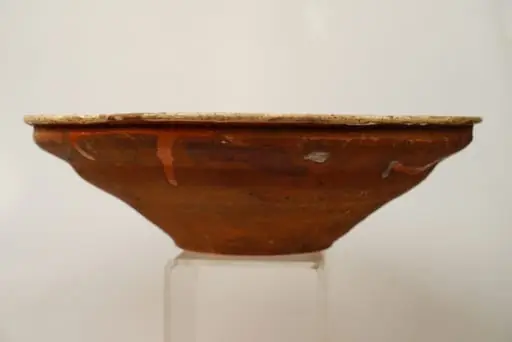
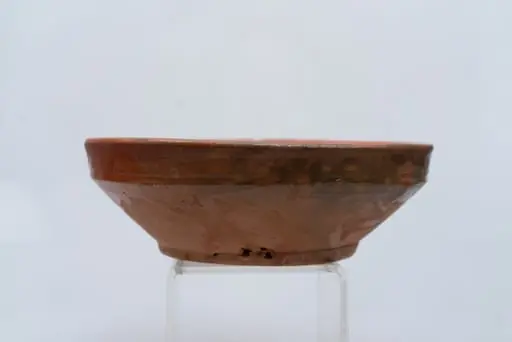 Farfurie adâncă de tip castron, cu buză verticală; decorul este realizat direct pe suprafața neangobată a vasului, prin pictare cu cornul și prin picurarea culorii: o floare stilizată albă înscrisă între două cercuri concentrice albe, neglijent realizate, constituie registrul decorativ central de pe fundul farfuriei. Partea inferioară a buzei vasului este decorată cu linii circulare și șase grupuri de linii buclate de culoare albă. Pete neregulate de culoare verde, realizate prin picurarea culorii, completează decorul. Suprafața ornamentată a farfuriei este acoperită cu un strat de smalț transparent. Cromatica: alb, verde, pe fondul lutului ars.
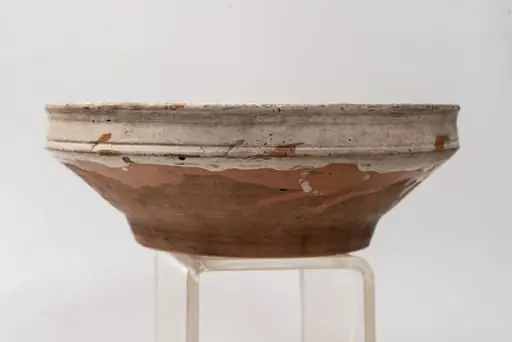 Farfurie adâncă de tip castron, cu corp tronconic și buză verticală cu o ușoară concavitate pe exterior; piesa este modelată din lut la roata olarului și angobată cu humă albă pe fața interioară și pe exterior pe suprafața buzei. Decorul este realizat prin pictare cu cornul și cu pensula și se compune din motive florale geometrizate, realizate cu decor maro și umplute cu pigmeți verde și galben (un buchet cu trei flori cu petale alungite și frunze, dispus central pe fundul vasului), două grupuri de motive sugerând motive vegetale, așezate diametral opus pe peretele farfuriei și intercalate de alte două grupuri de motive formate de linii paralele umplute cu puncte colorate. Câteva linii subțiri de culoare maro, dispuse sub formă de cerc, completează decorul. Cromatica: alb, verde, galben, maro. Farfuria este acoperită pe fața ornamentată și pe exterior, pe suprafața buzei, cu un strat de smalț transparent.
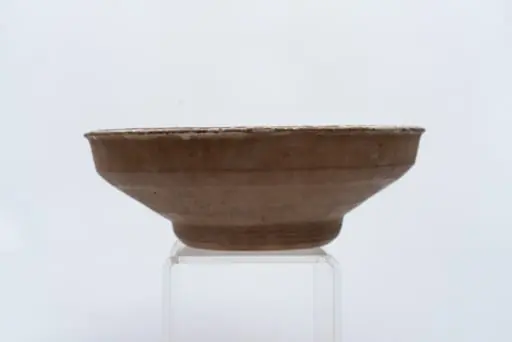 Farfurie adâncă, de tip castron, cu fund îngust, corp tronconic și buză verticală, înaltă. Este angobată cu humă albă pe fața interioară. Decorul este realizat prin jirăvire cu cornul și cu gaița: peretele farfuriei este decorat cu șase motive formate din grupuri de linii paralele de culoare verde, roșu, maro, jirăvite cu gaița, având la mijloc o linie ondulată de culoare maro. Centrul farfuriei este decorat cu o linie spiralată de culoare maro, ce are pe exterior patru motive formate din puncte de culoare maro și verde alăturate și trase cu găițoiul. Buza farfuriei este decorată cu linii circulare subțiri de culoare maro iar muchia acesteia cu o linie maro ondulată. Cromatica: alb, maro, roșu, verde. Suprafața ornamentată a farfuriei este acoperită cu un strat de smalț transparent.
 Farfurie adâncă de tip castron, cu corp tronconic și buză verticală îngustă, cu muchia buzei răsfrântă; este acoperită pe suprafața interioară cu un strat de angobă albă peste care este pictat cu cornul decorul monocromatic format din motive geometrice și florale, dispuse pe întreaga suprafață a farfuriei: tulpină cu trei flori (cea centrală de crin, cele două laterale de lalea), dispuse central pe fundul farfuriei; cinci flori cu petale rotunde și centrul format din linii hașurate intersectat; linii circulare simple, ondulate, sub formă de zigzag; spirale mici; motive formate din linii paralele crescătoare și descrescătoare dispuse sub formă de triunghi; grupuri de linii hașurate intersectat. Suprafața ornamentată a farfuriei este acoperită cu un strat de smalț transparent. Cromatica: alb, albastru.
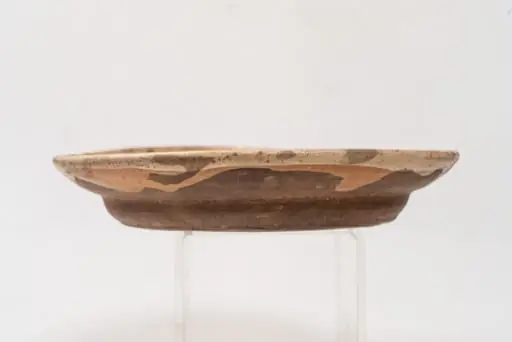 Farfurie semi-adâncă, cu fund larg, buză evazată și muchia buzei ușor ridicată. Piesa este angobată pe fața interioară cu un strat de humă albă, peste care este realizat prin sgrafitare și prin pictare cu pensula decorul format din motive vegetale stilizate: o tulpină cu frunze și elemente vegetale de culoare verde și maro, regăsite pe fundul farfuriei. Buza acesteia este decorată cu un șir de linii ovale sgrafitate, umplute cu culoare (verde și maro). Suprafața ornamentată este acoperită cu un strat de smalț transparent. Cromatica: alb, maro, verde.
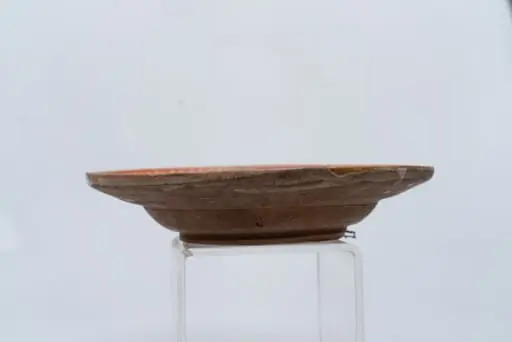 Farfurie adâncă, cu buza evazată și muchia buzei ușor ridicată. Piesa este angobată pe fața interioară cu un strat de angobă albă, peste care este pictat cu pensula și cu cornul decorul format din motive florale stilizate și geometrice: central pe fundul farfuriei sunt pictate cinci flori cu petale mici rotunde, cu contur de culoare siena arsă și mijlocul umplut cu linii hașurate intersectat, de culoare verde. Un romb central, umplut cu linii hașurate intersectat și puncte mici de culoare verde completează decorul din acest registru. Registrul decorativ marginal de pe buza farfuriei, înscris între două linii circulare de culoare siena arsă, este format dintr-o linie circulară buclată de culoare verde, în buclele căreia sunt pictate câte trei puncte maro. Marginea buzei este marcată cu o dungă de culoare siena arsă peste care este pictată o linie ondulată mărunt, albă. Suprafața ornamentată a farfuriei este acoperită cu un strat de smalț transparent. Cromatica: alb, siena arsă, verde, maro.
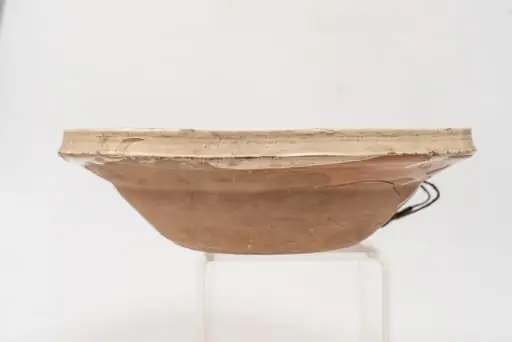 Farfurie adâncă de tip castron, cu corp tronconic, buză evazată și muchia buzei verticală. Piesa este acoperită pe fața interioară și pe exteriorul buzei cu un strat de angobă albă peste care este pictat cu pensula și cu cornul decorul format din motive florale și fitomorfe stilizate: zona centrală a farfuriei este decorată cu o floare cu petale alungite de culoare albastră, mijloc marcat printr-un punct maro, frunze verzi și elemente vegetale de culoare maro-închis. Buza este decorată cu cinci flori de culoare maro cu frunze, aproximativ identice, înscrise între două linii circulare de culoare maro. Suprafața ornamentată a farfuriei este acoperită cu un strat de smalț transparent. Cromatica: alb, maro, verde, albastru, maro-închis.
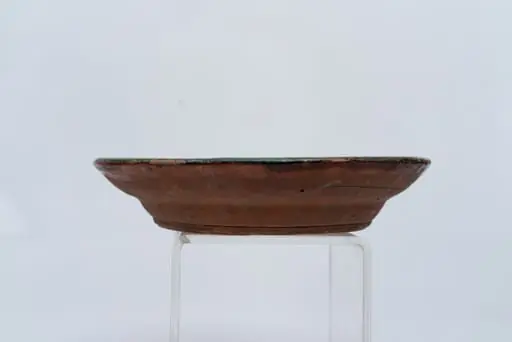 Farfurie adâncă, cu buză evazată; este angobată pe fața interioară cu un strat de angobă maro, peste care este pictat cu cornul, pensula și cu gaița decorul format din motive geometrice: central pe fundul farfuriei este pictată o linie spiralată rotundă de culoare albă; bordura interioară a farfuriei este decorată cu linii circulare concentrice de culoare albă trase cu gaița și cu puncte verzi, iar buza farfuriei cu o linie ondulată circulară și puncte groase de culoare albă. Muchia buzei este marcată cu o dungă verde. Suprafața ornamentată a farfuriei este acoperită cu un strat de smalț transparent. Cromatica: maro, alb, verde.
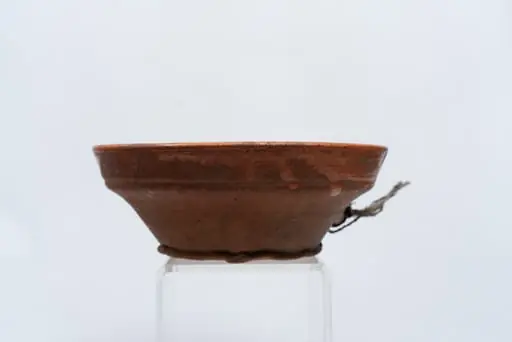 Farfurie adâncă de tip castron, cu corp tronconic și buză dreaptă, verticală. Decorul este realizat prin pictare cu cornul și cu pensula direct pe fondul neangobat al lutului, și se compune din motive florale stilizate: pe peretele farfuriei se află două motive florale aproximativ identice, dispuse diametral opus, constând într-o tulpină maro cu o floare albă și frunze de culoare verde turcoaz deschis și albe. Acest registru este încadrat între două linii circulare de culoare maro. Suprafața ornamentată a farfuriei este acoperită cu un strat de smalț transparent. Cromatica: alb, maro, verde turcoaz deschis, pe fondul roșu al lutului ars.
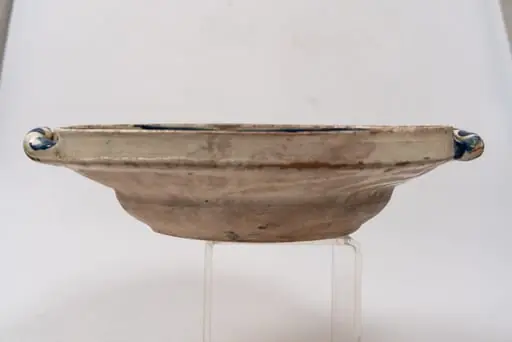 Farfurie adâncă de tip castron, cu corp tronconic, buză dreaptă, verticală și două torți laterale de prindere inserate orizontal. Piesa este acoperită pe ambele fețe cu un strat de angobă albă. Decorul monocromatic este realizat prin pictare cu cornul și cu pensula și se compune din motive florale și vegetale stilizate și din motive geometrice: central pe fundul farfuriei se regăsește o tulpină cu patru flori, una de lalea iar celălalte sub formă de boboci decorați cu puncte și cu linii hașurate intersectat. De o parte și de alta a florii centrale se găsește câte un motiv format din linii hașurate intersectat. Decorul marginal constă într-un șir continuu de elemente vegetale (frunze). Bordura interioară a farfuriei și marginea buzei sunt decorate cu linii circulare simple și linie circulară ondulată. Torțile de prindere au un decor simplu, format din mici linii paralele albastre. Cromatica: alb, albastru. Suprafața ornamentată a farfuriei este acoperită cu un strat de smalț transparent.
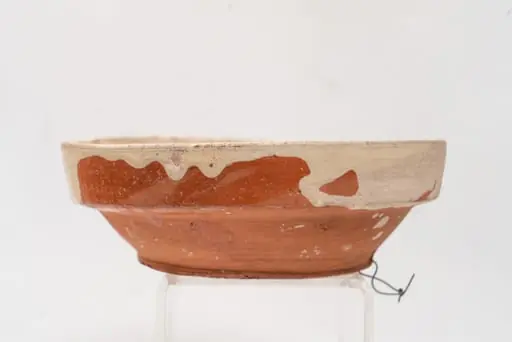 Farfurie adâncă de tip castron, cu corp tronconic și buză dreaptă verticală. Piesa este angobată pe suprafața interioară și parțial pe exteriorul buzei cu un strat de humă albă. Decorul este realizat prin pictare cu cornul și cu pensula cu motive geometrice (un cerc central pe fundul farfuriei și o linie circulară ce marchează partea inferioară a buzei, ambele de culoare maro-închis) și vegetale (trei flori cu petale de culoare roșu-cărămiziu, cu tulpină maro-închis și frunze verzi, dispuse pe peretele farfuriei). Suprafața ornamentată a farfuriei este acoperită cu un strat de smalț transparent. Cromatica: alb, verde, maro-închis, roșu-cărămiziu.