Artwork
Farfurie adâncă de tip castron, cu buză verticală; decorul este realizat direct pe suprafața neangobată a vasului, prin pictare cu cornul și prin picurarea culorii: o floare stilizată albă înscrisă între două cercuri concentrice albe, neglijent realizate, constituie registrul decorativ central de pe fundul farfuriei. Partea inferioară a buzei vasului este decorată cu linii circulare și șase grupuri de linii buclate de culoare albă. Pete neregulate de culoare verde, realizate prin picurarea culorii, completează decorul. Suprafața ornamentată a farfuriei este acoperită cu un strat de smalț transparent. Cromatica: alb, verde, pe fondul lutului ars.
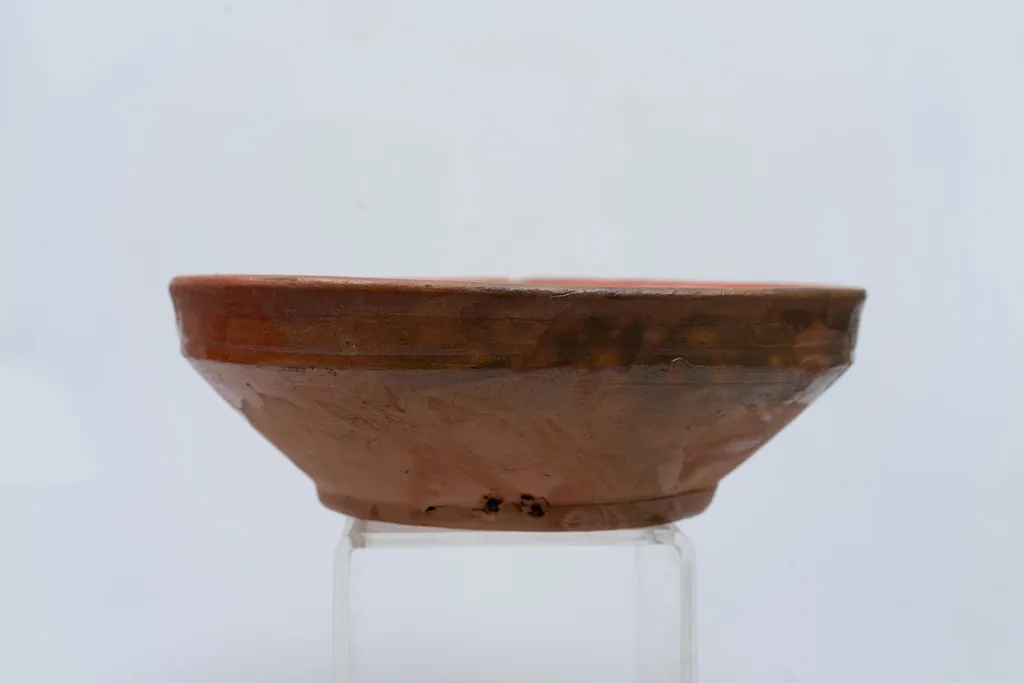
Farfurie adâncă de tip castron, cu buză verticală; decorul este realizat direct pe suprafața neangobată a vasului, prin pictare cu cornul și prin picurarea culorii: o floare stilizată albă înscrisă între două cercuri concentrice albe, neglijent realizate, constituie registrul decorativ central de pe fundul farfuriei. Partea inferioară a buzei vasului este decorată cu linii circulare și șase grupuri de linii buclate de culoare albă. Pete neregulate de culoare verde, realizate prin picurarea culorii, completează decorul. Suprafața ornamentată a farfuriei este acoperită cu un strat de smalț transparent. Cromatica: alb, verde, pe fondul lutului ars. is a print by Unknown. It dates from 1850 and is held in the collection of the Ethnographical Museum of Transylvania. A deep, wide ceramic bowl with a vertical rim, crafted from unglazed clay and coated in transparent glaze.
About this work
Overview
Its surface retains the natural texture of the fired earth, contrasting with deliberate decorative elements applied directly onto the body.
A deep, wide ceramic bowl with a vertical rim, crafted from unglazed clay and coated in transparent glaze. Its surface retains the natural texture of the fired earth, contrasting with deliberate decorative elements applied directly onto the body. The decoration employs hand-drawn white lines and splattered green pigment, creating a restrained yet expressive visual language rooted in local ceramic traditions.
Subject & Meaning
The central motif is a simplified white flower enclosed by two uneven concentric circles, likely symbolizing natural forms rather than religious or mythological narratives. Surrounding the base of the rim are six clusters of curved lines and circular bands, possibly representing water, growth, or rhythmic patterns tied to seasonal cycles. The irregular green spots, applied by dripping, suggest an intuitive, non-idealized approach to ornamentation.
Technique & Style
Decoration was executed directly on the unslipped clay surface using a corn-based tool for incised lines and freehand dripping for green pigment. The white floral design and circular bands are loosely rendered, with visible imperfections in alignment and stroke control. The glaze, applied uniformly over the entire surface, enhances the contrast between the rough clay body and the precise, albeit crude, painted elements.
History & Provenance
This vessel originates from a regional ceramic tradition in Eastern Europe, likely produced in a rural workshop during the late 19th or early 20th century. It entered the collection of the Museum of Ethnography as part of a broader effort to document vernacular pottery practices. Its unrefined execution and localized motifs indicate it was made for domestic use rather than ceremonial or commercial purposes.
Context
Produced in a context where ceramic-making was a household or village-based craft, this bowl reflects a functional aesthetic where decoration emerged from habitual practice rather than formal training. The use of locally available pigments and tools, combined with minimal glazing, aligns with broader patterns of peasant pottery in the Carpathian region, where utility and symbolic expression coexisted without elaborate refinement.
Legacy
As a representative of everyday ceramic production, this bowl contributes to the understanding of non-elite material culture in Eastern Europe. Its preservation in a museum setting underscores the value placed on vernacular art forms that were once considered ordinary. The piece remains a quiet testament to the quiet creativity embedded in utilitarian objects.
Artist & collection
Museum
Ethnographical Museum of Transylvania
Continue through works from the same source collection.
 Domestic Scene
 Giacomo and Cardinal Marco, investing Andrea, Abbot of San Zeno, with his Benefice
 The Nymph of Fontainebleau
 Portrait of a Woman
 Madonna and Child with Saints in the Enclosed Garden
 Venus and Minerva
 Family Group of Four on Sofa
 Wall painting from Room H of the Villa of P. Fannius Synistor at Boscoreale
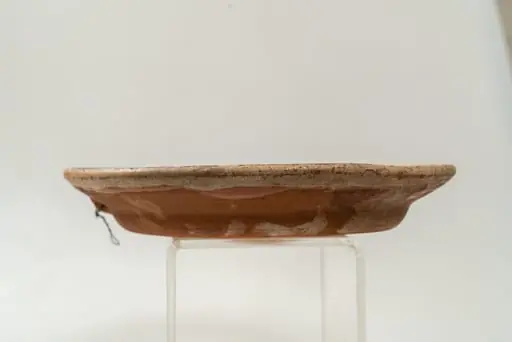 Farfurie semi-adâncă, cu buza răsfrântă, modelată la roata olarului și angobată cu humă albă pe fața interioară. Decorul este pictat cu cornul și cu pensula și se compune din motive decorative vegetale stilizate (flori cu frunze, dispuse central, pe fundul farfuriei) și motive decorative geometrice (șapte grupuri de linii paralele,verticale, intercalate cu șapte grupuri de câte 3 linii sub formă de semicercuri umplute cu culoare galbenă și verde), dispuse pe buza farfuriei și încadrate de linii paralele sub formă de cerc. Piesa este acoperită pe fața pictată cu un strat de smalț transparent. Cromatica: alb, verde, maro, galben ocru.
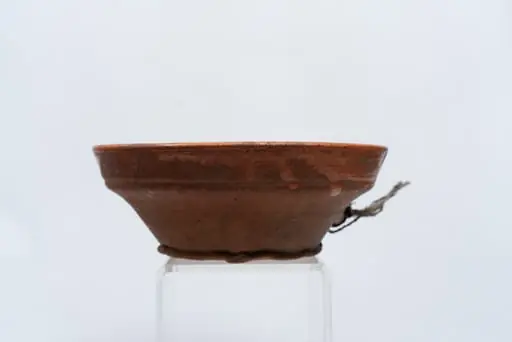 Farfurie adâncă de tip castron, cu corp tronconic și buză dreaptă, verticală. Decorul este realizat prin pictare cu cornul și cu pensula direct pe fondul neangobat al lutului, și se compune din motive florale stilizate: pe peretele farfuriei se află două motive florale aproximativ identice, dispuse diametral opus, constând într-o tulpină maro cu o floare albă și frunze de culoare verde turcoaz deschis și albe. Acest registru este încadrat între două linii circulare de culoare maro. Suprafața ornamentată a farfuriei este acoperită cu un strat de smalț transparent. Cromatica: alb, maro, verde turcoaz deschis, pe fondul roșu al lutului ars.
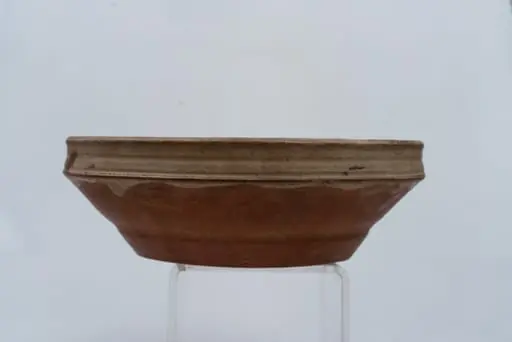 Farfurie adâncă de tip castron, cu buză verticală, ușor profilată. Este angobată pe fața interioară și pe exteriorul buzei cu un strat de angobă albă. Decorul este realizat prin pictare cu cornul și se compune din trei motive pictate central pe fundul vasului, sugerând crenguțe de brad de culoare verde, dispuse în formă de triunghi și încadrate într-un cerc de culoare maro. Registrul decorativ de pe peretele vasului, imediat sub buză, se compune din patru grupuri de motive formate din linii paralele crescătoare și descrescătoare de culoare verde, încadrate între linii circulare subțiri de culoare maro. Buza vasului este decorată pe exterior cu două linii circulare realizate prin incizare, iar fundul vasului este marcat cu o dungă incizată. Cromatica: alb, verde, maro. Suprafața ornamentată este acoperită cu un strat de smalț transparent.
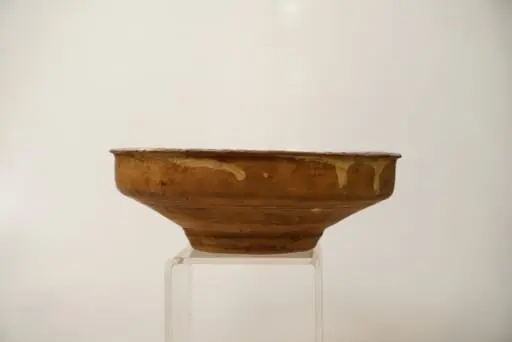 Farfurie adâncă de tip castron, cu corp tronconic și buza dreaptă, verticală și cu muchia buzei subțire și răsfrântă; este angobată pe suprfața interioară cu un strat de humă albă, peste care este pictat cu cornul decorul format din motive florale stilizate și din motive geometrice dispuse astfel: centrul farfuriei conține o linie spiralată rotundă, de culoare maro, completată pe exterior cu o linie formată din puncte roșii; peretele farfuriei este decorat cu un șir de flori mici cu petale de culoare maro, roșu, și verde. Buza farfuriei este decorată cu o linie spiralată subțire, circulară, iar muchia buzei cu o linie circulară ondulată, maro. Suprafața ornamentată a farfuriei este acoperită cu un strat de smalț transparent. Cromatica: alb, verde, maro, roșu.
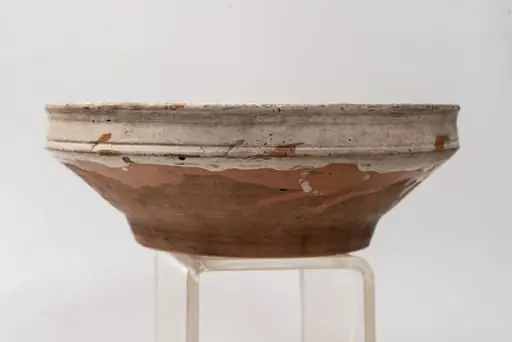 Farfurie adâncă de tip castron, cu corp tronconic și buză verticală cu o ușoară concavitate pe exterior; piesa este modelată din lut la roata olarului și angobată cu humă albă pe fața interioară și pe exterior pe suprafața buzei. Decorul este realizat prin pictare cu cornul și cu pensula și se compune din motive florale geometrizate, realizate cu decor maro și umplute cu pigmeți verde și galben (un buchet cu trei flori cu petale alungite și frunze, dispus central pe fundul vasului), două grupuri de motive sugerând motive vegetale, așezate diametral opus pe peretele farfuriei și intercalate de alte două grupuri de motive formate de linii paralele umplute cu puncte colorate. Câteva linii subțiri de culoare maro, dispuse sub formă de cerc, completează decorul. Cromatica: alb, verde, galben, maro. Farfuria este acoperită pe fața ornamentată și pe exterior, pe suprafața buzei, cu un strat de smalț transparent.
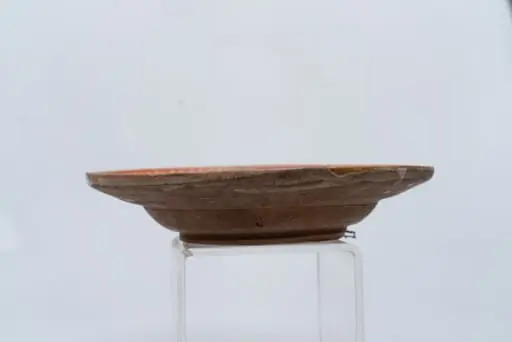 Farfurie adâncă, cu buza evazată și muchia buzei ușor ridicată. Piesa este angobată pe fața interioară cu un strat de angobă albă, peste care este pictat cu pensula și cu cornul decorul format din motive florale stilizate și geometrice: central pe fundul farfuriei sunt pictate cinci flori cu petale mici rotunde, cu contur de culoare siena arsă și mijlocul umplut cu linii hașurate intersectat, de culoare verde. Un romb central, umplut cu linii hașurate intersectat și puncte mici de culoare verde completează decorul din acest registru. Registrul decorativ marginal de pe buza farfuriei, înscris între două linii circulare de culoare siena arsă, este format dintr-o linie circulară buclată de culoare verde, în buclele căreia sunt pictate câte trei puncte maro. Marginea buzei este marcată cu o dungă de culoare siena arsă peste care este pictată o linie ondulată mărunt, albă. Suprafața ornamentată a farfuriei este acoperită cu un strat de smalț transparent. Cromatica: alb, siena arsă, verde, maro.
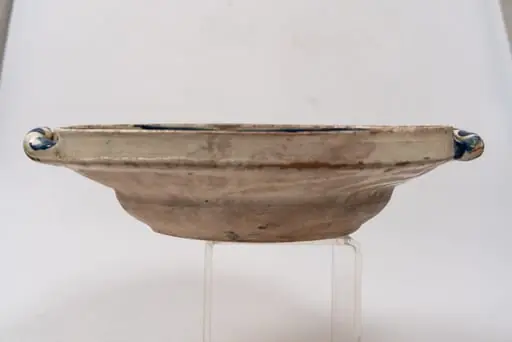 Farfurie adâncă de tip castron, cu corp tronconic, buză dreaptă, verticală și două torți laterale de prindere inserate orizontal. Piesa este acoperită pe ambele fețe cu un strat de angobă albă. Decorul monocromatic este realizat prin pictare cu cornul și cu pensula și se compune din motive florale și vegetale stilizate și din motive geometrice: central pe fundul farfuriei se regăsește o tulpină cu patru flori, una de lalea iar celălalte sub formă de boboci decorați cu puncte și cu linii hașurate intersectat. De o parte și de alta a florii centrale se găsește câte un motiv format din linii hașurate intersectat. Decorul marginal constă într-un șir continuu de elemente vegetale (frunze). Bordura interioară a farfuriei și marginea buzei sunt decorate cu linii circulare simple și linie circulară ondulată. Torțile de prindere au un decor simplu, format din mici linii paralele albastre. Cromatica: alb, albastru. Suprafața ornamentată a farfuriei este acoperită cu un strat de smalț transparent.
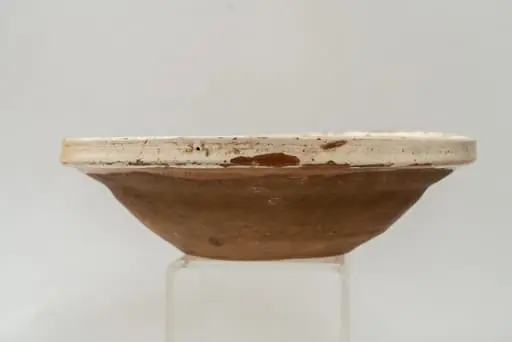 Farfurie mare, adâncă, cu muchia buzei ușor concavă spre interior. Piesa este modelată la roata olarului, angobată pe fața interioară cu humă albă. Decorul este realizat prin pictare cu pensula și constă în motive decorative avimorfe (pasăre - în zona centrală, pe fundul farfuriei), geometrice (linii sub formă de cercuri concentrice și puncte) și vegetale stilizate (flori și frunze - în zona centrală și pe buza farfuriei). Cromatica decorului: alb, verde, albastru, siena arsă.
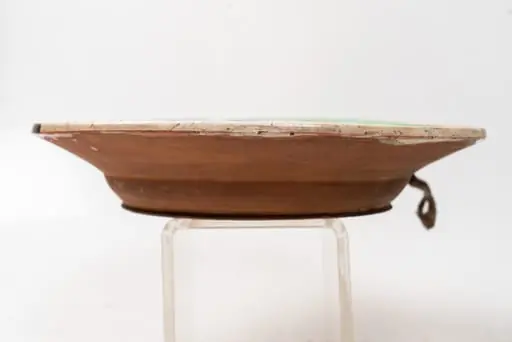 Farfurie mare, semi-adâncă, cu buza răsfrântă; piesa este modelată la roata olarului și angobată cu humă albă pe fața interioară. Decorul este realizat prin sgrafitare în pasta albă de angobă și prin pictare cu pensula și cu cornul și se compune din motive decorative vegetale (o floare foarte stilizată, cu patru petale, dispusă în registrul central de pe fundul farfuriei) și geometrice (linii circulare, de culoare verde și siena arsă, pe buza farfuriei). Cromatica: alb, verde, siena arsă, maro. Fața ornamentată a farfuriei este acoperită cu un strat de smalț transparent.
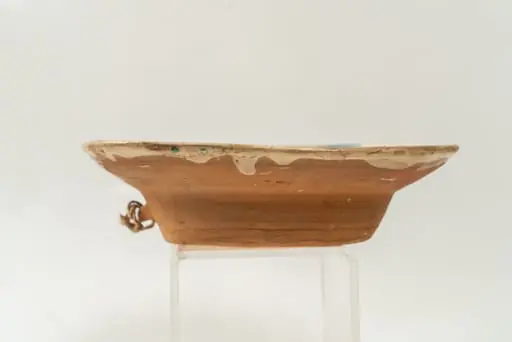 Farfurie adâncă, cu corp mic și buză lată, evazată; piesa este modelată la roata olarului și angobată cu humă albă pe fața interioară. Decorul este realizat prin pictare cu pensula și se compune din motive decorative florale și vegetale stilizate, dispuse central, pe fundul vasului (o floare albastră cu frunze verzi) și pe buza farfuriei (4 flori albastre alternate cu 4 grupuri de frunze). Fața decorată a farfuriei este acoperită cu un strat de smalț transparent. Cromatica: alb, albastru, verde.
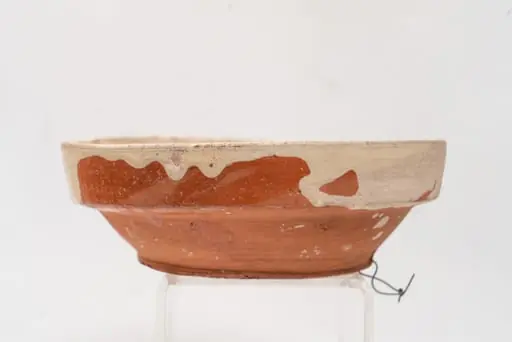 Farfurie adâncă de tip castron, cu corp tronconic și buză dreaptă verticală. Piesa este angobată pe suprafața interioară și parțial pe exteriorul buzei cu un strat de humă albă. Decorul este realizat prin pictare cu cornul și cu pensula cu motive geometrice (un cerc central pe fundul farfuriei și o linie circulară ce marchează partea inferioară a buzei, ambele de culoare maro-închis) și vegetale (trei flori cu petale de culoare roșu-cărămiziu, cu tulpină maro-închis și frunze verzi, dispuse pe peretele farfuriei). Suprafața ornamentată a farfuriei este acoperită cu un strat de smalț transparent. Cromatica: alb, verde, maro-închis, roșu-cărămiziu.