Artwork
Farfurie adâncă de tip castron, cu corp tronconic și buză verticală. Este prevăzută cu două torți mici laterale, inserate orizontal, pe exteriorul buzei. Este modelată la roata olarului și angobată cu humă albă pe fața interioară și pe exteriorul buzei. Decorul este realizat prin pictare cu cornul și se compune din motive florale și geometrice: central pe fundul farfuriei este reprezentat un buchet format din cinci flori stilizate, dintre care două sunt lalele iar celălalte trei au centrul rotund, umplut cu linii hașurate intersectat și petale rotunde de culoare albastră. Partea superioară a peretelui vasului, imediat sub buză, conține un registru decorativ format din opt grupuri de motive formate din linii hașurate intersectat, de culoare verde, albastră și galben ocru, înscrise între două linii circulare albastre. Exteriorul buzei este decorat cu mici motive formate din linii curbe, crescătoareca mărime, de culoare albastră și galben ocru. Torțile sunt decorate cu mici linii paralele de culoare galben ocru. Suprafața ornamentată a farfuriei este acoperită cu un strat de smalț transparent. Cromatica: alb, albastru, verde, galben ocru.
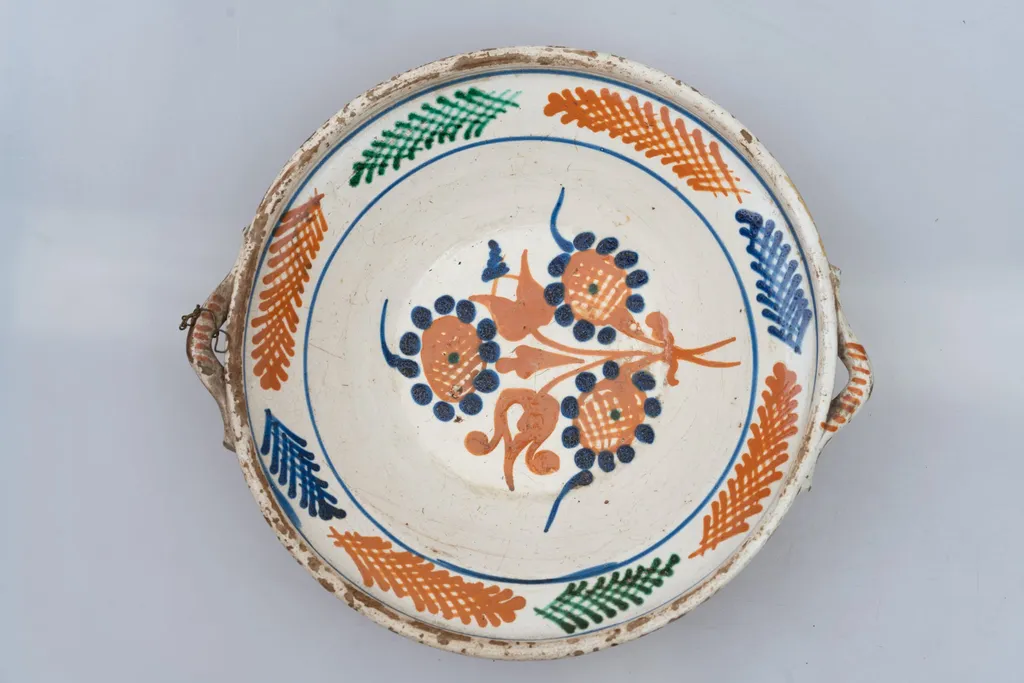
Farfurie adâncă de tip castron, cu corp tronconic și buză verticală. Este prevăzută cu două torți mici laterale, inserate orizontal, pe exteriorul buzei. Este modelată la roata olarului și angobată cu humă albă pe fața interioară și pe exteriorul buzei. Decorul este realizat prin pictare cu cornul și se compune din motive florale și geometrice: central pe fundul farfuriei este reprezentat un buchet format din cinci flori stilizate, dintre care două sunt lalele iar celălalte trei au centrul rotund, umplut cu linii hașurate intersectat și petale rotunde de culoare albastră. Partea superioară a peretelui vasului, imediat sub buză, conține un registru decorativ format din opt grupuri de motive formate din linii hașurate intersectat, de culoare verde, albastră și galben ocru, înscrise între două linii circulare albastre. Exteriorul buzei este decorat cu mici motive formate din linii curbe, crescătoareca mărime, de culoare albastră și galben ocru. Torțile sunt decorate cu mici linii paralele de culoare galben ocru. Suprafața ornamentată a farfuriei este acoperită cu un strat de smalț transparent. Cromatica: alb, albastru, verde, galben ocru. is a photography by Unknown. It dates from 1850 and is held in the collection of the Ethnographical Museum of Transylvania.
About this work
Overview
This ceramic plate features a conical body with a vertical rim, crafted on a potter’s wheel and coated with white slip on both interior and rim surfaces.
This ceramic plate features a conical body with a vertical rim, crafted on a potter’s wheel and coated with white slip on both interior and rim surfaces. Two small horizontal handles are attached to the outer rim. A transparent glaze covers the decorated areas, preserving the pigments beneath. The form and surface treatment reflect regional ceramic traditions of the late medieval or early modern period in Eastern Europe.
Subject & Meaning
The central motif is a stylized bouquet of five flowers: two tulips and three with rounded centers filled with hatched lines, their petals rendered in blue. Surrounding this, geometric bands of intersecting hatched lines in green, blue, and ochre yellow form a decorative register beneath the rim. The arrangement suggests a symbolic emphasis on growth and order, common in folk decorative systems where floral and geometric patterns coexist without overt narrative.
Technique & Style
The vessel was shaped on a wheel, then coated with white slip before painting. Pigments—blue, green, and ochre yellow—were applied with a fine brush, likely made from animal hair or reed. Decorative elements include curved lines on the rim’s exterior and parallel strokes on the handles. The style blends naturalistic floral elements with abstract geometry, characteristic of local ceramic workshops that prioritized rhythmic repetition over realism.
History & Provenance
The plate’s form and decoration align with ceramic production in the Carpathian region during the 16th to 18th centuries. Similar pieces have been found in archaeological contexts across present-day Romania and Moldova. While no specific maker is recorded, the technical consistency suggests workshop production rather than solitary artisan creation. Its survival indicates use in domestic or ceremonial settings, preserved through burial or abandonment.
Context
This plate belongs to a broader tradition of glazed earthenware in Eastern Europe, where household ceramics often bore symbolic motifs derived from nature and geometry. The use of limited pigments—blue, green, ochre—reflects locally available minerals and the constraints of low-temperature firing. Such objects were not luxury items but everyday vessels elevated through ornamentation, expressing cultural identity through repetitive, learned patterns.
Legacy
Though attributed to anonymous makers, the plate exemplifies a durable folk aesthetic that persisted for centuries. Its design elements reappear in later regional ceramics and textile patterns, indicating a shared visual vocabulary. Modern collectors and museums value it not for authorship but for its embodiment of vernacular craftsmanship, offering insight into pre-industrial domestic life and aesthetic priorities.
Artist & collection
Museum
Ethnographical Museum of Transylvania
Continue through works from the same source collection.
 Domestic Scene
 Giacomo and Cardinal Marco, investing Andrea, Abbot of San Zeno, with his Benefice
 The Nymph of Fontainebleau
 Portrait of a Woman
 Madonna and Child with Saints in the Enclosed Garden
 Venus and Minerva
 Family Group of Four on Sofa
 Wall painting from Room H of the Villa of P. Fannius Synistor at Boscoreale
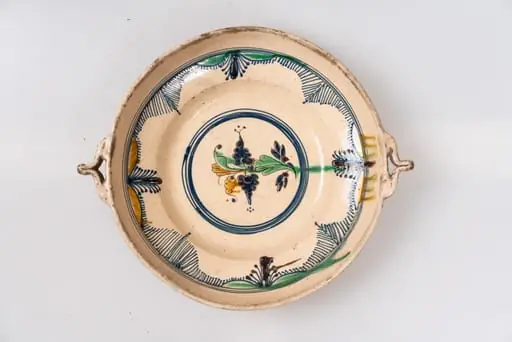 Farfurie adâncă de tip castron, cu corp tronconic, buză dreaptă verticală cu muchia rotunjită, prevăzută cu două torți laterale de prindere în acoladă, inserate pe orizontală pe exteriorul buzei. Piesa este acoperită pe suprafața interioară cu un strat de angobă albă, peste care este pictat cu cornul și cu pensula decorul format din motive geometrice și vegetale, realizate cu contur fin: central pe fundul farfuriei, încadrată într-o linie spiralată albastră, se găsește o tulpină cu două flori albastre, o floare galbenă, doi boboci albaștri la bază și frunze verzi. Buza farfuriei este decorată cu patru motive vegetale stilizate, dispuse în formă de cruce, formate din două frunze de culoare verde și galbenă, cu o floare în mijloc, de culoare maro cu linii albastre. Între aceste motive vegetale se găsesc motive formate din linii paralele subțiri de culoare albastră, crescătoare și descrescătoare ca marime. Suprafața ornamentată a farfuriei este acoperită cu un strat de smalț transparent. Cromatica: alb, galben, verde, maro, albastru.
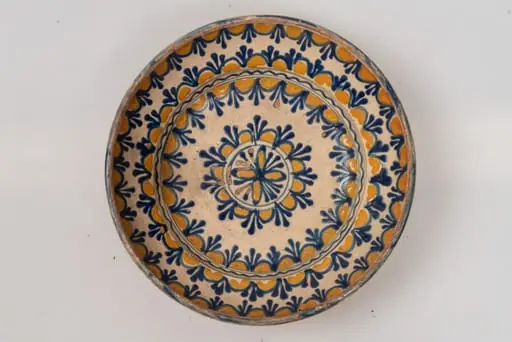 Farfurie adâncă, cu buza evazată și ușor concavă; este acoperită pe fața interioară cu un strat de angobă albă peste care este pictat cu pensula și cu cornul decorul format din motive geometrice și florale geometrizate: central pe fundul farfuriei se regăsește o floare cu petale galbene și contur albastru, încadrată într-un cerc dublu de culoare albastră, decorat pe exterior cu un șir format din semicercuri cu contur albastru și interior galben, separate de câte trei linii albastre în formă de V. Alte trei șiruri circulare formate din aceleași motive decorează buza și peretele farfuriei. Bordura interioară a farfuriei este marcată cu linii circulare simple și o linie circulară ondulată de culoare albastră iar muchia buzei cu o dungă albastră. Suprafața ornamentată a farfuriei este acoperită cu un strat de smalț transparent. Cromatica: alb, galben, albastru.
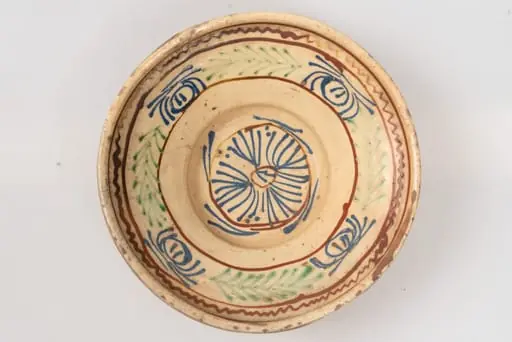 Farfurie adâncă, de tip castron, cu fund îngust, corp tronconic și buză dreaptă, verticală; este angobată pe fața interioară și pe suprafața exterioară a buzei cu un strat de humă albă. Este decorată prin pictare cu cornul cu motive florale și fitomorfe geometrizate: pe fundul farfuriei este pictată o floare cu petalele din linii subțiri albastre și centrul marcat cu un cerc mic maro, încadrată într-un cerc de asemenea de culoare maro. Peretele farfuriei este decorat cu patru grupuri de motive formate din linii verzi, sugerând o ramură cu frunze, intercalate de patru flori geometrizate, realizate din linii albastre. Decorul este completat cu trei linii circulare simple și o linie circulară ondulată. Suprafața ornamentată a farfuriei este acoperită cu un strat de smalț transparent. Cromatica: alb, verde, albastru, maro.
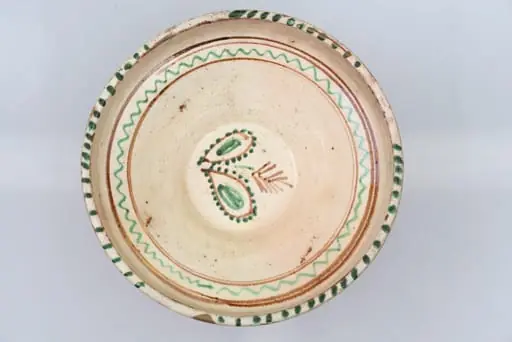 Farfurie adâncă de tip castron, cu baza îngustă, corp tronconic și buza dreaptă, verticală. Suprafața interioară a farfuriei este acoperită cu un strat de angobă albă, peste care s-a pictat cu cornul decorul format din motive decorative geometrice și un motiv vegetal stilizat: central pe fundul farfuriei se regăsesște un motiv vegetal format din două frunze cu contur dintr-o linie maro și puncte verzi având în centru o floare cu petale formate din linii simple maro. Bordura interioară a farfuriei este decorată cu două linii circulare maro între care se găsește o linie circulară ondulată, de culoare verde. Muchia buzei este decorată cu trei grupuri de linii mici drepte, de culoare verde. Suprafața exterioară a buzei este decorată cu două linii circulare simple realizate prin incizare. Suprafața ornamentată a farfuriei este acoperită cu un strat de smalț transparent. Cromatica: alb, verde, maro.
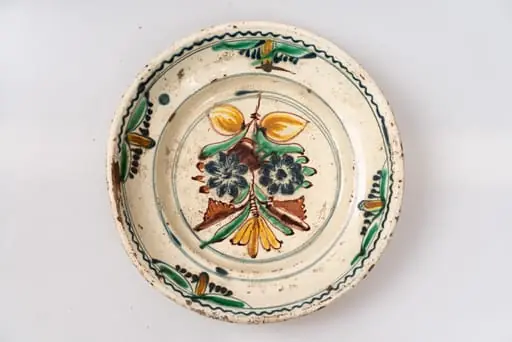 Farfurie semi-adâncă, cu buza evazată și muchia buzei rotunjită; este acoperită pe suprafața interioară cu un strat de angobă albă, peste care este pictat cu cornul și cu pensula decorul format din motive florale și geometrice, realizate cu contur din linii fine maro: central pe fundul farfuriei, încadrat într-un cerc albastru format dintr-o linie spiralată subțire, este pictat un buchet format din două flori albstre, o floare galbenă cu petale lungi, doi boboci galbeni și frunze verzi. Registrul decorativ marginal, încadrat între două cercuri albastre, conține patru motive vegetale stilizate, aproximativ identice, dispuse în cruce (două frunze verzi și una centrală galbenă, decorate cu puncte alungite de culoare albastru-închis). Muchia buzei este marcată cu o linie circulară ondulată de culoare albastră. Suprafața ornamentată a farfuriei este acoperită cu un strat de smalț transparent. Cromatica: alb, galben, verde, maro, albastru.
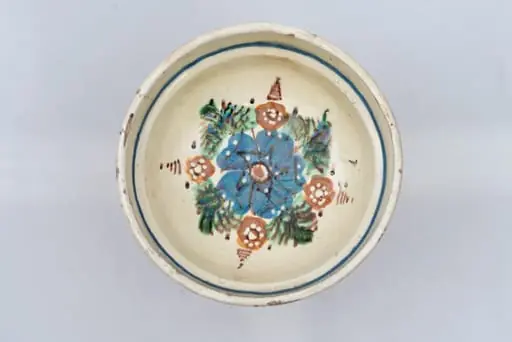 Farfurie adâncă de tip castron, cu corp tronconic, ușor concav, și buza dreaptă și verticală. Este acoperită pe suprafața interioară și pe exteriorul buzei cu un strat de angobă albă. Decorul este pictat cu pensula și cu cornul și se compune din motive florale și vegetale stilizate: central pe fundul farfuriei este pictată o floare cu cinci petale albastre, frunze verzi și patru flori mai mici, maro. O linie circulară albastră marchează pe interior partea inferioară a buzei, iar exteriorul acesteia este decorat cu o linie circulară simplă, ș una ondulată, albastre. Cromatica: alb, albastru, verde, maro. Ambele suprafețe ale farfuriei sunt acoperite cu un strat de smalț transparent.
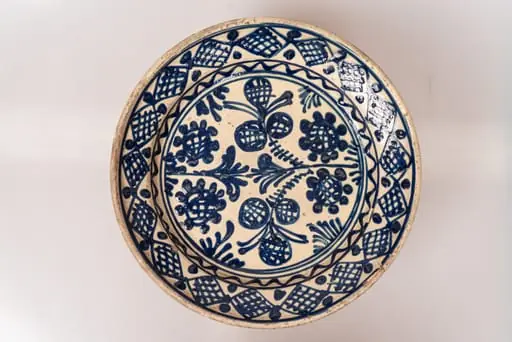 Farfurie de formă semi-adâncă, cu buza răsfrântă; piesa este modelată la roata olarului și angobată cu humă albă pe fața interioară. Decorul monocromatic este realizat prin pictare cu cornul și cu pensula și se compune din motive florale stilizate și geometrice, dispuse pe întreaga suprafață a piesei (registrul central de pe fundul farfuriei, delimitat de un cerc format din două linii concentrice, conține două perechi de flori cu petale rotunde, așezate diametral opus și o tulpină cu două ramuri ce se termină cu câte trei boboci și frunze; florile sunt umplute cu linii hașurate). Registrul marginal de pe buza farfuriei este decorat cu un șir continuu de romburi umplute cu linii hașurate și cu puncte groase. Peretele foarte îngust al farfuriei este decorat cu un cerc dintr-o linie vălurită iar muchia buzei și bordura interioară a farfuriei sunt marcate de câte o linie albastră sub formă de cerc. Cromatica: alb, albastru. Piesa este acoperită pe fața ornamentată cu un strat de smalț transparent.
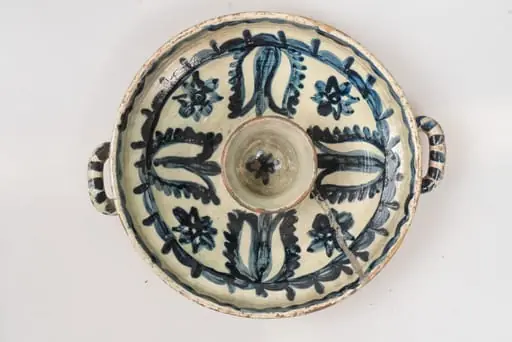 Farfurie adâncă de tip castron, cu corp tronconic, larg și buza îngustă, verticală; este prevăzută în interior, pe centru, cu o farfurioară mai mică (ce putea servi ca suport pentru lumânare), iar pe exterior cu două torți de prindere orizontale. Întreaga suprafață a farfuriei este acoperită cu un strat de angobă albă. Suprafața interioară a farfuriei este decorată prin pictare cu pensula cu motive florale stilizate: pe corpul farfuriei sunt pictate patru flori mari de lalea, alternate cu patru flori mai mici, cu petale ascuțite. Bordura interioară a farfuriei este marcată cu o linie circulară ondulată cu linii mici drepte, perpendiculare, iar marginea buzei cu o linie circulară ondulată. Torțile farfuriei sunt decorate cu linii groase albastre, iar buza este decorată pe exterior cu două linii circulare incizate. Suprafața ornamentată a farfuriei este acoperită cu un strat de smalț transparent. Cromatica: alb, albastru.