Artwork
farfurie
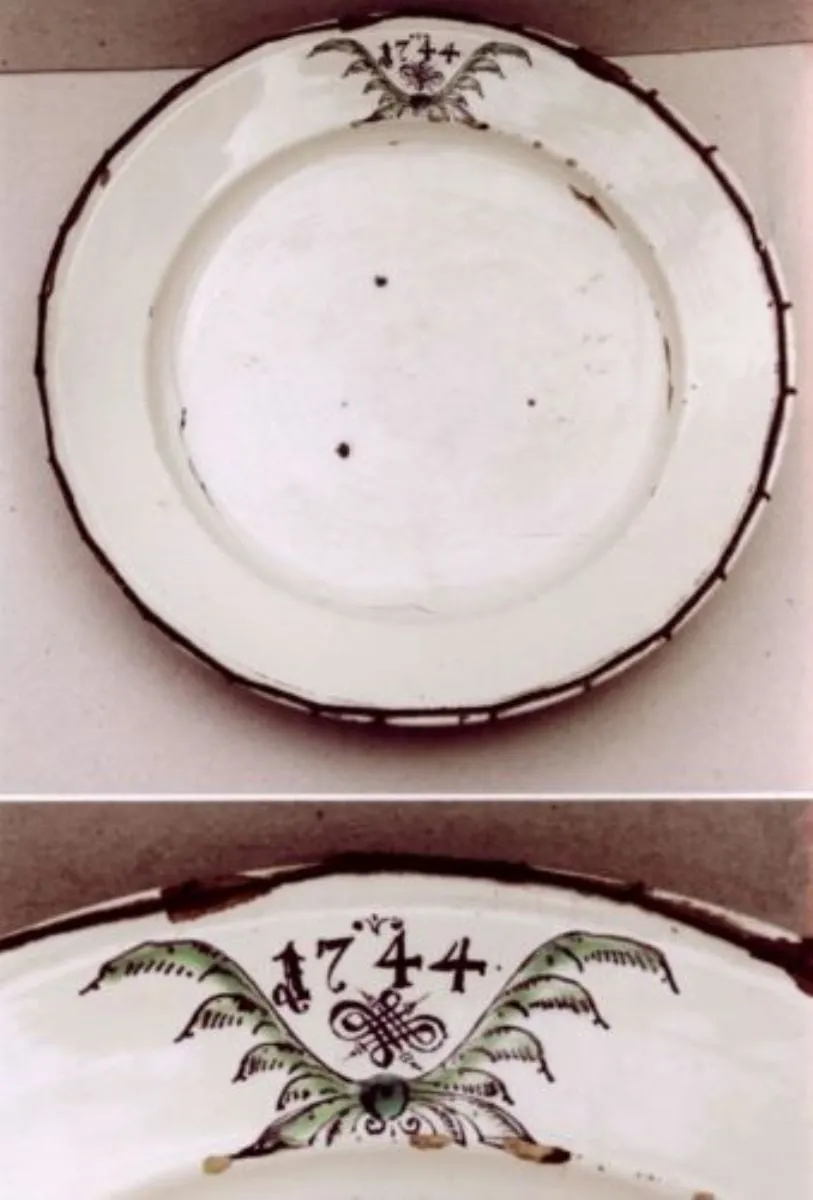
farfurie is a photography by the Baroque artist Unknown. It dates from 1744 and is held in the collection of the Ethnographical Museum of Transylvania.
About this work
Overview
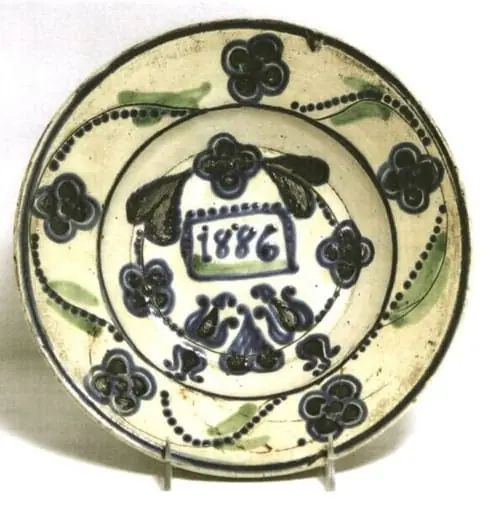
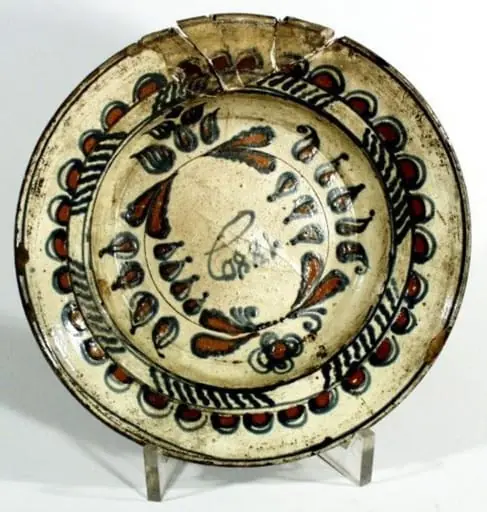
The rim displays a continuous band of ornamental motifs, while the center holds a floral composition accompanied by a small inscription.
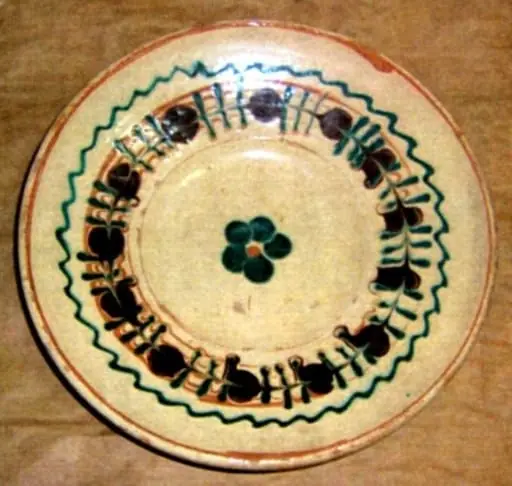
This ceramic plate, labeled 'farfurie,' features a white ground with decorative elements in black and green. The rim displays a continuous band of ornamental motifs, while the center holds a floral composition accompanied by a small inscription. Its form and detailing align with Central European ceramic traditions of the late 17th to early 18th century, reflecting regional craftsmanship rather than high-status porcelain production.
Subject & Meaning
The central design combines stylized leaves and blossoms, common in folk ornamentation of the period. The inscription likely identifies the maker or owner, serving both as a signature and a marker of personal or familial identity. These motifs carry no overt religious or mythological symbolism but instead express local aesthetic preferences rooted in nature and domestic life.
Technique & Style
The plate was hand-painted using underglaze pigments on earthenware, with fine brushwork defining the intricate patterns. The black outlines and green fills suggest a limited palette typical of regional workshops. The Baroque influence appears in the density of detail and rhythmic repetition, though the execution remains modest compared to courtly ceramics, indicating artisanal rather than aristocratic production.
History & Provenance
The plate originates from a tradition of domestic ceramics produced in areas now part of Romania or neighboring regions. It was likely made for everyday use in rural or small-town households. Its preservation suggests it was valued as a household object, possibly passed through generations. The Museum of Ethnography holds similar pieces that contextualize its regional origins.
Context
In the 17th and 18th centuries, ceramic production in Eastern Europe flourished outside urban centers, often in family-run kilns. These wares responded to local tastes and available materials. Unlike imported porcelain, such plates were functional yet decorated to reflect cultural identity, blending folk motifs with broader European decorative trends without direct imitation.
Legacy
This plate represents a continuity of regional ceramic practices that persisted into the 19th century. Its survival offers insight into the domestic material culture of non-elite communities. Contemporary ethnographic collections preserve similar examples, helping to document the evolution of folk art traditions in the absence of formal artistic institutions.
Artist & collection
Museum
Ethnographical Museum of Transylvania
Continue through works from the same source collection.
 Domestic Scene
 Giacomo and Cardinal Marco, investing Andrea, Abbot of San Zeno, with his Benefice
 The Nymph of Fontainebleau
 Portrait of a Woman
 Madonna and Child with Saints in the Enclosed Garden
 Venus and Minerva
 Family Group of Four on Sofa
 Wall painting from Room H of the Villa of P. Fannius Synistor at Boscoreale
 farfurie
 farfurie
 farfurie
 farfurie
 farfurie
 farfurie
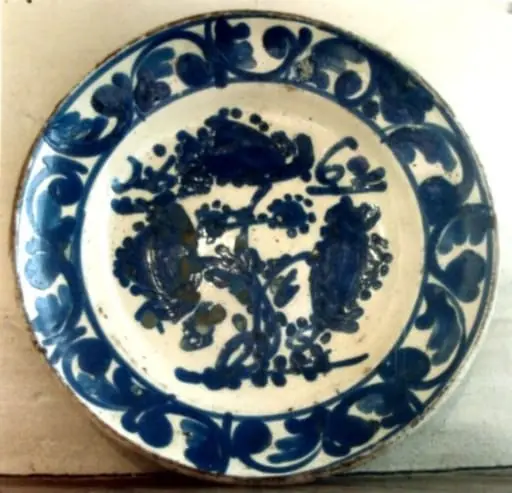
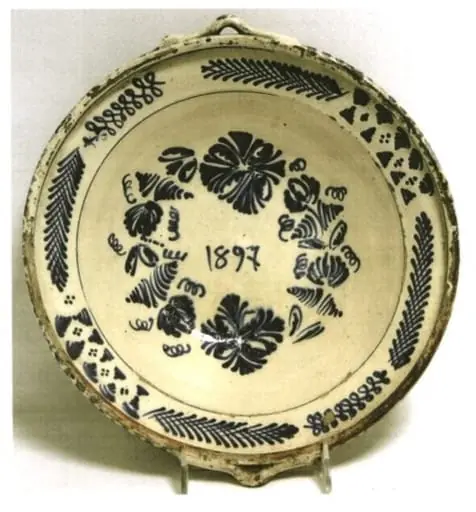
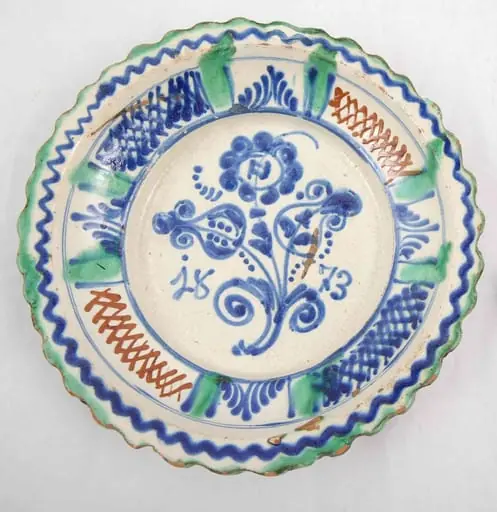
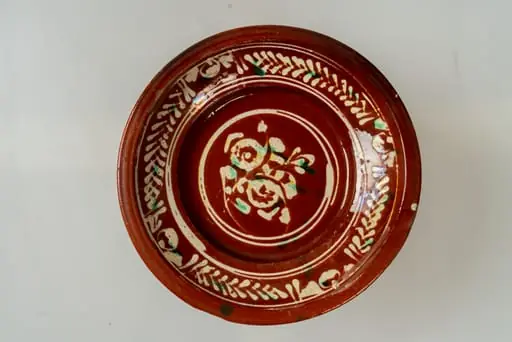 Farfurie adâncă, modelată la roata olarului, cu suprafața interioară neangobată. Decorul este pictat cu cornul și cu pensula și constă în motive decorative florale (un buchet de flori central) și vegetale stilizate, pe buza farfuriei. Pe fața interioară a farfuriei este aplicat un strat de smalț transparent. Cromatica decorului: alb, pe fondul roșu al lutului ars.