Artwork
farfurie
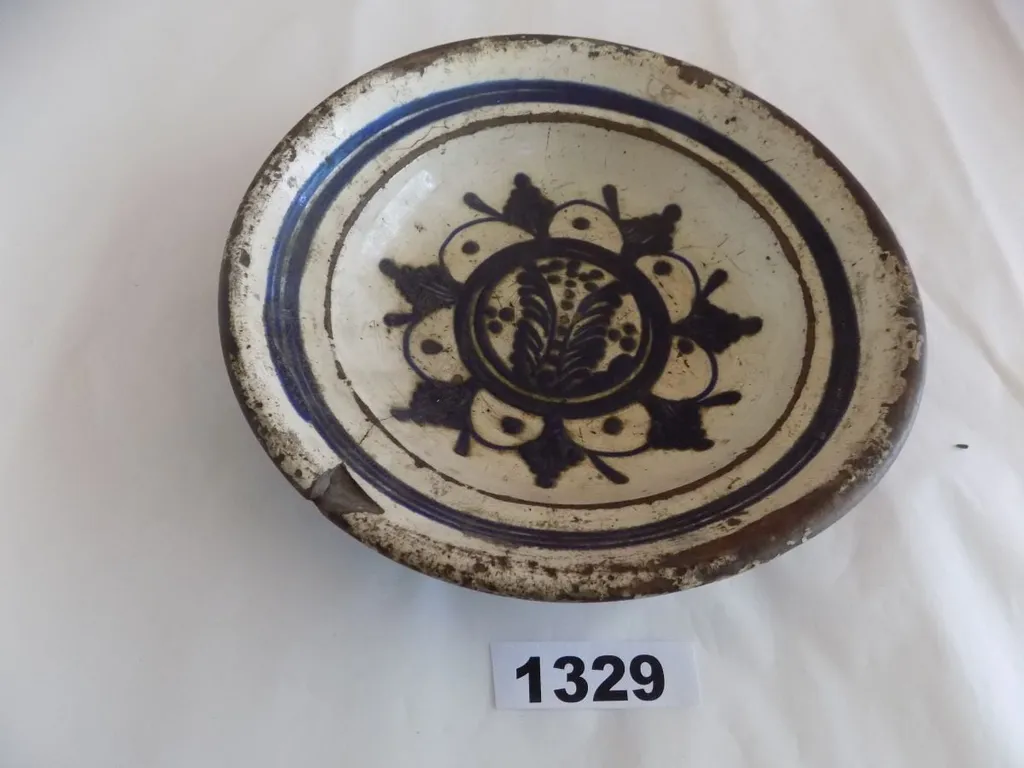
farfurie is a print by Unknown. It dates from 1850 and is held in the collection of the Bucharest Municipality Museum. This ceramic plate features a simple, centered blue floral motif on a white ground.
About this work
Overview
Its round form includes a broad rim, and the surface shows signs of age—fading, minor wear, and subtle imperfections.
This ceramic plate features a simple, centered blue floral motif on a white ground. Its round form includes a broad rim, and the surface shows signs of age—fading, minor wear, and subtle imperfections. The design is restrained, with no additional ornamentation beyond the central pattern and scattered dots and lines. The plain background enhances the plate’s quiet presence, drawing attention to its form and handcrafted detail.
Subject & Meaning
The central design resembles a stylized flower with surrounding leaves, likely drawn from regional decorative traditions. The inclusion of dots and linear accents may reflect symbolic or rhythmic motifs common in folk pottery, though no specific narrative or religious meaning is evident. The motif’s repetition in similar objects suggests it served as a conventional aesthetic, rather than a unique statement.
Technique & Style
The plate was likely hand-painted using a cobalt-based pigment applied beneath a clear glaze, a technique common in European and Near Eastern ceramics. The brushwork is loose and unrefined, indicating artisanal rather than industrial production. The blue pigment has slightly blurred at the edges, a natural result of firing, adding to the work’s tactile, handmade character.
History & Provenance
The object’s age and wear suggest it was used in daily life before entering a collection. Its style aligns with 19th-century folk ceramics from Eastern Europe, possibly Romania or neighboring regions. It may have been acquired by the Museum of Ethnography during efforts to document rural material culture, though its exact origin and prior ownership remain undocumented.
Context
This plate belongs to a broader tradition of utilitarian ceramics decorated with simplified natural forms. Similar pieces were produced in household or village workshops, often for local use. The design’s simplicity reflects both technical limitations and aesthetic preferences of the time, where ornamentation balanced beauty with durability in everyday objects.
Legacy
Though not signed or attributed to a known maker, the plate contributes to the understanding of vernacular ceramic practices in Eastern Europe. Its preservation in ethnographic collections highlights efforts to document non-elite material culture. It remains a quiet example of how ordinary objects carried regional visual languages across generations.
Artist & collection
 Domestic Scene
 Giacomo and Cardinal Marco, investing Andrea, Abbot of San Zeno, with his Benefice
 The Nymph of Fontainebleau
 Portrait of a Woman
 Madonna and Child with Saints in the Enclosed Garden
 Venus and Minerva
 Family Group of Four on Sofa
 Wall painting from Room H of the Villa of P. Fannius Synistor at Boscoreale
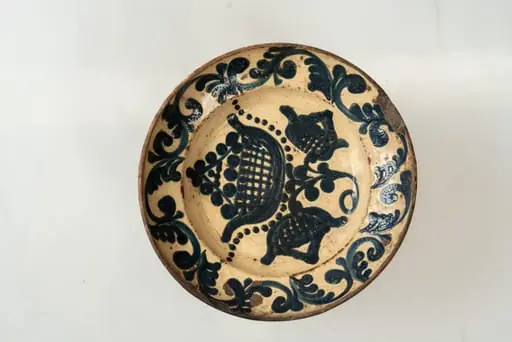 Farfurie semi-adâncă, cu corp scund și buză lată, răsfrântă și muchia buzei ușor concavă spre interior. Piesa este modelată la roata olarului, angobată cu humă albă pe fața interioară a acesteia. Decorul este realizat prin pictare cu pensula și cu cornul, cu linii groase, și constă în motive decorative florale și vegetale stilizate (flori și frunze), dispuse pe toată suprafața farfuriei. Cromatica decorului: alb, albastru. Farfuria este smălțuită pe interior, cu smalț transparent.
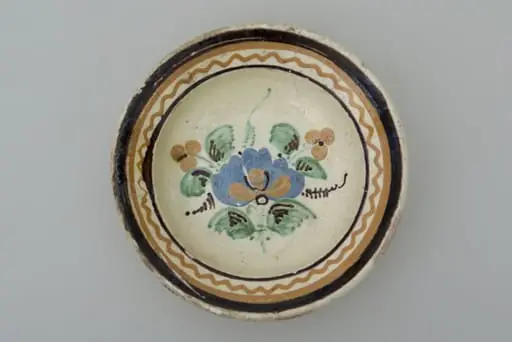 Blid de formă tronconică cu buza evazată. Smălțuit. Decorat cu motive florale: buchet, plasat pe fundul vasului și motive geoemtrice plasate pe gură: alternantă de cercuri și spirale ce se închid îm cerc. Cromatică: fond: alb; motive: maro; crem; verde; albastru.
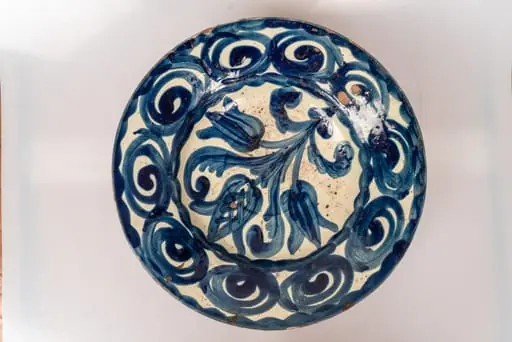 Farfurie mare, adâncă, cu buza răsfrântă; piesa este modelată la roata olarului și angobată pe fața interioară cu humă albă. Decorul monocromatic, este realizat prin pictare cu pensula, cu linii groase, și se compune din motive florale stilizate (trei flori de lalele cu frunze, dispuse central, pe fundul farfuriei) și motivul spiralei, ce acoperă întreaga suprafață a buzei, într-un șir continuu. Bordura interioară a farfuriei și muchia buzei sunt marcate de câte o linie vălurită. Pe fața ornamentată farfuria este acoperită cu un strat de smalț transparent. Cromatica: alb, albastru.
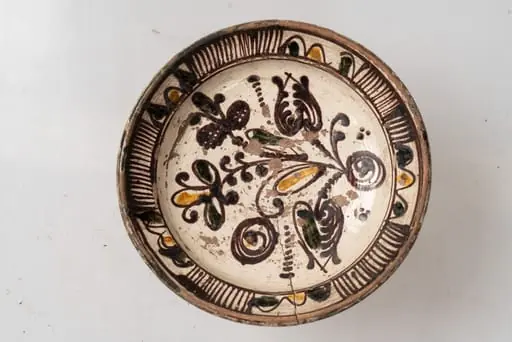 Farfurie semi-adâncă, cu fundul larg și buza evazată; piesa este modelată din lut la roata olarului și angobată cu humă albă pe fața interioară. Decorul este realizat cu pigmenți, prin pictare cu cornul și cu pensula și se compune din motive florale si vegetale stilizate (buchet de flori de lalea și elemente vegetale, de culoare brună, dispuse central, în registrul de pe fundul farfuriei) și din motive geometrice (linii sub formă de semicerc, conținând câte un punct colorat, verde și galben; șiruri de linii paralele, linii circulare). Cromatica: alb, brun, verde, galben. Fața ornamentată a farfuriei este acoperită cu un strat de smalț transparent.
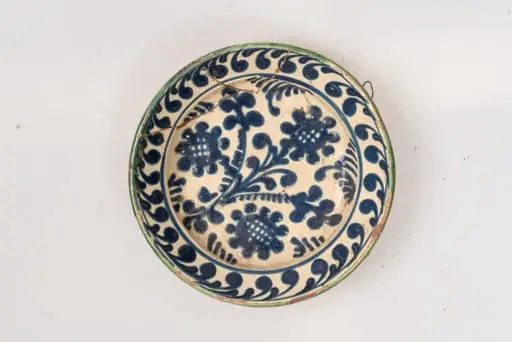 Farfurie de formă semi-adâncă, cu fund larg și buză evazată. Farfuria este angobată pe fața interioară cu un strat de humă albă, peste care este pictat cu cornul și cu pensula decorul format din motive florale și fitomorfe stilizate: o tulpină cu trei flori rotunde, cu mijlocul umplut cu linii hașurate intersectat, și frunze, reprezentate central pe fundul farfuriei. Buza farfuriei este decorată cu un șir continuu format din două tipuri de linii sub formă de virgulă. Bordura interioară a farfuriei este marcată cu o dungă de culoare albastră iar muchia buzei cu o dungă verde. Cromatica: alb, albastru, verde. Farfuria este acoperită pe fața ornamentată cu un strat de smalț transparent.
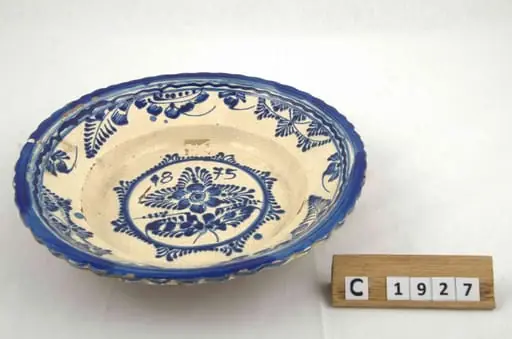 Blid
Blid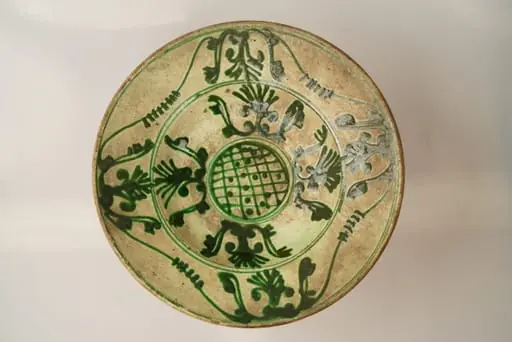 Farfurie mare, adâncă, cu buză lată dreaptă, evazată; suprafața interioară a piesei este acoperită cu un strat de angobă albă peste care este pictat cu cornul decorul monocromatic format din motive vegetale stilizate și geometrice, dispuse astfel: centrul farfuriei este decorat cu un cerc cu linii hașurate intersectat, de culoare verde, cu puncte verzi în interior; pe exteriorul acestui cerc, pe peretele farfuriei, sunt pictate patru motive vegetale aproximativ identice, formate din două frunze ce conțin în interior câte o floare formată din linii în formă de V (acest motiv poate fi interpretat și ca o floare de crin cu petalele deschise). Același motiv vegetal de pe peretele farfuriei se repetă de patru ori și pe buza acesteia, legătura între motive făcându-se cu o linie în formă de S ce are, perpendiculare pe mijloc, mici linii drepte verzi. Suprafața ornamentată a farfuriei este acoperită cu un strat de smalț transparent. Cromatica: alb, verde.
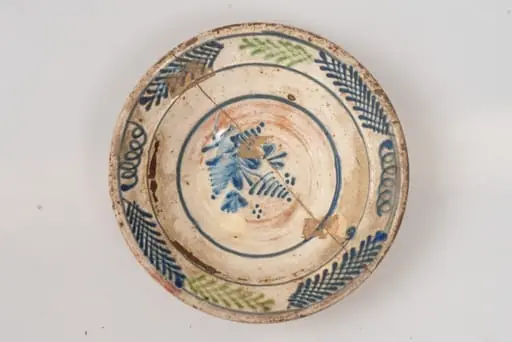 Farfurie adâncă, acoperită pe fața interioară cu un strat de humă albă peste care este pictat cu cornul decorul format din motive florale și vegetale stilizate: central pe fundul farfuriei este pictată o tulpină cu trei flori albastre (realizate din linii paralele descrescătoare ca mărime, dispuse sub formă de triunghi), și frunze albastre, încadrată într-un cerc albastru. Buza farfuriei este decorată cu șase grupuri de motive realizate din linii hașurate intersectat, patru grupuri de culoare albastră, celălalte două de culoare verde, sugerând niște ramuri cu frunze. Două linii mici buclate, așezate diametral opus, completează decorul de pe buza farfuriei. Muchia interioară a buzei și marginea ei sunt marcate de câte o linie circulară de culoare albastră, linii ce încadrează decorul din această zonă. Suprafața ornamentată a farfuriei este acoperită cu un strat de smalț transparent. Cromatica: alb, albastru, verde.
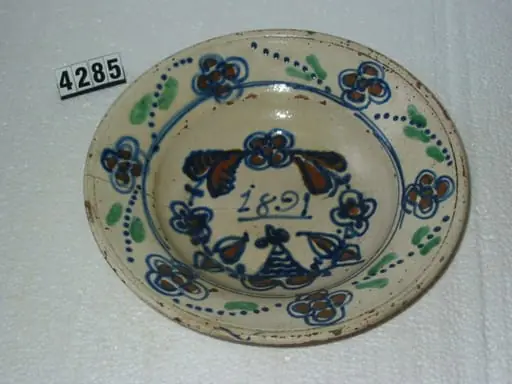 blid
blid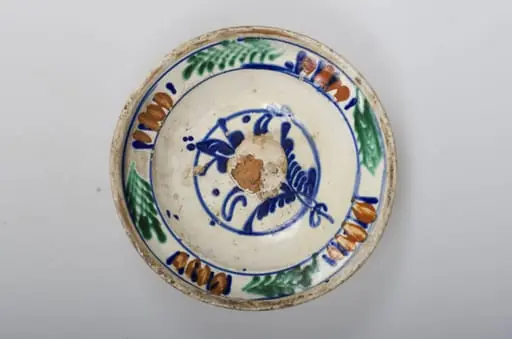 Vas de formă tronconică adâncit, smălțuit în interior cu buză profilată spre exterior. Este decorat în interior cu motive vegetale și florale (motivul brăduțului) dispuse într-un registru circular pictat pe în zona diametrului maxim al vasului. Cromatică: fond cărămiziu (exterior) cu scurgeri de smalț alb spre baza vasului; fond crem (interior); albastru; maro; verde; galben.