Artwork
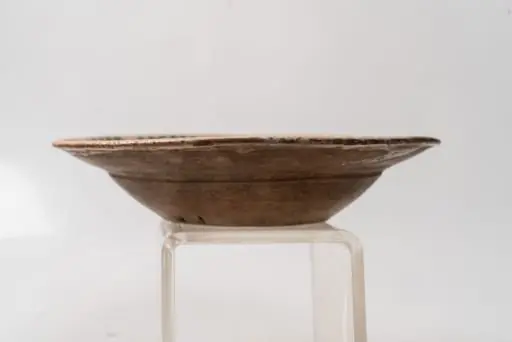
Farfurie de formă semi-adâncă cu buza evazată, ușor concavă spre interior și cu muchia buzei răsfrântă și ondulată. Farfuria este angobată pe fața interioară cu un strat de humă albă, peste care este pictat cu cornul decorul monocromatic, format din motive geometrice: central, pe fundul farfuriei, linii dispuse în formă de V sunt pictate într-un șir continuu de-a lungul unei linii circulare; același motiv decorează și buza farfuriei. Pe fundul farfuriei este înscris cu pensula anul fabricării piesei: 1871. Muchia buzei este marcată cu o dungă de culoare albastră. Cromatica: alb, albastru. Farfuria este acoperită pe fața decorată cu un strat de smalț transparent.
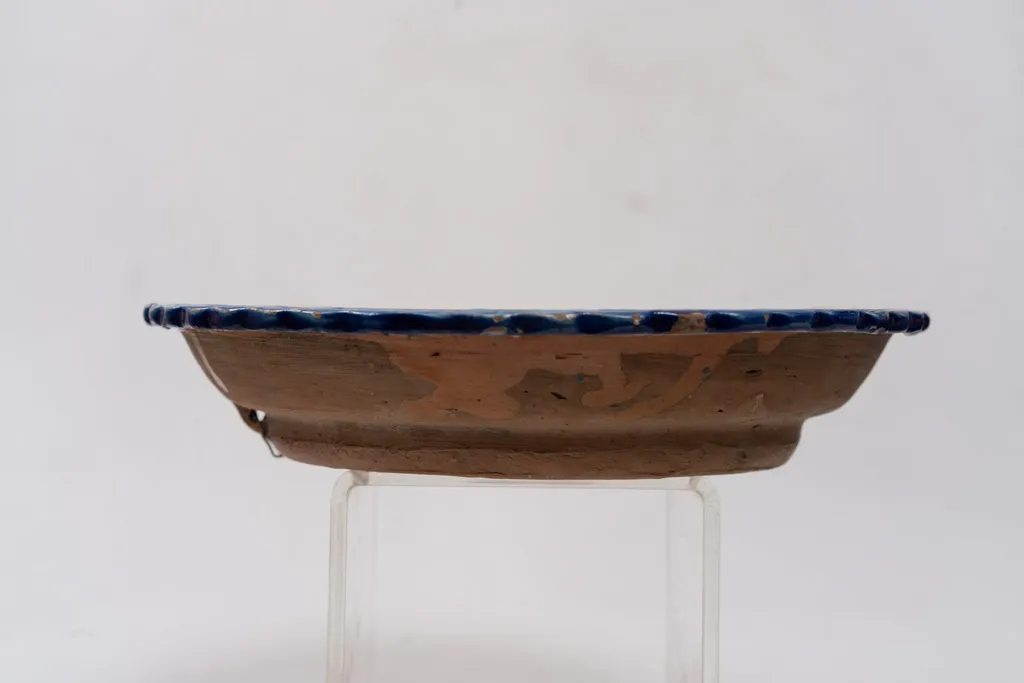
Farfurie de formă semi-adâncă cu buza evazată, ușor concavă spre interior și cu muchia buzei răsfrântă și ondulată. Farfuria este angobată pe fața interioară cu un strat de humă albă, peste care este pictat cu cornul decorul monocromatic, format din motive geometrice: central, pe fundul farfuriei, linii dispuse în formă de V sunt pictate într-un șir continuu de-a lungul unei linii circulare; același motiv decorează și buza farfuriei. Pe fundul farfuriei este înscris cu pensula anul fabricării piesei: 1871. Muchia buzei este marcată cu o dungă de culoare albastră. Cromatica: alb, albastru. Farfuria este acoperită pe fața decorată cu un strat de smalț transparent. is a print by Unknown. It dates from 1871 and is held in the collection of the Ethnographical Museum of Transylvania. This ceramic piece is a semi-deep bowl featuring a flared, slightly concave rim with a wavy, reflexed edge.
About this work
The design is made up of lines that curve around the edge of the bowl, and a small mark in the center that looks like a date: 1871.
This painting shows a shallow bowl with a wavy rim. The bowl is painted with a white layer on the inside, and then decorated with a simple design in blue. The design is made up of lines that curve around the edge of the bowl, and a small mark in the center that looks like a date: 1871.
The bowl is painted in a simple style, with bold lines and bright colors. The blue paint is used sparingly, but adds a pop of color to the otherwise plain design. The overall effect is one of simplicity and elegance.
If you like this painting, you might also want to check out the work of other artists who specialize in still-life paintings, like the ones held at the Museum of Ethnography.
Overview
This ceramic piece is a semi-deep bowl featuring a flared, slightly concave rim with a wavy, reflexed edge. Its interior is coated with a white glaze base, over which a monochromatic design is applied using a brush.
Subject & Meaning
The bowl's design centers on geometric motifs. A continuous circular arrangement of V-shaped lines dominates the base, repeated on the rim. The year '1871' is inscribed on the base, indicating the piece's date of manufacture.
Technique & Style
The bowl features a transparent glaze overlaying a white underglaze on the interior. The design, executed in blue, employs bold, simple lines, characteristic of a restrained yet elegant aesthetic.
History & Provenance
Manufactured in 1871, as directly indicated by the inscription on its base. No additional provenance details are provided.
Context
Comparable to traditional ceramic practices emphasizing geometric patterns and minimal color palettes. Similar pieces can be found in ethnographic collections, such as those at the Museum of Ethnography.
Legacy
Reflects a enduring style of ceramic design focusing on simplicity and geometric motifs, influencing or paralleling the work of artists in the still-life and traditional crafts realm.
Artist & collection
Museum
Ethnographical Museum of Transylvania
Continue through works from the same source collection.
 Domestic Scene
 Giacomo and Cardinal Marco, investing Andrea, Abbot of San Zeno, with his Benefice
 The Nymph of Fontainebleau
 Portrait of a Woman
 Madonna and Child with Saints in the Enclosed Garden
 Venus and Minerva
 Family Group of Four on Sofa
 Wall painting from Room H of the Villa of P. Fannius Synistor at Boscoreale
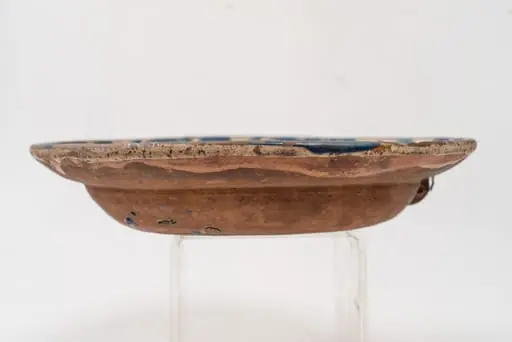 Farfurie adâncă, cu buza evazată și muchia ușor ridicată. Farfuria este angobată pe fața interioară cu un strat de humă albă, peste care este pictat cu cornul și cu pensula decorul monocromatic, format din motive florale și fitomorfe stilizate (tulpină cu cinci flori, din care patru sunt lalele, și frunze, reprezentate pe centrul farfuriei și un șir continuu format din elemente vegetale, ce decorează buza acesteia). Muchia buzei este marcată cu o dungă de culoare albastră. La baza tulpinii cu flori apare pictat cu pensula anul fabricării piesei: 1785. Cromatica: alb, albastru. Farfuria este acoperită pe fața decorată cu un strat de smalț transparent.
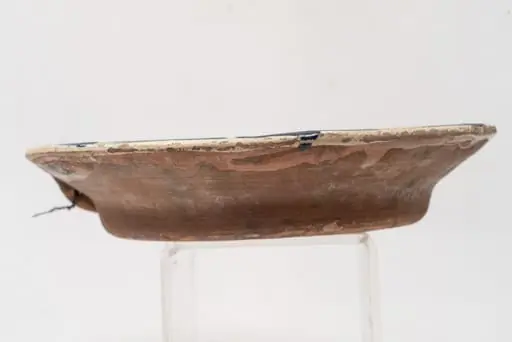 Farfurie de formă semi-adâncă, cu fund larg și buză evazată; este angobată pe fața interioară cu un strat de humă albă, peste care este pictat cu pensula și cu cornul decorul format din motive florale stilizate și din motive geometrice: registrul central de pe fundul farfuriei conține o linie spiralată de culoare maro pe exteriorul căreia sunt pictate opt flori de lalea cu petale în culorile albastru, galben, maro. Buza este decorată cu un șir de linii drepte de culoare verde și albastră. Muchia buzei este marcată cu o dungă albastră și o linie circulară maro, subțire iar bordura interioară a farfuriei este decorată cu trei linii circulare de culoare maro. Cromatica: alb, albastru, verde, galben, maro. Farfuria este acoperită pe fața ornamentată cu un strat de smalț transparent.
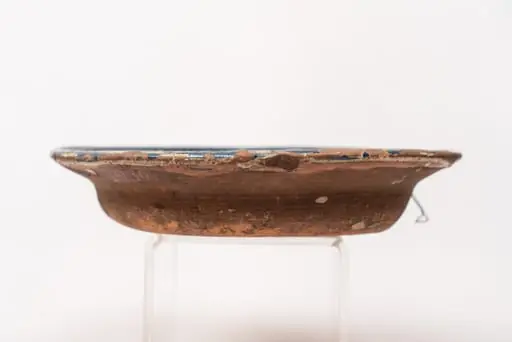 Farfurie semi-adâncă, cu buza răsfrântă; piesa este modelată la roata olarului și angobată cu humă albă pe fața interioară. Decorul monocromatic este realizat prin pictare cu cornul și cu pensula și se compune din motive florale și vegetale stilizate (o tulpină cu două flori de lalea și o floare centrală cu zece petale și frunze, pictate în zona centrală a farfuriei) și motive geometrice (grupuri de linii crescătoare și descrescătoare, șiruri de puncte, linii sub formă de spirală mică, linii hașurate). Câte o linie groasă albastră marchează muchia buzei și bordura interioară a farfuriei. Cromatica: alb, albastru. Fața ornamentată a farfuriei este acoperită cu un start de smalț transparent.
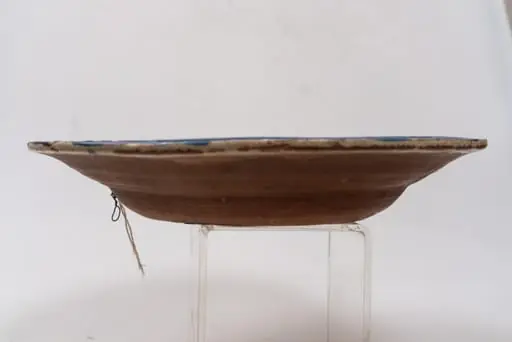 Farfurie de formă semi-adâncă, cu buză lată, evazată; este angobată pe fața interioară cu un strat de humă albă, peste care este pictat cu pensula, cu linii groase, decorul monocromatic, format din motive florale și fitomorfe stilizate: o tulpină cu trei flori de lalea și frunze, reprezentate central pe fundul farfuriei. Buza acesteia este decorată cu un șir de motive formate din linii spiralate aproximativ rotunde. Bordura interioară a farfuriei și muchia buzei sunt marcate cu câte o linie ușor ondulată. Cromatica: alb, albastru. Farfuria este acoperită pe fața decorată cu un strat de smalț transparent.
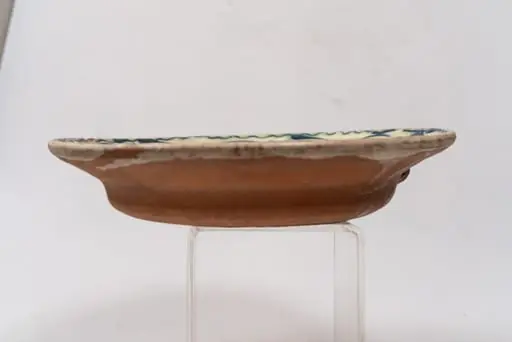 Farfurie semi-adâncă cu buza evazată și muchia rotunjită; este angobată pe suprafața interioară cu un strat de humă albă, peste care este pictat cu cornul decorul monocromatic format din motive florale stilizate și geometrice: centrul farfuriei conține un buchet format din două flori de lalea decorate cu puncte și două flori cu frunze rotunde; la baza acestui buchet este înscris anul confecționării piesei, 1782. Buza farfuriei este decorată cu un șir continuu format din linii în formă de S și grupuri de linii albastre paralele. Suprafața ornamentată a farfuriei este acoperită cu un strat de smalț transparent. Cromatica: alb, albastru.
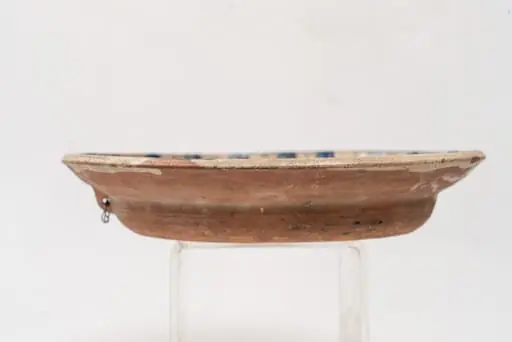 Farfurie de formă semi-adâncă, cu fund larg și buză răsfrântă; este angobată pe fața interioară cu un strat de humă albă, peste care este pictat cu cornul și cu pensula decorul monocromatic, format din motive florale și fitomorfe stilizate și din motive geometrice: registrul central de pe fundul farfuriei conține o linie spiralată ce are pe exterior, de o parte și de alta, câte un semicerc dublu decorat cu linii mici albastre și două motive vegetale. Buza este decorată cu un șir continuu de frunze duble între linii punctate. Muchia buzei este marcată cu o linie de culoare albastră iar bordura interioară a farfuriei cu două linii subțiri circulare. Cromatica: alb, albastru. Farfuria este acoperită pe fața ornamentată cu un strat de smalț transparent.
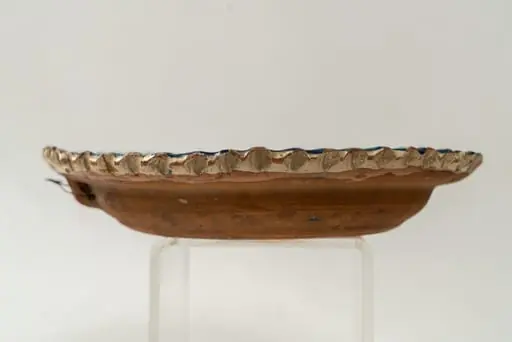 Farfurie semi-adâncă, cu corp scund și buză lată, răsfrântă, ușor concavă spre interior și muchie ondulată (mici alveole). Piesa este modelată la roata olarului, angobată cu humă albă pe fața interioară. Decorul monocromatic, bogat, este realizat prin pictare cu cornul și cu pensula: zona centrală a farfuriei este decorată cu motive florale stilizate - o floare centrală, încadrată într-o linie sub formă de spirală peste care au fost așternute puncte groase; pe exteriorul acestei linii au fost pictate alte flori. Întreg acest registru central este încadrat într-un cerc format dintr-o linie vălurită. Buza farfuriei este decorată cu motive geometrice, într-un registru continuu: linii mici, groase, așezate în formă de V, intercalate de șiruri de puncte mici, sugerând un decor vegetal (frunze). Bordura interioară a farfuriei este marcată de o linie subțire sub formă de cerc iar muchia buzei de o dungă albastră. Cromatica decorului: alb, albastru. Farfuria este smălțuită pe interior cu smalț transparent.
 Farfurie adâncă, cu corp tronconic ușor rotunjit și buză evazată; piesa este modelată din lut la roata olarului și angobată pe interior cu humă albă. Decorul este realizat prin pictare cu cornul și se compune din motive geometrice și florale geometrizate (registrul decorativ central de pe fundul farfuriei conține o floare cu petale conturate cu câte patru linii paralele de culori diferite și cu mijlocul umplut cu linii hașurate; buza farfuriei este decorată cu grupuri de linii ondulate paralele. Cromatica: alb cu halouri maro, verde, galben-ocru, maro, gri. Fața ornamentată a farfuriei este acoperită cu un strat de smalț transparent.