Artwork
Farfurie semi-adâncă cu buza evazată și muchia rotunjită; este angobată pe suprafața interioară cu un strat de humă albă, peste care este pictat cu cornul decorul monocromatic format din motive florale stilizate și geometrice: centrul farfuriei conține un buchet format din două flori de lalea decorate cu puncte și două flori cu frunze rotunde; la baza acestui buchet este înscris anul confecționării piesei, 1782. Buza farfuriei este decorată cu un șir continuu format din linii în formă de S și grupuri de linii albastre paralele. Suprafața ornamentată a farfuriei este acoperită cu un strat de smalț transparent. Cromatica: alb, albastru.
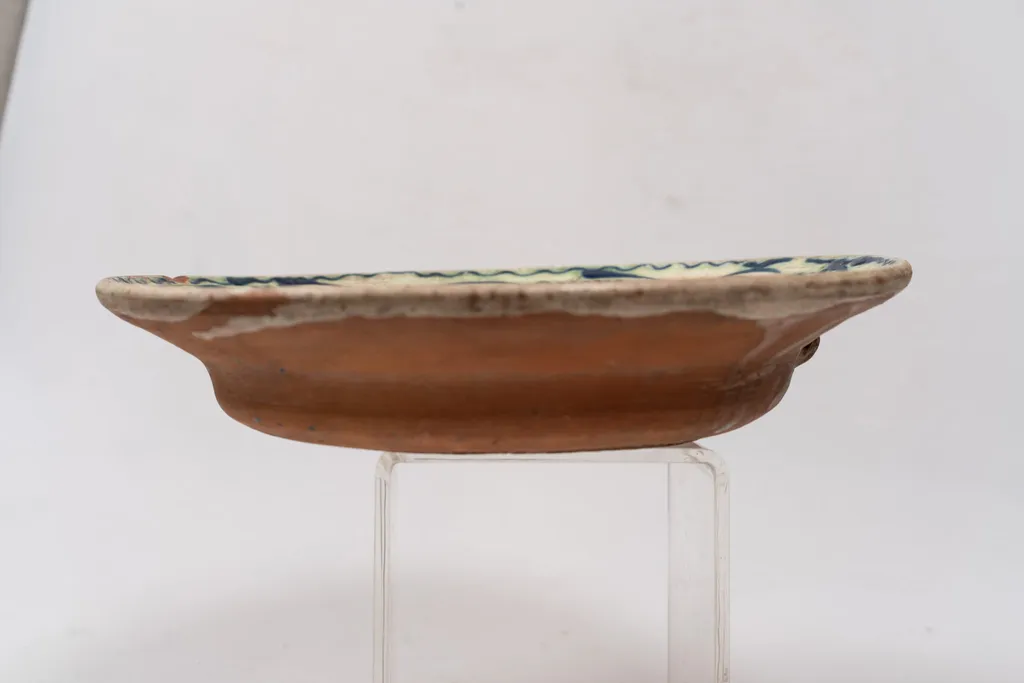
Farfurie semi-adâncă cu buza evazată și muchia rotunjită; este angobată pe suprafața interioară cu un strat de humă albă, peste care este pictat cu cornul decorul monocromatic format din motive florale stilizate și geometrice: centrul farfuriei conține un buchet format din două flori de lalea decorate cu puncte și două flori cu frunze rotunde; la baza acestui buchet este înscris anul confecționării piesei, 1782. Buza farfuriei este decorată cu un șir continuu format din linii în formă de S și grupuri de linii albastre paralele. Suprafața ornamentată a farfuriei este acoperită cu un strat de smalț transparent. Cromatica: alb, albastru. is a photography by Unknown. It dates from 1750 and is held in the collection of the Ethnographical Museum of Transylvania. This shallow clay dish, dated 1782, features a rounded rim and an interior decorated with a simple, monochromatic design.
About this work
Overview
This shallow clay dish, dated 1782, features a rounded rim and an interior decorated with a simple, monochromatic design. The piece exhibits a combination of white and blue hues, with a transparent glaze overlay.
Subject & Meaning
The central motif is a stylized bouquet containing two lily-like flowers adorned with dots and two rounded-leaf flowers. The inclusion of the year '1782' at the base of this motif serves as a date of creation.
Technique & Style
The dish's interior is first coated with a white slip (humă albă), upon which blue, stylized floral and geometric patterns are applied using a corn tool. The rim features a continuous pattern of 'S'-shaped lines and parallel blue lines.
History & Provenance
While the exact origin and ownership history are not provided, the dish's condition, with visible wear on the edges, suggests age and use consistent with its 1782 date. Provenance details are not specified.
Context
This type of handmade, decorated pottery is characteristic of traditional craftsmanship. For similar examples, the Museum of Ethnography is noted as a relevant resource, implying the dish's style aligns with ethnographic or folk art categories.
Legacy
The legacy of this specific dish is not detailed in the provided information, focusing instead on its characteristics and suggested interest for those who appreciate handmade pottery.
Artist & collection
Museum
Ethnographical Museum of Transylvania
Continue through works from the same source collection.
 Domestic Scene
 Giacomo and Cardinal Marco, investing Andrea, Abbot of San Zeno, with his Benefice
 The Nymph of Fontainebleau
 Portrait of a Woman
 Madonna and Child with Saints in the Enclosed Garden
 Venus and Minerva
 Family Group of Four on Sofa
 Wall painting from Room H of the Villa of P. Fannius Synistor at Boscoreale
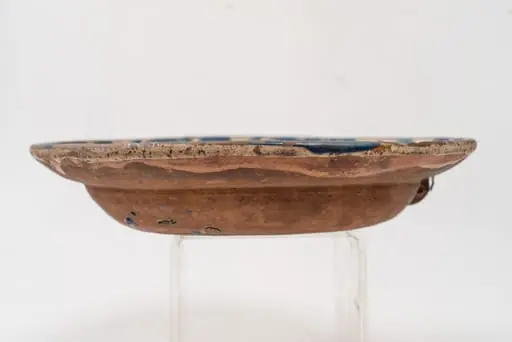 Farfurie adâncă, cu buza evazată și muchia ușor ridicată. Farfuria este angobată pe fața interioară cu un strat de humă albă, peste care este pictat cu cornul și cu pensula decorul monocromatic, format din motive florale și fitomorfe stilizate (tulpină cu cinci flori, din care patru sunt lalele, și frunze, reprezentate pe centrul farfuriei și un șir continuu format din elemente vegetale, ce decorează buza acesteia). Muchia buzei este marcată cu o dungă de culoare albastră. La baza tulpinii cu flori apare pictat cu pensula anul fabricării piesei: 1785. Cromatica: alb, albastru. Farfuria este acoperită pe fața decorată cu un strat de smalț transparent.
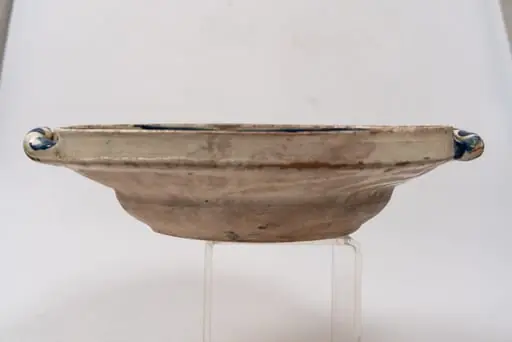 Farfurie adâncă de tip castron, cu corp tronconic, buză dreaptă, verticală și două torți laterale de prindere inserate orizontal. Piesa este acoperită pe ambele fețe cu un strat de angobă albă. Decorul monocromatic este realizat prin pictare cu cornul și cu pensula și se compune din motive florale și vegetale stilizate și din motive geometrice: central pe fundul farfuriei se regăsește o tulpină cu patru flori, una de lalea iar celălalte sub formă de boboci decorați cu puncte și cu linii hașurate intersectat. De o parte și de alta a florii centrale se găsește câte un motiv format din linii hașurate intersectat. Decorul marginal constă într-un șir continuu de elemente vegetale (frunze). Bordura interioară a farfuriei și marginea buzei sunt decorate cu linii circulare simple și linie circulară ondulată. Torțile de prindere au un decor simplu, format din mici linii paralele albastre. Cromatica: alb, albastru. Suprafața ornamentată a farfuriei este acoperită cu un strat de smalț transparent.
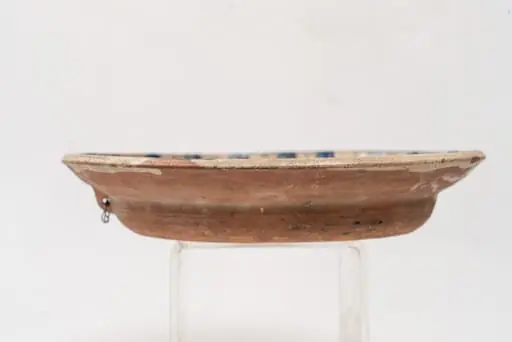 Farfurie de formă semi-adâncă, cu fund larg și buză răsfrântă; este angobată pe fața interioară cu un strat de humă albă, peste care este pictat cu cornul și cu pensula decorul monocromatic, format din motive florale și fitomorfe stilizate și din motive geometrice: registrul central de pe fundul farfuriei conține o linie spiralată ce are pe exterior, de o parte și de alta, câte un semicerc dublu decorat cu linii mici albastre și două motive vegetale. Buza este decorată cu un șir continuu de frunze duble între linii punctate. Muchia buzei este marcată cu o linie de culoare albastră iar bordura interioară a farfuriei cu două linii subțiri circulare. Cromatica: alb, albastru. Farfuria este acoperită pe fața ornamentată cu un strat de smalț transparent.
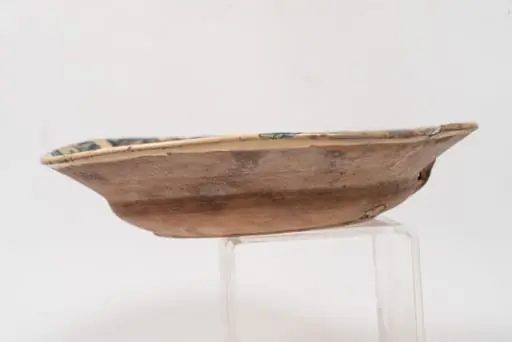 Farfurie semi-adâncă, cu buza dreaptă, evazată; este angobată pe suprafața interioară cu un strat de humă albă peste care este pictat cu cornul și cu pensula decorul format din motive geometrice și motive vegetale și florale stilizate: registrul central de pe fundul farfuriei cuprinde patru flori de lalea de culoare albastră, așezate în formă de cruce în colțurile unui romb ce conține în interior un motiv format din linii albastre hașurate intersectat, motiv ce se regăsește și între florile de lalea. Registrul marginal de pe buza farfuriei este format dintr-o succesiune alternantă a două motive decorative vegetale, de culoare verde și albastră (un motiv format din două vrejuri albastre în formă de inimă, ce închid în interior un grup de linii hașurate intersectat de culoare verde; al doilea motiv este format dintr-un grup de frunze ce conțin în mijloc o floare ovală, cu interiorul format din linii hașurate intersectat). Suprafața ornamentată a farfuriei este acoperită cu un strat de smalț transparent. Cromatica: alb, albastru, verde.
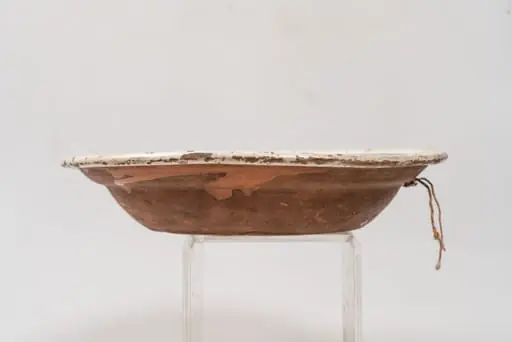 Farfurie adâncă, cu buza răsfrântă și muchia buzei rotunjită; piesa este angobată pe fața interioară cu un strat de humă albă, peste care este pictat cu cornul decorul format din motive geometrice: central pe fundul farfuriei este reprezentată o floare geometrizată cu șase petale și puncte albastre, înscrisă într-un cerc care este, la rândul său, înscris într-un motiv sub formă de rozetă albastră. Buza farfuriei poartă un decor format din grupuri de linii hașurate intersectate, de culoare albastră și roșu cărămiziu, înscrise între două linii circulare de culoare albastră. Cromatica: alb, albastru, roșu cărămiziu. Fața ornamentată a farfuriei este acoperită cu un strat de smalț transparent.
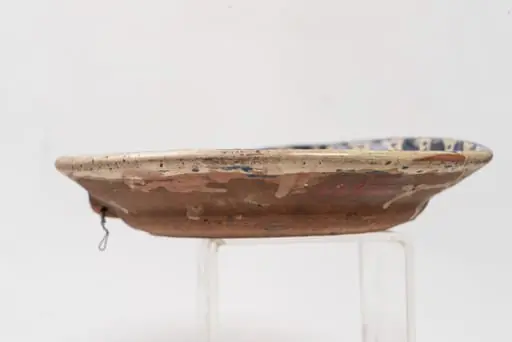 Farfurie de formă semi-adâncă, cu buză lată, evazată și muchia buzei ușor ridicată. Farfuria este angobată pe fața interioară cu un strat de humă albă, peste care este pictat cu cornul și cu pensula decorul monocromatic, format din motive florale și fitomorfe stilizate: registrul decorativ central conține un cerc dublu, decorat cu linii mici sub formă de virgulă, în interior conținând o lalea iar pe exterior, poziționate în formă de cruce, patru flori de lalea intercalate de patru motive sugerând niște frunze. Buza farfuriei este decorată cu un șir continuu de frunze duble între linii punctate. Muchia buzei este marcată cu o dungă de culoare albastră iar bordura interioară a farfuriei cu două linii circulare simple și o linie circulară ondulată între ele. Cromatica: alb, albastru. Farfuria este acoperită pe fața decorată cu un strat de smalț transparent.
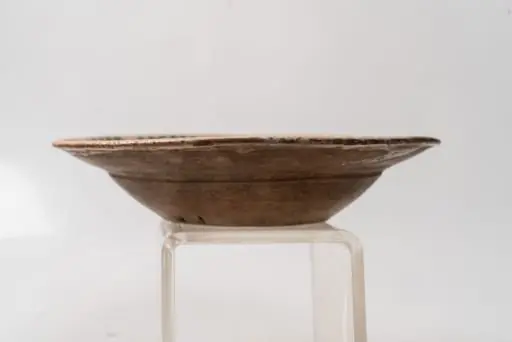 Farfurie adâncă, cu corp tronconic ușor rotunjit și buză evazată; piesa este modelată din lut la roata olarului și angobată pe interior cu humă albă. Decorul este realizat prin pictare cu cornul și se compune din motive geometrice și florale geometrizate (registrul decorativ central de pe fundul farfuriei conține o floare cu petale conturate cu câte patru linii paralele de culori diferite și cu mijlocul umplut cu linii hașurate; buza farfuriei este decorată cu grupuri de linii ondulate paralele. Cromatica: alb cu halouri maro, verde, galben-ocru, maro, gri. Fața ornamentată a farfuriei este acoperită cu un strat de smalț transparent.