Artwork
Farfurie mare, adâncă, cu buză răsfrântă; piesa este modelată la roata olarului și angobată cu humă albă pe fața interioară. Decorul este unul figurativ, realizat în manieră naivă, reprezentat de un soldat în uniformă verde, ținând în mâna dreaptă hățurile calului maro pe care este încălecat. Aceste figuri sunt încadrate într-un cerc format din două linii albastre. Bordura interioară a farfuriei este decorată cu un șir continuu format din motive geometrice (linii concave de culoare maro și puncte de culoare verde). Cromatica: alb, maro, verde, galben, albastru. Piesa este smălțuită transparent pe fața decorată.
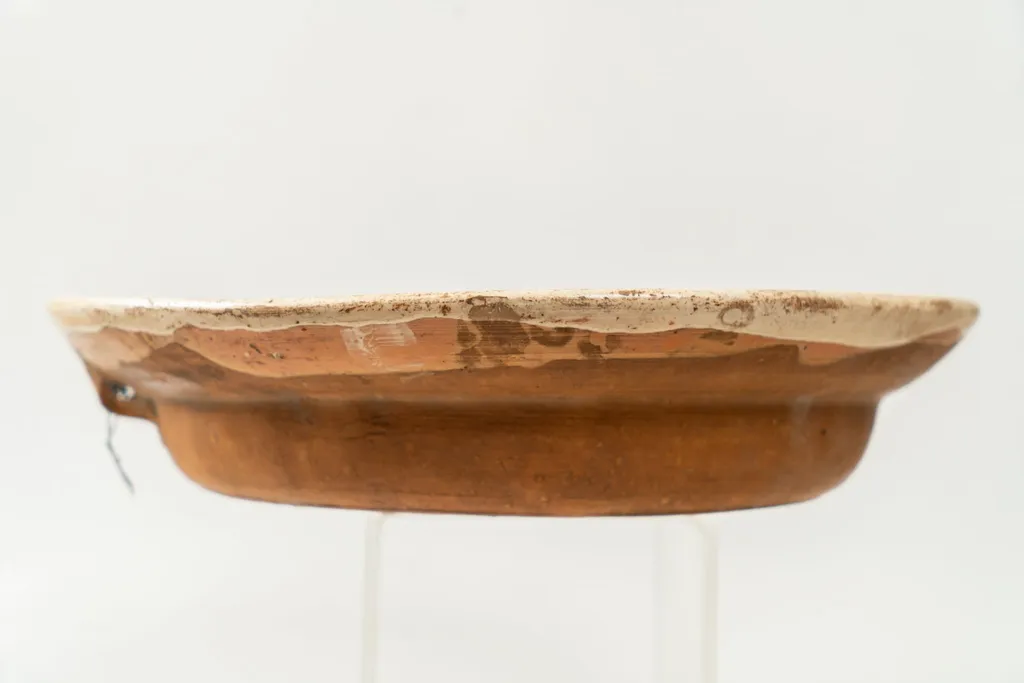
Farfurie mare, adâncă, cu buză răsfrântă; piesa este modelată la roata olarului și angobată cu humă albă pe fața interioară. Decorul este unul figurativ, realizat în manieră naivă, reprezentat de un soldat în uniformă verde, ținând în mâna dreaptă hățurile calului maro pe care este încălecat. Aceste figuri sunt încadrate într-un cerc format din două linii albastre. Bordura interioară a farfuriei este decorată cu un șir continuu format din motive geometrice (linii concave de culoare maro și puncte de culoare verde). Cromatica: alb, maro, verde, galben, albastru. Piesa este smălțuită transparent pe fața decorată. is a photography by Unknown. It dates from 1850 and is held in the collection of the Ethnographical Museum of Transylvania. A large, shallow ceramic dish with a flared rim, hand-thrown on a potter’s wheel, features a white slip coating on its interior surface.
About this work
Overview
A large, shallow ceramic dish with a flared rim, hand-thrown on a potter’s wheel, features a white slip coating on its interior surface. The exterior remains unglazed, showing natural clay texture and signs of wear. A transparent glaze covers only the painted interior, preserving the delicate figural scene while leaving the rim’s surface matte and aged.
Subject & Meaning
The central image depicts a soldier mounted on a brown horse, holding reins in his right hand, rendered in a simplified, folk style. The figure is enclosed within a double blue circle, suggesting symbolic framing. The absence of context or narrative detail implies a personal or local emblem, possibly tied to military service or regional identity, rather than a grand historical event.
Technique & Style
The decoration was applied with brushwork using muted pigments—brown, green, yellow, and blue—on a white slip ground. Motifs along the inner rim consist of repeating geometric patterns: concave lines and dots. The painting is unrefined, lacking perspective or shading, characteristic of vernacular ceramic traditions where function and symbolic form outweigh naturalistic representation.
History & Provenance
The piece shows evidence of prolonged use, with surface cracks, faded pigments, and a worn rim. Its construction and decoration align with early 20th-century Romanian rural pottery practices. Though exact origin is unrecorded, similar items are documented in regional collections, particularly among household ceramics used in Moldavia or Transylvania.
Context
This dish belongs to a broader tradition of utilitarian pottery in Eastern Europe, where domestic vessels often bore symbolic imagery. Soldiers and horses appeared in folk art as representations of duty, mobility, or local pride. The use of limited color palettes and repetitive borders reflects both material constraints and inherited decorative conventions passed through generations of potters.
Legacy
The object survives as a quiet testament to everyday craftsmanship in pre-industrial Romania. Though not produced by a known artisan, its preservation in museum collections highlights the cultural value assigned to vernacular art forms. It contributes to understanding how ordinary objects carried personal or communal meaning beyond their functional role.
Artist & collection
Museum
Ethnographical Museum of Transylvania
Continue through works from the same source collection.
 Domestic Scene
 Giacomo and Cardinal Marco, investing Andrea, Abbot of San Zeno, with his Benefice
 The Nymph of Fontainebleau
 Portrait of a Woman
 Madonna and Child with Saints in the Enclosed Garden
 Venus and Minerva
 Family Group of Four on Sofa
 Wall painting from Room H of the Villa of P. Fannius Synistor at Boscoreale
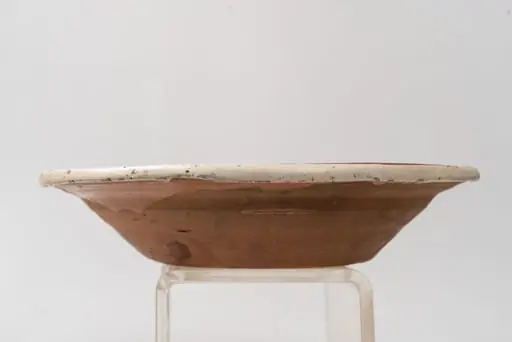 Farfurie adâncă, cu buza răsfrântă; piesa este modelată din lut la roata olarului și angobată cu humă albă pe fața interioară. Decorul este realizat prin pictare cu cornul și constă în motive geometrice (linii hașurate, puncte, linii circulare, linii dispuse sub formă de raze, linii în V). Cromatica: alb, albastru, verde, siena arsă. Fața ornamentată a farfuriei este acoperită cu un strat de smalț transparent.
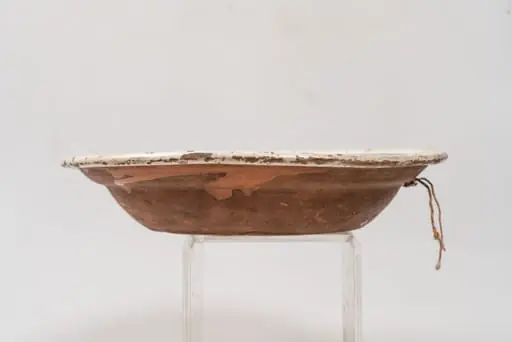 Farfurie adâncă, cu buza răsfrântă și muchia buzei rotunjită; piesa este angobată pe fața interioară cu un strat de humă albă, peste care este pictat cu cornul decorul format din motive geometrice: central pe fundul farfuriei este reprezentată o floare geometrizată cu șase petale și puncte albastre, înscrisă într-un cerc care este, la rândul său, înscris într-un motiv sub formă de rozetă albastră. Buza farfuriei poartă un decor format din grupuri de linii hașurate intersectate, de culoare albastră și roșu cărămiziu, înscrise între două linii circulare de culoare albastră. Cromatica: alb, albastru, roșu cărămiziu. Fața ornamentată a farfuriei este acoperită cu un strat de smalț transparent.
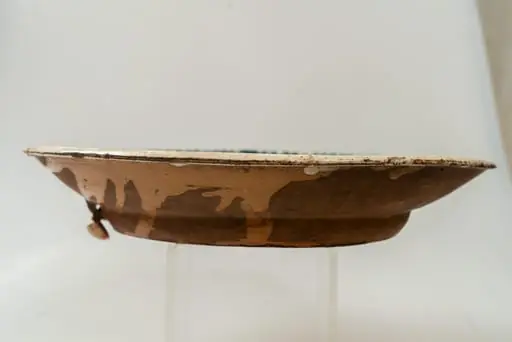 Farfurie mare, lată, cu buză răsfrântă. Este modelată la roata olarului și angobată cu humă albă pe fața interioară. Decorul este realizat prin pictare cu cornul și cu pensula și se compune din motive decorative florale stilizate (buchet central, pe fundul farfuriei) și motive geometrice variate, dispuse pe buza farfuriei. Cromatica: alb, brun, verde, galben, albastru. Fața interioară a farfuriei este acoperită de un strat de smalț transparent.
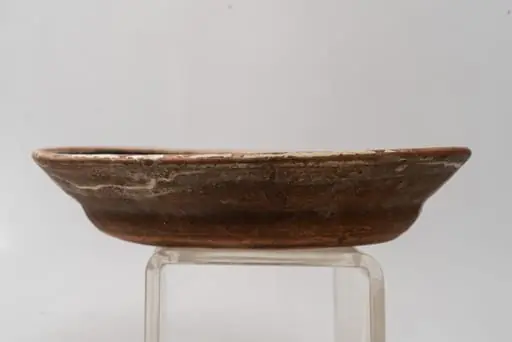 Farfurie semi-adâncă, cu fundul larg și buza răsfrântă oblic; piesa este modelată din lut la roata olarului și angobată cu humă albă pe fața interioară. Decorul este realizat cu pigmenți, prin pictare cu cornul și cu pensula și se compune din motive florale si vegetale stilizate (floare de lalea, două flori cu petale rotunde, boboci, frunze - dispuse central, în registrul de pe fundul farfuriei) și din motive geometrice (linii sub formă de semicerc, conținând câte un punct colorat; șiruri de linii paralele, linii hașurate, linii circulare). Cromatica: alb, maro, verde, galben ocru. Fața ornamentată a farfuriei este acoperită cu un strat de smalț transparent.
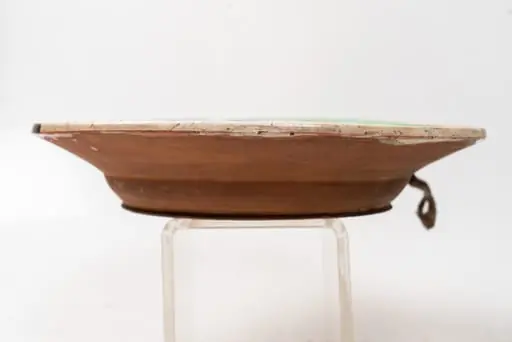 Farfurie mare, semi-adâncă, cu buza răsfrântă; piesa este modelată la roata olarului și angobată cu humă albă pe fața interioară. Decorul este realizat prin sgrafitare în pasta albă de angobă și prin pictare cu pensula și cu cornul și se compune din motive decorative vegetale (o floare foarte stilizată, cu patru petale, dispusă în registrul central de pe fundul farfuriei) și geometrice (linii circulare, de culoare verde și siena arsă, pe buza farfuriei). Cromatica: alb, verde, siena arsă, maro. Fața ornamentată a farfuriei este acoperită cu un strat de smalț transparent.
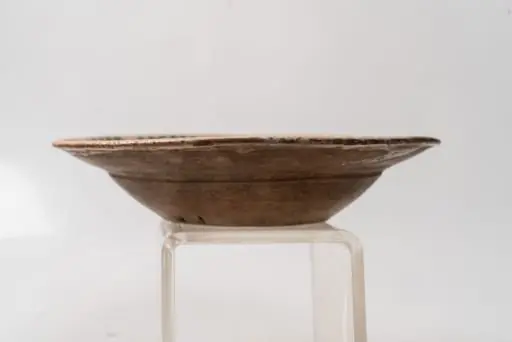 Farfurie adâncă, cu corp tronconic ușor rotunjit și buză evazată; piesa este modelată din lut la roata olarului și angobată pe interior cu humă albă. Decorul este realizat prin pictare cu cornul și se compune din motive geometrice și florale geometrizate (registrul decorativ central de pe fundul farfuriei conține o floare cu petale conturate cu câte patru linii paralele de culori diferite și cu mijlocul umplut cu linii hașurate; buza farfuriei este decorată cu grupuri de linii ondulate paralele. Cromatica: alb cu halouri maro, verde, galben-ocru, maro, gri. Fața ornamentată a farfuriei este acoperită cu un strat de smalț transparent.
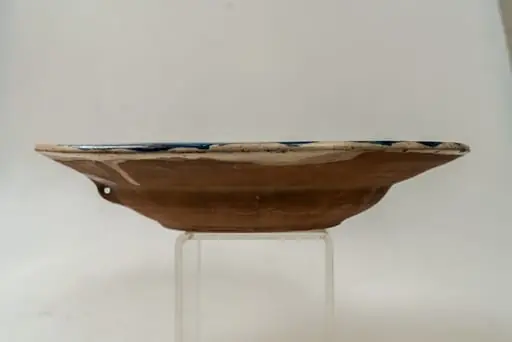 Farfurie mare, adâncă, cu corp scund și buză lată, răsfrântă. Piesa este modelată la roata olarului, angobată cu humă albă pe fața interioară a acesteia. Decorul este unul bogat, realizat prin pictare cu pensula, cu linii groase, și constă în motive decorative florale și vegetale stilizate (flori și frunze), dispuse pe toată suprafața farfuriei. Cromatica decorului: alb, albastru. Farfuria este smălțuită pe interior, cu smalț transparent.
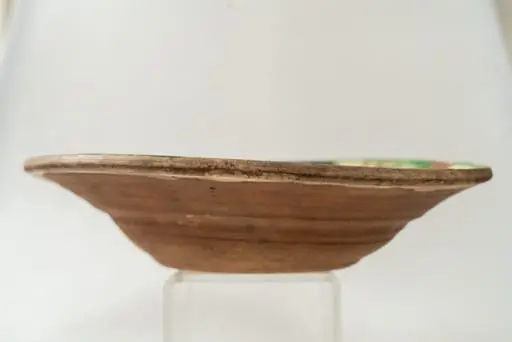 Farfurie mare, de formă adâncă, cu buză răsfrântă. Piesa este modelată la roată, angobată cu humă albă pe fața interioară. Decorul este realizat prin pictare cu pensula, cu smalțuri colorate (verde și maro) și prin sgrafitare. Motivele decorative sunt florale și vegetale stilizate (flori cu frunze) dispuse pe fundul farfuriei (o floare) și patru flori intercalate de patru elemente decorative vegetale (frunze) sugerând motivul inimii, dispuse pe buza farfuriei. Bordura interioară a farfuriei este marcată de o linie groasă sub formă de cerc, de culoare verde. Pe fața interioară a farfuriei este aplicat un strat de smalț transparent.
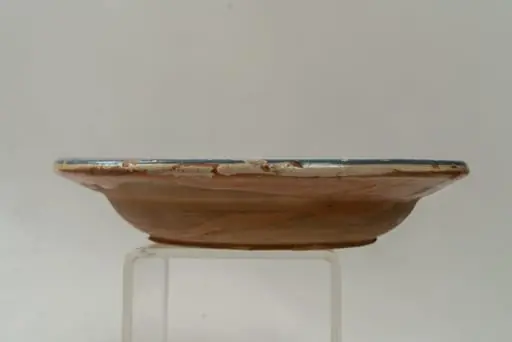 Farfurie adâncă, cu buză răsfrântă, modelată la roata olarului și angobată cu humă albă pe fața interioară a acesteia. Decorul, realizat prin pictare cu pensula și cu cornul, se compune din motive avimorfe (cocoș) și florale stilizate, dispuse într-un registru decorativ în zona centrală a farfuriei. Decorul este completat de câteva motive geometrice (linie ondulată, puncte, linii hașurate, linii sub formă de cercuri concentrice). Pe buza farfuriei: două cercuri concentrice, subțiri și o dungă albastră pe toată lungimea muchiei buzei. Cromatica: alb, albastru, verde, maro, siena naturală, roz pal. Peste decor, pe fața interioară a farfuriei este așezat un strat de smalț transparent.
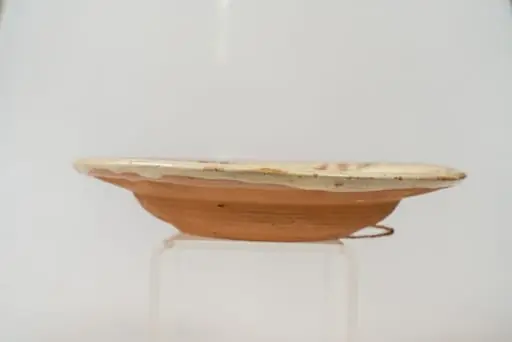 Farfurie adâncă, cu buza răsfrântă; piesa este modelată la roata olarului și angobată cu humă albă pe fața interioară. Decorul, realizat cu pigmenți, prin pictare cu cornul și cu pensula, se compune din motive decorative geometrice: linie spiralată de culoare maro, înscrisă într-un cerc format dintr-o linie groasă verde - amplasate central, pe fundul farfuriei; șase grupuri de motive decorative formate dintr-o linie ușor ondulată având de o parte și de alta cercuri realizate cu contur maro și umplute cu culorile maro și verde, sugerând niște spice de grâu - amplasate pe buza farfuriei, între două linii sub formă de cerc, de culoare maro. Cromatica: alb, maro, siena arsă, verde. Fața decorată a farfuriei este acoperită cu un strat de smalț transparent.