Artwork
Farfurie mare, semi-adâncă, cu buza răsfrântă; piesa este modelată la roata olarului și angobată cu humă albă pe fața interioară. Decorul este realizat prin sgrafitare în pasta albă de angobă și prin pictare cu pensula și cu cornul și se compune din motive decorative vegetale (o floare foarte stilizată, cu patru petale, dispusă în registrul central de pe fundul farfuriei) și geometrice (linii circulare, de culoare verde și siena arsă, pe buza farfuriei). Cromatica: alb, verde, siena arsă, maro. Fața ornamentată a farfuriei este acoperită cu un strat de smalț transparent.
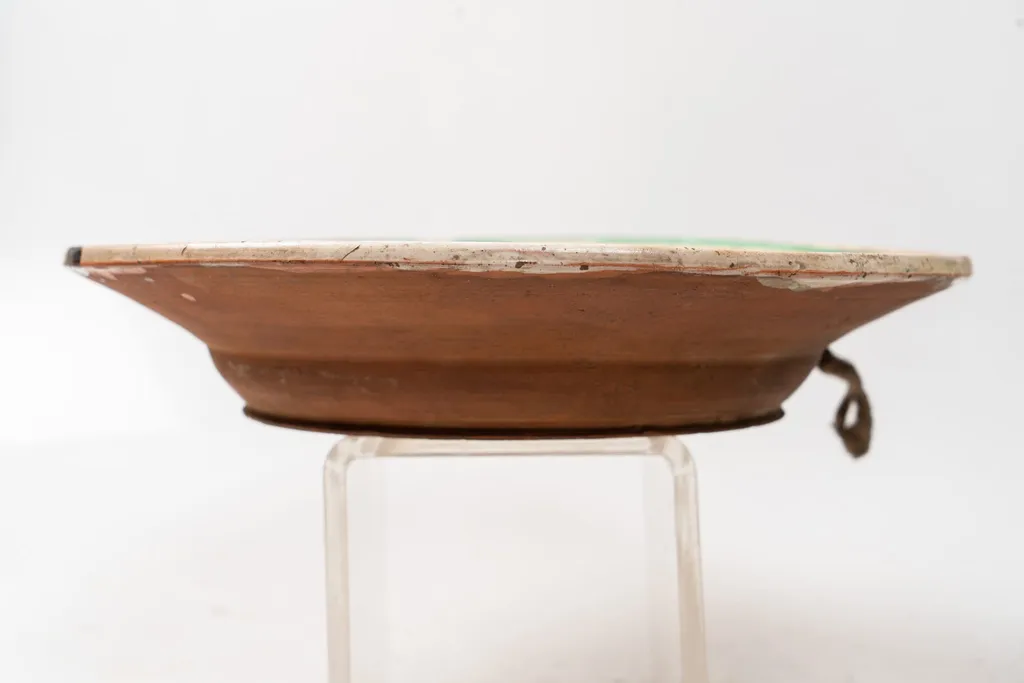
Farfurie mare, semi-adâncă, cu buza răsfrântă; piesa este modelată la roata olarului și angobată cu humă albă pe fața interioară. Decorul este realizat prin sgrafitare în pasta albă de angobă și prin pictare cu pensula și cu cornul și se compune din motive decorative vegetale (o floare foarte stilizată, cu patru petale, dispusă în registrul central de pe fundul farfuriei) și geometrice (linii circulare, de culoare verde și siena arsă, pe buza farfuriei). Cromatica: alb, verde, siena arsă, maro. Fața ornamentată a farfuriei este acoperită cu un strat de smalț transparent. is a photography by Unknown. It dates from 1850 and is held in the collection of the Ethnographical Museum of Transylvania. This large, semi-deep ceramic plate was wheel-thrown and coated with a white slip on its interior surface.
About this work
Overview
The form and decoration reflect traditional ceramic practices from a specific regional context, emphasizing craftsmanship over ornamentation.
This large, semi-deep ceramic plate was wheel-thrown and coated with a white slip on its interior surface. A transparent glaze covers the decorated side, enhancing its surface sheen. The design combines incised sgraffito work with brush and horn-applied pigments, creating a layered visual effect. The form and decoration reflect traditional ceramic practices from a specific regional context, emphasizing craftsmanship over ornamentation.
Subject & Meaning
The central motif is a highly stylized four-petaled flower, likely symbolic of natural cycles or local botanical knowledge. Surrounding it are concentric circular lines and geometric patterns in green and burnt sienna, suggesting rhythmic or cosmological references. These motifs, common in folk ceramic traditions, may have served both decorative and ritual purposes, embedding cultural meaning into everyday objects.
Technique & Style
The decoration was executed through sgraffito—scratching through the white slip to reveal the darker clay beneath—combined with hand-painted details using brush and horn tools. The palette is restrained: white, green, burnt sienna, and brown. The precision of the lines and the controlled application of pigment indicate skilled, deliberate craftsmanship, prioritizing clarity and balance over complexity.
History & Provenance
The plate belongs to the ceramic collection of the Museum of Ethnography, likely acquired during systematic documentation of regional folk crafts. Its form and decoration align with late 19th- to early 20th-century pottery traditions in Eastern Europe, where such wares were produced for domestic or ceremonial use. Its preservation suggests it was valued as a representative example of local artisan practice.
Context
This piece reflects a broader tradition of utilitarian ceramics in rural communities, where decoration was integrated into functional objects. The use of locally sourced materials and hand tools points to self-sufficient production methods. Similar wares were common in households, often made by potters serving neighboring villages, linking aesthetic choices to regional identity and inherited techniques.
Legacy
As a preserved example of vernacular ceramic art, the plate contributes to the understanding of pre-industrial craft practices in Eastern Europe. Its inclusion in a museum collection underscores its role as a cultural artifact, offering insight into how ordinary objects carried symbolic weight. It remains a reference point for studies of folk aesthetics and material heritage.
Artist & collection
Museum
Ethnographical Museum of Transylvania
Continue through works from the same source collection.
 Domestic Scene
 Giacomo and Cardinal Marco, investing Andrea, Abbot of San Zeno, with his Benefice
 The Nymph of Fontainebleau
 Portrait of a Woman
 Madonna and Child with Saints in the Enclosed Garden
 Venus and Minerva
 Family Group of Four on Sofa
 Wall painting from Room H of the Villa of P. Fannius Synistor at Boscoreale
 Farfurie adâncă, cu buza răsfrântă, modelată la roata olarului și angobată cu humă albă pe fața interioară a farfuriei. Decorul este pictat cu pensula și se compune din motive decorative vegetale stilizate (buchet de flori cu frunze, dispuse central, pe fundul farfuriei) și motive decorative geometrice (grupuri de linii paralele, linii sub formă de cercuri concentrice și grupuri de semicercuri umplute cu culoare) dispuse pe buza farfuriei. Cromatica: alb, verde, maro, galben ocru.
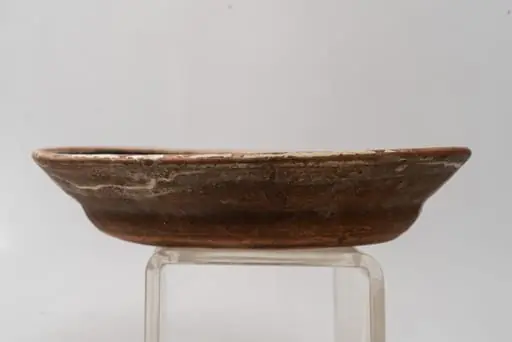 Farfurie semi-adâncă, cu fundul larg și buza răsfrântă oblic; piesa este modelată din lut la roata olarului și angobată cu humă albă pe fața interioară. Decorul este realizat cu pigmenți, prin pictare cu cornul și cu pensula și se compune din motive florale si vegetale stilizate (floare de lalea, două flori cu petale rotunde, boboci, frunze - dispuse central, în registrul de pe fundul farfuriei) și din motive geometrice (linii sub formă de semicerc, conținând câte un punct colorat; șiruri de linii paralele, linii hașurate, linii circulare). Cromatica: alb, maro, verde, galben ocru. Fața ornamentată a farfuriei este acoperită cu un strat de smalț transparent.
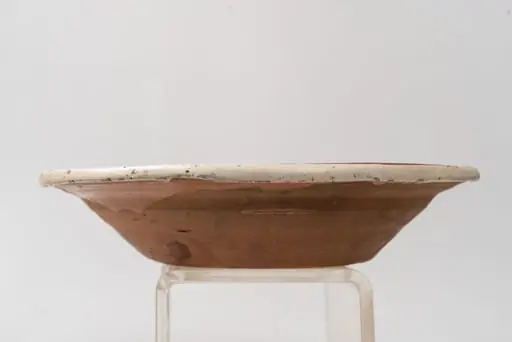 Farfurie adâncă, cu buza răsfrântă; piesa este modelată din lut la roata olarului și angobată cu humă albă pe fața interioară. Decorul este realizat prin pictare cu cornul și constă în motive geometrice (linii hașurate, puncte, linii circulare, linii dispuse sub formă de raze, linii în V). Cromatica: alb, albastru, verde, siena arsă. Fața ornamentată a farfuriei este acoperită cu un strat de smalț transparent.
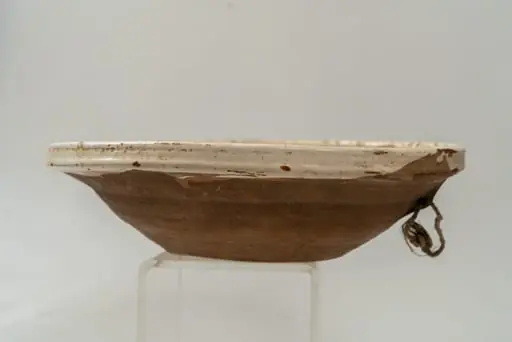 Farfurie mare, adâncă, de tip castron. Piesa este modelată la roata olarului și este angobată pe fața sa interioară. Decorul este pictat cu pensula și cu cornul și se compune din motive decorative florale (buchet de flori, în zona centrală a farfuriei) și geometrice (linii hașurate, linii sub formă de cercuri concentrice) situate pe buza farfuriei. Cromatica: alb, albastru, siena naturală, verde. Farfuria este acoperită, pe fața sa interioară, de un strat de smalț transparent.
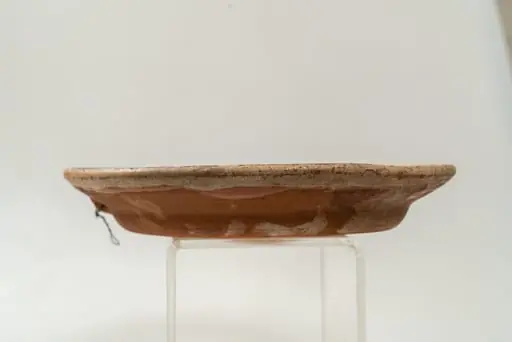 Farfurie semi-adâncă, cu buza răsfrântă, modelată la roata olarului și angobată cu humă albă pe fața interioară. Decorul este pictat cu cornul și cu pensula și se compune din motive decorative vegetale stilizate (flori cu frunze, dispuse central, pe fundul farfuriei) și motive decorative geometrice (șapte grupuri de linii paralele,verticale, intercalate cu șapte grupuri de câte 3 linii sub formă de semicercuri umplute cu culoare galbenă și verde), dispuse pe buza farfuriei și încadrate de linii paralele sub formă de cerc. Piesa este acoperită pe fața pictată cu un strat de smalț transparent. Cromatica: alb, verde, maro, galben ocru.
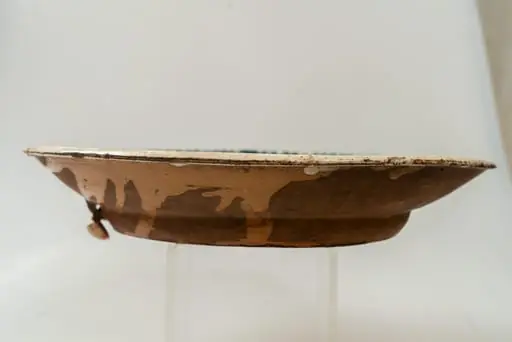 Farfurie mare, lată, cu buză răsfrântă. Este modelată la roata olarului și angobată cu humă albă pe fața interioară. Decorul este realizat prin pictare cu cornul și cu pensula și se compune din motive decorative florale stilizate (buchet central, pe fundul farfuriei) și motive geometrice variate, dispuse pe buza farfuriei. Cromatica: alb, brun, verde, galben, albastru. Fața interioară a farfuriei este acoperită de un strat de smalț transparent.
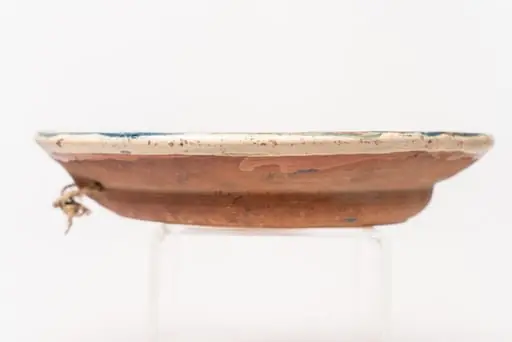 Farfurie semi-adâncă, cu răsfrântă; piesa este modelată la roata olarului și angobată cu humă albă pe fața interioară a acesteia. Decorul este realizat prin pictare cu cornul și cu pensula și constă în motive decorative florale și vegetale stilizate (flori de culoare galbenă cu contur albastru și frunze, dispuse în șir continuu pe fundul farfuriei și pe toată buza acestei), un motiv zoomorf (un cerb pictat central și înscris într-un cerc albastru cu puncte) și motive geometrice (linii sub formă de cerc și linie vălurită, sub bordura interioară a farfuriei; muchia buzei este marcată cu o linie albastră). Cromatica: alb, albastru, galben. Farfuria este smălțuită pe interior, cu smalț transparent.
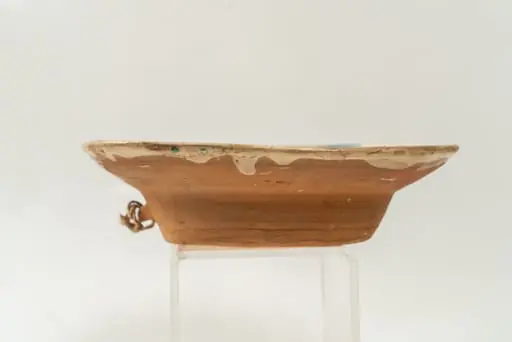 Farfurie adâncă, cu corp mic și buză lată, evazată; piesa este modelată la roata olarului și angobată cu humă albă pe fața interioară. Decorul este realizat prin pictare cu pensula și se compune din motive decorative florale și vegetale stilizate, dispuse central, pe fundul vasului (o floare albastră cu frunze verzi) și pe buza farfuriei (4 flori albastre alternate cu 4 grupuri de frunze). Fața decorată a farfuriei este acoperită cu un strat de smalț transparent. Cromatica: alb, albastru, verde.
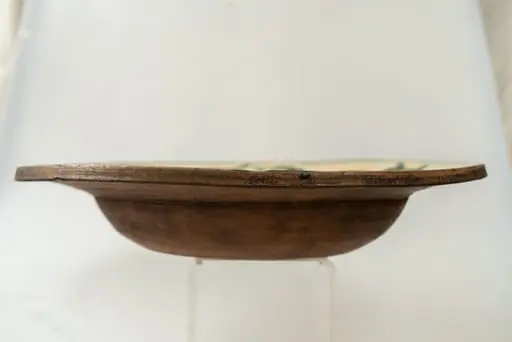 Farfurie mare, de formă adâncă, cu buză lată, răsfrântă. Piesa este modelată la roată, angobată cu humă albă pe fața interioară. Decorul este realizat prin pictare cu pensula și prin sgrafitare și este format din motive decorative florale și vegetale stilizate, dispuse pe fundul farfuriei, într-un registru central (o floare cu patru petale, înconjurată de alte patru flori cu frunze, dispuse diametral opus) și pe buza farfuriei (cinci grupuri de flori și frunze, ca cele de pe fundul farfuriei). Bordura interioară a farfuriei și muchia buzei sunt marcate de linii sub formă de cerc, de culoare verde. Pe buza farfuriei este marcat, prin sgrafitare, anul realizării piesei "1731", încadrat într-un registru decorativ sub formă de inimă. Fața interioară a farfuriei este acoperită cu un smalț transparent. Cromatica: alb, galben, verde.
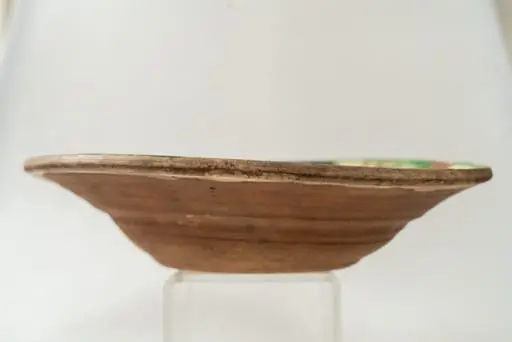 Farfurie mare, de formă adâncă, cu buză răsfrântă. Piesa este modelată la roată, angobată cu humă albă pe fața interioară. Decorul este realizat prin pictare cu pensula, cu smalțuri colorate (verde și maro) și prin sgrafitare. Motivele decorative sunt florale și vegetale stilizate (flori cu frunze) dispuse pe fundul farfuriei (o floare) și patru flori intercalate de patru elemente decorative vegetale (frunze) sugerând motivul inimii, dispuse pe buza farfuriei. Bordura interioară a farfuriei este marcată de o linie groasă sub formă de cerc, de culoare verde. Pe fața interioară a farfuriei este aplicat un strat de smalț transparent.
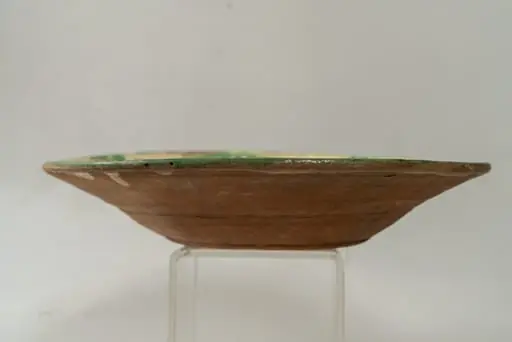 Farfurie mare, adâncă, cu buză lată, răsfrântă. Piesa este modelată la roata olarului, angobată cu humă albă. Decorul este realizat prin sgrafitare în angoba crudă, peste care se aștern cu pensula culorile de smalț: verde, galben, albastru. Motivele decorative sunt florale și vegetale stilizate, dispuse pe toată suprafața farfuriei și un motiv avimorf stilizat, dispus în zona centrală a acesteia. Cromatica decorului: alb, albastru, galben, verde.