Artwork
Farfurie mare, de formă adâncă, cu buză răsfrântă. Piesa este modelată la roată, angobată cu humă albă pe fața interioară. Decorul este realizat prin pictare cu pensula, cu smalțuri colorate (verde și maro) și prin sgrafitare. Motivele decorative sunt florale și vegetale stilizate (flori cu frunze) dispuse pe fundul farfuriei (o floare) și patru flori intercalate de patru elemente decorative vegetale (frunze) sugerând motivul inimii, dispuse pe buza farfuriei. Bordura interioară a farfuriei este marcată de o linie groasă sub formă de cerc, de culoare verde. Pe fața interioară a farfuriei este aplicat un strat de smalț transparent.
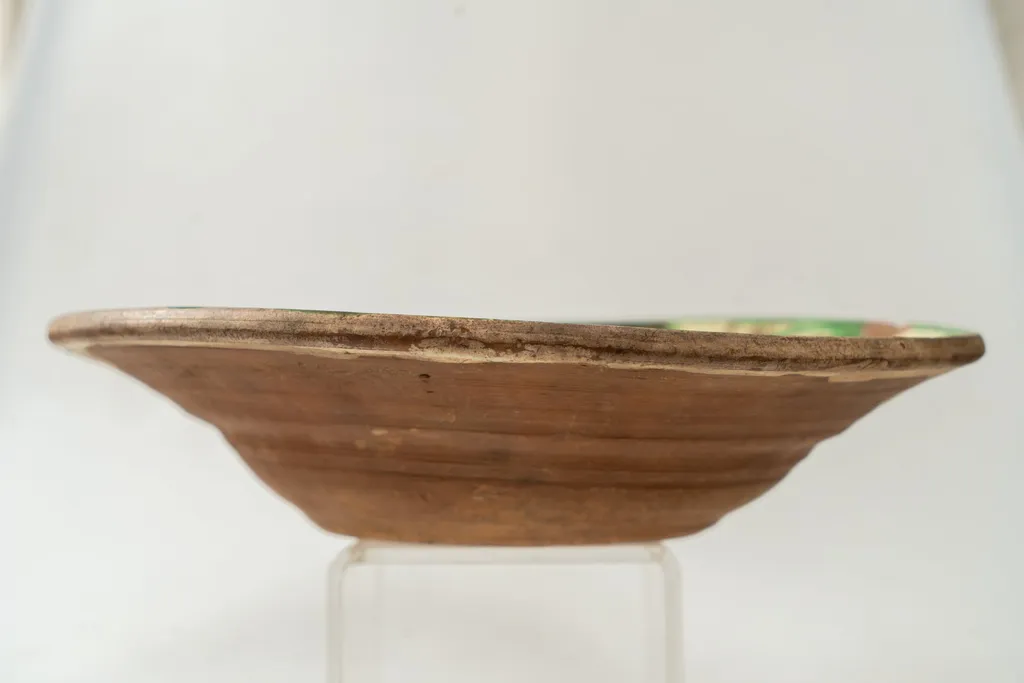
Farfurie mare, de formă adâncă, cu buză răsfrântă. Piesa este modelată la roată, angobată cu humă albă pe fața interioară. Decorul este realizat prin pictare cu pensula, cu smalțuri colorate (verde și maro) și prin sgrafitare. Motivele decorative sunt florale și vegetale stilizate (flori cu frunze) dispuse pe fundul farfuriei (o floare) și patru flori intercalate de patru elemente decorative vegetale (frunze) sugerând motivul inimii, dispuse pe buza farfuriei. Bordura interioară a farfuriei este marcată de o linie groasă sub formă de cerc, de culoare verde. Pe fața interioară a farfuriei este aplicat un strat de smalț transparent. is a print by Unknown. It dates from 1850 and is held in the collection of the Ethnographical Museum of Transylvania. This deep, wide-rimmed ceramic dish was formed on a potter's wheel using coarse clay.
About this work
Overview
The interior surface was coated with a white slip, while the exterior retained its natural, unrefined texture.
This deep, wide-rimmed ceramic dish was formed on a potter's wheel using coarse clay. The interior surface was coated with a white slip, while the exterior retained its natural, unrefined texture. A transparent glaze was applied over the painted decoration, preserving the pigments beneath. The rim features a thick green band, framing the painted motifs that occupy the interior base and upper edge.
Subject & Meaning
Decorative elements consist of stylized floral and vegetal forms: a central flower surrounded by four additional blooms, each alternating with leaf-like shapes that suggest heart motifs. These patterns, arranged in a radial composition, reflect a tradition of nature-inspired ornamentation common in regional ceramics. The repetition and symmetry imply an emphasis on harmony rather than naturalistic representation.
Technique & Style
The vessel was shaped on a wheel, then decorated using brush-painted glazes in green and brown, combined with sgraffito techniques to reveal the underlying clay. The lines are hand-drawn, with irregular edges suggesting direct, unmediated application. The contrast between the smooth, pale interior and the rough, unglazed exterior highlights the maker’s intentional distinction between functional and ornamental surfaces.
History & Provenance
This piece belongs to a regional ceramic tradition from the medieval Balkans, likely produced in the 13th to 15th centuries. Similar vessels have been found in archaeological contexts across Romania and neighboring regions. Its construction and decoration align with local workshops that combined Byzantine and Slavic aesthetic influences, though its exact origin remains undocumented.
Context
Such ceramics were likely used for serving food or storing dry goods in domestic or monastic settings. The use of slip, glaze, and hand-painted motifs indicates a level of craftsmanship beyond utilitarian ware, suggesting either local elite patronage or ceremonial use. The decorative language reflects broader Eurasian traditions of vegetal ornamentation in Islamic and Christian material culture.
Legacy
This object exemplifies a vernacular ceramic practice that persisted in Eastern Europe long after the decline of large-scale industrial pottery. Its modest scale and handmade quality distinguish it from courtly or imported wares, preserving a tactile record of everyday artistic expression. Modern ceramicists in the region still reference similar motifs and techniques in revivalist work.
Artist & collection
Museum
Ethnographical Museum of Transylvania
Continue through works from the same source collection.
 Domestic Scene
 Giacomo and Cardinal Marco, investing Andrea, Abbot of San Zeno, with his Benefice
 The Nymph of Fontainebleau
 Portrait of a Woman
 Madonna and Child with Saints in the Enclosed Garden
 Venus and Minerva
 Family Group of Four on Sofa
 Wall painting from Room H of the Villa of P. Fannius Synistor at Boscoreale
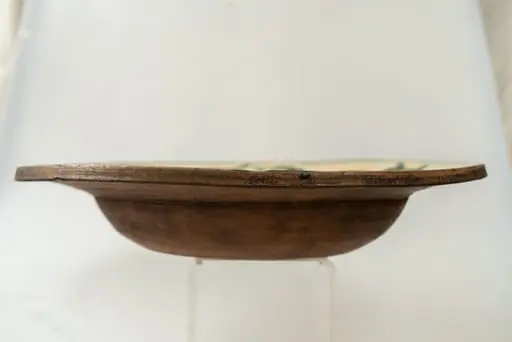 Farfurie mare, de formă adâncă, cu buză lată, răsfrântă. Piesa este modelată la roată, angobată cu humă albă pe fața interioară. Decorul este realizat prin pictare cu pensula și prin sgrafitare și este format din motive decorative florale și vegetale stilizate, dispuse pe fundul farfuriei, într-un registru central (o floare cu patru petale, înconjurată de alte patru flori cu frunze, dispuse diametral opus) și pe buza farfuriei (cinci grupuri de flori și frunze, ca cele de pe fundul farfuriei). Bordura interioară a farfuriei și muchia buzei sunt marcate de linii sub formă de cerc, de culoare verde. Pe buza farfuriei este marcat, prin sgrafitare, anul realizării piesei "1731", încadrat într-un registru decorativ sub formă de inimă. Fața interioară a farfuriei este acoperită cu un smalț transparent. Cromatica: alb, galben, verde.
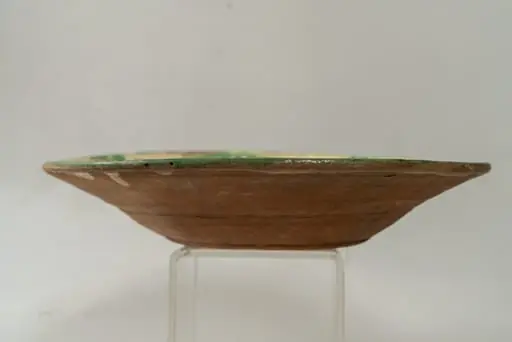 Farfurie mare, adâncă, cu buză lată, răsfrântă. Piesa este modelată la roata olarului, angobată cu humă albă. Decorul este realizat prin sgrafitare în angoba crudă, peste care se aștern cu pensula culorile de smalț: verde, galben, albastru. Motivele decorative sunt florale și vegetale stilizate, dispuse pe toată suprafața farfuriei și un motiv avimorf stilizat, dispus în zona centrală a acesteia. Cromatica decorului: alb, albastru, galben, verde.
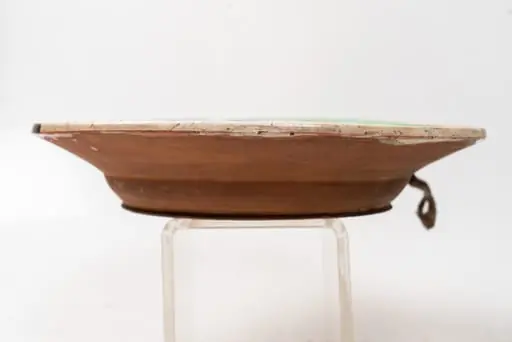 Farfurie mare, semi-adâncă, cu buza răsfrântă; piesa este modelată la roata olarului și angobată cu humă albă pe fața interioară. Decorul este realizat prin sgrafitare în pasta albă de angobă și prin pictare cu pensula și cu cornul și se compune din motive decorative vegetale (o floare foarte stilizată, cu patru petale, dispusă în registrul central de pe fundul farfuriei) și geometrice (linii circulare, de culoare verde și siena arsă, pe buza farfuriei). Cromatica: alb, verde, siena arsă, maro. Fața ornamentată a farfuriei este acoperită cu un strat de smalț transparent.
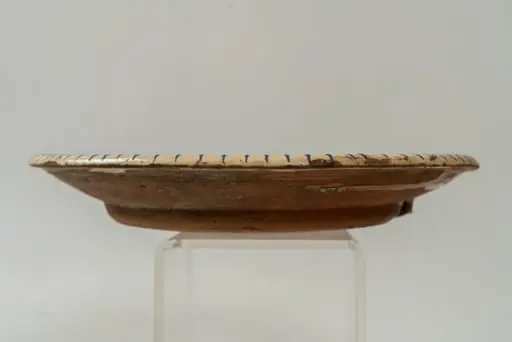 Farfurie de formă aplatizată, modelată la roata olarului, angobată cu humă albă pe fața interioară a acesteia. Decorul este realizat prin pictare cu pensula și cu cornul și constă în motive decorative vegetale stilizate (floare cu frunze - dispuse central, pe fundul farfuriei) și motive geometrice (grupuri de linii paralele, descrescătoare ca mărime - motivul brăduțului - și un șir de linii paralele pe toată lungimea muchiei buzei). Cromatica decorului: alb, albastru. Farfuria este smălțuită pe interior, cu smalț transparent.
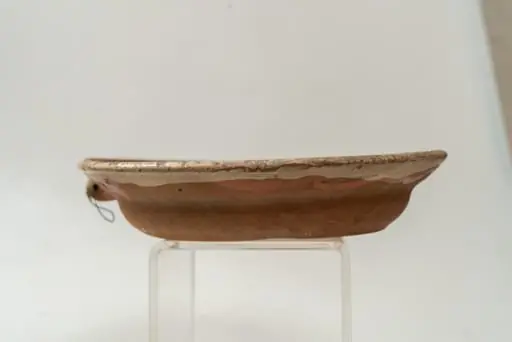 Farfurie adâncă, cu buza răsfrântă, modelată la roata olarului și angobată cu humă albă pe fața interioară a farfuriei. Decorul este pictat cu pensula și se compune din motive decorative vegetale stilizate (buchet de flori cu frunze, dispuse central, pe fundul farfuriei) și motive decorative geometrice (grupuri de linii paralele, linii sub formă de cercuri concentrice și grupuri de semicercuri umplute cu culoare) dispuse pe buza farfuriei. Cromatica: alb, verde, maro, galben ocru.
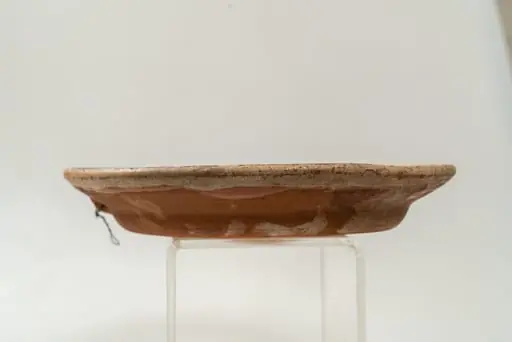 Farfurie semi-adâncă, cu buza răsfrântă, modelată la roata olarului și angobată cu humă albă pe fața interioară. Decorul este pictat cu cornul și cu pensula și se compune din motive decorative vegetale stilizate (flori cu frunze, dispuse central, pe fundul farfuriei) și motive decorative geometrice (șapte grupuri de linii paralele,verticale, intercalate cu șapte grupuri de câte 3 linii sub formă de semicercuri umplute cu culoare galbenă și verde), dispuse pe buza farfuriei și încadrate de linii paralele sub formă de cerc. Piesa este acoperită pe fața pictată cu un strat de smalț transparent. Cromatica: alb, verde, maro, galben ocru.
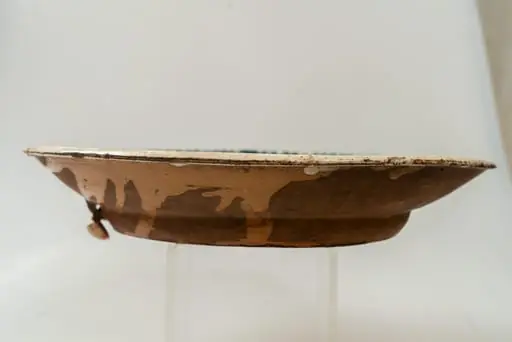 Farfurie mare, lată, cu buză răsfrântă. Este modelată la roata olarului și angobată cu humă albă pe fața interioară. Decorul este realizat prin pictare cu cornul și cu pensula și se compune din motive decorative florale stilizate (buchet central, pe fundul farfuriei) și motive geometrice variate, dispuse pe buza farfuriei. Cromatica: alb, brun, verde, galben, albastru. Fața interioară a farfuriei este acoperită de un strat de smalț transparent.
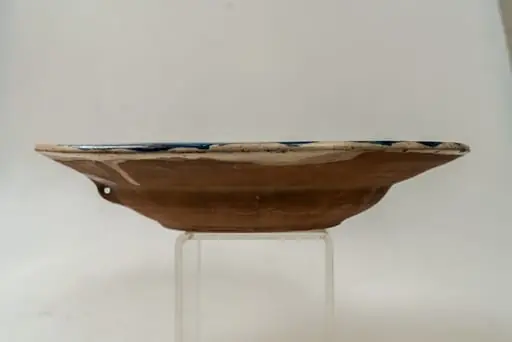 Farfurie mare, adâncă, cu corp scund și buză lată, răsfrântă. Piesa este modelată la roata olarului, angobată cu humă albă pe fața interioară a acesteia. Decorul este unul bogat, realizat prin pictare cu pensula, cu linii groase, și constă în motive decorative florale și vegetale stilizate (flori și frunze), dispuse pe toată suprafața farfuriei. Cromatica decorului: alb, albastru. Farfuria este smălțuită pe interior, cu smalț transparent.
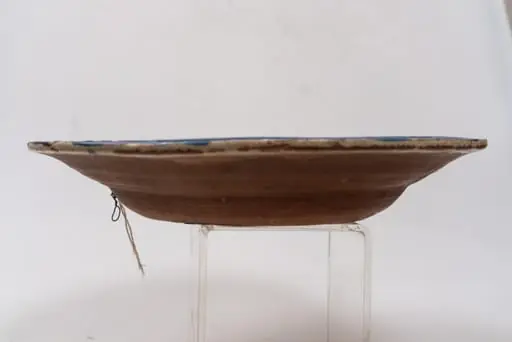 Farfurie de formă semi-adâncă, cu buză lată, evazată; este angobată pe fața interioară cu un strat de humă albă, peste care este pictat cu pensula, cu linii groase, decorul monocromatic, format din motive florale și fitomorfe stilizate: o tulpină cu trei flori de lalea și frunze, reprezentate central pe fundul farfuriei. Buza acesteia este decorată cu un șir de motive formate din linii spiralate aproximativ rotunde. Bordura interioară a farfuriei și muchia buzei sunt marcate cu câte o linie ușor ondulată. Cromatica: alb, albastru. Farfuria este acoperită pe fața decorată cu un strat de smalț transparent.
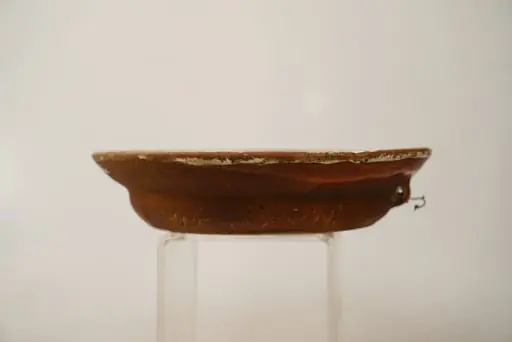 Farfurie semi-adâncă, cu buza evazată și ușor concavă spre interior și cu muchia buzei rotunjită; este acoperită pe suprafața interioară cu un strat de angobă albă peste care este pictat cu cornul și cu pensula decorul format din motive vegetale și florale stilizate (registrul decorativ de pe fundul farfuriei conține o tulpină cu o floare centrală cu petale rotunde, în culorile galben-ocru, maro și verde; două flori laterale de lalea, de culoare maro, și frunze de culoare galben-ocru și verde) și motive decorative geometrice (patru grupuri, inegale ca lungime, formate din linii paralele drepte, de culoare maro, intercalate cu patru grupuri de câte 3 linii maro sub formă de semicercuri, umplute cu culorile galben și verde), dispuse pe buza farfuriei și încadrate de linii paralele sub formă de cerc, de culoare maro. Patru linii mici spiralate, de culoare maro, completează decorul central de pe fundul farfuriei. Piesa este acoperită pe suprafața ornamentată cu un strat de smalț transparent. Cromatica: alb, verde, maro, galben-ocru.
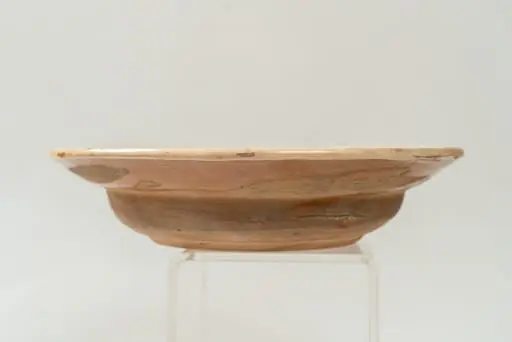 Farfurie adâncă, cu buză răsfrântă, modelată la roata olarului și angobată pe fața interioară cu humă albă. Decorul este realizat prin pictare cu pensula și este alcătuit din motive decorative vegetale stilizate (flori și frunze), dispuse central, pe fundul farfuriei (un buchet de flori, format dintr-o floare mare, centrală, cu petale albastre, înconjurată de frunze și trei boboci de culoare maro) și pe muchia buzei (șapte flori mici de culoare bej, cu frunze, înșiruite pe toată lungimea buzei, pe o dungă albastră) și motive geometrice (linii sub formă de cercuri concentrice). Cromatica: alb gălbui, verde, bej, siena arsă, maro. Piesa este acoperită pe fața interioară de un strat de smalț transparent.