Artwork
Farfurie mare, de formă aplatizată, cu marginea lată, răsfrântă, și cu muchia buzei ușor concavă spre exterior. Decorul, dispus pe un fond alb, prin pictare, este format din motive florale fin stilizate (flori și frunze), dispuse central, pe fundul farfuriei, și motive geometrice pe buza acesteia. Cromatica decorului: alb, verde-turcoaz, brun, galben-ocru, albastru.
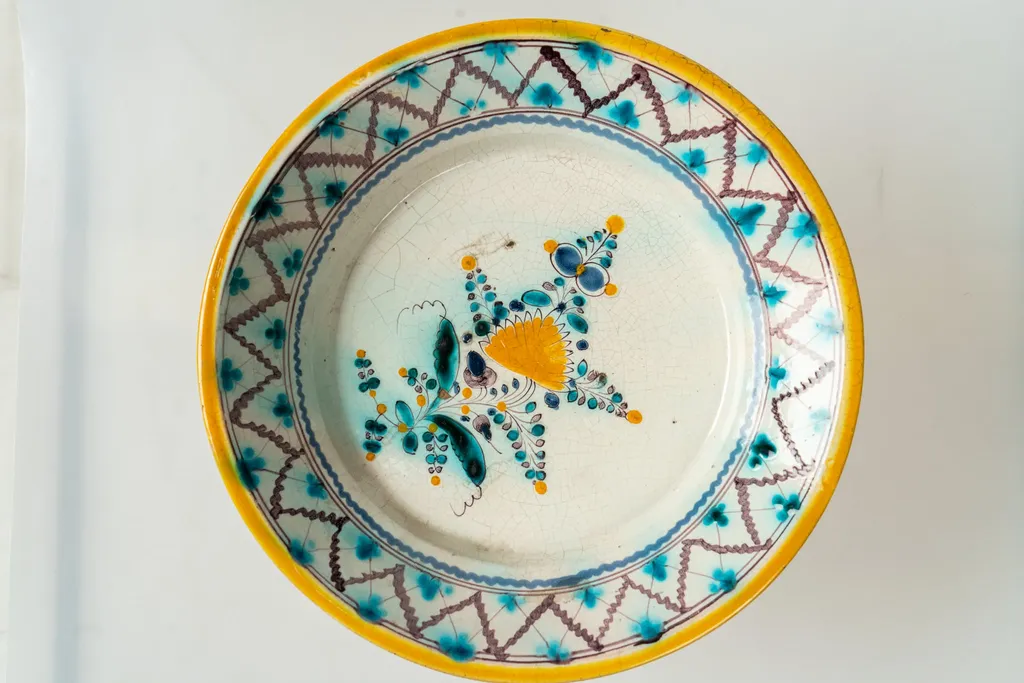
Farfurie mare, de formă aplatizată, cu marginea lată, răsfrântă, și cu muchia buzei ușor concavă spre exterior. Decorul, dispus pe un fond alb, prin pictare, este format din motive florale fin stilizate (flori și frunze), dispuse central, pe fundul farfuriei, și motive geometrice pe buza acesteia. Cromatica decorului: alb, verde-turcoaz, brun, galben-ocru, albastru. is a photography by Unknown. It dates from 1850 and is held in the collection of the Ethnographical Museum of Transylvania. This large, flattened plate features a broad, upturned rim and a gently inward-curving lip.
About this work
Overview
This large, flattened plate features a broad, upturned rim and a gently inward-curving lip. Its surface is painted with a restrained palette of earthy and cool tones over a white ground, emphasizing handcrafted precision. The design balances central floral motifs with a geometric border, reflecting a tradition of decorative ceramics rooted in regional craftsmanship rather than mass production.
Subject & Meaning
The central decoration consists of stylized flowers and leaves, arranged without naturalistic detail, suggesting symbolic rather than literal representation.
The central decoration consists of stylized flowers and leaves, arranged without naturalistic detail, suggesting symbolic rather than literal representation. The border repeats small blue dots and swirling lines, possibly evoking protective or rhythmic patterns common in folk art. These motifs may carry cultural significance tied to nature, fertility, or domestic harmony, though their exact meaning remains unrecorded.
Technique & Style
Painted by hand using mineral-based pigments, the design employs flat areas of color with minimal shading. The floral elements are simplified into clean contours, while the rim’s geometric pattern is applied with rhythmic repetition. The palette—turquoise, ochre, brown, blue, and white—reflects locally available materials and a preference for muted, harmonious contrasts over vivid saturation.
History & Provenance
This plate originates from a tradition of domestic ceramic production in Eastern Europe, likely made in the late 19th or early 20th century. It was probably crafted for everyday use in rural households, later collected by ethnographers for its regional stylistic traits. Its presence in the Museum of Ethnography indicates its recognition as a representative artifact of folk material culture.
Context
Produced outside urban workshops, such plates were made by local artisans using hand-turned wheels and wood-fired kilns. Similar designs appear across the Carpathian region, where folk ceramics often combined floral and geometric motifs to distinguish household wares. This object reflects a broader cultural practice of embedding aesthetic order into utilitarian objects.
Legacy
Though not signed or dated, the plate contributes to the documented corpus of Eastern European folk ceramics. Its preservation in ethnographic collections underscores its role in understanding regional identity through material culture. It continues to inform studies on vernacular art, craftsmanship, and the transmission of decorative motifs across generations.
Artist & collection
Museum
Ethnographical Museum of Transylvania
Continue through works from the same source collection.
 Domestic Scene
 Giacomo and Cardinal Marco, investing Andrea, Abbot of San Zeno, with his Benefice
 The Nymph of Fontainebleau
 Portrait of a Woman
 Madonna and Child with Saints in the Enclosed Garden
 Venus and Minerva
 Family Group of Four on Sofa
 Wall painting from Room H of the Villa of P. Fannius Synistor at Boscoreale
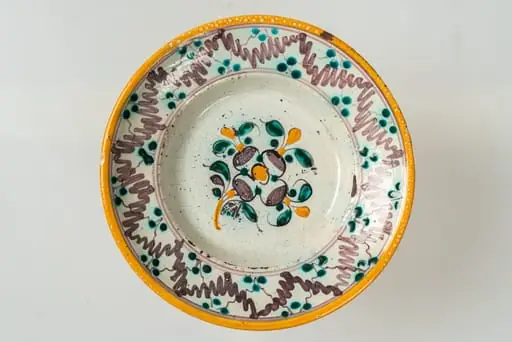 Farfurie de formă semi-adâncă, cu buza lată, răsfrântă. Decorul, dispus pe un fond alb, prin pictare, este format din motive florale fin stilizate (flori și frunze), dispuse central, pe fundul farfuriei, și motive geometrice pe buza acesteia (linii vălurite, puncte, cercuri concentrice). Cromatica decorului: alb, verde-turcoaz, brun, galben-ocru.
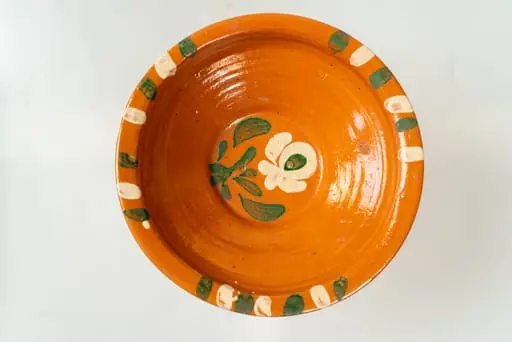 Farfurie adâncă, corpul de formă tronconică, cu buză îngustă, răsfrântă. Piesa este modelată la roata olarului, nefiind angobată. Decorul este realizat prin pictare cu pensula și constă în motive decorative florale (o floare cu frunze), dispuse central, pe fundul farfuriei și motive geometrice (linii groase, paralele), dispuse în trei registre, pe buza acesteia. Cromatica decorului: alb, verde. Farfuria este smălțuită pe interior, cu smalț transparent.
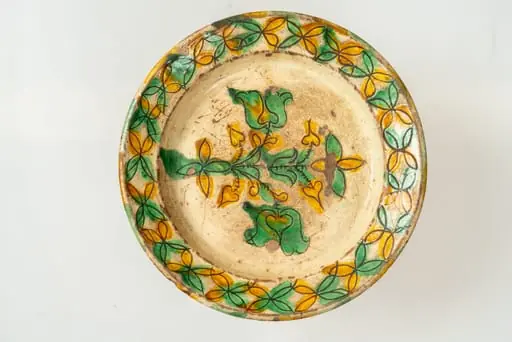 Farfurie de formă aplatizată, cu buză răsfrântă și muchie rotunjită. Piesa este modelată la roata olarului, angobată cu humă albă. Decorul este realizat prin sgrafitare în angoba crudă, peste care se aștern cu pensula culorile de smalț: verde și galben. Motivele decorative sunt florale și vegetale stilizate, dispuse pe fundul și pe buza farfuriei. Cromatica decorului: alb, galben, verde.
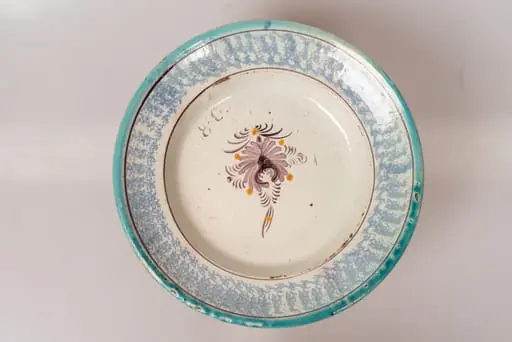 Farfurie de formă aplatizată, cu buza lată, răsfrântă. Decorul este dispus în centrul farfuriei, pe un fond alb-lăptos, și prezintă un motiv vegetal stilizat, pictat cu pensula cu linii fine (o floare cu frunze de culoare maro brun și puncte galbene) iar buza farfuriei este colorată neregulat cu o nuanță deschisă de albastru. Două linii subțiri, în culoarea brun, dispuse sub formă de cercuri concentrice marchează bordura interioară a farfuriei și marginea acesteia. Muchia buzei este marchată de o dungă de culoarea albastru turcoaz. Cromatica: alb, maro-brun, galben-ocru, albastru-turcoaz, albastru deschis.
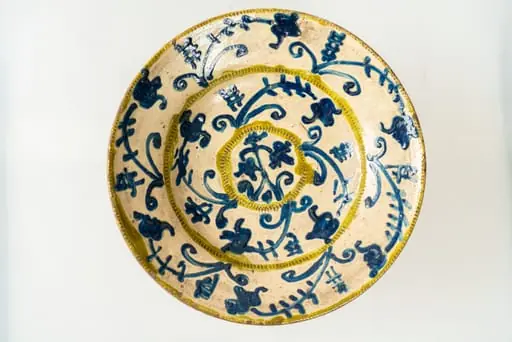 Farfurie mare, semi-adâncă, cu corp scund și buză lată, răsfrântă. Piesa este modelată la roata olarului, angobată cu humă albă pe fața interioară a acesteia. Decorul este realizat prin pictare cu pensula și cu cornul și constă în motive decorative florale și vegetale stilizate (flori și frunze), dispuse pe toată suprafața farfuriei, încadrate în trei registre separate de cercuri concentrice formate dintr-o linie verde și un șir continu de linii mici, paralele, incizate (cercuri localizate: central - pe fundul farfuriei; pe bordura interioară a buzei și pe muchia acesteia). Cromatica decorului: alb, albastru, verde. Farfuria este smălțuită pe interior, cu smalț transparent.
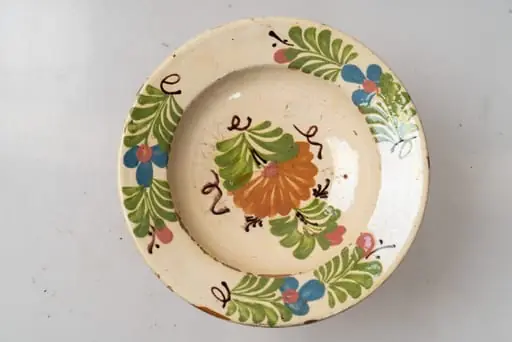 Farfurie adâncă, cu buza lată, răsfrântă; piesa este modelată din lut la roata olarului și este angobată cu humă albă pe fața interioară. Decorul este realizat prin pictare cu pensula și cu cornul și constă în motive florale și fitomorfe (o floare cu frunze și un boboc, pe centrul farfuriei și trei grupuri de flori cu frunze, pe buza farfuriei). Cromatica: alb, albastru, verde, siena naturală, roz-bej, maro. Fața ornamentată a farfuriei este acoperită cu un strat de smalț transparent.
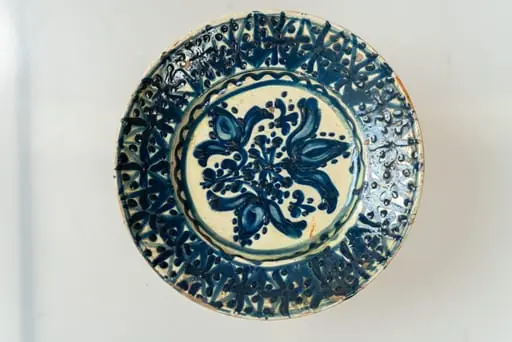 Farfurie de formă aplatizată, cu buză lată, răsfrântă. Piesa este modelată la roata olarului, angobată cu humă albă pe fața interioară a acesteia. Decorul este unul bogat, realizat prin pictare cu pensula și cu cornul, cu linii groase, și constă în motive decorative florale și vegetale stilizate (lalele și frunze), dispuse central pe fundul farfuriei și motive decorative geometrice pe buza acesteia (linii vălurite, puncte, linii intersectate sub forma motivului de stea). Cromatica decorului: alb, albastru. Farfuria este smălțuită pe interior, cu smalț transparent.