Artwork
Farfurie de formă semi-adâncă, cu buza lată, răsfrântă. Decorul, dispus pe un fond alb, prin pictare, este format din motive florale fin stilizate (flori și frunze), dispuse central, pe fundul farfuriei, și motive geometrice pe buza acesteia (linii vălurite, puncte, cercuri concentrice). Cromatica decorului: alb, verde-turcoaz, brun, galben-ocru.
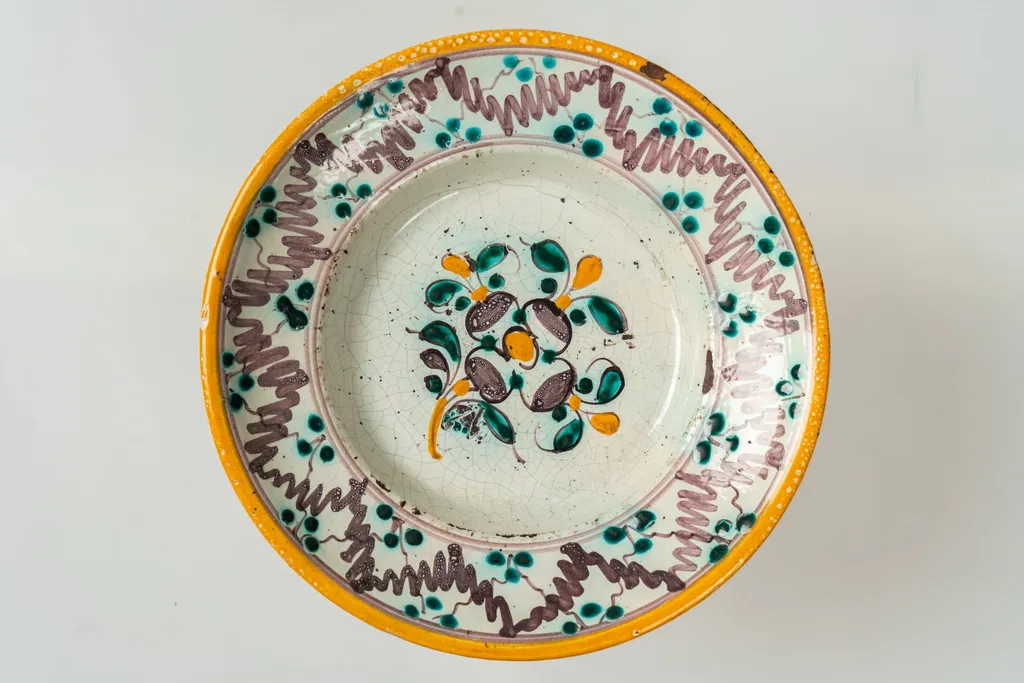
Farfurie de formă semi-adâncă, cu buza lată, răsfrântă. Decorul, dispus pe un fond alb, prin pictare, este format din motive florale fin stilizate (flori și frunze), dispuse central, pe fundul farfuriei, și motive geometrice pe buza acesteia (linii vălurite, puncte, cercuri concentrice). Cromatica decorului: alb, verde-turcoaz, brun, galben-ocru. is a photography by Unknown. It dates from 1850 and is held in the collection of the Ethnographical Museum of Transylvania. This shallow ceramic dish features a broad, upturned rim and a gently curved interior.
About this work
Overview
This shallow ceramic dish features a broad, upturned rim and a gently curved interior. Its surface is predominantly white, serving as a backdrop for hand-painted decorative elements in muted earth tones. The design balances organic and geometric motifs, arranged with deliberate asymmetry, suggesting a craft tradition rooted in regional pottery practices rather than mass production.
Subject & Meaning
The decoration centers on loosely arranged stylized flowers and leaves, evoking natural forms without literal representation. Surrounding the rim, abstract patterns—wavy lines, dots, and concentric circles—may reference symbolic or protective motifs common in folk ceramics. The arrangement implies a connection to seasonal cycles or domestic rituals, though no explicit narrative is conveyed.
Technique & Style
The contrast between the central floral cluster and the rim’s geometric bands reflects a deliberate compositional rhythm, typical of local ceramic traditions.
Painted in a limited palette of teal, brown, ochre, and white, the design employs freehand brushwork with visible irregularities, indicating artisanal execution. Outlines in dark brown define shapes without rigid precision, enhancing the handcrafted feel. The contrast between the central floral cluster and the rim’s geometric bands reflects a deliberate compositional rhythm, typical of local ceramic traditions.
History & Provenance
This piece belongs to a group of semi-shallow bowls produced in Eastern European folk pottery traditions, likely from the 19th or early 20th century. Similar forms and decorative schemes appear in regional collections, particularly in areas with strong ceramic heritage. Its preservation suggests domestic use, possibly for serving or ritual purposes, before entering institutional collections.
Context
The design aligns with broader Central and Eastern European ceramic practices where floral and geometric patterns coexisted on utilitarian wares. The use of locally sourced pigments and hand-painted techniques reflects pre-industrial production methods. Such vessels were often made in family workshops, passed down through generations, and integrated into everyday life rather than ceremonial display.
Legacy
This bowl exemplifies a vernacular aesthetic that persisted despite industrialization. Its preservation in ethnographic collections underscores its value as a record of non-elite material culture. Similar pieces continue to inform contemporary ceramic artists exploring traditional techniques, preserving a tactile link to rural craft heritage.
Artist & collection
Museum
Ethnographical Museum of Transylvania
Continue through works from the same source collection.
 Domestic Scene
 Giacomo and Cardinal Marco, investing Andrea, Abbot of San Zeno, with his Benefice
 The Nymph of Fontainebleau
 Portrait of a Woman
 Madonna and Child with Saints in the Enclosed Garden
 Venus and Minerva
 Family Group of Four on Sofa
 Wall painting from Room H of the Villa of P. Fannius Synistor at Boscoreale
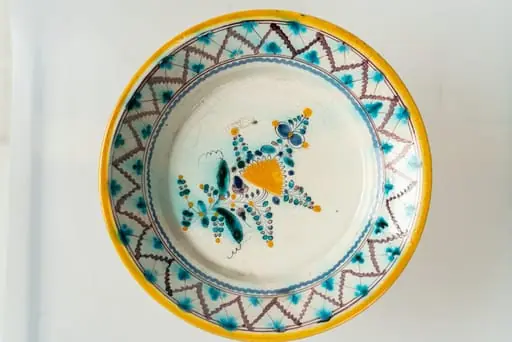 Farfurie mare, de formă aplatizată, cu marginea lată, răsfrântă, și cu muchia buzei ușor concavă spre exterior. Decorul, dispus pe un fond alb, prin pictare, este format din motive florale fin stilizate (flori și frunze), dispuse central, pe fundul farfuriei, și motive geometrice pe buza acesteia. Cromatica decorului: alb, verde-turcoaz, brun, galben-ocru, albastru.
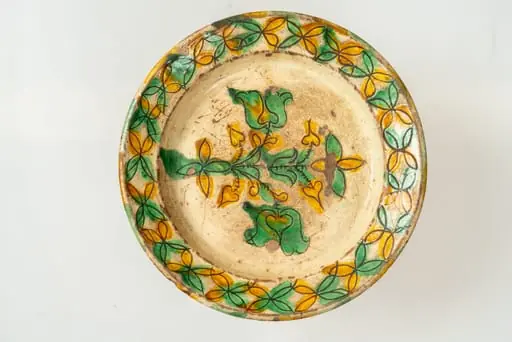 Farfurie de formă aplatizată, cu buză răsfrântă și muchie rotunjită. Piesa este modelată la roata olarului, angobată cu humă albă. Decorul este realizat prin sgrafitare în angoba crudă, peste care se aștern cu pensula culorile de smalț: verde și galben. Motivele decorative sunt florale și vegetale stilizate, dispuse pe fundul și pe buza farfuriei. Cromatica decorului: alb, galben, verde.
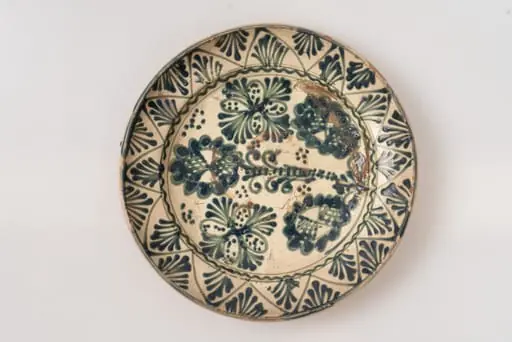 Farfurie de formă semi-adâncă, cu buză lată, răsfrântă; este angobată pe fața interioară cu un strat de humă albă, peste care este pictat cu cornul decorul monocromatic, format din motive florale și fitomorfe foarte stilizate (tulpină cu cinci flori și frunze, reprezentate pe centrul farfuriei) și geometrice (o linie în formă de zig-zag, pe toată lungimea buzei, completată cu motive formate din linii verticale, dispuse în formă de triunghi; linii circulare simple și linie circulară ondulată ce marchează bordura interioară a farfuriei; puncte, linii hașurate). Buza farfuriei este marcată cu o dungă de culoare albastră. Cromatica: alb, albastru. Farfuria este acoperită pe fața decorată cu un strat de smalț transparent.
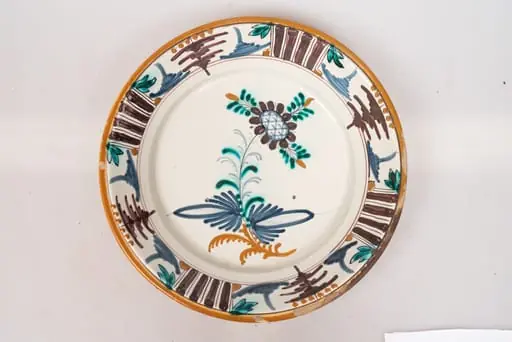 Farfurie de formă aplatizată, cu buza răsfrântă. Decorul, dispus pe un fond alb lăptos, prin pictare, este format dintr-un motiv floral stilizat, dispus central, pe fundul farfuriei, și motive geometrice (puncte galbene, grupuri de dungi paralele de culoare maro-brun, linii subțiri, paralele, linii sub formă de cerc, motivul bradului), dispuse într-un registru continuu pe buza farfuriei. Muchia buzei este marcată cu o dungă de culoare galbenă. Cromatica: alb, verde, brun, albastru, galben-ocru.
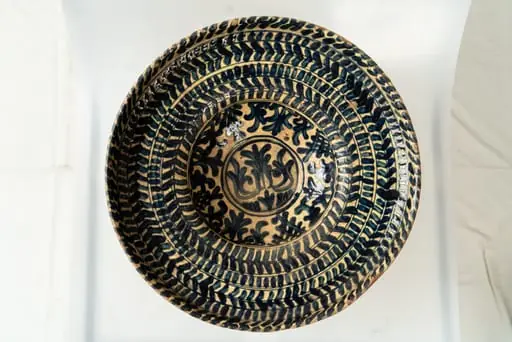 Farfurie mare, adâncă, cu corp tronconic și buză foarte lată, răsfrântă și cu muchia buzei dreaptă. Piesa este modelată la roata olarului, angobată cu humă albă pe fața interioară a acesteia. Decorul este unul foarte bogat, acoperă întreaga suprafață a piesei și este realizat prin pictare cu pensula, cu linii groase. Motivele decorative sunt florale și vegetale stilizate (flori și frunze, dispuse în zona centrală a farfuriei) și geometrice (șiruri de linii paralele și oblice, înscrise în cercuri concentrice, pe buza și muchia farfuriei). Cromatica decorului: alb, albastru. Farfuria este smălțuită pe interior, cu smalț transparent.
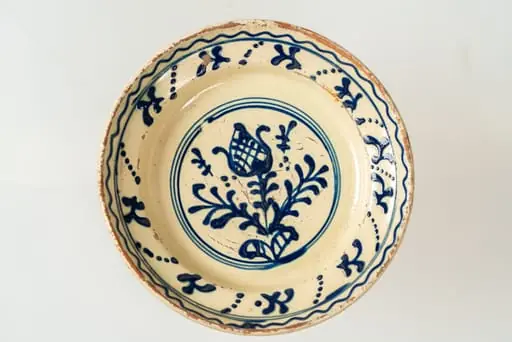 Farfurie semi-adâncă, cu corp scund și buză lată, răsfrântă, cu muchia buzei ușor concavă spre interior. Piesa este modelată la roata olarului, angobată cu humă albă pe fața interioară a acesteia. Decorul este realizat prin pictare cu pensula și cu cornul și constă în motive decorative florale și vegetale stilizate (flori și frunze), dispuse central, pe fundul farfuriei (încadrate in trei cercuri concentrice) și pe buza acesteia. Motive decorative geometrice: șiruri oblice de puncte, linie vălurită, linii sub formă de cerc. Cromatica decorului: alb, albastru. Farfuria este smălțuită pe fața interioară cu smalț transparent.
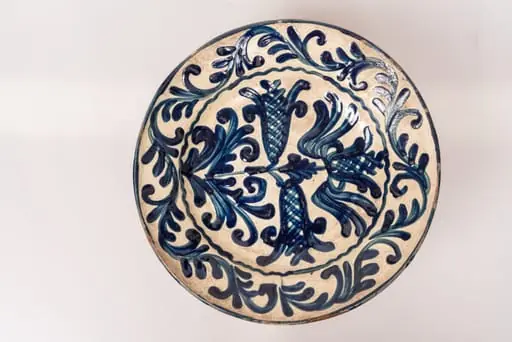 Farfurie semi-adâncă, cu buză răsfrântă; piesa este modelată la roata olarului și este angobată pe fața interioară cu humă albă. Decorul monocromatic este pictat cu pensula și se compune din motive decorative florale și vegetale stilizate (o floare de crin cu doi boboci și cu frunze, plasate central pe fundul farfuriei; buza farfuriei este acoperită cu un șir continuu de motive vegetale). Muchia buzei este marcată de o linie albastră iar bordura interioară a farfuriei de o linie vălurită. Cromatica: alb, albastru. Fața ornamentată a farfuriei este acoperită cu un strat de smalț transparent.
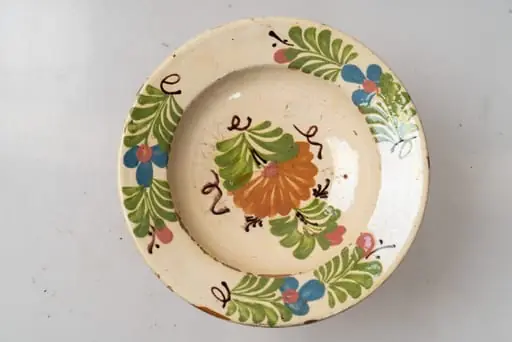 Farfurie adâncă, cu buza lată, răsfrântă; piesa este modelată din lut la roata olarului și este angobată cu humă albă pe fața interioară. Decorul este realizat prin pictare cu pensula și cu cornul și constă în motive florale și fitomorfe (o floare cu frunze și un boboc, pe centrul farfuriei și trei grupuri de flori cu frunze, pe buza farfuriei). Cromatica: alb, albastru, verde, siena naturală, roz-bej, maro. Fața ornamentată a farfuriei este acoperită cu un strat de smalț transparent.
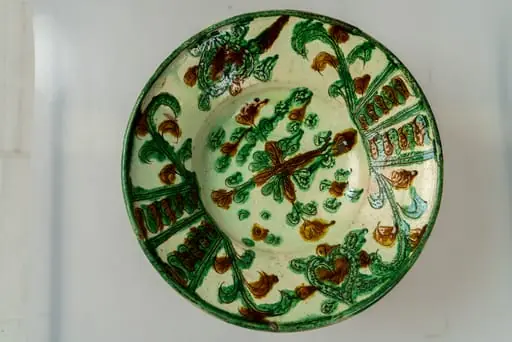 Farfurie mare, de formă semi-adâncă, cu buză răsfrântă, foarte lată, cu muchie rotunjită. Piesa este modelată la roata olarului, angobată cu humă albă. Decorul este realizat prin sgrafitare în angoba crudă, peste care se aștern cu pensula culorile de smalț: verde și galben-ocru închis. Motivele decorative sunt florale și vegetale stilizate, dispuse pe toată suprafața farfuriei. Cromatica decorului: alb, galben-ocru închis, verde.