Artwork
Farfurie mare, semi-adâncă, cu buza lată, răsfrântă. Decorul principal este dispus în centrul farfuriei, pe un fond alb-lăptos și prezintă un motiv vegetal stilizat (o floare cu petale galbene, frunze și alte elemente vegetale) iar buza farfuriei este decorată cu motive geometrice (două linii de culoare maro dispuse în zig-zag, alternativ, una mai groasă și vălurită, cealaltă mai subțire, dreaptă; puncte de culoare verde-turcoaz, linii subțiri dispuse sub formă de cercuri concentrice). Muchia buzei este marcată de o dungă galbenă iar bordura interioară a farfuriei cu o linie vălurită mărunt, de culoare albastră. Cromatica: alb, maro-brun, galben-ocru, verde-turcoaz, albastru.
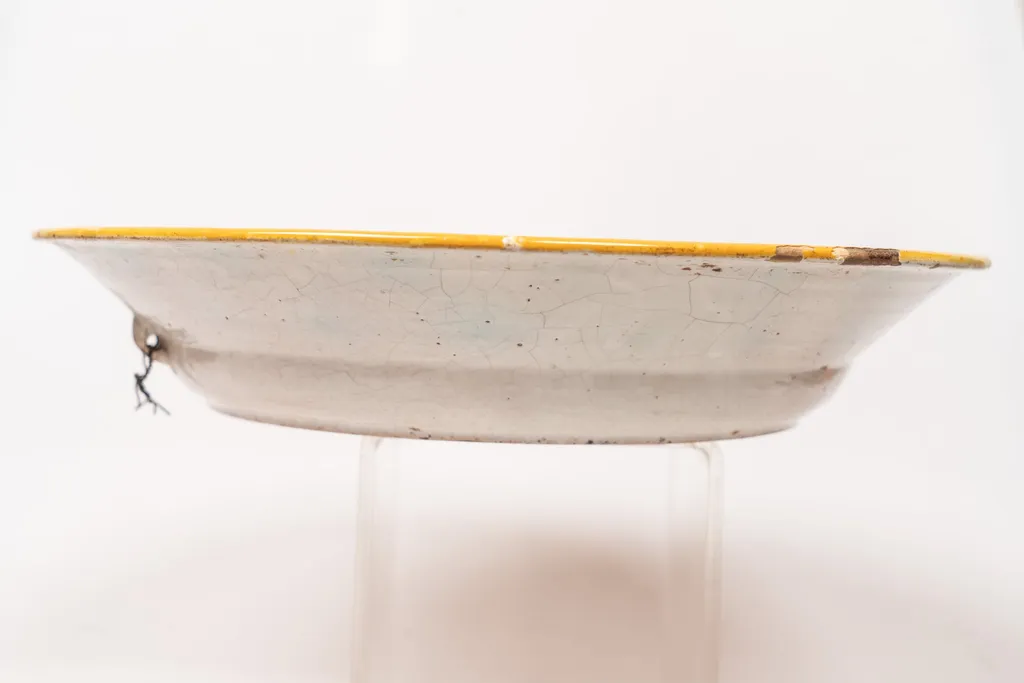
Farfurie mare, semi-adâncă, cu buza lată, răsfrântă. Decorul principal este dispus în centrul farfuriei, pe un fond alb-lăptos și prezintă un motiv vegetal stilizat (o floare cu petale galbene, frunze și alte elemente vegetale) iar buza farfuriei este decorată cu motive geometrice (două linii de culoare maro dispuse în zig-zag, alternativ, una mai groasă și vălurită, cealaltă mai subțire, dreaptă; puncte de culoare verde-turcoaz, linii subțiri dispuse sub formă de cercuri concentrice). Muchia buzei este marcată de o dungă galbenă iar bordura interioară a farfuriei cu o linie vălurită mărunt, de culoare albastră. Cromatica: alb, maro-brun, galben-ocru, verde-turcoaz, albastru. is a print by Unknown. It dates from 1850 and is held in the collection of the Ethnographical Museum of Transylvania. This ceramic plate features a wide, flared rim and a shallow, white-creamy body.
About this work
Overview
Its decoration is restrained, centered on a faint stylized floral motif, while the rim carries a geometric pattern in brown, turquoise, and blue.
This ceramic plate features a wide, flared rim and a shallow, white-creamy body. Its decoration is restrained, centered on a faint stylized floral motif, while the rim carries a geometric pattern in brown, turquoise, and blue. The surface shows signs of wear, suggesting regular use. The palette is muted—ochre yellow, brown, turquoise, and blue—applied with simple brushwork over a low-fired earthenware body.
Subject & Meaning
The central motif is a simplified flower with yellow petals and green leaves, likely drawn from local botanical forms rather than symbolic tradition. The geometric patterns along the rim—zigzags, dots, and concentric circles—do not appear to carry narrative meaning but instead serve as rhythmic borders. These elements reflect a functional aesthetic, prioritizing visual balance over iconography.
Technique & Style
The plate was hand-thrown and low-fired, with slip-painted decoration applied in thin washes. The floral design is loosely rendered, with minimal detail, while the rim’s zigzags and dots are executed with steady, repetitive strokes. The use of contrasting lines—thick wavy and thin straight—creates visual texture without complexity. The wear on the surface indicates a utilitarian origin and hand-crafted production.
History & Provenance
This object likely originated in a rural ceramic tradition from Eastern Europe, possibly Romania, given the stylistic parallels with regional folk pottery. Its form and decoration align with 19th- to early 20th-century domestic wares. It entered museum collections through ethnographic fieldwork, likely collected as an example of everyday craftsmanship rather than high art.
Context
Produced in small workshops or at home, such plates were part of common household sets, used for serving food or storing goods. Their decoration, though modest, distinguished regional styles and reflected local tastes. The absence of glaze and the use of earth-toned pigments suggest limited access to industrial materials, pointing to a pre-industrial or semi-rural production context.
Legacy
This plate represents a quiet continuity in folk ceramic traditions, where form and decoration evolved through practice rather than formal design. It survives today not as an artifact of elite culture but as evidence of ordinary life. Museums preserve such objects to document the material habits of communities that left few written records.
Artist & collection
Museum
Ethnographical Museum of Transylvania
Continue through works from the same source collection.
 Domestic Scene
 Giacomo and Cardinal Marco, investing Andrea, Abbot of San Zeno, with his Benefice
 The Nymph of Fontainebleau
 Portrait of a Woman
 Madonna and Child with Saints in the Enclosed Garden
 Venus and Minerva
 Family Group of Four on Sofa
 Wall painting from Room H of the Villa of P. Fannius Synistor at Boscoreale
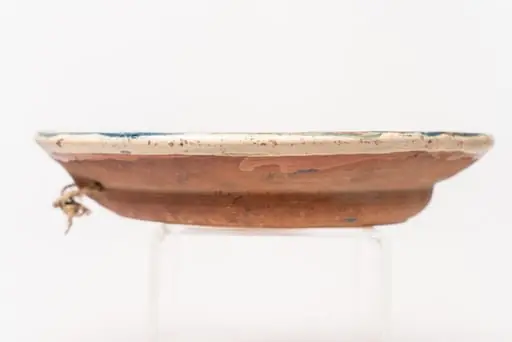 Farfurie semi-adâncă, cu răsfrântă; piesa este modelată la roata olarului și angobată cu humă albă pe fața interioară a acesteia. Decorul este realizat prin pictare cu cornul și cu pensula și constă în motive decorative florale și vegetale stilizate (flori de culoare galbenă cu contur albastru și frunze, dispuse în șir continuu pe fundul farfuriei și pe toată buza acestei), un motiv zoomorf (un cerb pictat central și înscris într-un cerc albastru cu puncte) și motive geometrice (linii sub formă de cerc și linie vălurită, sub bordura interioară a farfuriei; muchia buzei este marcată cu o linie albastră). Cromatica: alb, albastru, galben. Farfuria este smălțuită pe interior, cu smalț transparent.
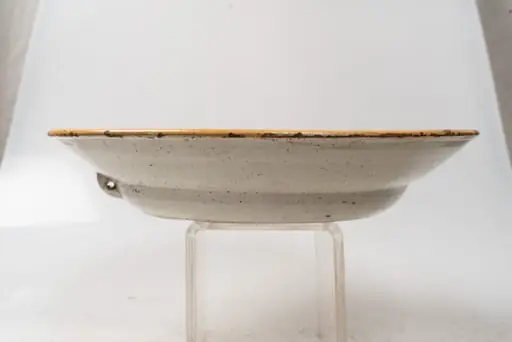 Farfurie de formă aplatizată, cu marginea lată, răsfrântă. Decorul, dispus pe un fond alb-lăptos prin pictare, este format din motive florale fin stilizate (un buchet din șase flori și frunze, dispuse central, pe fundul farfuriei) și geometrice (pe buza acesteia: linii subțiri de culoare maro-brun, sub formă de cerc, linie ondulată de culoare albastră, linii mici, paralele, linii sub formă de arc). Muchia buzei este marcată de o dungă galbenă. Cromatica: alb, albastru-turcoaz, maro-brun, galben-ocru, albastru.
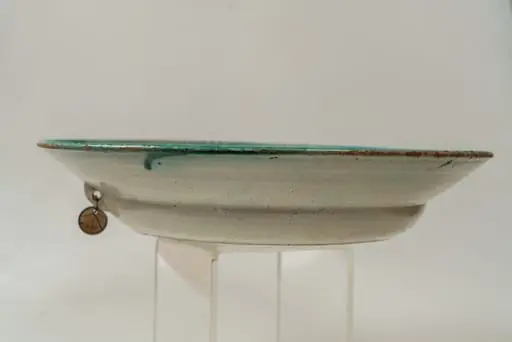 Farfurie mare, de formă aplatizată, cu buza lată, răsfrântă. Decorul principal este dispus pe centrul farfuriei, pe un fond alb-lăptos, și prezintă un motiv zoomorf (cerb) și vegetal stilizat (flori albastre cu frunze), iar buza farfuriei este decorată cu motive geometrice (două linii vălurite dispuse în zig-zag, alternativ, una mai groasă, cealaltă mai subțire, de culoare maro; pete de culoare verde turcoaz închis, linii subțiri dispuse sub formă de cercuri concentrice). Muchia buzei este marchată de o dungă verde. Cromatica: alb, galben ocru, verde turcoaz închis, albastru, maro.
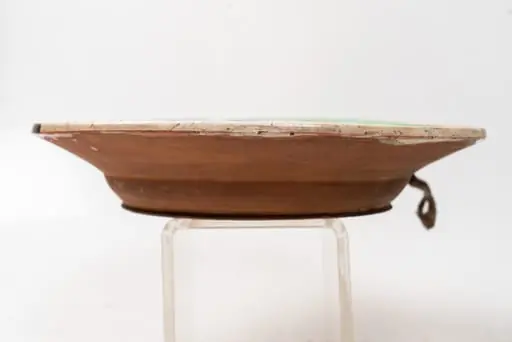 Farfurie mare, semi-adâncă, cu buza răsfrântă; piesa este modelată la roata olarului și angobată cu humă albă pe fața interioară. Decorul este realizat prin sgrafitare în pasta albă de angobă și prin pictare cu pensula și cu cornul și se compune din motive decorative vegetale (o floare foarte stilizată, cu patru petale, dispusă în registrul central de pe fundul farfuriei) și geometrice (linii circulare, de culoare verde și siena arsă, pe buza farfuriei). Cromatica: alb, verde, siena arsă, maro. Fața ornamentată a farfuriei este acoperită cu un strat de smalț transparent.
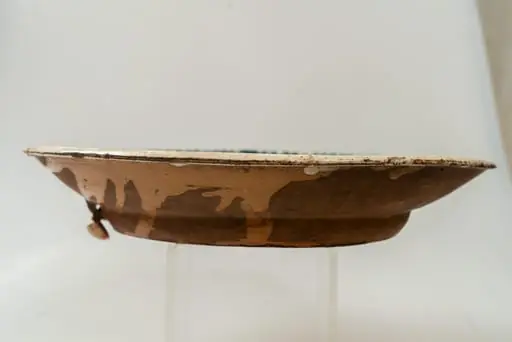 Farfurie mare, lată, cu buză răsfrântă. Este modelată la roata olarului și angobată cu humă albă pe fața interioară. Decorul este realizat prin pictare cu cornul și cu pensula și se compune din motive decorative florale stilizate (buchet central, pe fundul farfuriei) și motive geometrice variate, dispuse pe buza farfuriei. Cromatica: alb, brun, verde, galben, albastru. Fața interioară a farfuriei este acoperită de un strat de smalț transparent.
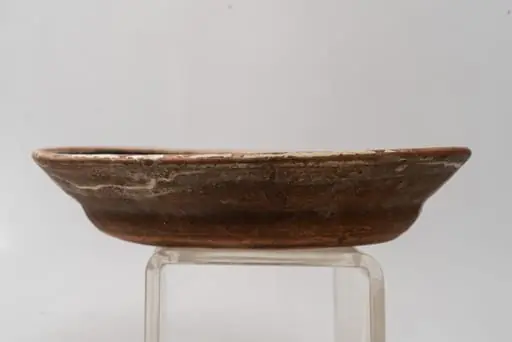 Farfurie semi-adâncă, cu fundul larg și buza răsfrântă oblic; piesa este modelată din lut la roata olarului și angobată cu humă albă pe fața interioară. Decorul este realizat cu pigmenți, prin pictare cu cornul și cu pensula și se compune din motive florale si vegetale stilizate (floare de lalea, două flori cu petale rotunde, boboci, frunze - dispuse central, în registrul de pe fundul farfuriei) și din motive geometrice (linii sub formă de semicerc, conținând câte un punct colorat; șiruri de linii paralele, linii hașurate, linii circulare). Cromatica: alb, maro, verde, galben ocru. Fața ornamentată a farfuriei este acoperită cu un strat de smalț transparent.
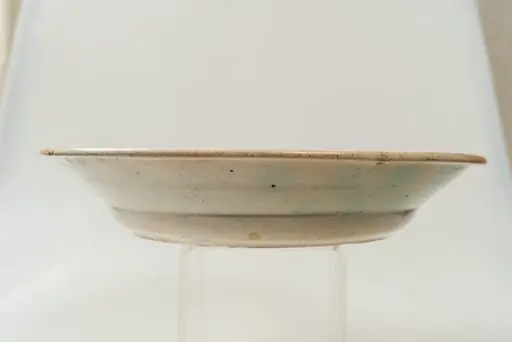 Farfurie mare, adâncă, cu buza răsfrântă. Decorul, dispus pe un fond alb lăptos, fin realizat prin pictare cu pensula, este format din motive vegetale stilizate, dispuse într-un registru central, pe fundul farfuriei (format din două flori, una galbenă și cealaltă albastră, cu petale alungite, împreună cu frunze și elemente vegetale de culoare albastru-turcoaz și maro-brun) și pe buza farfuriei, într-un registru continuu (grupuri de puncte de culoare albastră, galben-ocru, albastru-turcoaz; cercuri maro-brun, linii subțiri sub formă de arc) sugerând o ghirlandă de flori și elemente vegetale. Cromatica: alb, albastru-turcoaz, maro-brun, albastru, galben-ocru.
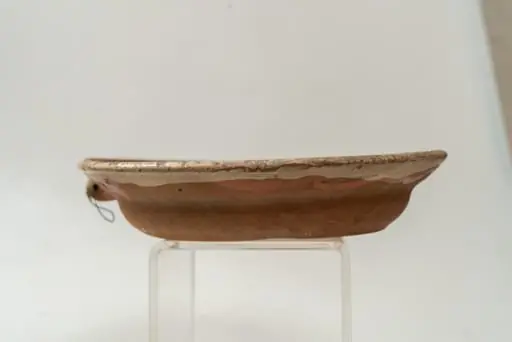 Farfurie adâncă, cu buza răsfrântă, modelată la roata olarului și angobată cu humă albă pe fața interioară a farfuriei. Decorul este pictat cu pensula și se compune din motive decorative vegetale stilizate (buchet de flori cu frunze, dispuse central, pe fundul farfuriei) și motive decorative geometrice (grupuri de linii paralele, linii sub formă de cercuri concentrice și grupuri de semicercuri umplute cu culoare) dispuse pe buza farfuriei. Cromatica: alb, verde, maro, galben ocru.
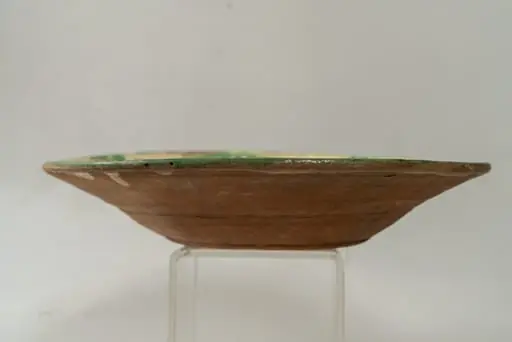 Farfurie mare, adâncă, cu buză lată, răsfrântă. Piesa este modelată la roata olarului, angobată cu humă albă. Decorul este realizat prin sgrafitare în angoba crudă, peste care se aștern cu pensula culorile de smalț: verde, galben, albastru. Motivele decorative sunt florale și vegetale stilizate, dispuse pe toată suprafața farfuriei și un motiv avimorf stilizat, dispus în zona centrală a acesteia. Cromatica decorului: alb, albastru, galben, verde.
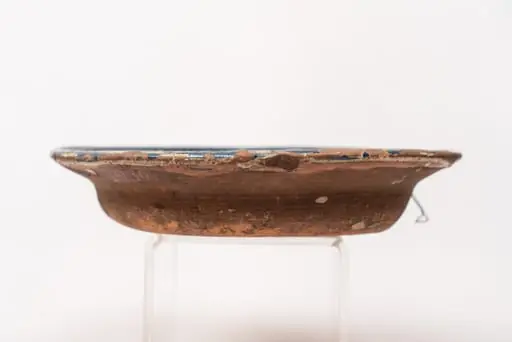 Farfurie semi-adâncă, cu buza răsfrântă; piesa este modelată la roata olarului și angobată cu humă albă pe fața interioară. Decorul monocromatic este realizat prin pictare cu cornul și cu pensula și se compune din motive florale și vegetale stilizate (o tulpină cu două flori de lalea și o floare centrală cu zece petale și frunze, pictate în zona centrală a farfuriei) și motive geometrice (grupuri de linii crescătoare și descrescătoare, șiruri de puncte, linii sub formă de spirală mică, linii hașurate). Câte o linie groasă albastră marchează muchia buzei și bordura interioară a farfuriei. Cromatica: alb, albastru. Fața ornamentată a farfuriei este acoperită cu un start de smalț transparent.
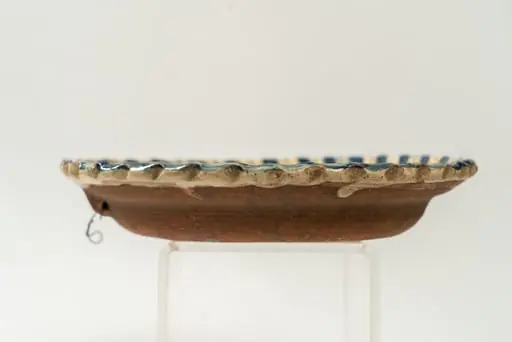 Farfurie adâncă, cu corp scund și buză lată, răsfrântă și muchie ondulată (mici alveole). Central, pe fundul farfuriei, este atașată o farfurioară mai mică, cu diametrul de 7 cm și înălțimea de 1 cm, care servea, probabil, pe lângă rolul său decorativ, pentru a ține lumânarea la coliva morților. Piesa este modelată la roata olarului, angobată cu humă albă pe fața interioară a acesteia. Decorul, bogat, este realizat prin pictare cu cornul și cu pensula și constă în motive decorative vegetale stilizate (frunze) și geometrice (linii, puncte, linii spiralate, linie vălurită, motivul colțului de lup), dispuse pe întreaga suprafață a farfuriei. Cromatica decorului: alb, albastru. Farfuria este smălțuită pe interior, cu smalț transparent.