Artwork
Farfurie mare, adâncă, cu buză lată, răsfrântă. Piesa este modelată la roata olarului, angobată cu humă albă. Decorul este realizat prin sgrafitare în angoba crudă, peste care se aștern cu pensula culorile de smalț: verde, galben, albastru. Motivele decorative sunt florale și vegetale stilizate, dispuse pe toată suprafața farfuriei și un motiv avimorf stilizat, dispus în zona centrală a acesteia. Cromatica decorului: alb, albastru, galben, verde.
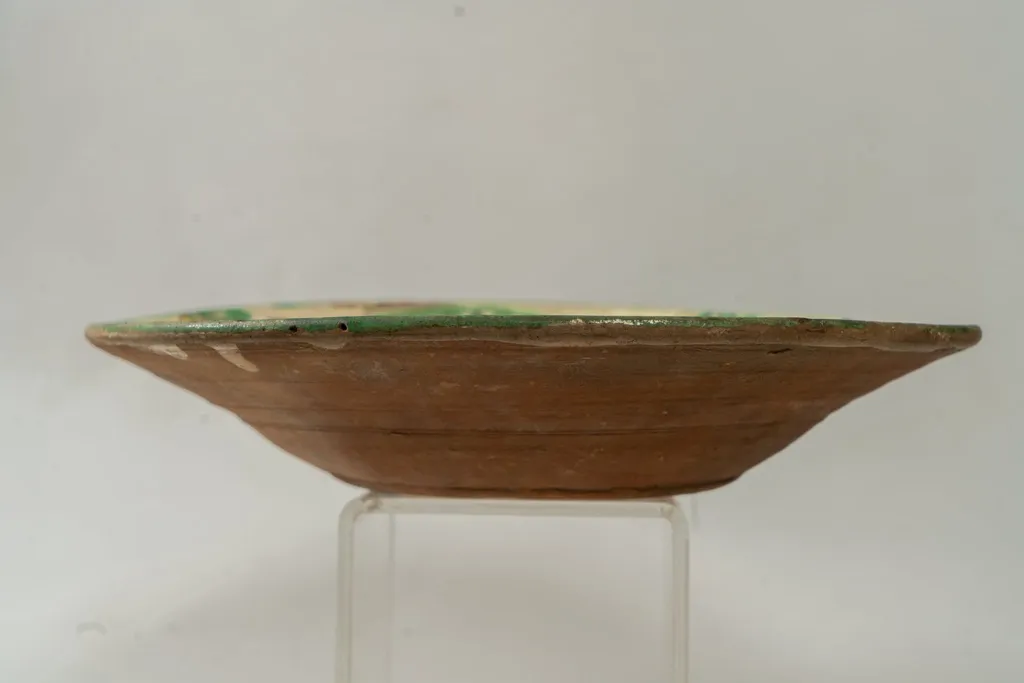
Farfurie mare, adâncă, cu buză lată, răsfrântă. Piesa este modelată la roata olarului, angobată cu humă albă. Decorul este realizat prin sgrafitare în angoba crudă, peste care se aștern cu pensula culorile de smalț: verde, galben, albastru. Motivele decorative sunt florale și vegetale stilizate, dispuse pe toată suprafața farfuriei și un motiv avimorf stilizat, dispus în zona centrală a acesteia. Cromatica decorului: alb, albastru, galben, verde. is a print by Unknown. It dates from 1850 and is held in the collection of the Ethnographical Museum of Transylvania. This large, deep ceramic dish features a wide, upturned rim and is formed on a potter’s wheel.
About this work
Overview
The piece is displayed on a transparent stand, emphasizing its three-dimensional form and allowing full visual access from all angles.
This large, deep ceramic dish features a wide, upturned rim and is formed on a potter’s wheel. Its surface is coated with a white slip, over which decorative patterns are incised using the sgraffito technique. Colored glazes in green, yellow, and blue are then brushed over the scratched design, creating a layered visual effect. The piece is displayed on a transparent stand, emphasizing its three-dimensional form and allowing full visual access from all angles.
Subject & Meaning
The decoration centers on a stylized avian form, surrounded by abstracted floral and vegetal motifs that cover the entire surface. These elements suggest a connection to natural cycles and possibly symbolic representations of fertility or renewal. The absence of figurative human or narrative content points to a decorative tradition rooted in organic forms rather than storytelling, common in regional ceramic practices of the period.
Technique & Style
The dish was shaped on a wheel, then coated with a white slip before being incised with fine tools to reveal the darker clay beneath. Color was applied as glaze over the scratched surface, with blue, green, and yellow used sparingly to highlight the linear patterns. The sgraffito method creates contrast between the white slip and the underlying clay, while the glaze adds subtle luminosity. The style is highly stylized, favoring rhythmic repetition over naturalism.
History & Provenance
This piece belongs to a tradition of ceramic production in Eastern Europe, likely from the late medieval or early modern period. Similar vessels have been found in archaeological contexts across Romania and neighboring regions, often associated with domestic or ceremonial use. Its preservation and display suggest it was collected in the 19th or early 20th century, possibly by ethnographic institutions documenting regional craft practices.
Context
The dish reflects a broader ceramic culture in which utilitarian objects were adorned with symbolic motifs drawn from the natural world. Its use of limited pigments and incised decoration aligns with regional techniques that prioritized craftsmanship over mass production. Such pieces were typically made in local workshops, using locally sourced clay and pigments, and were part of everyday life in rural communities.
Legacy
This vessel contributes to the understanding of pre-industrial ceramic traditions in Eastern Europe, illustrating how aesthetic choices were shaped by material constraints and cultural symbolism. It remains a reference point in ethnographic collections, helping to document regional craftsmanship before industrialization transformed artisanal practices. Its preservation supports ongoing study of folk art and material heritage.
Artist & collection
Museum
Ethnographical Museum of Transylvania
Continue through works from the same source collection.
 Domestic Scene
 Giacomo and Cardinal Marco, investing Andrea, Abbot of San Zeno, with his Benefice
 The Nymph of Fontainebleau
 Portrait of a Woman
 Madonna and Child with Saints in the Enclosed Garden
 Venus and Minerva
 Family Group of Four on Sofa
 Wall painting from Room H of the Villa of P. Fannius Synistor at Boscoreale
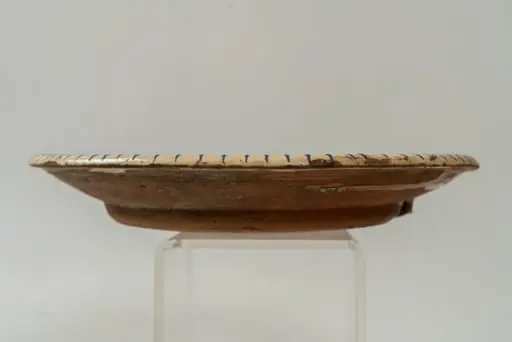 Farfurie de formă aplatizată, modelată la roata olarului, angobată cu humă albă pe fața interioară a acesteia. Decorul este realizat prin pictare cu pensula și cu cornul și constă în motive decorative vegetale stilizate (floare cu frunze - dispuse central, pe fundul farfuriei) și motive geometrice (grupuri de linii paralele, descrescătoare ca mărime - motivul brăduțului - și un șir de linii paralele pe toată lungimea muchiei buzei). Cromatica decorului: alb, albastru. Farfuria este smălțuită pe interior, cu smalț transparent.
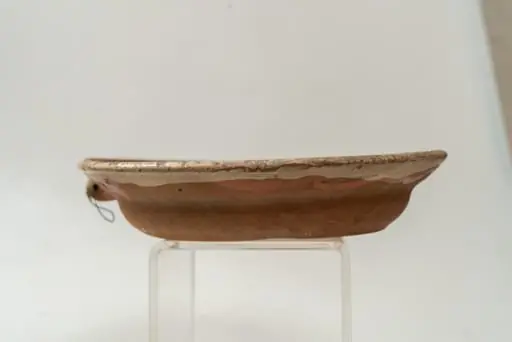 Farfurie adâncă, cu buza răsfrântă, modelată la roata olarului și angobată cu humă albă pe fața interioară a farfuriei. Decorul este pictat cu pensula și se compune din motive decorative vegetale stilizate (buchet de flori cu frunze, dispuse central, pe fundul farfuriei) și motive decorative geometrice (grupuri de linii paralele, linii sub formă de cercuri concentrice și grupuri de semicercuri umplute cu culoare) dispuse pe buza farfuriei. Cromatica: alb, verde, maro, galben ocru.
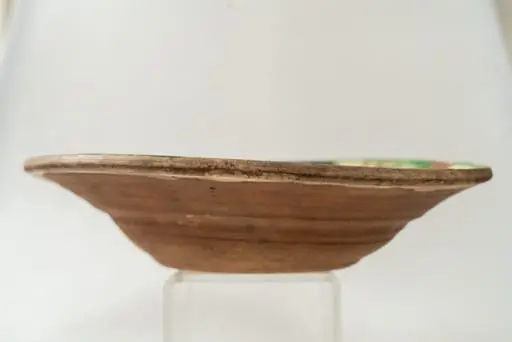 Farfurie mare, de formă adâncă, cu buză răsfrântă. Piesa este modelată la roată, angobată cu humă albă pe fața interioară. Decorul este realizat prin pictare cu pensula, cu smalțuri colorate (verde și maro) și prin sgrafitare. Motivele decorative sunt florale și vegetale stilizate (flori cu frunze) dispuse pe fundul farfuriei (o floare) și patru flori intercalate de patru elemente decorative vegetale (frunze) sugerând motivul inimii, dispuse pe buza farfuriei. Bordura interioară a farfuriei este marcată de o linie groasă sub formă de cerc, de culoare verde. Pe fața interioară a farfuriei este aplicat un strat de smalț transparent.
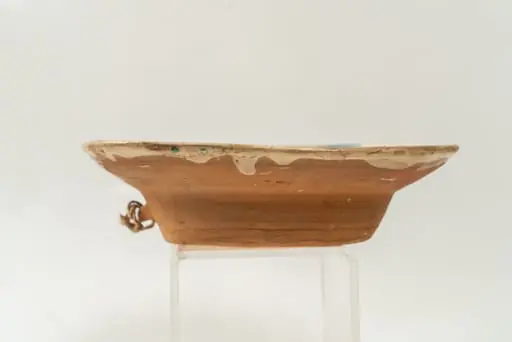 Farfurie adâncă, cu corp mic și buză lată, evazată; piesa este modelată la roata olarului și angobată cu humă albă pe fața interioară. Decorul este realizat prin pictare cu pensula și se compune din motive decorative florale și vegetale stilizate, dispuse central, pe fundul vasului (o floare albastră cu frunze verzi) și pe buza farfuriei (4 flori albastre alternate cu 4 grupuri de frunze). Fața decorată a farfuriei este acoperită cu un strat de smalț transparent. Cromatica: alb, albastru, verde.
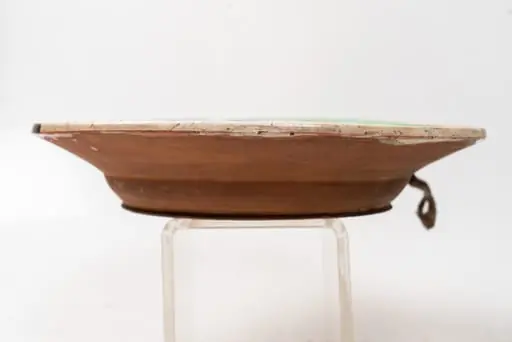 Farfurie mare, semi-adâncă, cu buza răsfrântă; piesa este modelată la roata olarului și angobată cu humă albă pe fața interioară. Decorul este realizat prin sgrafitare în pasta albă de angobă și prin pictare cu pensula și cu cornul și se compune din motive decorative vegetale (o floare foarte stilizată, cu patru petale, dispusă în registrul central de pe fundul farfuriei) și geometrice (linii circulare, de culoare verde și siena arsă, pe buza farfuriei). Cromatica: alb, verde, siena arsă, maro. Fața ornamentată a farfuriei este acoperită cu un strat de smalț transparent.
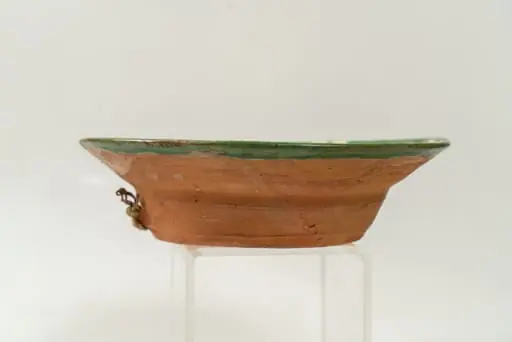 Farfurie adâncă, cu buză lată, evazată; piesa este modelată din lut la roata olarului și acoperită cu un strat de angobă verde pe fața interioară. Decorul este realizat prin pictare cu pensula și se compune din motive florale și vegetale stilizate (un buchet cu trei flori albe și frunze de culoare verde-închis, plasat în zona centrală, pe fundul farfuriei și cinci flori albe pictate pe buza acesteia, intercalate de cinci grupuri de frunze). Cromatica: verde, alb, verde-închis. Fața ornamentată a farfuriei este acoperită cu un strat de smalț transparent.
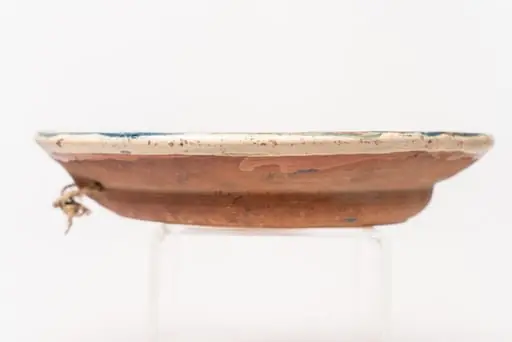 Farfurie semi-adâncă, cu răsfrântă; piesa este modelată la roata olarului și angobată cu humă albă pe fața interioară a acesteia. Decorul este realizat prin pictare cu cornul și cu pensula și constă în motive decorative florale și vegetale stilizate (flori de culoare galbenă cu contur albastru și frunze, dispuse în șir continuu pe fundul farfuriei și pe toată buza acestei), un motiv zoomorf (un cerb pictat central și înscris într-un cerc albastru cu puncte) și motive geometrice (linii sub formă de cerc și linie vălurită, sub bordura interioară a farfuriei; muchia buzei este marcată cu o linie albastră). Cromatica: alb, albastru, galben. Farfuria este smălțuită pe interior, cu smalț transparent.
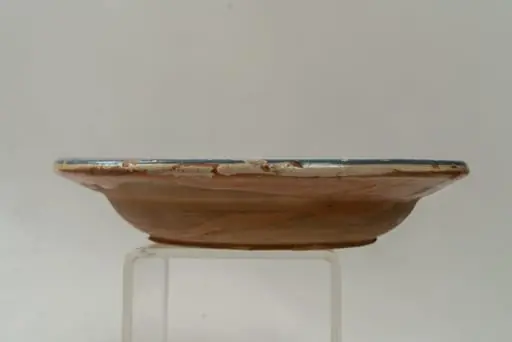 Farfurie adâncă, cu buză răsfrântă, modelată la roata olarului și angobată cu humă albă pe fața interioară a acesteia. Decorul, realizat prin pictare cu pensula și cu cornul, se compune din motive avimorfe (cocoș) și florale stilizate, dispuse într-un registru decorativ în zona centrală a farfuriei. Decorul este completat de câteva motive geometrice (linie ondulată, puncte, linii hașurate, linii sub formă de cercuri concentrice). Pe buza farfuriei: două cercuri concentrice, subțiri și o dungă albastră pe toată lungimea muchiei buzei. Cromatica: alb, albastru, verde, maro, siena naturală, roz pal. Peste decor, pe fața interioară a farfuriei este așezat un strat de smalț transparent.
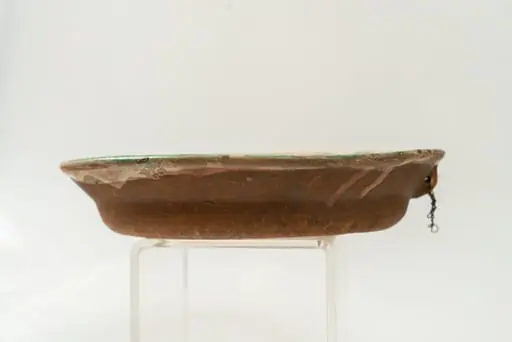 Farfurie adâncă, cu buza răsfrântă, modelată la roata olarului, angobată cu humă albă pe fața interioară. Decorul, bogat, este realizat prin pictare cu pensula și cu cornul și se compune din motive decorative florale stilizate și geometrice, acoperind întreaga suprafață a farfuriei. Cromatica: alb, verde, galben ocru, maro.
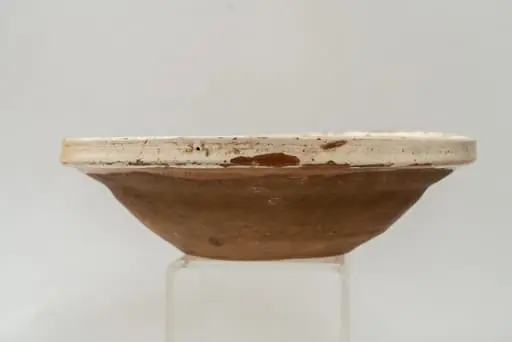 Farfurie mare, adâncă, cu muchia buzei ușor concavă spre interior. Piesa este modelată la roata olarului, angobată pe fața interioară cu humă albă. Decorul este realizat prin pictare cu pensula și constă în motive decorative avimorfe (pasăre - în zona centrală, pe fundul farfuriei), geometrice (linii sub formă de cercuri concentrice și puncte) și vegetale stilizate (flori și frunze - în zona centrală și pe buza farfuriei). Cromatica decorului: alb, verde, albastru, siena arsă.