Artwork
Farfurie întinsă
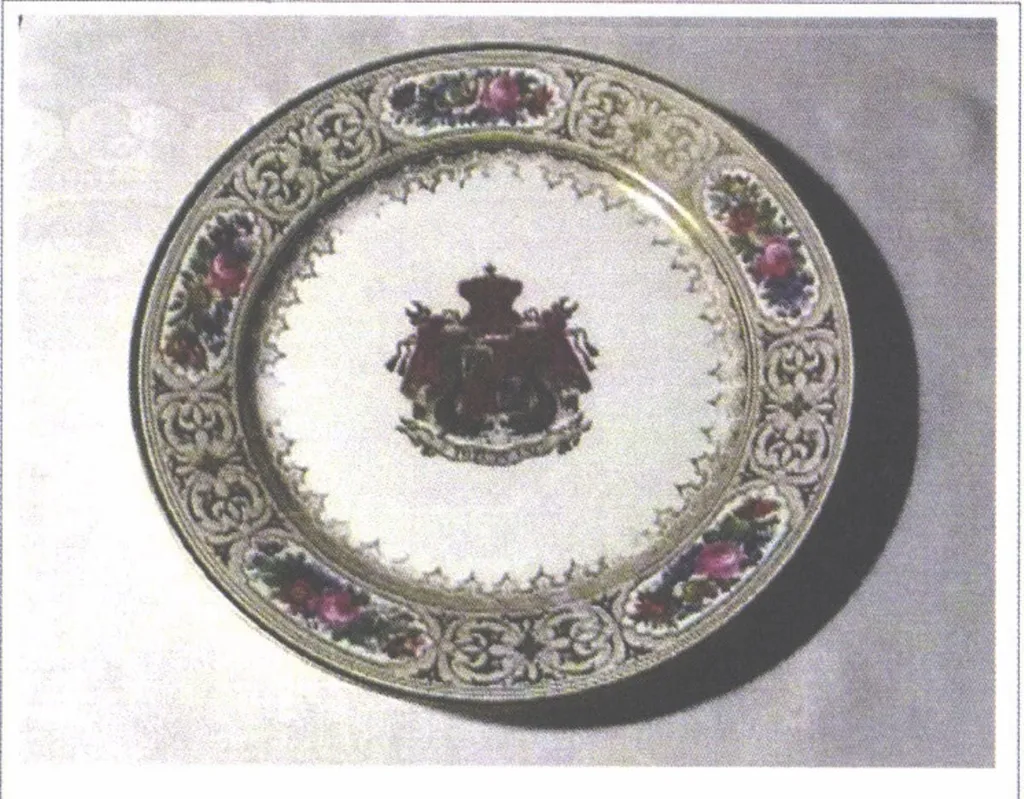
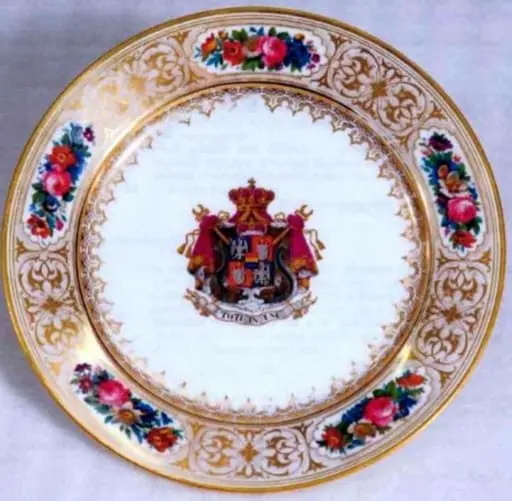
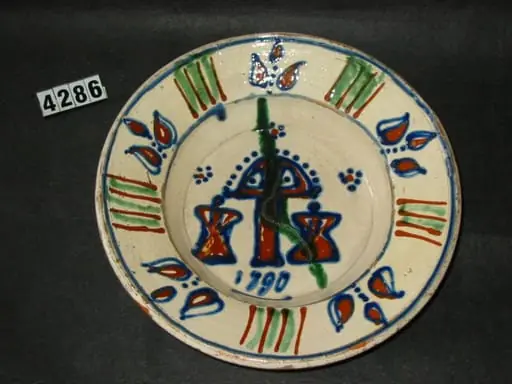
Farfurie întinsă is a print by Unknown. It dates from 1850 and is held in the collection of the Moldova National Museum Complex. This circular decorative plate features an ornate gold border adorned with swirling motifs and small red floral accents.
About this work
Overview
Its form and decoration align with European traditions of decorative heraldry, where visual symbols conveyed identity and status.
This circular decorative plate features an ornate gold border adorned with swirling motifs and small red floral accents. At its center is a dark emblem resembling a heraldic shield, topped with a crown and inscribed with abstract symbols. The design suggests ceremonial or aristocratic use, typical of objects crafted to signify lineage or authority. Its form and decoration align with European traditions of decorative heraldry, where visual symbols conveyed identity and status.
Subject & Meaning
The central shield, crowned and marked with symbolic glyphs, functions as a heraldic device, likely representing a family, institution, or territorial entity. Heraldic emblems were not merely decorative but encoded lineage, achievements, or jurisdiction. The crown implies elevated status, while the abstract internal marks may denote specific bloodlines or alliances. Such imagery was used to assert legitimacy and historical continuity in elite contexts.
Technique & Style
The plate employs fine metallic gilding for its border, with meticulous hand-painted red flowers integrated into the swirling patterns. The central shield is rendered in a darker, matte tone to contrast with the luminous edge, emphasizing its importance. The style blends Baroque-inspired ornamentation with simplified heraldic forms, suggesting a decorative adaptation of formal armorial traditions for domestic or ceremonial use.
History & Provenance
Though specific origins are undocumented, the plate’s design aligns with 18th- to early 19th-century European decorative arts, particularly in regions where heraldic motifs were repurposed for tableware and interior display. Similar pieces were commissioned by nobility or civic institutions to mark significant events or residences. Its survival suggests it was preserved as a valued object, possibly within a family collection or aristocratic household.
Context
In early modern Europe, decorative plates often served as status symbols, displaying familial or regional emblems in domestic settings. Heraldry, traditionally reserved for shields and seals, was increasingly adapted for porcelain, ceramics, and metalwork to communicate prestige beyond formal documents. This plate reflects a broader trend of visualizing identity through everyday objects, merging public heraldic language with private luxury.
Legacy
This object exemplifies the transition of heraldic symbolism from military and legal contexts into domestic aesthetics. While its specific emblem remains unverified, its form contributes to the broader understanding of how noble iconography permeated material culture. Such items preserve the visual language of lineage, offering insight into how identity was performed and preserved in non-textual forms during the early modern period.
Artist & collection
 Domestic Scene
 Giacomo and Cardinal Marco, investing Andrea, Abbot of San Zeno, with his Benefice
 The Nymph of Fontainebleau
 Portrait of a Woman
 Madonna and Child with Saints in the Enclosed Garden
 Venus and Minerva
 Family Group of Four on Sofa
 Wall painting from Room H of the Villa of P. Fannius Synistor at Boscoreale