Artwork
Serviciul de masă Al.I.Cuza
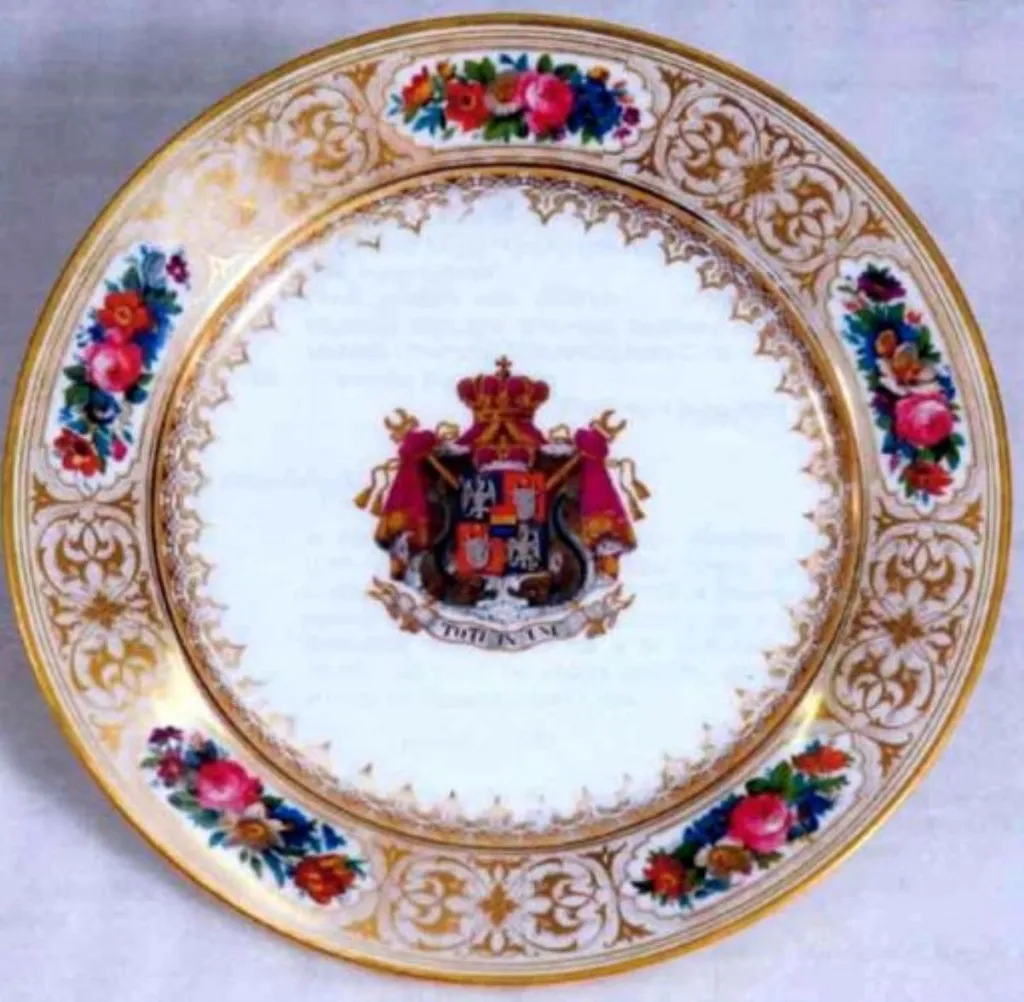
Serviciul de masă Al.I.Cuza is a print by the Impressionist artist Unknown. It dates from 1864 and is held in the collection of the National Museum of Romanian History.
About this work
Overview
Central to the design is a heraldic shield crowned and adorned with black, gold, and red elements, accompanied by a banner bearing inscribed text.
This ceramic plate, attributed to the service of Alexandru Ioan Cuza, features a white ground with a gilded border and ornamental floral motifs in vivid reds, pinks, and greens. Central to the design is a heraldic shield crowned and adorned with black, gold, and red elements, accompanied by a banner bearing inscribed text. The decorative scheme blends symbolic armorial imagery with elaborate floral scrollwork, suggesting ceremonial use rather than everyday dining.
Subject & Meaning
The central shield represents the coat of arms of Alexandru Ioan Cuza, ruler of the United Principalities of Moldavia and Wallachia. The crown signifies sovereignty, while the colors and emblem reflect state identity and dynastic authority. Surrounding floral patterns and gold detailing elevate the object beyond utility, framing the ruler’s emblem as a symbol of legitimacy and prestige during formal meals.
Technique & Style
The plate was likely hand-painted using enamel glazes on ceramic, with gold leaf applied for the rim and decorative swirls. The floral borders follow a stylized, repetitive pattern common in 19th-century European tableware, while the shield’s rendering adheres to heraldic conventions. The contrast between the crisp, symbolic center and the fluid, ornamental edge reflects a fusion of official iconography and decorative artistry.
History & Provenance
Produced during Cuza’s reign (1859–1866), this piece formed part of a ceremonial table service commissioned for official functions. Such services were often imported from European porcelain manufactories or locally produced under royal patronage. Its survival suggests it was preserved as a relic of early Romanian statehood, possibly in institutional or private collections after Cuza’s abdication.
Context
In mid-19th-century Romania, the creation of state symbols—including tableware—was part of nation-building efforts following unification. Ceremonial porcelain served to visually assert sovereignty and modernity, aligning with Western European courtly traditions. This plate would have been used in state banquets, reinforcing political identity through material culture during a period of institutional consolidation.
Legacy
As one of the few surviving examples of Cuza’s official table service, the plate offers insight into the material expression of early Romanian statehood. It remains a tangible artifact of the period’s political symbolism, preserved in museum collections as evidence of how rulers used domestic objects to project authority and cultural continuity.
Artist & collection

 Domestic Scene
 Giacomo and Cardinal Marco, investing Andrea, Abbot of San Zeno, with his Benefice
 The Nymph of Fontainebleau
 Portrait of a Woman
 Madonna and Child with Saints in the Enclosed Garden
 Venus and Minerva
 Family Group of Four on Sofa
 Wall painting from Room H of the Villa of P. Fannius Synistor at Boscoreale
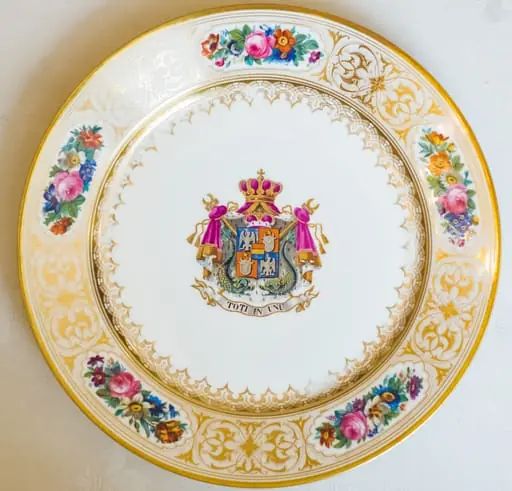 Farfurie, model decorativ stil Louis-Philippe, ales pentru serviciul de masa de peste 100 de piese Cuza, comandat la manufacturile regale din Sevres. Acesta urma să fie folosit de familia domnitoare Cuza în palatul de la Cotroceni. Farfuria este întinsă, circulară, pictată pe margini cu cinci medalioane florale care alternează cu arabescuri aurii. Este decorată central cu stema Principatelor Române și deviza unionistă „Toți în Unu". Stema și motivele florale se caracterizează printr-o vie policromie: galben, auriu, nuanțe de roșu, roz, verde și albastru. Pe reversul ei apar două marci în câmp circular: „Chateaux de Trianon" (culoare roșu carmin) și „Sevres 1846" (cu albastru). De asemenea, se remarcă cartelul care conține, în cifre latine, datele dublei alegeri a lui Al. I. Cuza ca principe al Moldovei și Țării Românești.
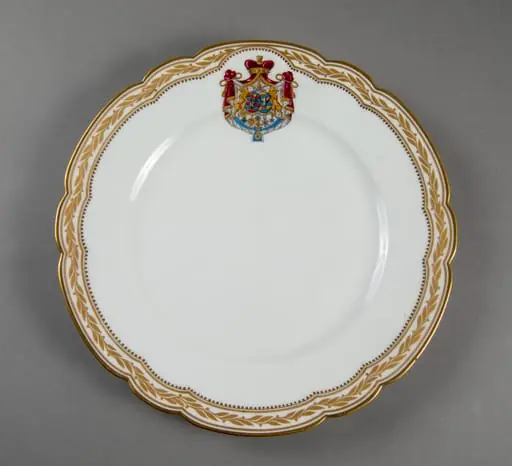 Farfurie de porțelan de Sevres, realizată din porțelan alb, cu margini treflate, decorate cu frunze de laur pictate, în centrul decorațiilor având blazonul familiei Suțu. Blazonul a fost adesea confundat cu cel al Principatelor Unite, fiind format din: stemele celor două țări românești: prima cea a Moldovei, cea de-a doua cea a Țării Românești, steme plasate pe două scuturi ovale, în fascie, acolate, puțin suprapuse, cea a Moldovei având capul de bour de argint cu stea în șase colțuri de aur, pe un scut cu segmente verticale egale roșii și albastre; cea a Țării Românești având acvila cruciată de argint, cu crucea de aur, scutul având segmente verticale galbene și albastre. Cele două scuturi au ca tenanți doi lei aurii, deasupra armele familiei Suțu – iataganul și sabia, ambele aurii, precum, pe un pavilion de purpură căptușit cu hermină, brodat cu ciucuri de aur și prins într-o coroană cu pietre scumpe. Pe scut, în partea inferioară se află și decorațiile familiei Suțu. Familia Suțu a fost o familie fanariotă grecească, venită în principate în cea de-a doua parte a secolului al XVIII-lea, având trei domni în ambele țări Românești (Alexandru Suțu, Mihai Suțu și Grigore Suțu). Blazonul familiei poate fi admirat inclusiv pe clădirea Palatului Suțu, astăzi Muzeul de Istorie a Municipiului București. Farfuria are marca atelierului Sevres și modelul din anul 1844, precum și seria.
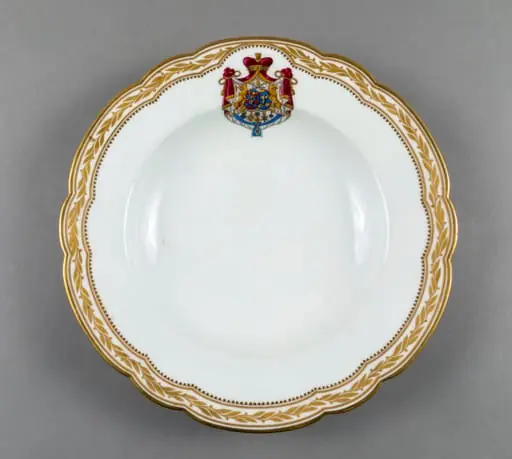 Farfurie adâncă de porțelan de Sevres, realizată din porțelan alb, cu margini treflate, decorate cu frunze de laur pictate, în centrul decorațiilor având blazonul familiei Suțu. Blazonul a fost adesea confundat cu cel al Principatelor Unite, fiind format din: stemele celor două țări românești: prima cea a Moldovei, cea de-a doua cea a Țării Românești, steme plasate pe două scuturi ovale, în fascie, acolate, puțin suprapuse, cea a Moldovei având capul de bour de argint cu stea în șase colțuri de aur, pe un scut cu segmente verticale egale roșii și albastre; cea a Țării Românești având acvila cruciată de argint, cu crucea de aur, scutul având segmente verticale galbene și albastre. Cele două scuturi au ca tenanți doi lei aurii, deasupra armele familiei Suțu – iataganul și sabia, ambele aurii, precum, pe un pavilion de purpură căptușit cu hermină, brodat cu ciucuri de aur și prins într-o coroană cu pietre scumpe. Pe scut, în partea inferioară se află și decorațiile familiei Suțu. Familia Suțu a fost o familie fanariotă grecească, venită în principate în cea de-a doua parte a secolului al XVIII-lea, având trei domni în ambele țări Românești (Alexandru Suțu, Mihai Suțu și Grigore Suțu). Blazonul familiei poate fi admirat inclusiv pe clădirea Palatului Suțu, astăzi Muzeul de Istorie a Municipiului București. Farfuria are marca atelierului Sevres și modelul din anul 1844, precum și seria.
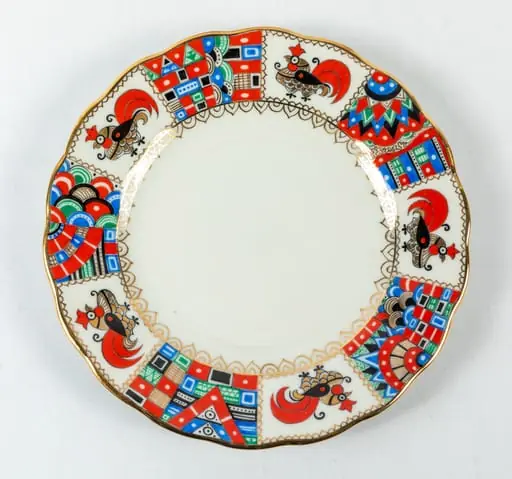 Farfurie pentru desert din porțelan, pictată manual, decorată cu motive tradiționale rusești. Pe verso logo-ul Fabricii de Porțelan Lomonosov. Farfuria face parte dintr-un serviciu de ceai pentru 10 persoane. Serviciu de ceai oferit lui Nicolae Ceaușescu de Leonid Brejnev cu ocazia întâlnirii de la Ialta, august 1978.
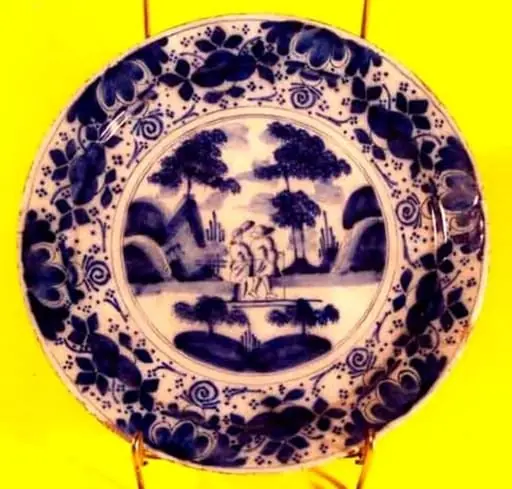 farfurie decorativă
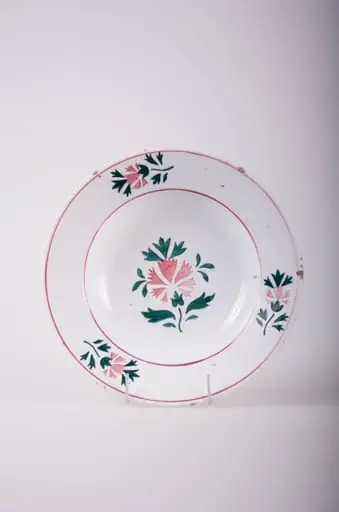 Farfurie de formă tronconică, adâncită; pe fund are găuri pentru agățare. În centru și pe margine este decorată cu motive fitomorfe și florale; pe margine sunt trei flori cu frunze încadrate de două cercuri concentrice; în interior este doar o floare cu frunze. Cromatică: fond: alb; motive: vișiniu; verde.
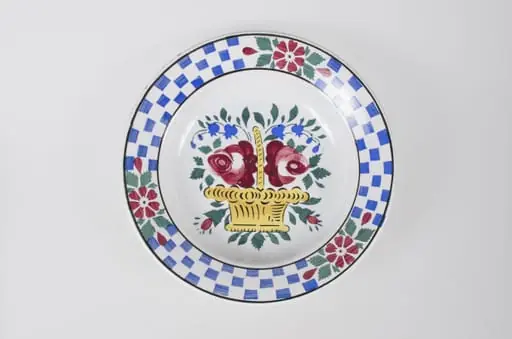 Vas de formă tronconică, adâncă. Pe fundul farfuriei se află un ornament format din: un coș de flori (trandafiri și clopoței). Pe marginea farfuriei între două cercuri concentrice apar trei flori despărțite de trei registre în formă de tablă de șah realizate din dreptunghiuri albastre. Cromatică: fond: alb; motive: galben; roșu; verde; albastru; negru.
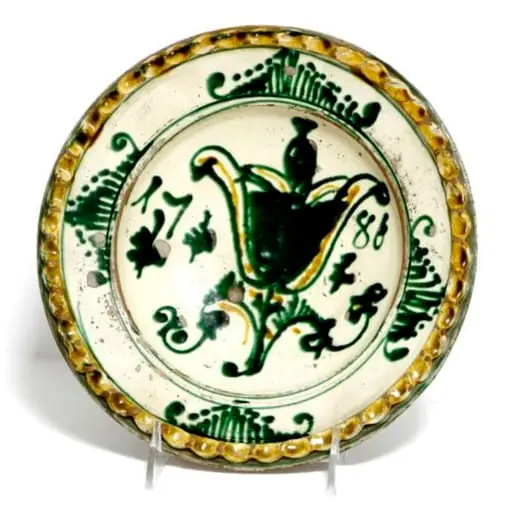 farfurie
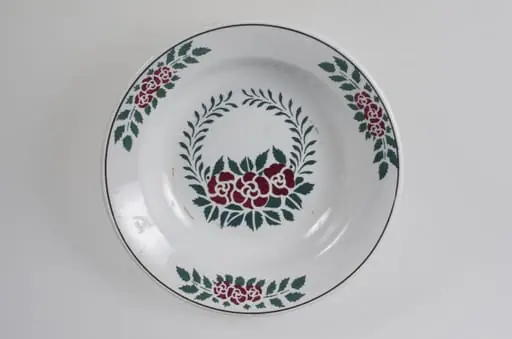 Vasul are formă tronconică, adâncită. Este decorat cu motive florale, vegetale și geometrice; are trei flori pe margine ce sunt delimitate de o linie; în centru este decorat cu un buchet format din trei trandafiri; pe fund are trei cercuri concentrice. Vasul este smălțuit interior-exterior. Cromatică: fond alb; motive: verde; roșu.