Artwork
Farfurie plată,cu marginea lată și evazată spre interior. Marginea este decorată cu trei fire de floare de nu-mă-uita intercalate de un mic motiv fitomorf. Decorul central reprezintă un castel medieval poziționat într-un peisaj naturalist, înconjurat de trei brazi. Cromatică: alb, albastru, verde, maro.
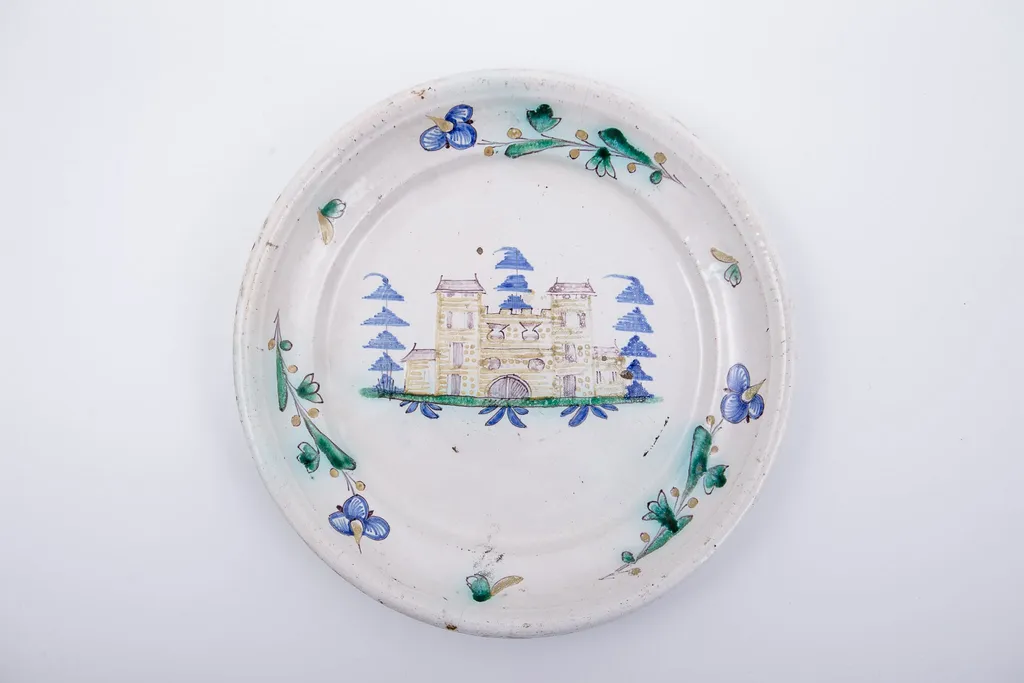
Farfurie plată,cu marginea lată și evazată spre interior. Marginea este decorată cu trei fire de floare de nu-mă-uita intercalate de un mic motiv fitomorf. Decorul central reprezintă un castel medieval poziționat într-un peisaj naturalist, înconjurat de trei brazi. Cromatică: alb, albastru, verde, maro. is a print by Unknown. It dates from 1850 and is held in the collection of the ASTRA National Museum Complex. This ceramic plate features a white glazed surface with hand-painted decoration.
About this work
Overview
This ceramic plate features a white glazed surface with hand-painted decoration. Its wide, inward-flaring rim bears a repeating motif of forget-me-not flowers and stylized botanical elements. The central scene depicts a medieval castle nestled within a naturalistic landscape, rendered in soft blues, greens, and browns against the unadorned white ground.
Subject & Meaning
The central image portrays a fairy-tale castle with three towers and a bridged approach, surrounded by three tall evergreens. The composition evokes an idealized, romanticized vision of medieval architecture embedded in nature, suggesting a symbolic harmony between human structure and the natural world, rather than a specific historical site.
Technique & Style
The decoration is executed in underglaze painting, with delicate brushwork defining architectural details and foliage. Colors are muted and atmospheric—blues for sky and shadows, greens for trees, browns for earth—creating a cohesive, tranquil tone. The rim’s floral border is rendered with rhythmic repetition, contrasting the more detailed central scene.
History & Provenance
The plate originates from a tradition of Central European ceramic production, likely 19th century, where domestic wares incorporated romanticized historical imagery. Its design aligns with popular decorative motifs of the period, reflecting a broader cultural fascination with medievalism and pastoral idealism in everyday objects.
Context
This piece belongs to a broader trend in 19th-century ceramics where household items were adorned with scenes drawn from folklore, literature, and imagined pasts. Similar motifs appear on tiles and tableware across Europe, serving both aesthetic and sentimental purposes, often produced for middle-class homes seeking refined yet accessible art.
Legacy
Though not produced by a major studio, the plate exemplifies how vernacular craftsmanship translated romantic ideals into functional art. Its survival reflects a quiet continuity in decorative arts traditions, preserving a moment when domestic objects carried narratives of nature, memory, and imagined history.
Artist & collection

 Domestic Scene
 Giacomo and Cardinal Marco, investing Andrea, Abbot of San Zeno, with his Benefice
 The Nymph of Fontainebleau
 Portrait of a Woman
 Madonna and Child with Saints in the Enclosed Garden
 Venus and Minerva
 Family Group of Four on Sofa
 Wall painting from Room H of the Villa of P. Fannius Synistor at Boscoreale
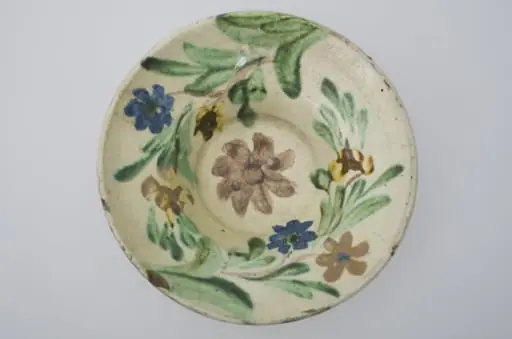 Farfurie cu marginea foarte lată și evazată, smălțuită în interior. Decor floral pe toată suprafața interioară. Cromatică: fond: alb; motive: brun; verde; galben; albastru.
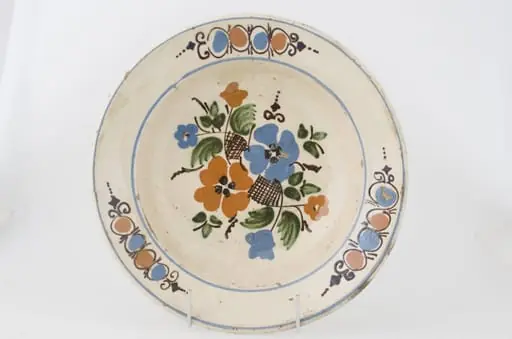 Farfuria este lucrată la roată, prezintă marginea evazată în plan orizontal fiind smălțuit în interior. Pe suprafața interioară a vasului se identifică registre decorative floral-vegetale dispuse pe fundul vasului și pe marginea interioară. Registrele sunt delimitate de două cercuri realizate prin pictare și dispuse pe buza vasului și spre interiorul acestuia. Cromatică: fond: alb; motive: roșu; albastru; verde; brun; maro.
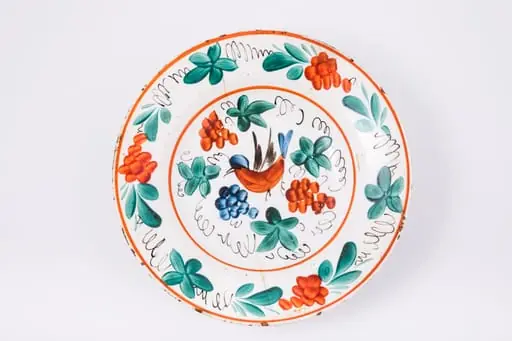 Farfurie adâncă, cu marginea lată și evazată, ușor îndoită spre interior. Marginea este decorată cu trei grupuri de buchete alcătuite dintr-o floare roșie și frunze, intercalate de trei motive fitomorfe și ramuri stilizate. Decorul central reprezintă o pasăre în cromatică roșu și albastru, cu aripi maro, înconjurată de trei buchete, două compuse din flori roșii și unul din flori albastre, intercalate de patru frunze și ramuri stilizate. Piesa prezintă pe spate o ștampilă, indescifrabilă. Cromatică: alb, roșu, verde, albastru, maro.
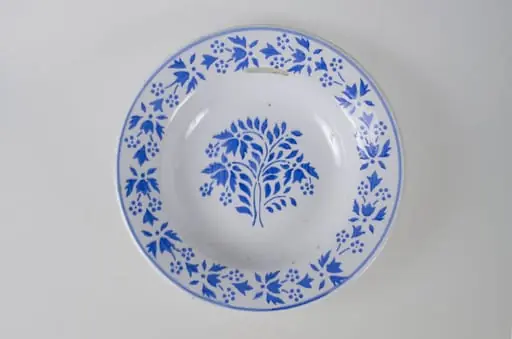 Farfuria are formă tronconică ușor adâncită. Pe buza vasului se identifică un registru decorativ floral, vegetal, continuu mărginit de o linie. Pe fund este o ștanță: o casă cu o pasăre pe acoperiș. Pe fundul vasului sunt două incizii în care este introdus șnurul folosit la agățarea vasului pe perete. Cromatică: fond: alb; motive: albastru.
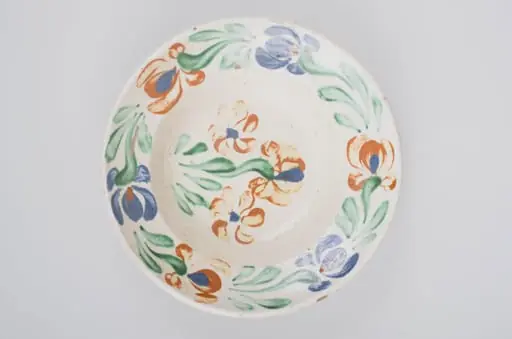 Farfurie cu fundul adâncit și buza evazată. Smălțuită numai în interior și scurgeri de smalț sub buză. Prezintă găuri pentru prinderea aței în vederea agățării. Decorată cu motive florale: central are trei flori iar pe margine un chenar floral. Cromatică: fond: alb; motive: maro; verde; albastru.
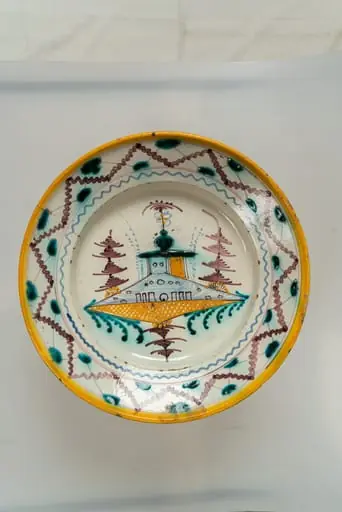 Farfurie de formă aplatizată, cu marginea lată, răsfrântă. Decorul principal este dispus în centrul farfuriei, pe un fond alb-lăptos, și prezintă un motiv arhitectural și vegetal stilizat, iar buza farfuriei este decorată cu motive geometrice (două linii vălurite dispuse în zig-zag, alternativ, una mai groasă, cealaltă mai subțire, de culoare maro; pete de culoare verde turcoaz, linii subțiri dispuse sub formă de cercuri concentrice). Muchia buzei este marchată de o dungă galbenă. Cromatica: alb, maro, galben ocru, albastru deschis, verde turcoaz.
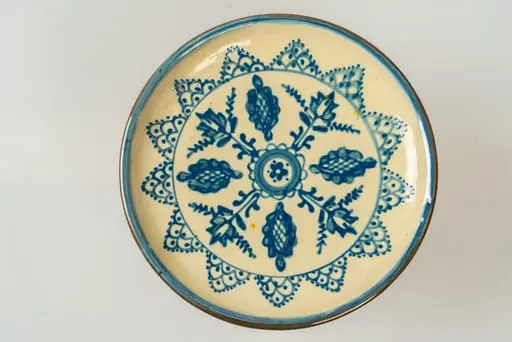 Farfurie mică, plată, cu muchia buzei ușor concavă spre interior. Piesa este modelată la roata olarului și este angobată cu humă albă pe fața sa interioară. Decorul este realizat prin pictare cu pensula, cu linii fine, și se compune din motive florale stilizate, plasate central și încadrate într-un cerc, pe a cărui față exterioară sunt ampalsate grupuri decorative formate din motivul solzi de pește și puncte. Cromatica: alb, albastru. Farfuria este smălțuită pe amble fețe cu un smalț transparent.