Artwork
Farfurie semi-adâncă, cu buza lată evazată; este angobată pe fața interioară cu un strat de humă albă peste care este realizat prin sgrafitare și prin pictare cu pensula decorul format din motive florale și vegetale stilizate: registrul decorativ central de pe fundul farfuriei conține o floare centrală ce are pe exterior patru boboci dispuși în formă de cruce, intercalați de patru flori cu câte trei petale. Buza farfuriei este decorată cu zece motive vegetale în formă de inimă. Suprafața ornamentată a farfuriei este acoperită cu un strat de smalț transparent. Cromatica: alb, verde, galben.
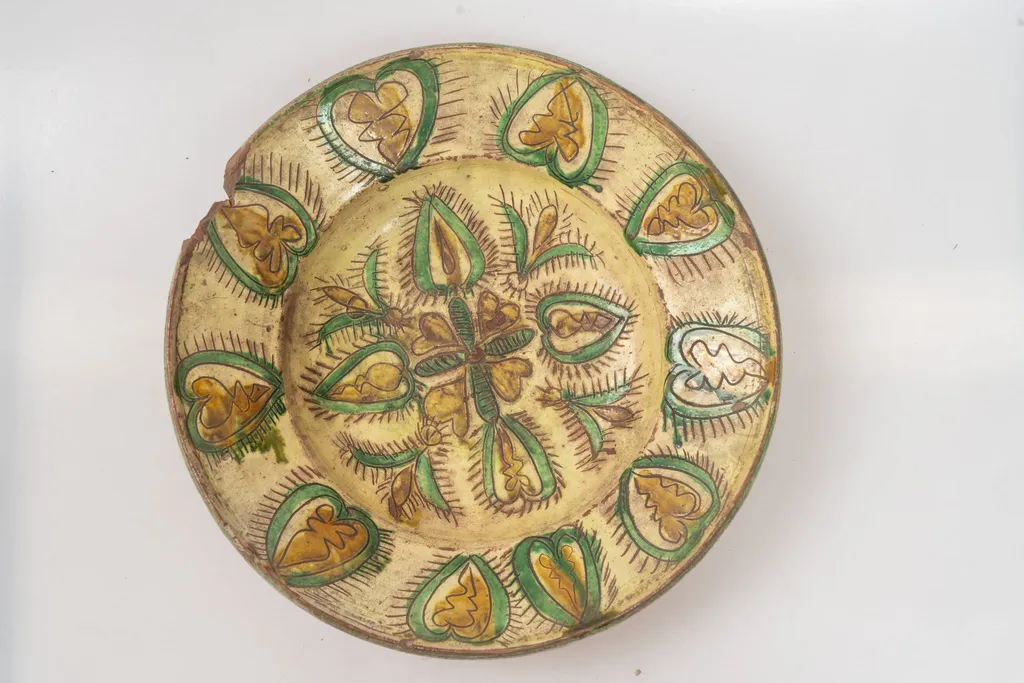
Farfurie semi-adâncă, cu buza lată evazată; este angobată pe fața interioară cu un strat de humă albă peste care este realizat prin sgrafitare și prin pictare cu pensula decorul format din motive florale și vegetale stilizate: registrul decorativ central de pe fundul farfuriei conține o floare centrală ce are pe exterior patru boboci dispuși în formă de cruce, intercalați de patru flori cu câte trei petale. Buza farfuriei este decorată cu zece motive vegetale în formă de inimă. Suprafața ornamentată a farfuriei este acoperită cu un strat de smalț transparent. Cromatica: alb, verde, galben. is a print by Unknown. It dates from 1850 and is held in the collection of the Ethnographical Museum of Transylvania. This shallow ceramic plate features a wide, flared rim and is coated internally with a white slip.
About this work
Overview
The craftsmanship suggests local, non-industrial production, with hand-formed contours and deliberate, restrained ornamentation.
This shallow ceramic plate features a wide, flared rim and is coated internally with a white slip. Decorative elements are applied through sgraffito and brush painting, revealing the darker clay beneath the slip. A transparent glaze covers the surface, enhancing the muted tones of green, yellow, and white. The craftsmanship suggests local, non-industrial production, with hand-formed contours and deliberate, restrained ornamentation.
Subject & Meaning
The central motif is a stylized flower with four bud-like forms arranged in a cross pattern, alternating with three-petaled blossoms. Around the rim, ten heart-shaped vegetal motifs frame the design. These symbols likely reflect regional floral iconography, possibly tied to seasonal cycles or domestic symbolism. The repetition and symmetry suggest an emphasis on order and natural harmony rather than narrative content.
Technique & Style
The decoration combines sgraffito and brush painting: a white slip is applied over the clay body, then partially scratched away to expose the darker surface beneath, creating crisp linear patterns. Additional details are painted in green and yellow pigments. The method avoids heavy modeling, favoring flat, rhythmic forms. The use of minimal color and controlled line work reflects a functional aesthetic rooted in local ceramic traditions.
History & Provenance
The plate originates from a rural ceramic tradition in Eastern Europe, likely produced in the 18th or 19th century. Similar pieces are held in the Museum of Ethnography, indicating a regional style shared across communities. Its simple form and handcrafted appearance suggest domestic or local market use, rather than elite or ceremonial function. No specific maker or date is recorded, but its technique aligns with widespread folk pottery practices.
Context
This plate belongs to a broader corpus of folk ceramics from the Carpathian region, where households often produced utilitarian wares with symbolic decoration. The floral and vegetal motifs echo natural cycles and local botany, common in peasant material culture. The use of slip and sgraffito was widespread due to its accessibility and low cost, making it a practical choice for everyday pottery in areas without access to industrial glazes or kilns.
Legacy
Though not signed or dated, the plate exemplifies a durable regional craft tradition that persisted into the modern era. Its preservation in ethnographic collections highlights its value as a record of vernacular artistry. Contemporary ceramicists in the region still reference such designs, acknowledging their formal simplicity and technical ingenuity as foundational to local heritage.
Artist & collection
Museum
Ethnographical Museum of Transylvania
Continue through works from the same source collection.
 Domestic Scene
 Giacomo and Cardinal Marco, investing Andrea, Abbot of San Zeno, with his Benefice
 The Nymph of Fontainebleau
 Portrait of a Woman
 Madonna and Child with Saints in the Enclosed Garden
 Venus and Minerva
 Family Group of Four on Sofa
 Wall painting from Room H of the Villa of P. Fannius Synistor at Boscoreale
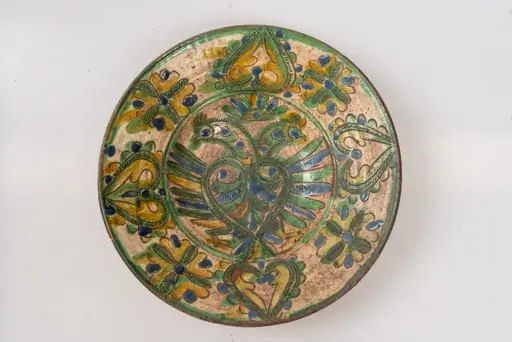 Farfurie adâncă, cu buza lată evazată; este angobată pe fața interioară cu un strat de humă albă peste care este realizat prin sgrafitare și prin pictare cu pensula decorul format dintr-un motiv avimorf și din motive florale și vegetale stilizate: registrul decorativ central de pe fundul farfuriei conține un vultur bicefal iar buza este decorată cu patru motive vegetale în formă de inimă intercalate de patru flori. Bordura interioară a farfuriei și muchia buzei sunt marcate cu câte o linie verde. Suprafața ornamentată a farfuriei este acoperită cu un strat de smalț transparent. Cromatica: alb, verde, galben, albastru.
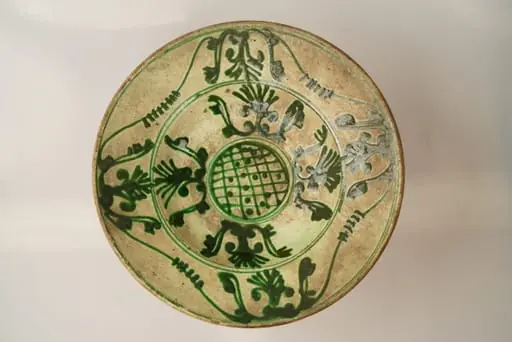 Farfurie mare, adâncă, cu buză lată dreaptă, evazată; suprafața interioară a piesei este acoperită cu un strat de angobă albă peste care este pictat cu cornul decorul monocromatic format din motive vegetale stilizate și geometrice, dispuse astfel: centrul farfuriei este decorat cu un cerc cu linii hașurate intersectat, de culoare verde, cu puncte verzi în interior; pe exteriorul acestui cerc, pe peretele farfuriei, sunt pictate patru motive vegetale aproximativ identice, formate din două frunze ce conțin în interior câte o floare formată din linii în formă de V (acest motiv poate fi interpretat și ca o floare de crin cu petalele deschise). Același motiv vegetal de pe peretele farfuriei se repetă de patru ori și pe buza acesteia, legătura între motive făcându-se cu o linie în formă de S ce are, perpendiculare pe mijloc, mici linii drepte verzi. Suprafața ornamentată a farfuriei este acoperită cu un strat de smalț transparent. Cromatica: alb, verde.
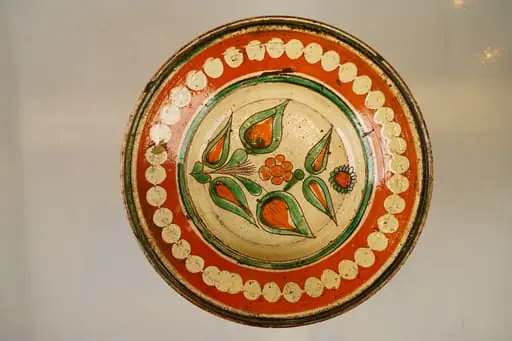 Farfurie semi-adâncă, cu buza dreaptă, evazată; este acoperită pe suprafața interioară cu un strat de angobă albă peste care este realizat, prin sgrafitare în pasta de angobă și prin pictare cu pensula, decorul format din motive florale și geometrice dispuse astfel: registrul decorativ de pe centrul farfuriei conține un buchet realizat cu contur sgrafitat, format din șase boboci de lalea, cu petale verzi și roșii, dintr-o floare roșie cu petale rotunde și o floare cu mijloc roșu și petale mici verzi, și din frunze verzi. Buza farfuriei este decorată cu un șir de puncte mari alipite, de culoare albă, pictate pe un fond de culoare roșie. Bordura interioară a farfuriei și muchia buzei sunt marcate cu o linie groasă de culoare verde, cu contur subțire maro. Suprafața ornamentată a farfuriei este acoperită cu un strat de smalț transparent. Cromatica: alb, verde, roșu-cărămiziu, maro.
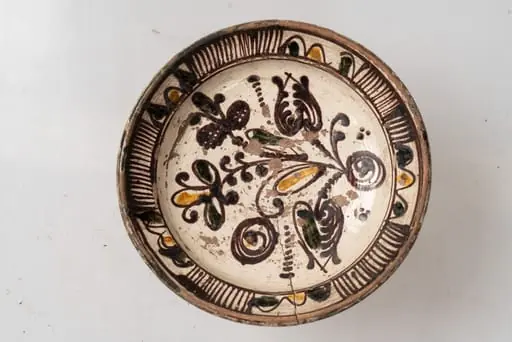 Farfurie semi-adâncă, cu fundul larg și buza evazată; piesa este modelată din lut la roata olarului și angobată cu humă albă pe fața interioară. Decorul este realizat cu pigmenți, prin pictare cu cornul și cu pensula și se compune din motive florale si vegetale stilizate (buchet de flori de lalea și elemente vegetale, de culoare brună, dispuse central, în registrul de pe fundul farfuriei) și din motive geometrice (linii sub formă de semicerc, conținând câte un punct colorat, verde și galben; șiruri de linii paralele, linii circulare). Cromatica: alb, brun, verde, galben. Fața ornamentată a farfuriei este acoperită cu un strat de smalț transparent.
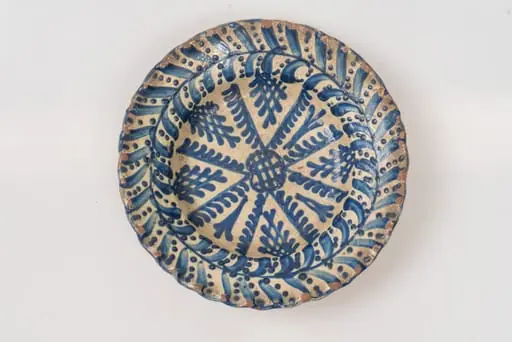 Farfurie semi-adâncă, cu fund larg, buză evazată și muchia buzei ondulată. Piesa este angobată pe suprafața interioară cu un strat de humă albă peste care este pictat cu pensula și cu cornul decorul monocromatic format din motive vegetale stilizate și geometrice: registrul central de pe fundul farfuriei conține un cerc umplut cu linii hașurate intersectat, linii în fomă de V, decorate pe exterior cu mici linii paralele, și cinci motive formate din linii hașurate intersectat. Buza farfuriei este decorată cu un șir continuu de frunze duble cu motive punctate între ele (linii). Muchia buzei este marcată cu o dungă albastră. Suprafața ornamentată a farfuriei este acoperită cu un strat de smalț transparent. Cromatica: alb, albastru.
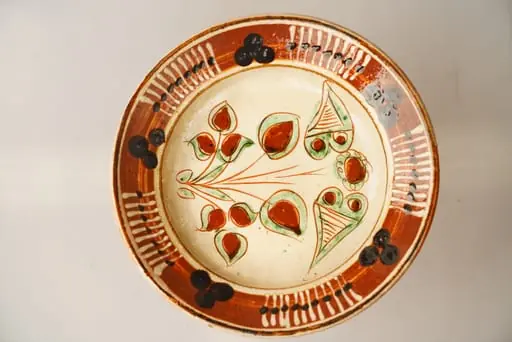 Farfurie adâncă, acoperită pe suprafața interioară cu un strat de angobă albă peste care este pictat cu pensula și cu cornul decorul format din motive vegetale stilizate și geometrice, dispuse astfel: centrul farfuriei este decorat cu o tulpină cu o floare mică centrală, opt boboci (doi dintre ei mai mari și câte trei mai mici, grupați împreună) și două frunze în formă de inimă (decorate cu câte două puncte mari și linii subțiri paralele dispuse în formă de triunghi), desenate cu contur fin roșu și umplute cu culorile roșu și verde. Registrul decorativ marginal de pe buza farfuriei se compune din motive geometrice (cinci grupuri de linii albe drepte, paralele, cu un șir de puncte maro în zona mediană, între care sunt intercalate grupuri de câte trei puncte mari, maro), pictate peste o dungă lată, de culoare roșu-cărămiziu, ce acoperă aproape întreaga suprafață a buzei. Suprafața ornamentată a farfuriei este acoperită cu un strat de smalț transparent. Cromatica: alb, verde, roșu-cărămiziu, maro.
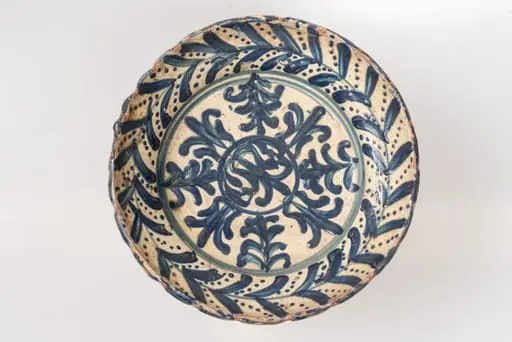 Farfurie de formă semi-adâncă, cu buză lată, evazată și muchia buzei ușor ondulată (mici alveole). Farfuria este angobată pe fața interioară cu un strat de humă albă, peste care este pictat cu cornul și cu pensula decorul monocromatic, format din motive florale și vegetale stilizate (o floare de lalea, înscrisă într-un cerc, pe exteriorul căruia se desfășoară un decor format din patru flori de lalea alternând cu patru brăduți - motive reprezentate central, pe fundul farfuriei, și un șir continuu de frunze duble între linii punctate - pe buza farfuriei). Bordura interioară a farfuriei este marcată de două linii circulare albastre iar buza farfuriei de o dungă, de asemena de culoare albastră. Cromatica: alb, albastru. Farfuria este acoperită pe fața ornamentată cu un strat de smalț transparent.
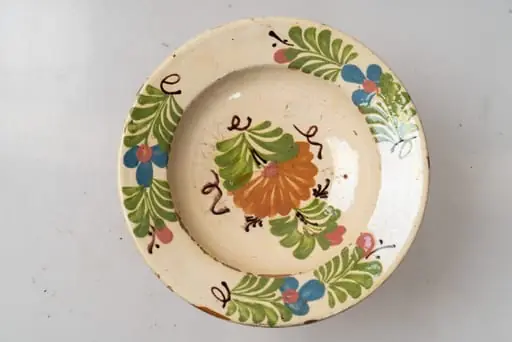 Farfurie adâncă, cu buza lată, răsfrântă; piesa este modelată din lut la roata olarului și este angobată cu humă albă pe fața interioară. Decorul este realizat prin pictare cu pensula și cu cornul și constă în motive florale și fitomorfe (o floare cu frunze și un boboc, pe centrul farfuriei și trei grupuri de flori cu frunze, pe buza farfuriei). Cromatica: alb, albastru, verde, siena naturală, roz-bej, maro. Fața ornamentată a farfuriei este acoperită cu un strat de smalț transparent.
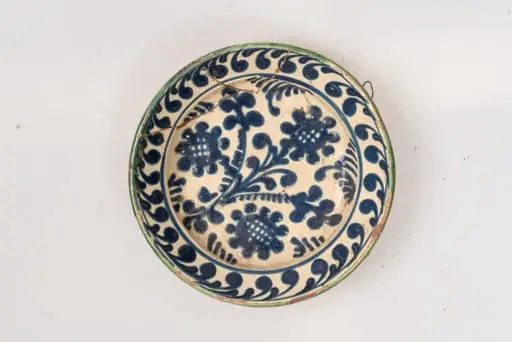 Farfurie de formă semi-adâncă, cu fund larg și buză evazată. Farfuria este angobată pe fața interioară cu un strat de humă albă, peste care este pictat cu cornul și cu pensula decorul format din motive florale și fitomorfe stilizate: o tulpină cu trei flori rotunde, cu mijlocul umplut cu linii hașurate intersectat, și frunze, reprezentate central pe fundul farfuriei. Buza farfuriei este decorată cu un șir continuu format din două tipuri de linii sub formă de virgulă. Bordura interioară a farfuriei este marcată cu o dungă de culoare albastră iar muchia buzei cu o dungă verde. Cromatica: alb, albastru, verde. Farfuria este acoperită pe fața ornamentată cu un strat de smalț transparent.
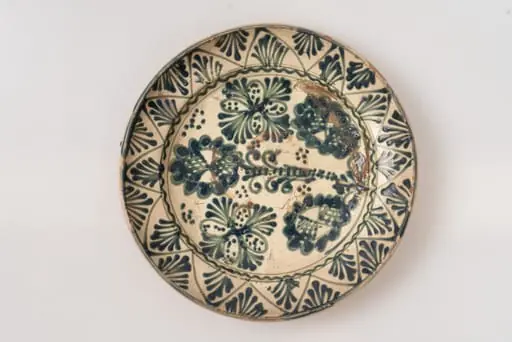 Farfurie de formă semi-adâncă, cu buză lată, răsfrântă; este angobată pe fața interioară cu un strat de humă albă, peste care este pictat cu cornul decorul monocromatic, format din motive florale și fitomorfe foarte stilizate (tulpină cu cinci flori și frunze, reprezentate pe centrul farfuriei) și geometrice (o linie în formă de zig-zag, pe toată lungimea buzei, completată cu motive formate din linii verticale, dispuse în formă de triunghi; linii circulare simple și linie circulară ondulată ce marchează bordura interioară a farfuriei; puncte, linii hașurate). Buza farfuriei este marcată cu o dungă de culoare albastră. Cromatica: alb, albastru. Farfuria este acoperită pe fața decorată cu un strat de smalț transparent.