Artwork
Farfurie adâncă, cu buza lată evazată; este angobată pe fața interioară cu un strat de humă albă peste care este realizat prin sgrafitare și prin pictare cu pensula decorul format dintr-un motiv avimorf și din motive florale și vegetale stilizate: registrul decorativ central de pe fundul farfuriei conține un vultur bicefal iar buza este decorată cu patru motive vegetale în formă de inimă intercalate de patru flori. Bordura interioară a farfuriei și muchia buzei sunt marcate cu câte o linie verde. Suprafața ornamentată a farfuriei este acoperită cu un strat de smalț transparent. Cromatica: alb, verde, galben, albastru.
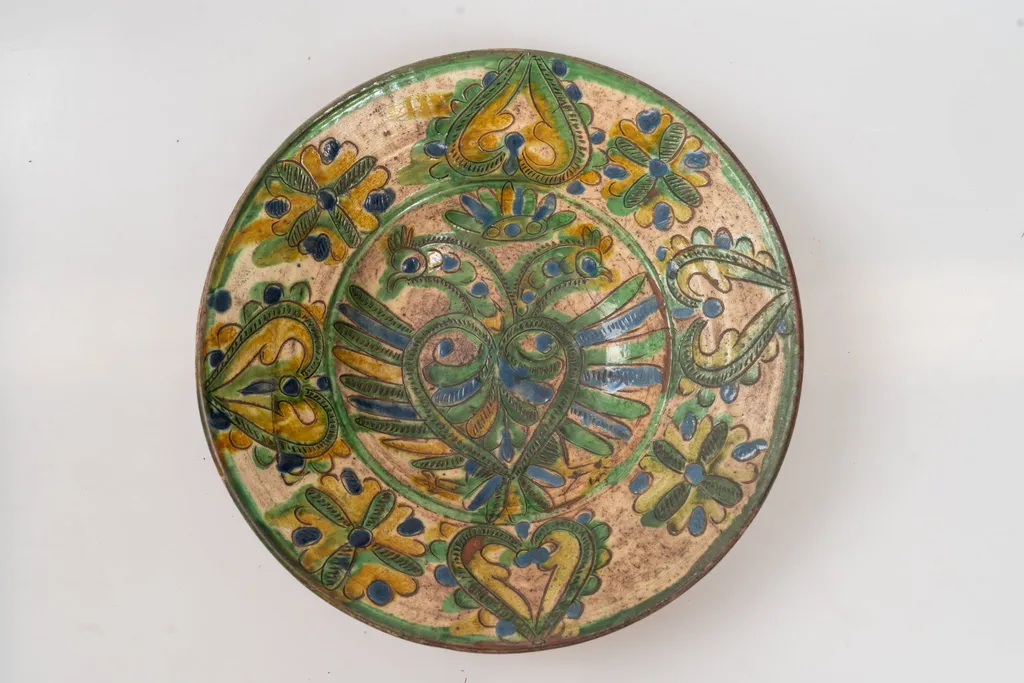
Farfurie adâncă, cu buza lată evazată; este angobată pe fața interioară cu un strat de humă albă peste care este realizat prin sgrafitare și prin pictare cu pensula decorul format dintr-un motiv avimorf și din motive florale și vegetale stilizate: registrul decorativ central de pe fundul farfuriei conține un vultur bicefal iar buza este decorată cu patru motive vegetale în formă de inimă intercalate de patru flori. Bordura interioară a farfuriei și muchia buzei sunt marcate cu câte o linie verde. Suprafața ornamentată a farfuriei este acoperită cu un strat de smalț transparent. Cromatica: alb, verde, galben, albastru. is a photography by Unknown. It dates from 1850 and is held in the collection of the Ethnographical Museum of Transylvania.
About this work
Overview
The entire design is sealed under a transparent glaze, enhancing the vibrancy of its pigments.
A large ceramic plate with a wide, flared rim, this piece features a white slip coating on its interior surface, over which intricate decorative motifs were applied using sgraffito and brush painting. The entire design is sealed under a transparent glaze, enhancing the vibrancy of its pigments. The composition centers on a stylized double-headed eagle, surrounded by floral and vegetal patterns, all rendered in a palette of white, green, yellow, and blue.
Subject & Meaning
The central motif is a double-headed eagle, a symbol historically associated with authority and duality, possibly reflecting Byzantine or Ottoman influences. Encircling it are stylized heart-shaped leaves and flowers, alternating in a rhythmic pattern. These vegetal forms, while decorative, may allude to fertility or natural abundance, common themes in regional ceramic traditions of the period.
Technique & Style
The decoration was executed in two stages: first, a design was incised through the white slip layer to reveal the darker clay beneath (sgraffito), then pigments were applied with a brush to fill in details. The use of bold outlines and flat, saturated colors—green, yellow, blue—creates a graphic clarity. Thin green lines frame the inner border and rim, providing structural definition to the ornamental field.
History & Provenance
This plate belongs to a tradition of glazed ceramic ware produced in the Balkans or Anatolia during the late medieval or early modern period. Similar pieces have been found in archaeological contexts linked to urban centers and elite households, suggesting it was made for display rather than daily use. Its craftsmanship indicates workshop production, likely under regional stylistic conventions.
Context
The design echoes broader Eurasian decorative traditions where avian and floral motifs were combined in ceramic art, particularly under Islamic and Christian cultural spheres. The double-headed eagle appears in both Byzantine and Ottoman iconography, while the heart-shaped leaves and stylized flowers align with regional folk motifs. This fusion reflects the layered cultural exchanges of the period.
Legacy
This plate exemplifies the technical and aesthetic sophistication of regional ceramic workshops that blended symbolic imagery with refined surface decoration. Though not widely documented in major collections, similar pieces contribute to understanding the continuity of decorative practices in Eastern European and Anatolian pottery, bridging medieval and early modern artistic conventions.
Artist & collection
Museum
Ethnographical Museum of Transylvania
Continue through works from the same source collection.
 Domestic Scene
 Giacomo and Cardinal Marco, investing Andrea, Abbot of San Zeno, with his Benefice
 The Nymph of Fontainebleau
 Portrait of a Woman
 Madonna and Child with Saints in the Enclosed Garden
 Venus and Minerva
 Family Group of Four on Sofa
 Wall painting from Room H of the Villa of P. Fannius Synistor at Boscoreale
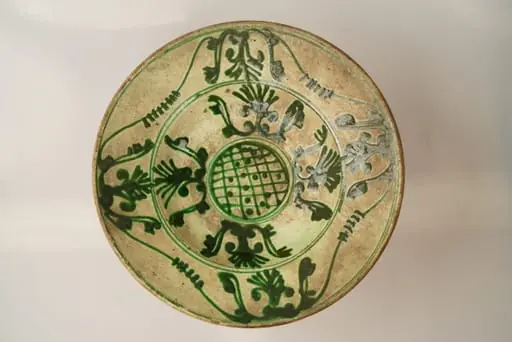 Farfurie mare, adâncă, cu buză lată dreaptă, evazată; suprafața interioară a piesei este acoperită cu un strat de angobă albă peste care este pictat cu cornul decorul monocromatic format din motive vegetale stilizate și geometrice, dispuse astfel: centrul farfuriei este decorat cu un cerc cu linii hașurate intersectat, de culoare verde, cu puncte verzi în interior; pe exteriorul acestui cerc, pe peretele farfuriei, sunt pictate patru motive vegetale aproximativ identice, formate din două frunze ce conțin în interior câte o floare formată din linii în formă de V (acest motiv poate fi interpretat și ca o floare de crin cu petalele deschise). Același motiv vegetal de pe peretele farfuriei se repetă de patru ori și pe buza acesteia, legătura între motive făcându-se cu o linie în formă de S ce are, perpendiculare pe mijloc, mici linii drepte verzi. Suprafața ornamentată a farfuriei este acoperită cu un strat de smalț transparent. Cromatica: alb, verde.
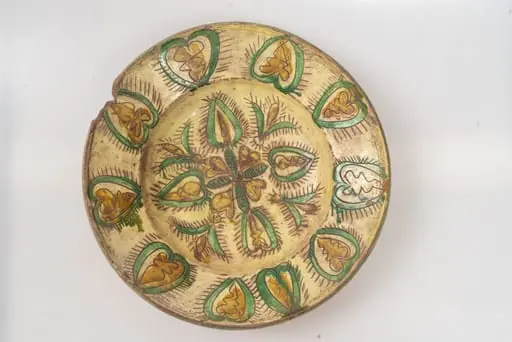 Farfurie semi-adâncă, cu buza lată evazată; este angobată pe fața interioară cu un strat de humă albă peste care este realizat prin sgrafitare și prin pictare cu pensula decorul format din motive florale și vegetale stilizate: registrul decorativ central de pe fundul farfuriei conține o floare centrală ce are pe exterior patru boboci dispuși în formă de cruce, intercalați de patru flori cu câte trei petale. Buza farfuriei este decorată cu zece motive vegetale în formă de inimă. Suprafața ornamentată a farfuriei este acoperită cu un strat de smalț transparent. Cromatica: alb, verde, galben.
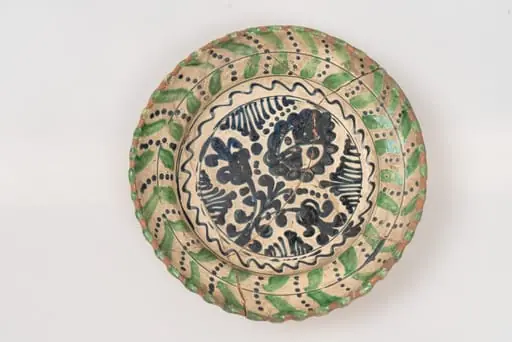 Farfurie de formă semi-adâncă, cu buză evazată și muchia buzei ondulată. Farfuria este angobată pe fața interioară cu un strat de humă albă, peste care este pictat cu cornul și cu pensula decorul format din motive florale și fitomorfe stilizate și din motive geometrice: în registrul central de pe fundul farfuriei este pictată o tulpină cu trei flori și frunze mici de culoare albastră, înscrisă într-un cerc dublu ce are la mijloc o linie ondulată circulară, de culoare albastră. Acest registru este completat cu motive formate din linii albastre crescătoare și descrescătoare dispuse în formă de triunghi. Buza farfuriei este decorată cu un șir continuu de frunze duble verzi între linii punctate de culoare albastră. Buza farfuriei este marcată cu o dungă de culoare verde. Cromatica: alb, albastru, verde. Farfuria este acoperită pe fața decorată cu un strat de smalț transparent.
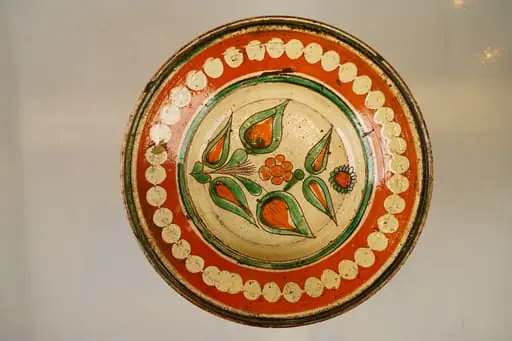 Farfurie semi-adâncă, cu buza dreaptă, evazată; este acoperită pe suprafața interioară cu un strat de angobă albă peste care este realizat, prin sgrafitare în pasta de angobă și prin pictare cu pensula, decorul format din motive florale și geometrice dispuse astfel: registrul decorativ de pe centrul farfuriei conține un buchet realizat cu contur sgrafitat, format din șase boboci de lalea, cu petale verzi și roșii, dintr-o floare roșie cu petale rotunde și o floare cu mijloc roșu și petale mici verzi, și din frunze verzi. Buza farfuriei este decorată cu un șir de puncte mari alipite, de culoare albă, pictate pe un fond de culoare roșie. Bordura interioară a farfuriei și muchia buzei sunt marcate cu o linie groasă de culoare verde, cu contur subțire maro. Suprafața ornamentată a farfuriei este acoperită cu un strat de smalț transparent. Cromatica: alb, verde, roșu-cărămiziu, maro.
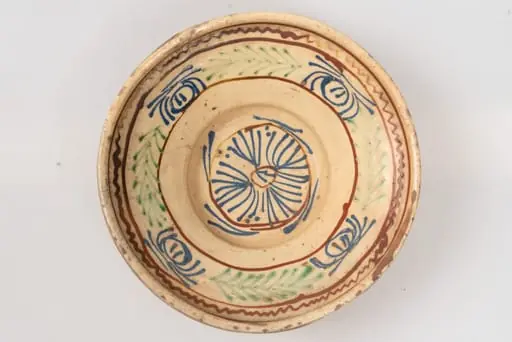 Farfurie adâncă, de tip castron, cu fund îngust, corp tronconic și buză dreaptă, verticală; este angobată pe fața interioară și pe suprafața exterioară a buzei cu un strat de humă albă. Este decorată prin pictare cu cornul cu motive florale și fitomorfe geometrizate: pe fundul farfuriei este pictată o floare cu petalele din linii subțiri albastre și centrul marcat cu un cerc mic maro, încadrată într-un cerc de asemenea de culoare maro. Peretele farfuriei este decorat cu patru grupuri de motive formate din linii verzi, sugerând o ramură cu frunze, intercalate de patru flori geometrizate, realizate din linii albastre. Decorul este completat cu trei linii circulare simple și o linie circulară ondulată. Suprafața ornamentată a farfuriei este acoperită cu un strat de smalț transparent. Cromatica: alb, verde, albastru, maro.
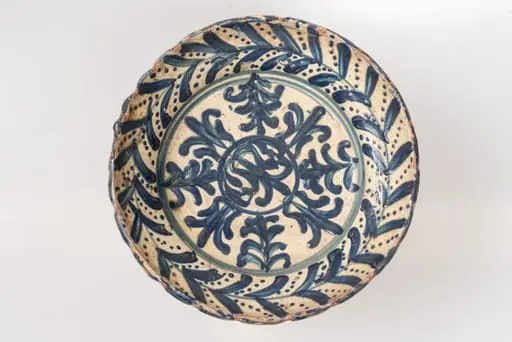 Farfurie de formă semi-adâncă, cu buză lată, evazată și muchia buzei ușor ondulată (mici alveole). Farfuria este angobată pe fața interioară cu un strat de humă albă, peste care este pictat cu cornul și cu pensula decorul monocromatic, format din motive florale și vegetale stilizate (o floare de lalea, înscrisă într-un cerc, pe exteriorul căruia se desfășoară un decor format din patru flori de lalea alternând cu patru brăduți - motive reprezentate central, pe fundul farfuriei, și un șir continuu de frunze duble între linii punctate - pe buza farfuriei). Bordura interioară a farfuriei este marcată de două linii circulare albastre iar buza farfuriei de o dungă, de asemena de culoare albastră. Cromatica: alb, albastru. Farfuria este acoperită pe fața ornamentată cu un strat de smalț transparent.
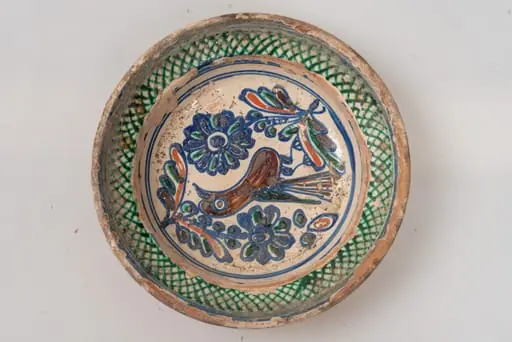 Farfurie semi-adâncă, cu fund larg și buză evazată cu muchia ușor ridicată. Piesa este angobată pe fața interioară cu un strat de humă albă peste care este pictat cu pensula și cu cornul decorul format din motive avimorfe, florale și vegetale stilizate: central pe fundul farfuriei, înscrisă într-un cerc albastru, este reprezentată o pasăre maro între două tulpini cu flori și frunze. Buza farfuriei este decorată în întregime cu linii hașurate intersectat de culoare verde. Suprafața ornamentată a farfuriei este acoperită cu un strat de smalț transparent. Cromatica: alb, albastru, verde, maro.
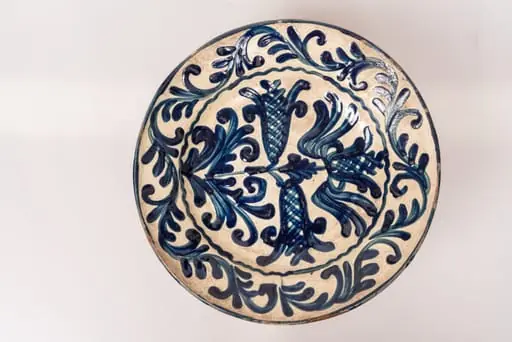 Farfurie semi-adâncă, cu buză răsfrântă; piesa este modelată la roata olarului și este angobată pe fața interioară cu humă albă. Decorul monocromatic este pictat cu pensula și se compune din motive decorative florale și vegetale stilizate (o floare de crin cu doi boboci și cu frunze, plasate central pe fundul farfuriei; buza farfuriei este acoperită cu un șir continuu de motive vegetale). Muchia buzei este marcată de o linie albastră iar bordura interioară a farfuriei de o linie vălurită. Cromatica: alb, albastru. Fața ornamentată a farfuriei este acoperită cu un strat de smalț transparent.
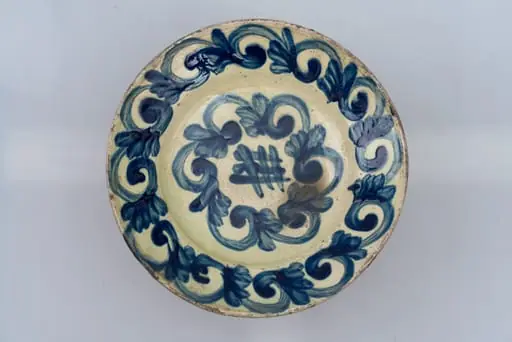 Farfurie adâncă, cu buză lată, evazată; este acoperită pe suprafața interioară cu un strat de angobă albă, peste care este pictat cu pensula, cu linii groase, decorul monocromatic format din motive vegetale stilizate: două ghirlande de formă circulară, una centrală pe fundul farfuriei și una pe buza acesteia, formate din frunze și vrejuri albastre. In centrul farfuriei se găsesște un motiv format din linii hașurate intersectat. Suprafața ornamentată a farfuriei este acoperită cu un strat de smalț transparent. Cromatica: alb, albastru.
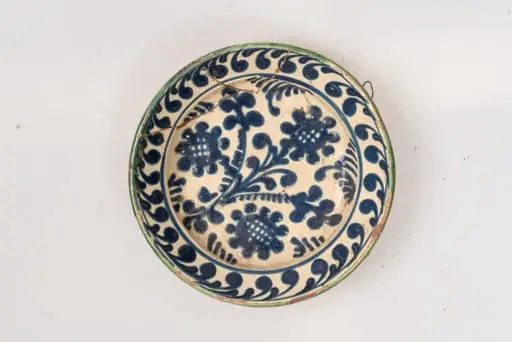 Farfurie de formă semi-adâncă, cu fund larg și buză evazată. Farfuria este angobată pe fața interioară cu un strat de humă albă, peste care este pictat cu cornul și cu pensula decorul format din motive florale și fitomorfe stilizate: o tulpină cu trei flori rotunde, cu mijlocul umplut cu linii hașurate intersectat, și frunze, reprezentate central pe fundul farfuriei. Buza farfuriei este decorată cu un șir continuu format din două tipuri de linii sub formă de virgulă. Bordura interioară a farfuriei este marcată cu o dungă de culoare albastră iar muchia buzei cu o dungă verde. Cromatica: alb, albastru, verde. Farfuria este acoperită pe fața ornamentată cu un strat de smalț transparent.
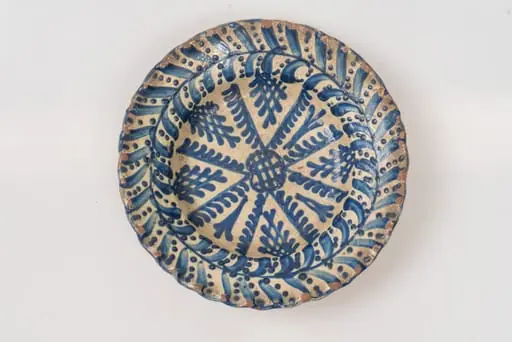 Farfurie semi-adâncă, cu fund larg, buză evazată și muchia buzei ondulată. Piesa este angobată pe suprafața interioară cu un strat de humă albă peste care este pictat cu pensula și cu cornul decorul monocromatic format din motive vegetale stilizate și geometrice: registrul central de pe fundul farfuriei conține un cerc umplut cu linii hașurate intersectat, linii în fomă de V, decorate pe exterior cu mici linii paralele, și cinci motive formate din linii hașurate intersectat. Buza farfuriei este decorată cu un șir continuu de frunze duble cu motive punctate între ele (linii). Muchia buzei este marcată cu o dungă albastră. Suprafața ornamentată a farfuriei este acoperită cu un strat de smalț transparent. Cromatica: alb, albastru.