Artwork
Farfurie semi-adâncă, cu buza lată, răsfrântă, modelată la roata olarului și angobată cu humă albă pe fața interioară. Decorul este realizat prin pictare cu pensula (linie ondulată, linii sub formă de cercuri concentrice, linii sub formă de semicercuri) și prin jirăvire: culorile sunt picurate cu cornul și trase (jirăvite) cu gaița, obținându-se un decor specific, în care culorile se petrec, fără să se întrepătrundă. Decorul acoperă întreaga suprafață interioară a farfuriei și este suprapus de un strat de smalț transparent. Cromatica decorului: alb, verde, siena arsă,maro.
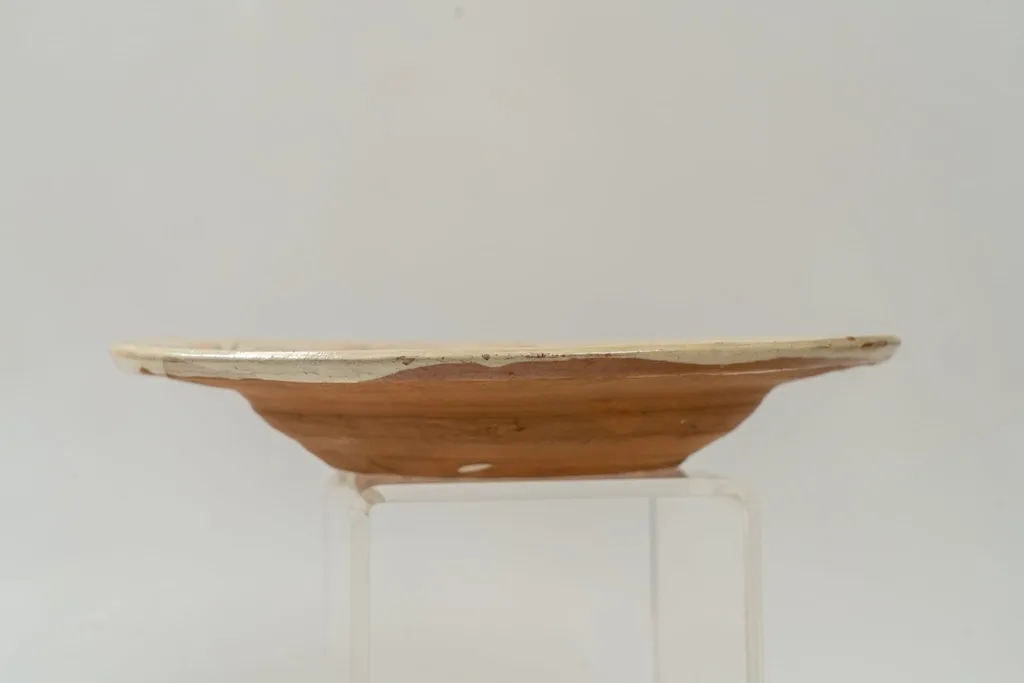
Farfurie semi-adâncă, cu buza lată, răsfrântă, modelată la roata olarului și angobată cu humă albă pe fața interioară. Decorul este realizat prin pictare cu pensula (linie ondulată, linii sub formă de cercuri concentrice, linii sub formă de semicercuri) și prin jirăvire: culorile sunt picurate cu cornul și trase (jirăvite) cu gaița, obținându-se un decor specific, în care culorile se petrec, fără să se întrepătrundă. Decorul acoperă întreaga suprafață interioară a farfuriei și este suprapus de un strat de smalț transparent. Cromatica decorului: alb, verde, siena arsă,maro. is a photography by Unknown. It dates from 1850 and is held in the collection of the Ethnographical Museum of Transylvania.
About this work
Overview
This shallow ceramic dish features a wide, upturned rim and a hand-thrown form with subtle irregularities, indicative of artisanal wheel-throwing.
This shallow ceramic dish features a wide, upturned rim and a hand-thrown form with subtle irregularities, indicative of artisanal wheel-throwing. The interior surface is coated with a white slip, providing a pale ground for painted decoration. A transparent glaze seals the design, enhancing its luminosity while preserving the distinct boundaries of the pigments. The exterior remains unglazed, retaining the natural warmth of the fired clay.
Subject & Meaning
The decoration consists of abstract motifs—undulating lines, concentric circles, and semicircular arcs—without representational imagery. These patterns may reflect symbolic or ritual associations tied to water, cycles, or cosmic order, common in regional ceramic traditions. The absence of figural elements suggests an emphasis on geometric harmony and tactile rhythm rather than narrative content.
Technique & Style
Pigments in white, green, burnt sienna, and brown were applied with a brush and manipulated using a bird’s feather to drag and blur their edges, creating a soft, smudged effect. This technique, known as jirăvire, prevents color blending while allowing subtle diffusion. The result is a layered, atmospheric surface where hues appear to hover just beneath the glaze, maintaining clarity without sharp definition.
History & Provenance
Produced in the medieval Balkans or Carpathian region, this vessel belongs to a local ceramic tradition active between the 12th and 14th centuries. Similar pieces have been recovered from domestic and ecclesiastical contexts, suggesting use in both daily life and ceremonial settings. Its construction and decoration align with regional workshops that prioritized functional elegance over mass production.
Context
This dish reflects a broader cultural practice in which pottery served as both utilitarian object and expressive medium. The use of slip, hand-painted motifs, and transparent glaze mirrors techniques found across Eastern European and Byzantine-influenced communities. Its restrained palette and non-figurative design distinguish it from more ornate contemporary wares, pointing to localized aesthetic preferences.
Legacy
The jirăvire technique and monochromatic slip decoration seen here influenced later regional ceramics, particularly in rural workshops preserving pre-Ottoman traditions. Though largely supplanted by industrial methods, the aesthetic of soft-edged, non-mixing color fields continues to inform contemporary ceramic artists exploring historical materiality and handcrafted imperfection.
Artist & collection
Museum
Ethnographical Museum of Transylvania
Continue through works from the same source collection.
 Domestic Scene
 Giacomo and Cardinal Marco, investing Andrea, Abbot of San Zeno, with his Benefice
 The Nymph of Fontainebleau
 Portrait of a Woman
 Madonna and Child with Saints in the Enclosed Garden
 Venus and Minerva
 Family Group of Four on Sofa
 Wall painting from Room H of the Villa of P. Fannius Synistor at Boscoreale
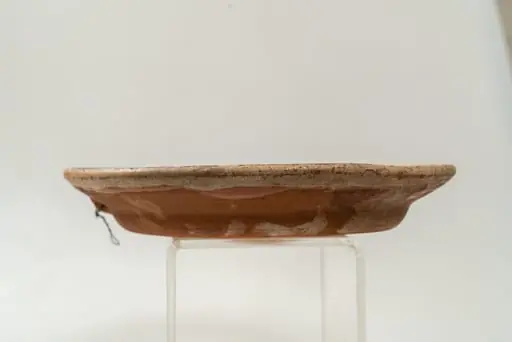 Farfurie semi-adâncă, cu buza răsfrântă, modelată la roata olarului și angobată cu humă albă pe fața interioară. Decorul este pictat cu cornul și cu pensula și se compune din motive decorative vegetale stilizate (flori cu frunze, dispuse central, pe fundul farfuriei) și motive decorative geometrice (șapte grupuri de linii paralele,verticale, intercalate cu șapte grupuri de câte 3 linii sub formă de semicercuri umplute cu culoare galbenă și verde), dispuse pe buza farfuriei și încadrate de linii paralele sub formă de cerc. Piesa este acoperită pe fața pictată cu un strat de smalț transparent. Cromatica: alb, verde, maro, galben ocru.
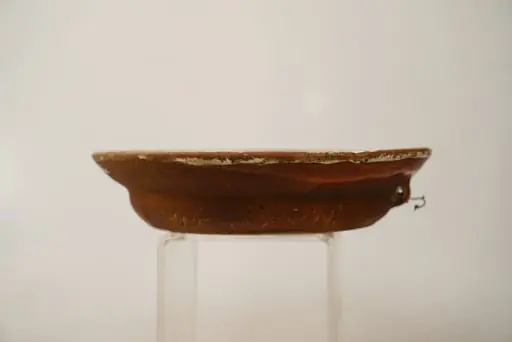 Farfurie semi-adâncă, cu buza evazată și ușor concavă spre interior și cu muchia buzei rotunjită; este acoperită pe suprafața interioară cu un strat de angobă albă peste care este pictat cu cornul și cu pensula decorul format din motive vegetale și florale stilizate (registrul decorativ de pe fundul farfuriei conține o tulpină cu o floare centrală cu petale rotunde, în culorile galben-ocru, maro și verde; două flori laterale de lalea, de culoare maro, și frunze de culoare galben-ocru și verde) și motive decorative geometrice (patru grupuri, inegale ca lungime, formate din linii paralele drepte, de culoare maro, intercalate cu patru grupuri de câte 3 linii maro sub formă de semicercuri, umplute cu culorile galben și verde), dispuse pe buza farfuriei și încadrate de linii paralele sub formă de cerc, de culoare maro. Patru linii mici spiralate, de culoare maro, completează decorul central de pe fundul farfuriei. Piesa este acoperită pe suprafața ornamentată cu un strat de smalț transparent. Cromatica: alb, verde, maro, galben-ocru.
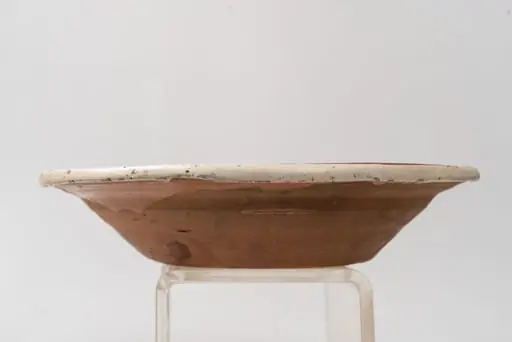 Farfurie adâncă, cu buza răsfrântă; piesa este modelată din lut la roata olarului și angobată cu humă albă pe fața interioară. Decorul este realizat prin pictare cu cornul și constă în motive geometrice (linii hașurate, puncte, linii circulare, linii dispuse sub formă de raze, linii în V). Cromatica: alb, albastru, verde, siena arsă. Fața ornamentată a farfuriei este acoperită cu un strat de smalț transparent.
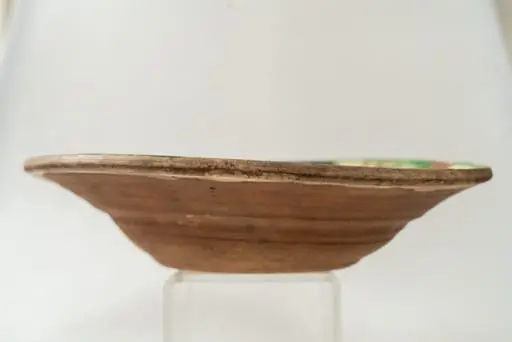 Farfurie mare, de formă adâncă, cu buză răsfrântă. Piesa este modelată la roată, angobată cu humă albă pe fața interioară. Decorul este realizat prin pictare cu pensula, cu smalțuri colorate (verde și maro) și prin sgrafitare. Motivele decorative sunt florale și vegetale stilizate (flori cu frunze) dispuse pe fundul farfuriei (o floare) și patru flori intercalate de patru elemente decorative vegetale (frunze) sugerând motivul inimii, dispuse pe buza farfuriei. Bordura interioară a farfuriei este marcată de o linie groasă sub formă de cerc, de culoare verde. Pe fața interioară a farfuriei este aplicat un strat de smalț transparent.
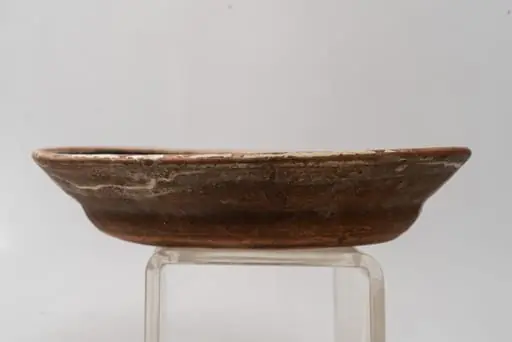 Farfurie semi-adâncă, cu fundul larg și buza răsfrântă oblic; piesa este modelată din lut la roata olarului și angobată cu humă albă pe fața interioară. Decorul este realizat cu pigmenți, prin pictare cu cornul și cu pensula și se compune din motive florale si vegetale stilizate (floare de lalea, două flori cu petale rotunde, boboci, frunze - dispuse central, în registrul de pe fundul farfuriei) și din motive geometrice (linii sub formă de semicerc, conținând câte un punct colorat; șiruri de linii paralele, linii hașurate, linii circulare). Cromatica: alb, maro, verde, galben ocru. Fața ornamentată a farfuriei este acoperită cu un strat de smalț transparent.
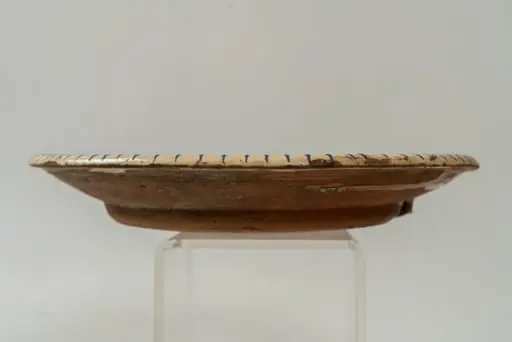 Farfurie de formă aplatizată, modelată la roata olarului, angobată cu humă albă pe fața interioară a acesteia. Decorul este realizat prin pictare cu pensula și cu cornul și constă în motive decorative vegetale stilizate (floare cu frunze - dispuse central, pe fundul farfuriei) și motive geometrice (grupuri de linii paralele, descrescătoare ca mărime - motivul brăduțului - și un șir de linii paralele pe toată lungimea muchiei buzei). Cromatica decorului: alb, albastru. Farfuria este smălțuită pe interior, cu smalț transparent.
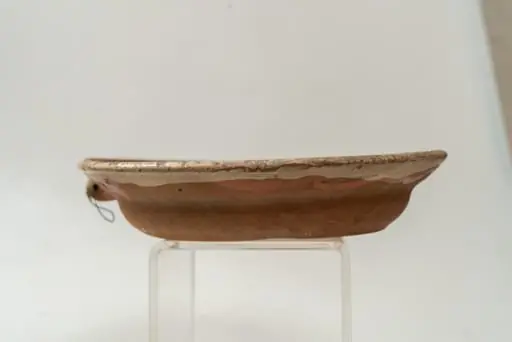 Farfurie adâncă, cu buza răsfrântă, modelată la roata olarului și angobată cu humă albă pe fața interioară a farfuriei. Decorul este pictat cu pensula și se compune din motive decorative vegetale stilizate (buchet de flori cu frunze, dispuse central, pe fundul farfuriei) și motive decorative geometrice (grupuri de linii paralele, linii sub formă de cercuri concentrice și grupuri de semicercuri umplute cu culoare) dispuse pe buza farfuriei. Cromatica: alb, verde, maro, galben ocru.
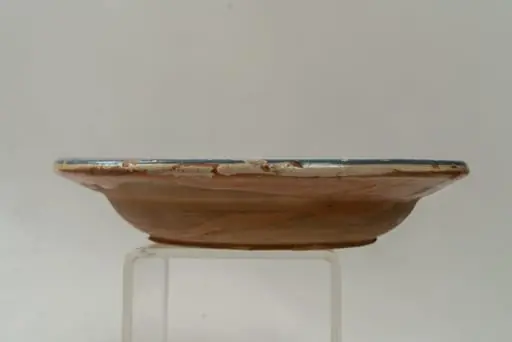 Farfurie adâncă, cu buză răsfrântă, modelată la roata olarului și angobată cu humă albă pe fața interioară a acesteia. Decorul, realizat prin pictare cu pensula și cu cornul, se compune din motive avimorfe (cocoș) și florale stilizate, dispuse într-un registru decorativ în zona centrală a farfuriei. Decorul este completat de câteva motive geometrice (linie ondulată, puncte, linii hașurate, linii sub formă de cercuri concentrice). Pe buza farfuriei: două cercuri concentrice, subțiri și o dungă albastră pe toată lungimea muchiei buzei. Cromatica: alb, albastru, verde, maro, siena naturală, roz pal. Peste decor, pe fața interioară a farfuriei este așezat un strat de smalț transparent.
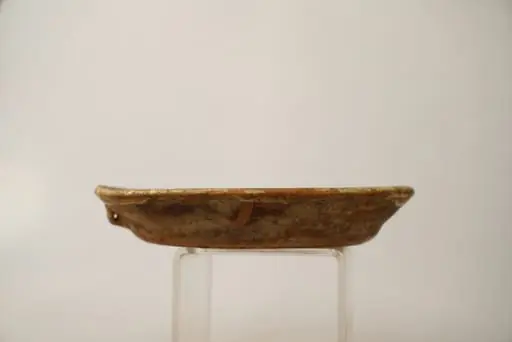 Farfurie semi-adâncă, cu buza evazată și foarte ușor concavă spre interior și cu muchia buzei rotunjită; este modelată la roata olarului și angobată cu humă albă pe fața interioară. Decorul este pictat cu cornul și cu pensula și se compune din motive florale stilizate (registrul decorativ de pe fundul farfuriei conține o tulpină cu o floare de lalea cu două petale verzi și centrul format din linii hașurate intersectat, de culoare maro, și cu patru frunze de culoare galbenă; de o parte și de alta a florii de lalea este pictată câte o floare cu petale rotunde în culorile maro, galben, verde și cu centrul format din linii hașurate intersectat, de culoare maro) și motive decorative geometrice (cinci grupuri, inegale ca lungime, formate din linii paralele drepte, de culoare maro, intercalate cu cinci grupuri de câte 2-3 linii maro sub formă de semicercuri umplute cu culorile galben și verde), dispuse pe buza farfuriei și încadrate de linii paralele sub formă de cerc, de culoare maro. Două grupuri de linii maro paralele, crescătoare și descrescătoare ca mărime, dispuse sub formă de triunghi, completează decorul central de pe fundul farfuriei. Piesa este acoperită pe suprafața ornamentată cu un strat de smalț transparent. Cromatica: alb, verde, maro, galben.
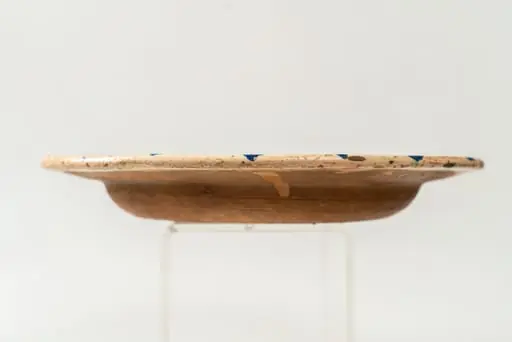 Farfurie semi-adâncă, cu buza răsfrântă; piesa este modelată la roata olarului și este angobată pe fața interioară cu humă albă. Decorul este realizat prin pictare cu pensula și se compune din motive decorative florale și vegetale stilizate, dispuse pe întreaga suprafață a piesei. La baza motivului decorativ central se află înscris anul fabricării piesei, 1782. Buza farfuriei este decorată cu un șir continuu de frunze de culoare verde și albastră. Cromatica: alb, verde, albastru. Fața decorată a farfuriei este acoperită cu un strat de smalț transparent.