Artwork
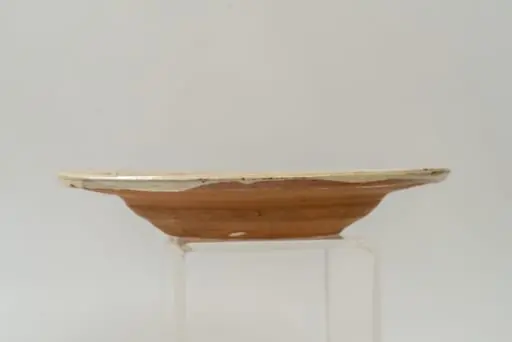
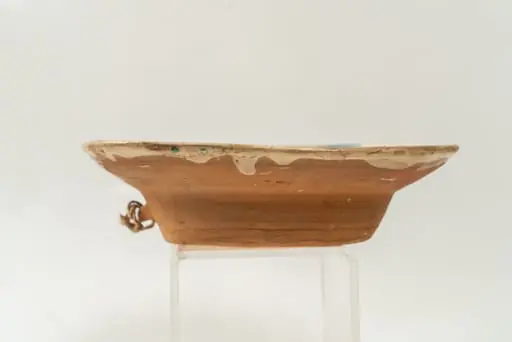
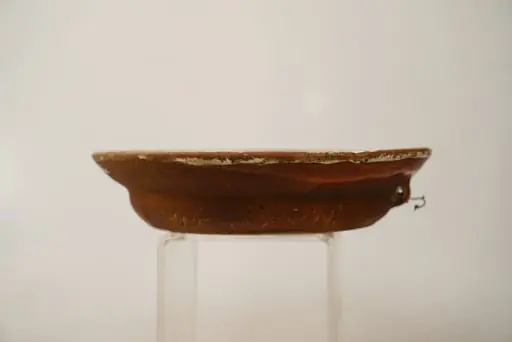
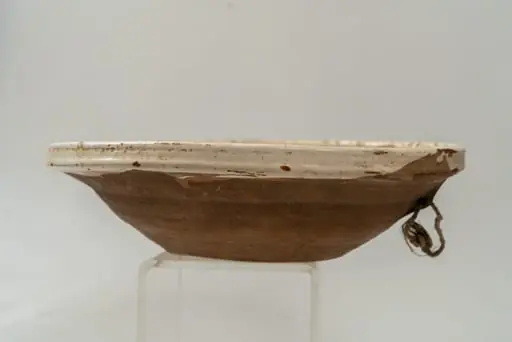
Farfurie semi-adâncă, cu buza răsfrântă, modelată la roata olarului și angobată cu humă albă pe fața interioară. Decorul este pictat cu cornul și cu pensula și se compune din motive decorative vegetale stilizate (flori cu frunze, dispuse central, pe fundul farfuriei) și motive decorative geometrice (șapte grupuri de linii paralele,verticale, intercalate cu șapte grupuri de câte 3 linii sub formă de semicercuri umplute cu culoare galbenă și verde), dispuse pe buza farfuriei și încadrate de linii paralele sub formă de cerc. Piesa este acoperită pe fața pictată cu un strat de smalț transparent. Cromatica: alb, verde, maro, galben ocru.
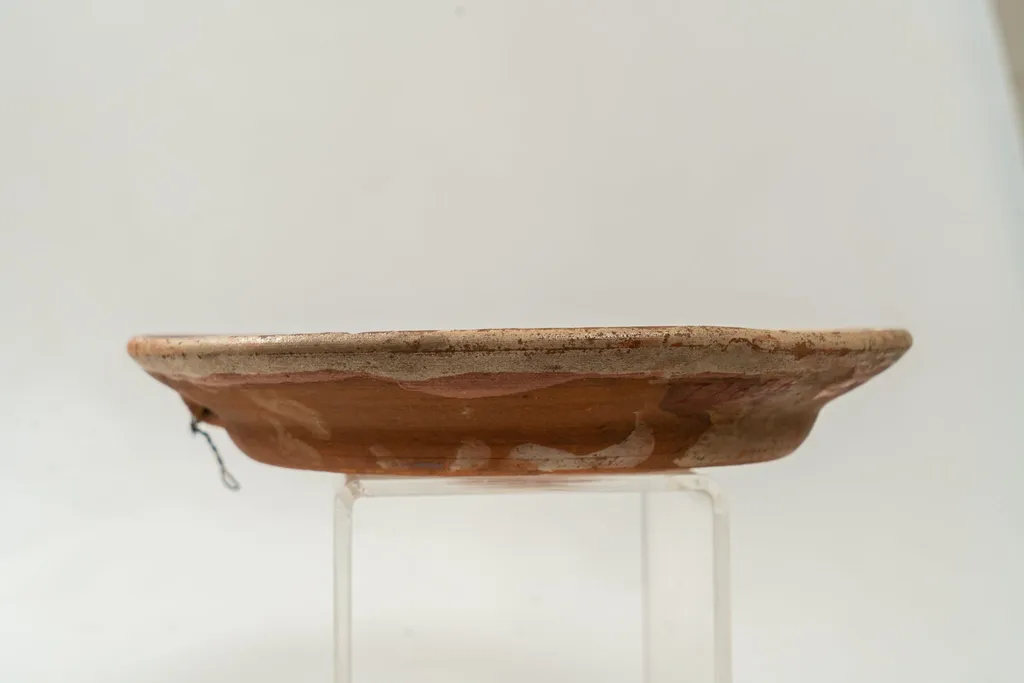
Farfurie semi-adâncă, cu buza răsfrântă, modelată la roata olarului și angobată cu humă albă pe fața interioară. Decorul este pictat cu cornul și cu pensula și se compune din motive decorative vegetale stilizate (flori cu frunze, dispuse central, pe fundul farfuriei) și motive decorative geometrice (șapte grupuri de linii paralele,verticale, intercalate cu șapte grupuri de câte 3 linii sub formă de semicercuri umplute cu culoare galbenă și verde), dispuse pe buza farfuriei și încadrate de linii paralele sub formă de cerc. Piesa este acoperită pe fața pictată cu un strat de smalț transparent. Cromatica: alb, verde, maro, galben ocru. is a print by Unknown. It dates from 1850 and is held in the collection of the Ethnographical Museum of Transylvania. This shallow ceramic plate features a flared rim and a smooth, interior surface coated with white slip.
About this work
Overview
This shallow ceramic plate features a flared rim and a smooth, interior surface coated with white slip.
This shallow ceramic plate features a flared rim and a smooth, interior surface coated with white slip. The exterior shows muted earth tones, suggesting natural firing conditions. A thin blue cord is attached to the base, possibly for suspension. The entire surface is sealed with a clear glaze, preserving the painted decoration beneath. Its form and finish reflect utilitarian craftsmanship typical of regional pottery traditions.
Subject & Meaning
The central motif consists of stylized floral elements—flowers with leaves—arranged symmetrically, suggesting a connection to natural cycles or domestic ornamentation. Around the rim, alternating bands of parallel lines and filled semicircles form a rhythmic border. These geometric patterns may carry symbolic weight, possibly denoting protection, continuity, or regional identity, though no explicit ritual function is documented.
Technique & Style
The vessel was wheel-thrown and coated with white slip on the interior before painting. Decorative elements were applied with a brush using pigments of yellow ochre and green, with lines and semicircles carefully aligned. The rim’s design alternates between vertical strokes and clustered half-circles, creating a structured yet hand-crafted rhythm. The glaze, transparent and even, enhances the vibrancy of the pigments without obscuring their brushwork.
History & Provenance
This piece originates from the collection of the Museum of Ethnography, indicating its documentation as part of a cultural heritage archive. Its construction and decoration align with regional ceramic practices from rural communities, likely produced in the 19th or early 20th century. The presence of a hanging cord suggests domestic use, possibly in food service or display within a household setting.
Context
The plate reflects a broader tradition of folk pottery in Eastern Europe, where utilitarian objects were adorned with locally derived motifs. The use of natural pigments and hand-painted designs distinguishes it from mass-produced wares. Similar decorative schemes appear in contemporaneous ceramics from neighboring regions, pointing to shared aesthetic conventions among rural potters who relied on inherited techniques.
Legacy
As a preserved example of vernacular ceramic art, this plate contributes to the understanding of everyday material culture in pre-industrial communities. Its survival in a museum context underscores efforts to document regional craftsmanship before industrialization altered traditional practices. The design elements continue to inform contemporary interpretations of folk art, though its original makers remain unnamed.
Artist & collection
Museum
Ethnographical Museum of Transylvania
Continue through works from the same source collection.
 Domestic Scene
 Giacomo and Cardinal Marco, investing Andrea, Abbot of San Zeno, with his Benefice
 The Nymph of Fontainebleau
 Portrait of a Woman
 Madonna and Child with Saints in the Enclosed Garden
 Venus and Minerva
 Family Group of Four on Sofa
 Wall painting from Room H of the Villa of P. Fannius Synistor at Boscoreale
 Farfurie adâncă, cu buza răsfrântă, modelată la roata olarului și angobată cu humă albă pe fața interioară a farfuriei. Decorul este pictat cu pensula și se compune din motive decorative vegetale stilizate (buchet de flori cu frunze, dispuse central, pe fundul farfuriei) și motive decorative geometrice (grupuri de linii paralele, linii sub formă de cercuri concentrice și grupuri de semicercuri umplute cu culoare) dispuse pe buza farfuriei. Cromatica: alb, verde, maro, galben ocru.
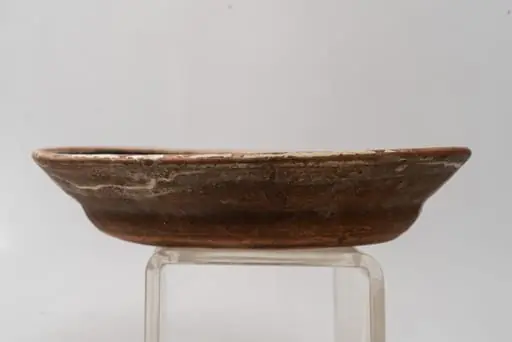 Farfurie semi-adâncă, cu fundul larg și buza răsfrântă oblic; piesa este modelată din lut la roata olarului și angobată cu humă albă pe fața interioară. Decorul este realizat cu pigmenți, prin pictare cu cornul și cu pensula și se compune din motive florale si vegetale stilizate (floare de lalea, două flori cu petale rotunde, boboci, frunze - dispuse central, în registrul de pe fundul farfuriei) și din motive geometrice (linii sub formă de semicerc, conținând câte un punct colorat; șiruri de linii paralele, linii hașurate, linii circulare). Cromatica: alb, maro, verde, galben ocru. Fața ornamentată a farfuriei este acoperită cu un strat de smalț transparent.
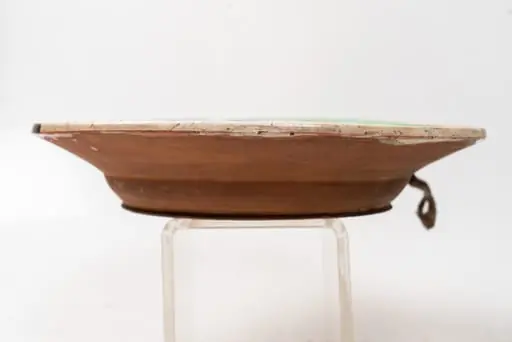 Farfurie mare, semi-adâncă, cu buza răsfrântă; piesa este modelată la roata olarului și angobată cu humă albă pe fața interioară. Decorul este realizat prin sgrafitare în pasta albă de angobă și prin pictare cu pensula și cu cornul și se compune din motive decorative vegetale (o floare foarte stilizată, cu patru petale, dispusă în registrul central de pe fundul farfuriei) și geometrice (linii circulare, de culoare verde și siena arsă, pe buza farfuriei). Cromatica: alb, verde, siena arsă, maro. Fața ornamentată a farfuriei este acoperită cu un strat de smalț transparent.
 Farfurie semi-adâncă, cu buza lată, răsfrântă, modelată la roata olarului și angobată cu humă albă pe fața interioară. Decorul este realizat prin pictare cu pensula (linie ondulată, linii sub formă de cercuri concentrice, linii sub formă de semicercuri) și prin jirăvire: culorile sunt picurate cu cornul și trase (jirăvite) cu gaița, obținându-se un decor specific, în care culorile se petrec, fără să se întrepătrundă. Decorul acoperă întreaga suprafață interioară a farfuriei și este suprapus de un strat de smalț transparent. Cromatica decorului: alb, verde, siena arsă,maro.
 Farfurie adâncă, cu corp mic și buză lată, evazată; piesa este modelată la roata olarului și angobată cu humă albă pe fața interioară. Decorul este realizat prin pictare cu pensula și se compune din motive decorative florale și vegetale stilizate, dispuse central, pe fundul vasului (o floare albastră cu frunze verzi) și pe buza farfuriei (4 flori albastre alternate cu 4 grupuri de frunze). Fața decorată a farfuriei este acoperită cu un strat de smalț transparent. Cromatica: alb, albastru, verde.
 Farfurie semi-adâncă, cu buza evazată și ușor concavă spre interior și cu muchia buzei rotunjită; este acoperită pe suprafața interioară cu un strat de angobă albă peste care este pictat cu cornul și cu pensula decorul format din motive vegetale și florale stilizate (registrul decorativ de pe fundul farfuriei conține o tulpină cu o floare centrală cu petale rotunde, în culorile galben-ocru, maro și verde; două flori laterale de lalea, de culoare maro, și frunze de culoare galben-ocru și verde) și motive decorative geometrice (patru grupuri, inegale ca lungime, formate din linii paralele drepte, de culoare maro, intercalate cu patru grupuri de câte 3 linii maro sub formă de semicercuri, umplute cu culorile galben și verde), dispuse pe buza farfuriei și încadrate de linii paralele sub formă de cerc, de culoare maro. Patru linii mici spiralate, de culoare maro, completează decorul central de pe fundul farfuriei. Piesa este acoperită pe suprafața ornamentată cu un strat de smalț transparent. Cromatica: alb, verde, maro, galben-ocru.
 Farfurie mare, adâncă, de tip castron. Piesa este modelată la roata olarului și este angobată pe fața sa interioară. Decorul este pictat cu pensula și cu cornul și se compune din motive decorative florale (buchet de flori, în zona centrală a farfuriei) și geometrice (linii hașurate, linii sub formă de cercuri concentrice) situate pe buza farfuriei. Cromatica: alb, albastru, siena naturală, verde. Farfuria este acoperită, pe fața sa interioară, de un strat de smalț transparent.
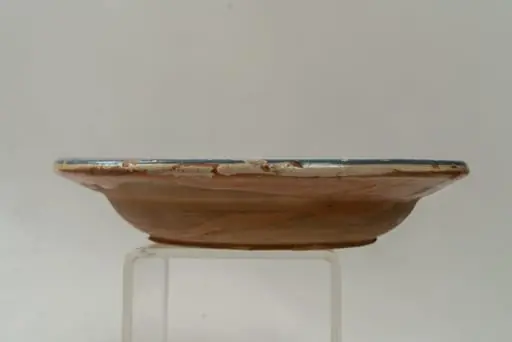 Farfurie adâncă, cu buză răsfrântă, modelată la roata olarului și angobată cu humă albă pe fața interioară a acesteia. Decorul, realizat prin pictare cu pensula și cu cornul, se compune din motive avimorfe (cocoș) și florale stilizate, dispuse într-un registru decorativ în zona centrală a farfuriei. Decorul este completat de câteva motive geometrice (linie ondulată, puncte, linii hașurate, linii sub formă de cercuri concentrice). Pe buza farfuriei: două cercuri concentrice, subțiri și o dungă albastră pe toată lungimea muchiei buzei. Cromatica: alb, albastru, verde, maro, siena naturală, roz pal. Peste decor, pe fața interioară a farfuriei este așezat un strat de smalț transparent.
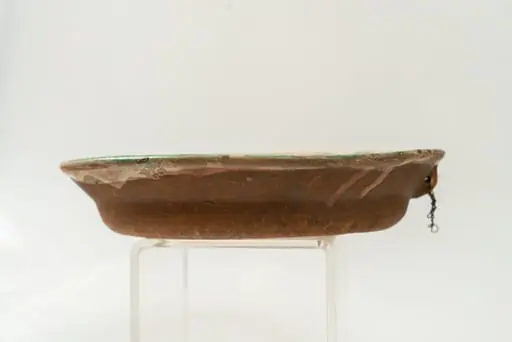 Farfurie adâncă, cu buza răsfrântă, modelată la roata olarului, angobată cu humă albă pe fața interioară. Decorul, bogat, este realizat prin pictare cu pensula și cu cornul și se compune din motive decorative florale stilizate și geometrice, acoperind întreaga suprafață a farfuriei. Cromatica: alb, verde, galben ocru, maro.
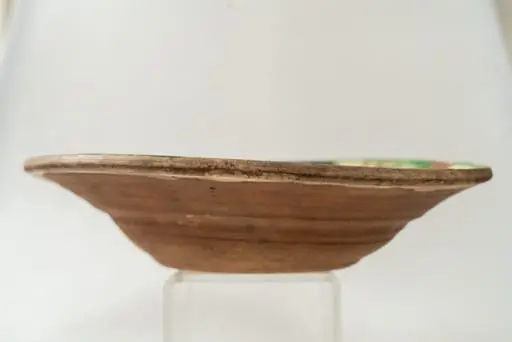 Farfurie mare, de formă adâncă, cu buză răsfrântă. Piesa este modelată la roată, angobată cu humă albă pe fața interioară. Decorul este realizat prin pictare cu pensula, cu smalțuri colorate (verde și maro) și prin sgrafitare. Motivele decorative sunt florale și vegetale stilizate (flori cu frunze) dispuse pe fundul farfuriei (o floare) și patru flori intercalate de patru elemente decorative vegetale (frunze) sugerând motivul inimii, dispuse pe buza farfuriei. Bordura interioară a farfuriei este marcată de o linie groasă sub formă de cerc, de culoare verde. Pe fața interioară a farfuriei este aplicat un strat de smalț transparent.
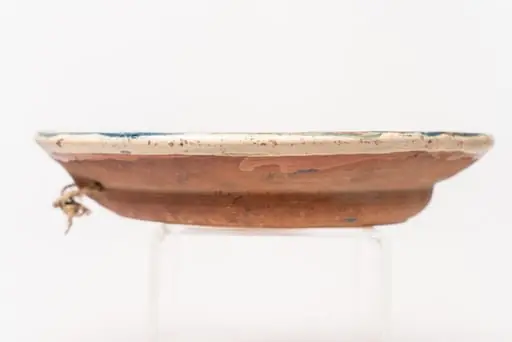 Farfurie semi-adâncă, cu răsfrântă; piesa este modelată la roata olarului și angobată cu humă albă pe fața interioară a acesteia. Decorul este realizat prin pictare cu cornul și cu pensula și constă în motive decorative florale și vegetale stilizate (flori de culoare galbenă cu contur albastru și frunze, dispuse în șir continuu pe fundul farfuriei și pe toată buza acestei), un motiv zoomorf (un cerb pictat central și înscris într-un cerc albastru cu puncte) și motive geometrice (linii sub formă de cerc și linie vălurită, sub bordura interioară a farfuriei; muchia buzei este marcată cu o linie albastră). Cromatica: alb, albastru, galben. Farfuria este smălțuită pe interior, cu smalț transparent.