Artwork
Folio 2, from a Great Poem about Twos (Dvyashraya Mahakavya) of Hemachandra with Commentary by Abhayatilaka
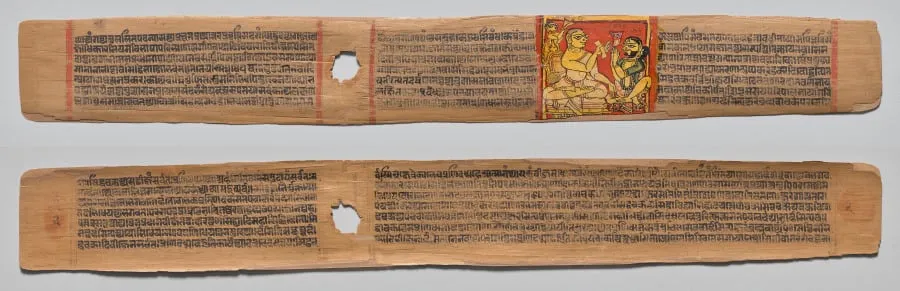
Folio 2, from a Great Poem about Twos (Dvyashraya Mahakavya) of Hemachandra with Commentary by Abhayatilaka is an unspecified painting by the Renaissance artist Unknown. It dates from 1428 and is held in the collection of the Cleveland Museum of Art.
About this work
You see a monk in white sitting on a throne, holding a cloth to his mouth and a broom behind his back.
You see a monk in white sitting on a throne, holding a cloth to his mouth and a broom behind his back.
This is Hemachandra, a Jain monk who wrote a book on grammar in 1160. The cloth keeps him from accidentally swallowing insects. The broom sweeps bugs from his path—both show Jain beliefs about not harming any living thing.
Look up Jain manuscripts at The Cleveland Museum of Art to see more like this.
Overview
This 12th‑century painted folio depicts the Jain scholar Hemachandra seated on a throne, accompanied by his patron King Kumarapala of the Solanki dynasty. The scene illustrates the author’s grammatical treatise composed in 1160, pairing scholarly activity with royal endorsement.
Subject & Meaning
Hemachandra is shown in the traditional white monastic robe with a shaved head, holding a cloth before his mouth to prevent the accidental ingestion of insects—a visual reminder of the Jain principle of ahimsa, non‑violence toward all life. A broom rests behind him, symbolising the monk’s duty to sweep away insects that might cross his path.
Technique & Style
Executed in miniature painting style, the work employs fine brushwork and delicate coloration to render the figures and their attributes with clarity. The composition balances the seated monk’s serene posture with the regal presence of the king, using spatial hierarchy to emphasize the scholarly authority of Hemachandra.
History & Provenance
The manuscript originates from western India, likely Gujarat, where Hemachandra served the Solanki court. The folio forms part of a larger codex containing the Dvyashraya Mahakavya, a grammatical poem accompanied by commentary from Abhayatilaka. The piece entered the Cleveland Museum of Art’s collection as part of its Jain manuscript holdings.
Context
During the 12th century, Jain scholars frequently produced illustrated texts that combined literary instruction with moral exemplars. Hemachandra’s work reflects this tradition, integrating linguistic analysis with ethical instruction, and demonstrates the close relationship between Jain monastic scholars and the ruling elite of the period.
Artist & collection

 Domestic Scene
 Giacomo and Cardinal Marco, investing Andrea, Abbot of San Zeno, with his Benefice
 The Nymph of Fontainebleau
 Portrait of a Woman
 Madonna and Child with Saints in the Enclosed Garden
 Venus and Minerva
 Family Group of Four on Sofa
 Wall painting from Room H of the Villa of P. Fannius Synistor at Boscoreale
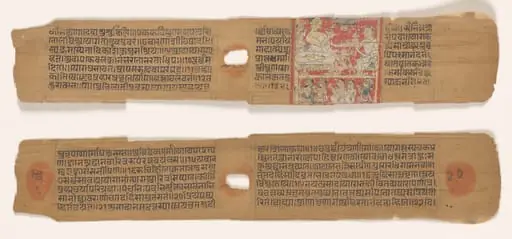 Folio 22 from a Yoga-shastra of Hemachandra: Jain Monk with disciple and two laymen, two Nuns, and a laywoman (recto); Text (verso)
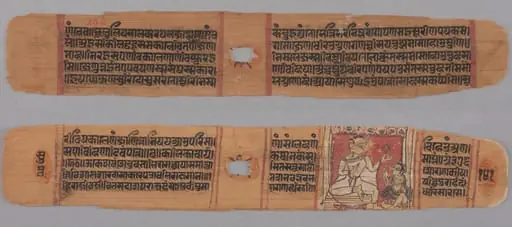 Folio 141, from a Kalpa-sutra and Story of Kalakacharya: Text (recto); Monk Holding a Flower Venerated by a Lay disciple (verso)
 Leaf from a Jain Manuscript: page from a Great Poem about Twos (Dvyashraya Mahakavya) of Hemachandra, with commentary by Abhayatilaka: Text (recto)
 Folio 1, from a Great Poem about Twos (Dvyashraya Mahakavya) of Hemachandra with Commentary by Abhayatilaka
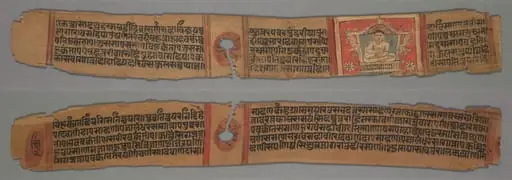 Folio 2, from a Kalpa-sutra and Story of Kalakacharya of Devachandra: Enthroned Monk Gautama (recto); Text (verso)
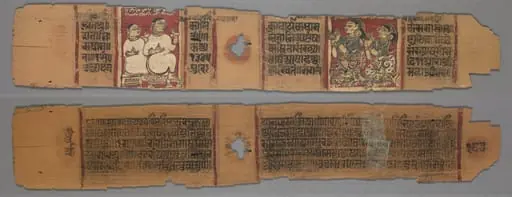 Folio 167, from a Kalpa-sutra and Story of Kalakacharya: two nuns teaching lay women (recto); genealogical text (verso)
 King Kumarapala Pays Reverence to Hemachandra: Folio 2 (recto), from a Great Poem about Twos (Dvyashraya Mahakavya) of Hemachandra with Commentary by Abhayatilaka
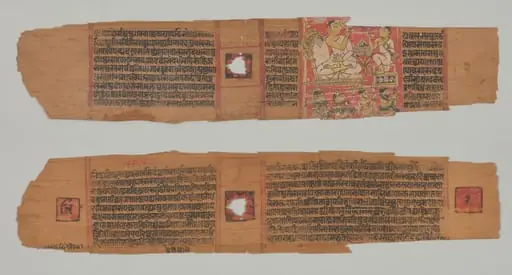 Folio 2 from a Parshvanatha Charitra (Life and Stories of Lord Parshva) of Bhavadeva-suri: Monk preaching to a disciple with a lay audience (recto); Text (verso)
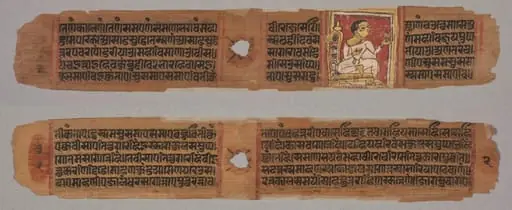 Folio 2, from a Kalpa-sutra and Story of Kalakacharya: Monk Holding a Flower (recto); text (verso)
 Leaf from a Jain Manuscript: page from a Great Poem about Twos (Dvyashraya Mahakavya) of Hemachandra, with commentary by Abhayatilaka: Monk in the Gift-giving Gesture before a Layman (verso)
 Folio (recto) from a Kalpa-sutra and Story of Kalakacharya of Devachandra: Text