Artwork
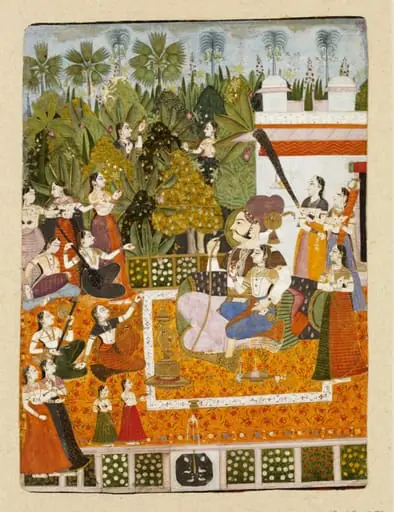
Prince playing Holi in harem
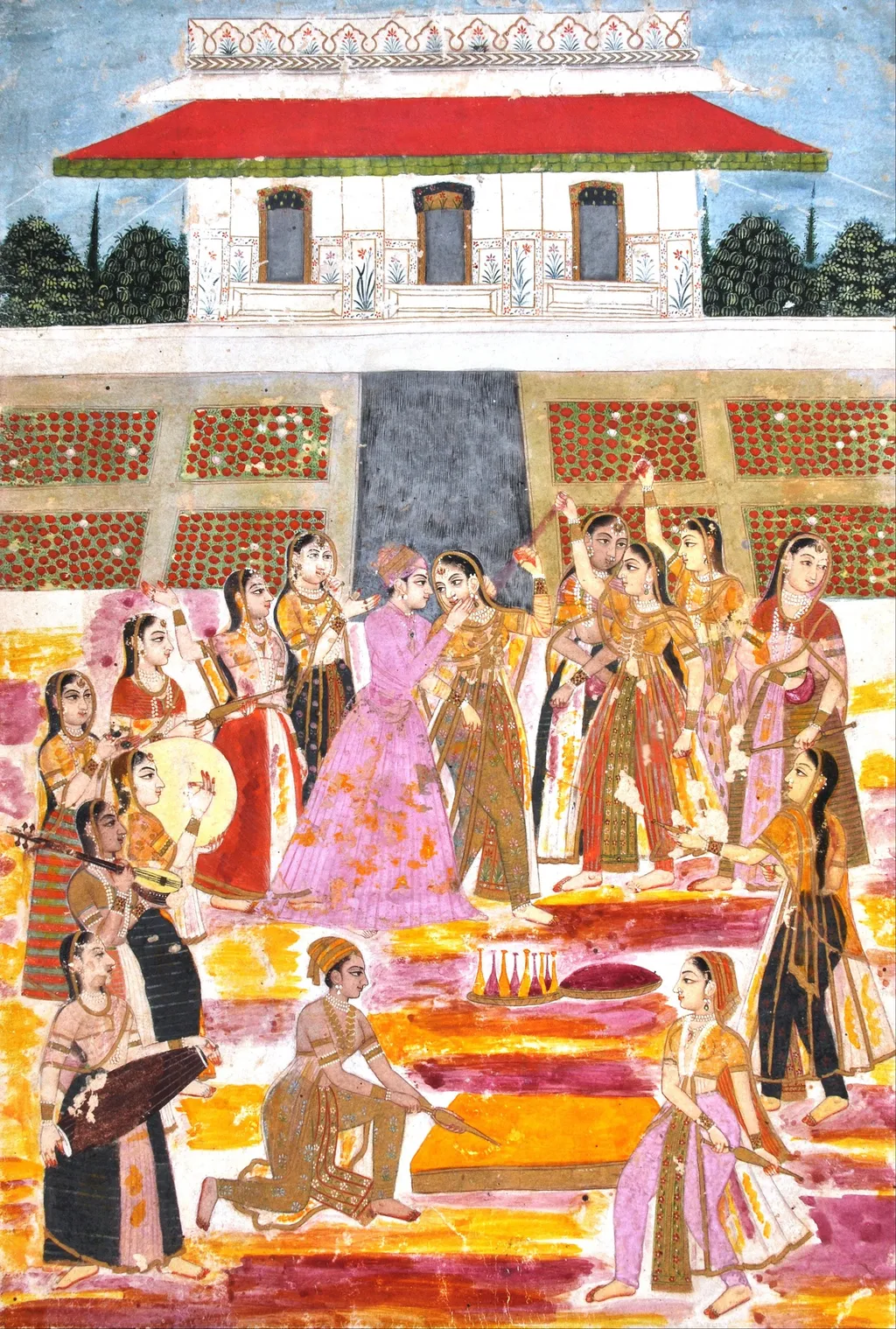
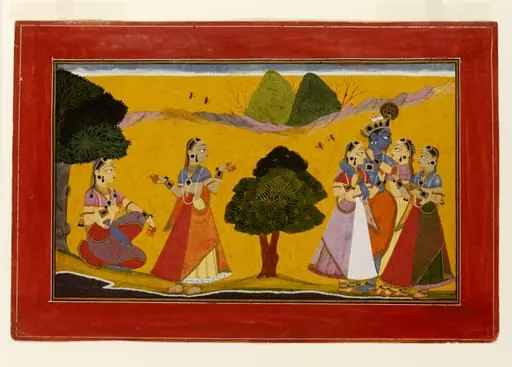
Prince playing Holi in harem is an unspecified painting by Unknown. It is held in the collection of the National Museum. The work portrays a festive gathering during the Hindu celebration of Holi, set in an open courtyard.
About this work
Overview
The work portrays a festive gathering during the Hindu celebration of Holi, set in an open courtyard. Central to the composition is a young prince dressed in a pink robe and turban, accompanied by a woman in a yellow dress. Around them, several women in vivid attire hold flowers or musical instruments, creating a lively tableau of color and movement.
Subject & Meaning
The painting captures the communal joy of Holi, a spring festival marked by the throwing of colored powders and the sharing of music and food. By placing a princely figure at the heart of the scene, the artist emphasizes the role of royalty in patronizing and participating in cultural rites, while the surrounding participants illustrate the inclusive, celebratory spirit of the occasion.
Technique & Style
Rendered with a bright palette, the artist employs clear, defined outlines to separate figures and their garments, allowing each hue to stand out. The composition balances a central focus on the prince with a rhythmic distribution of secondary figures, while the architectural backdrop—a white building with a red roof—provides a simple yet effective spatial setting.
History & Provenance
The painting, titled "Prince playing Holi in harem," belongs to a series of works that document courtly life and Indian festivals. Its provenance traces back to private collections in South Asia before entering a public museum inventory in the early twentieth century, where it has been catalogued as a representative example of courtly genre painting.
Context
Created during a period when Indian courts frequently commissioned artworks that blended royal portraiture with depictions of everyday festivities, the piece reflects a synthesis of aristocratic self‑representation and cultural documentation. The inclusion of musical instruments and floral motifs aligns with contemporary visual conventions that highlighted the sensory richness of Holi.
Legacy
As a visual record of Holi celebrations within a royal setting, the painting offers scholars insight into the interplay between power, ritual, and artistic expression in pre‑colonial India. It continues to serve as a reference point for studies of festival iconography and the representation of gendered participation in courtly festivities.
Artist & collection

 Domestic Scene
 Giacomo and Cardinal Marco, investing Andrea, Abbot of San Zeno, with his Benefice
 The Nymph of Fontainebleau
 Portrait of a Woman
 Madonna and Child with Saints in the Enclosed Garden
 Venus and Minerva
 Family Group of Four on Sofa
 Wall painting from Room H of the Villa of P. Fannius Synistor at Boscoreale
 Girls Spraying Each Other at Holi
 A princess with attendants on a terrace
 A Heroine and Her Paramour: Malavi Ragini, from a Ragamala
 Ratan Singh
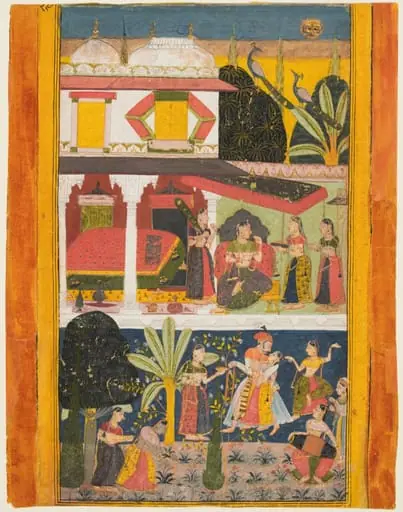 A Heroine and Her Paramour: Malavi Ragini, from a Ragamala
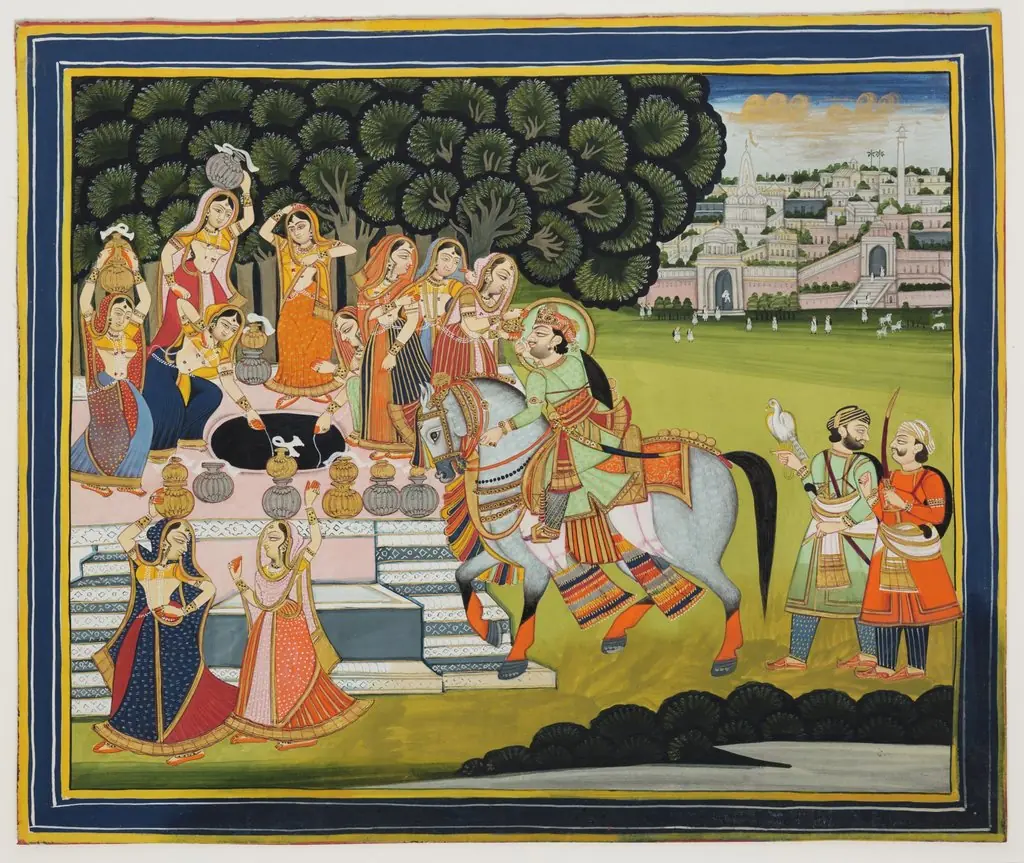 Encounter at the Well
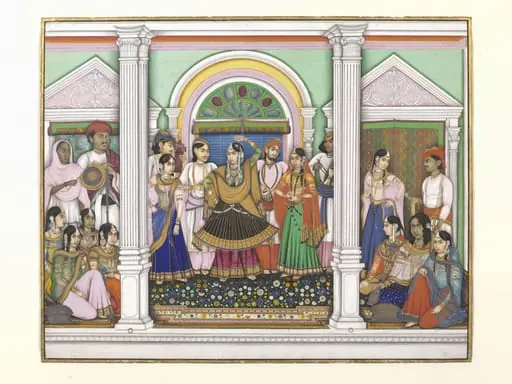 A nautch
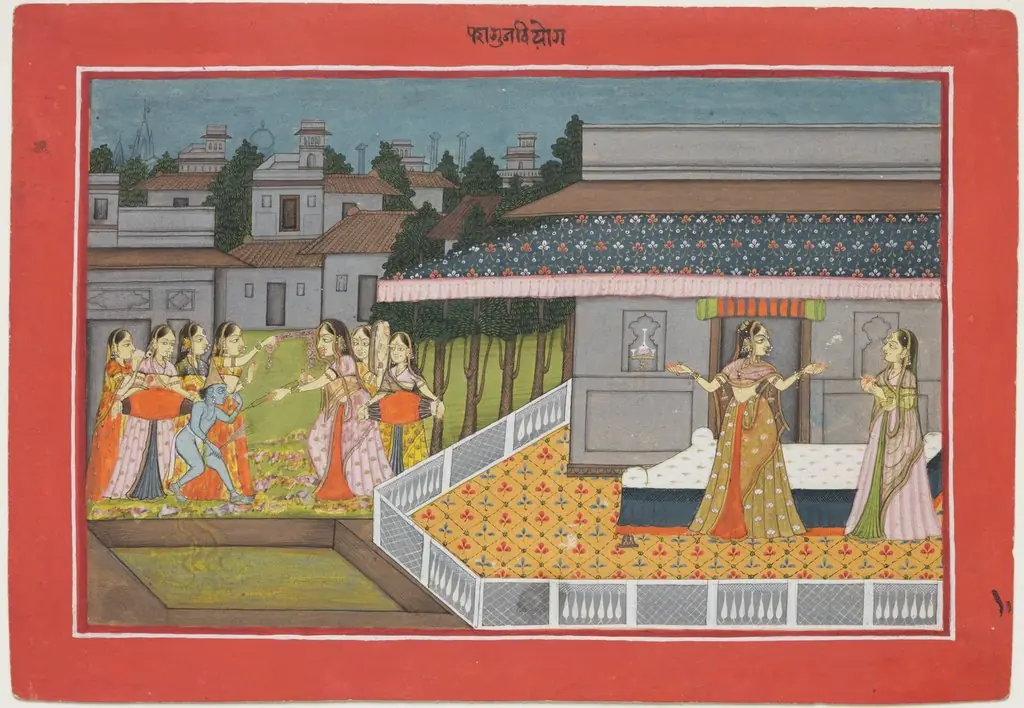 The Month of Phalguna (February-March), from a manuscript of the Barahmasa ("Twelve Months")
 Vishnu
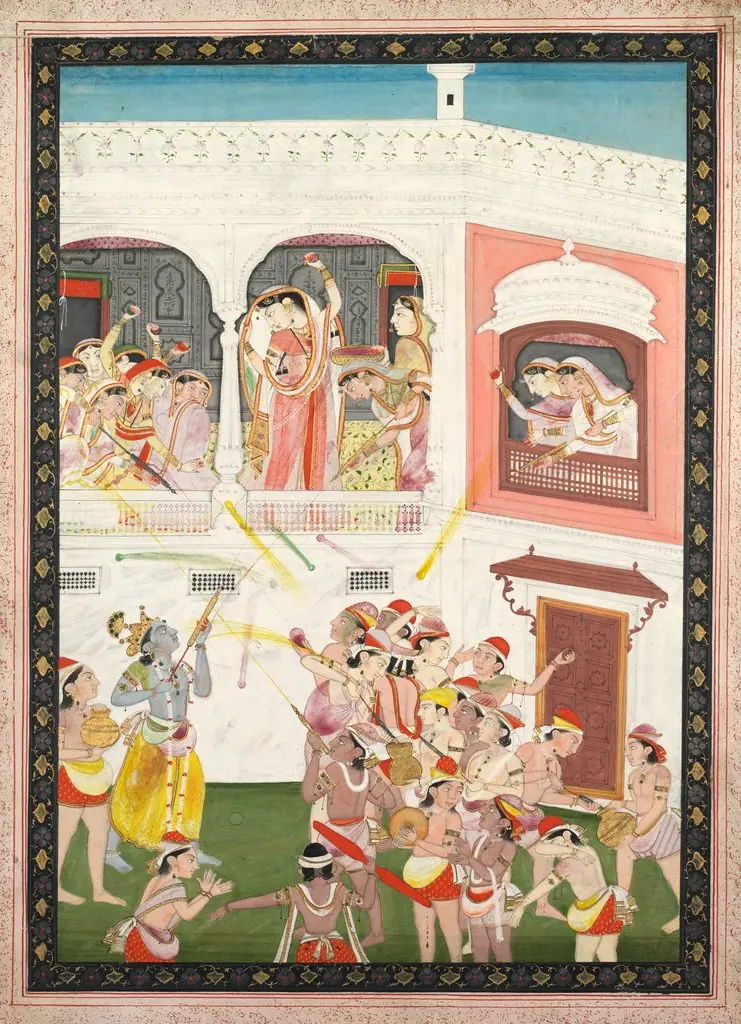 Radha and Hindu God Krishna Celebrating the Festival Holi
 Radha and Hindu God Krishna celebrating the festival Holi
 Radha and Krishna