Artwork
Going to Court - How I Went
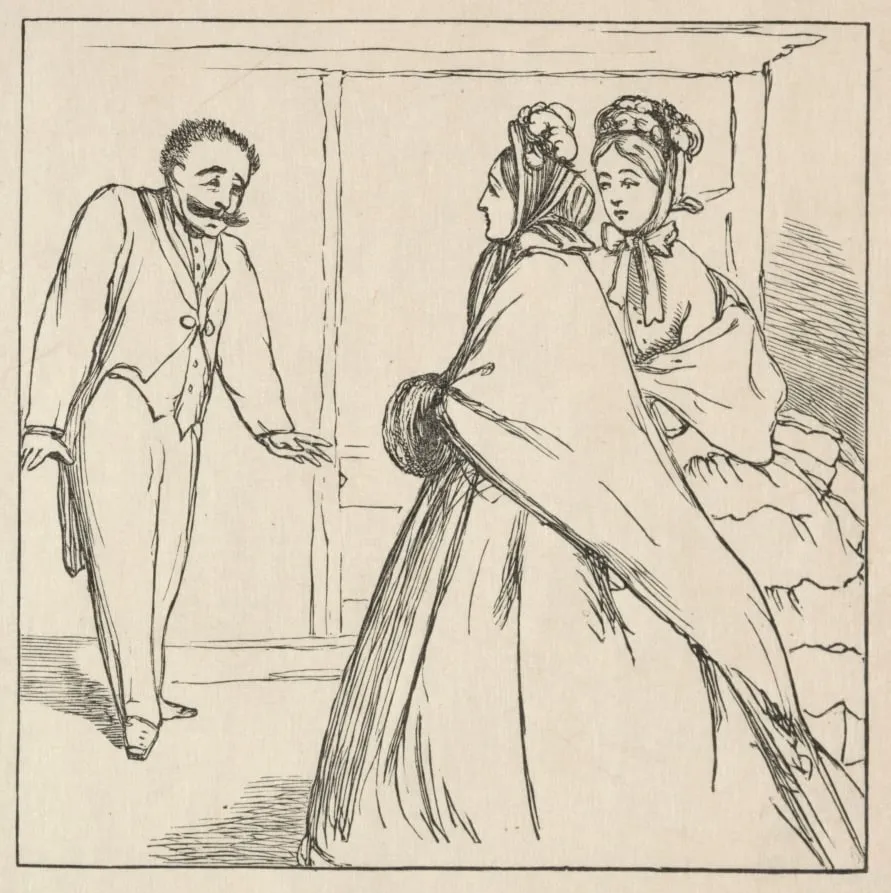
Going to Court - How I Went is a print by the Impressionist artist Unknown. It dates from 1863 and is held in the collection of the Cleveland Museum of Art. This unsigned 1863 print depicts a woman in a dark, floor-length dress walking along a rural path, accompanied by a small dog.
About this work
You see a woman in a long, dark dress walking down a dirt path, a small dog trotting beside her.
The painting feels like a snapshot—no grand drama, just a quiet moment. It’s signed and dated 1863, but no one knows who made it. That mystery makes it oddly personal, like a stranger’s diary entry left behind.
If you like this slice of everyday life, look up more under england, 19th century.
Overview
Its anonymity adds to its intimacy, as if the viewer has stumbled upon a private scene preserved without intent for public display.
This unsigned 1863 print depicts a woman in a dark, floor-length dress walking along a rural path, accompanied by a small dog. The composition captures a moment of unremarkable daily life, rendered with quiet precision. Its anonymity adds to its intimacy, as if the viewer has stumbled upon a private scene preserved without intent for public display. The work resists grand narrative, offering instead a subtle glimpse into 19th-century English domestic routine.
Subject & Meaning
The figure’s solitary walk suggests a routine errand or journey, possibly to a legal or civic appointment, as the title implies. The absence of context—no buildings, other figures, or signs—focuses attention on the woman’s quiet determination. The dog, a constant companion, reinforces the sense of familiarity and routine. The work conveys dignity in the ordinary, valuing the uncelebrated rhythms of everyday existence over theatricality.
Technique & Style
Rendered in a restrained tonal palette, the print uses fine lines and soft shading to suggest texture and depth without dramatic contrast. The figure is rendered with economical detail, avoiding idealization; her dress folds naturally, and the dog’s movement is captured in a single, fluid stride. The composition feels spontaneous, as if drawn on the spot, lending it the immediacy of a sketch rather than a polished studio piece.
History & Provenance
The print bears a clear 1863 date and artist’s signature, yet neither the creator nor the original commissioning party has been identified. It has no documented exhibition history or ownership trail prior to modern archival records. Its survival as a standalone object, unattached to a known artist’s oeuvre, suggests it may have been a personal keepsake or privately circulated work, preserved by chance rather than design.
Context
Produced during a period of expanding print culture in England, this work reflects a growing interest in depicting ordinary life beyond aristocratic or industrial themes. While major artists of the era focused on social commentary or romanticized rural scenes, this print offers a quieter, more intimate alternative—aligned with emerging photographic aesthetics and the rise of domestic visual culture in middle-class households.
Legacy
Though unknown in its time, the print now serves as a quiet testament to the value of unattributed, everyday imagery. Its anonymity invites viewers to project their own narratives, making it a resonant artifact of private life in Victorian England. It remains a touchstone for scholars examining the margins of 19th-century visual culture—where meaning is found not in fame, but in fidelity to the mundane.
Artist & collection

 Domestic Scene
 Giacomo and Cardinal Marco, investing Andrea, Abbot of San Zeno, with his Benefice
 The Nymph of Fontainebleau
 Portrait of a Woman
 Madonna and Child with Saints in the Enclosed Garden
 Venus and Minerva
 Family Group of Four on Sofa
 Wall painting from Room H of the Villa of P. Fannius Synistor at Boscoreale
 Ayant la prétention de faire partie du beau monde
 Fourberies de Femmes En Matière de Sentiment
 Fourberies de Femmes: En matière de sentiment
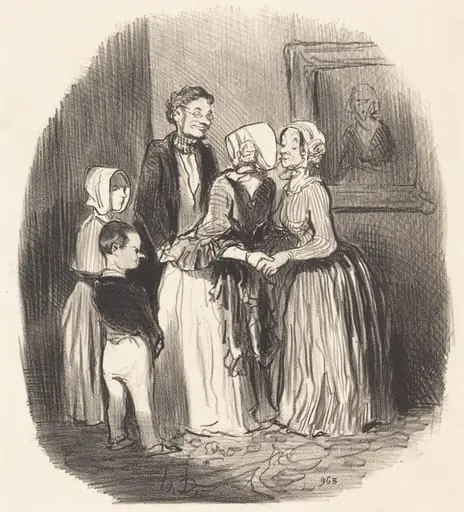 Au novel an, visite... a la tante Rabourdin
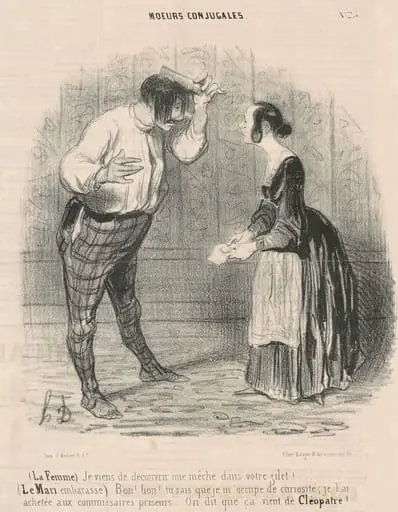 La femme. Je viens de découvrir une mèche...
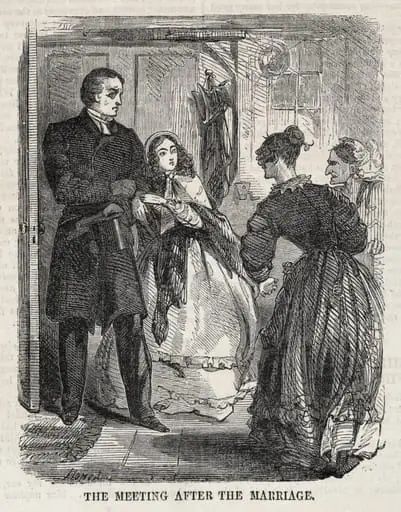 The Meeting After the Marriage
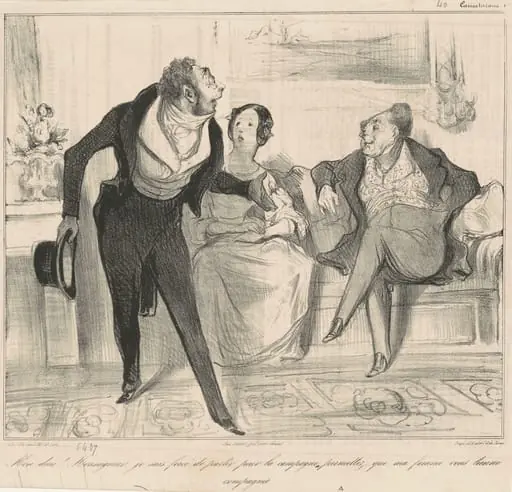 Mon Dieu! Monseigneur, je suis...
 A portée de lorgnon
 The Buds
 The Other Mrs. Johnson
 Wanted a Curate. Rather an Ordeal for the Reverend M. Green
 Une Idylle dans les blés