Artwork
Harsa Raga
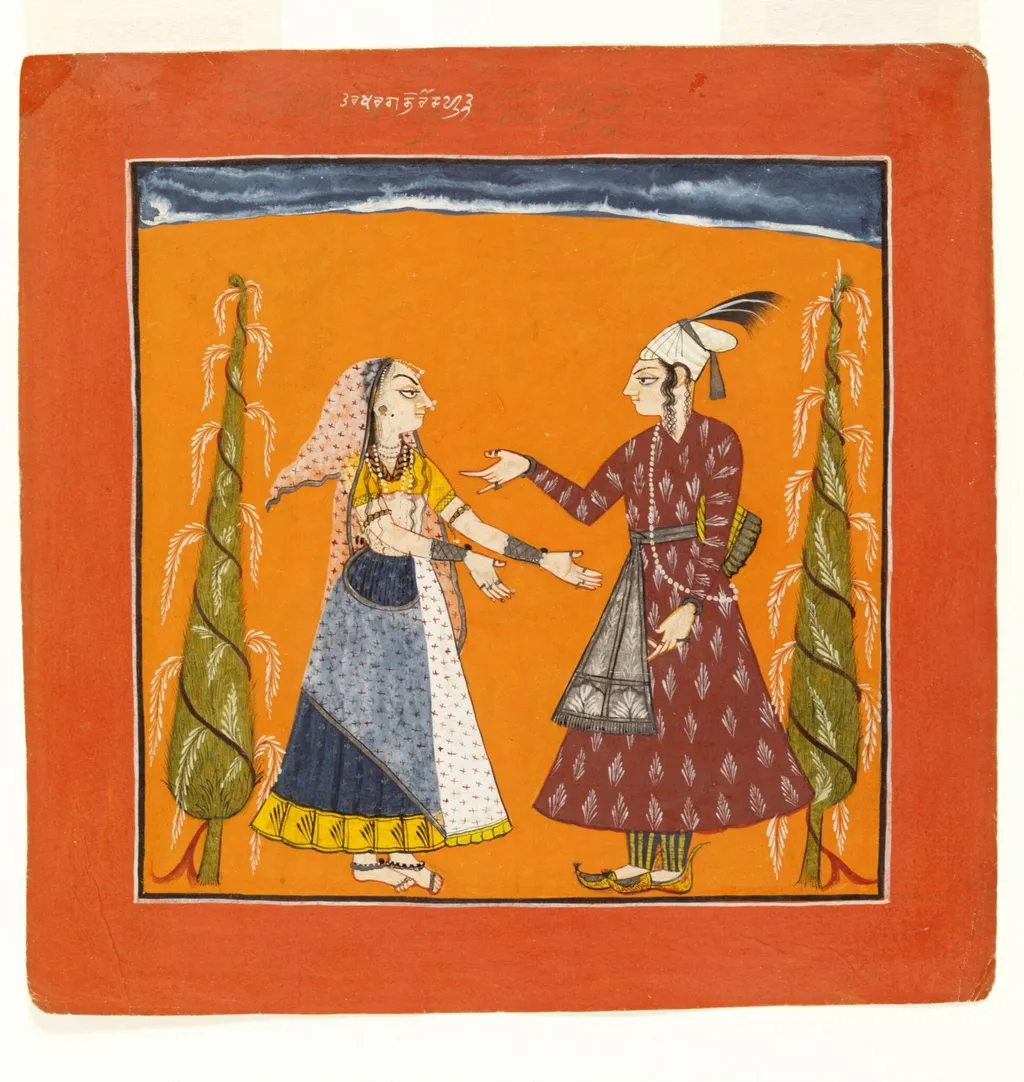
Harsa Raga is a paint painting by the Baroque artist Unknown. It dates from 1705 and is held in the collection of the Victoria and Albert Museum.
About this work
Overview
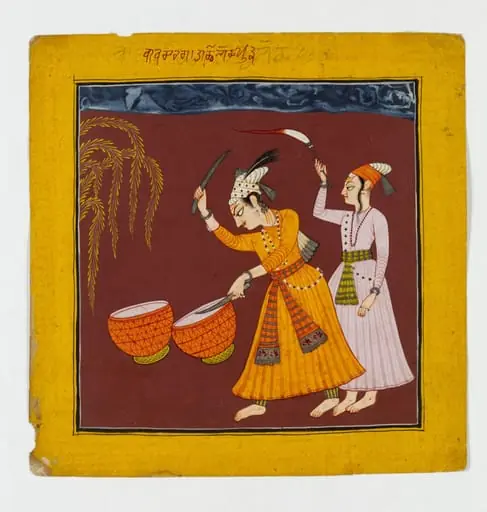
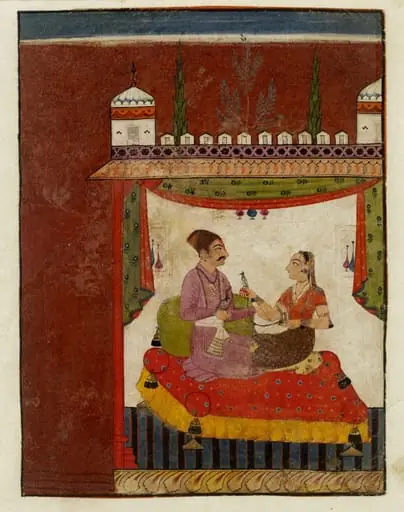
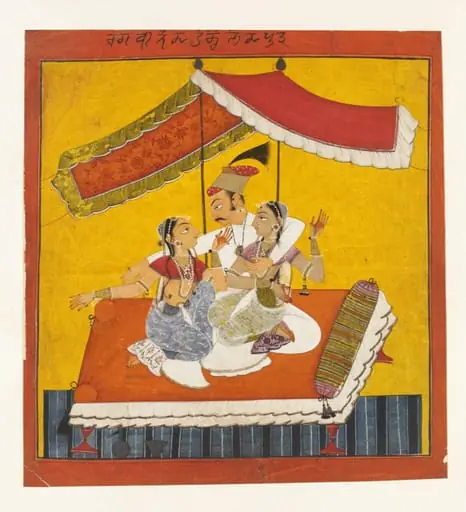
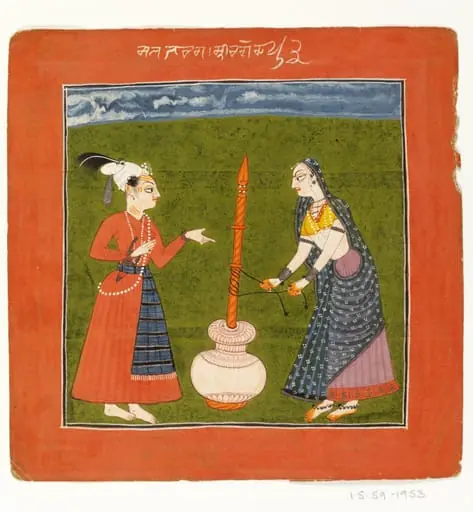
Created in 1705, *Harsa Raga* is an opaque watercolour on paper from the Rajasthani tradition, illustrating a musical mode through figurative imagery.
Created in 1705, *Harsa Raga* is an opaque watercolour on paper from the Rajasthani tradition, illustrating a musical mode through figurative imagery. It belongs to a series of ragamala paintings that translate sonic modes into visual narratives. The work was once in the collection of Michael Rothenstein before being acquired by the Victoria and Albert Museum in 1953 for £300, catalogued as IS.46 to 73-1953.
Subject & Meaning
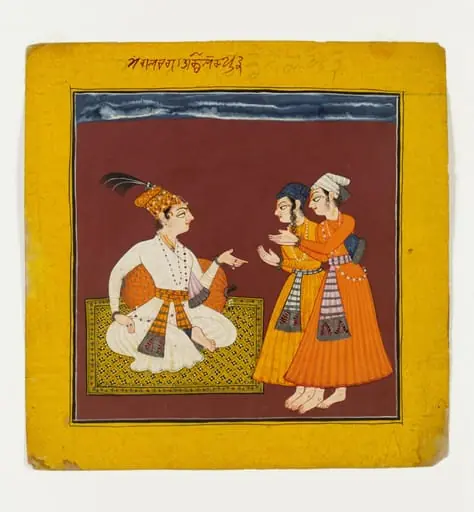
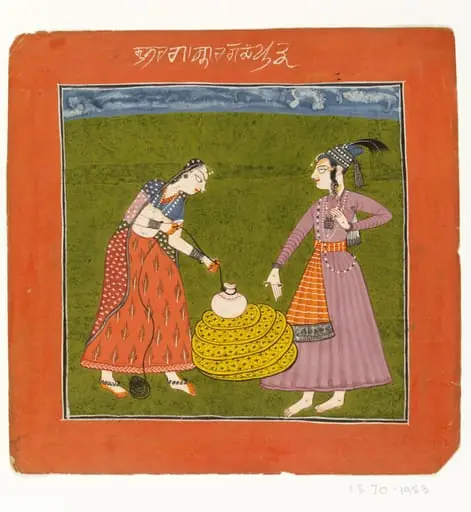
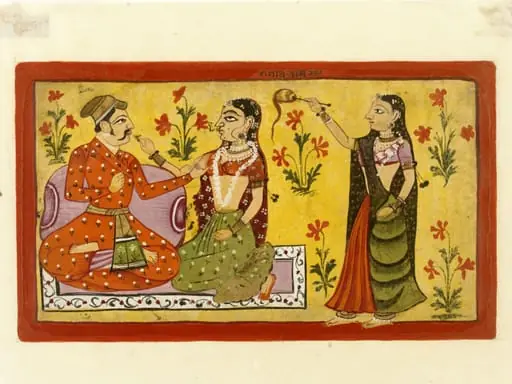
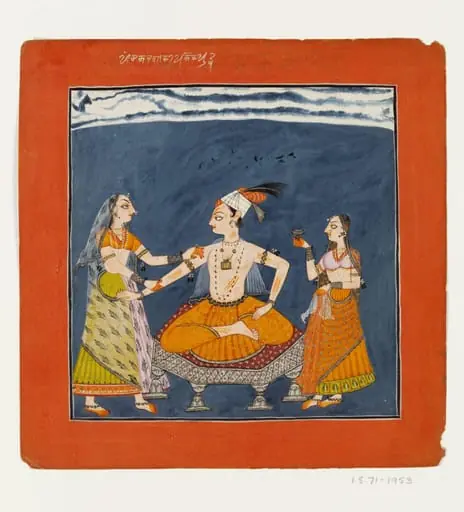
The painting depicts a woman and a prince facing each other in a stylized landscape, their outstretched hands suggesting a moment of connection. Though rooted in the Harsa Raga—a mode associated with joy—the scene avoids literal musical symbols, instead evoking emotional resonance through gesture and proximity. The interaction implies a spiritual or romantic exchange, aligning with the raga’s thematic association with elation and devotion.
Technique & Style
Executed in opaque watercolour, the painting employs bold outlines and saturated hues—blue, red, gold, and white—to define figures against a flat, orange ground. The figures are rendered with precise detail in costume and posture, while the background remains minimal, focusing attention on their interaction. The use of gold accents and patterned textiles reflects courtly aesthetics typical of early 18th-century Rajasthani miniatures.
History & Provenance
The painting entered the Victoria and Albert Museum’s collection in 1953 after being acquired from Michael Rothenstein, a British artist and collector known for his interest in South Asian art. Its acquisition for £300 reflects the modest market value of Indian miniatures at the time. Prior to this, its provenance is undocumented, though its style firmly situates it within the Rajasthani school of the early 1700s.
Context
Ragamala paintings emerged in North India as visual interpretations of musical modes, often commissioned by royal patrons. *Harsa Raga* fits within a broader tradition where emotion, not narrative, drives composition. These works were used in private devotional or aesthetic settings, linking music, poetry, and painting in a shared cultural framework that valued symbolic expression over realism.
Legacy
As part of the V&A’s South Asian collection, *Harsa Raga* contributes to scholarly understanding of how Indian musical concepts were translated into visual form. It remains a representative example of Rajasthani miniature painting’s capacity to convey abstract ideas through intimate, stylized figures. Its preservation allows continued study of the interplay between sound, gesture, and symbolism in pre-colonial Indian art.
Artist & collection

 Domestic Scene
 Giacomo and Cardinal Marco, investing Andrea, Abbot of San Zeno, with his Benefice
 The Nymph of Fontainebleau
 Portrait of a Woman
 Madonna and Child with Saints in the Enclosed Garden
 Venus and Minerva
 Family Group of Four on Sofa
 Wall painting from Room H of the Villa of P. Fannius Synistor at Boscoreale