Artwork
Head of Saint John the Baptist
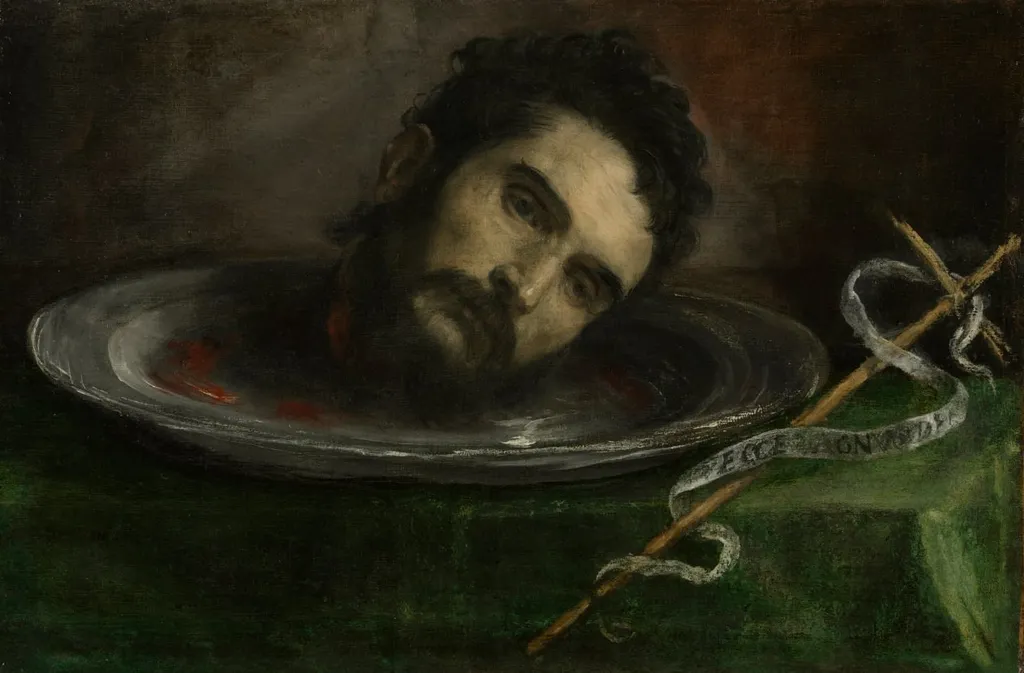
Head of Saint John the Baptist is an unspecified painting by the Mannerist artist Unknown. It dates from 1600 and is held in the collection of the Cleveland Museum of Art. The painting depicts a severed head placed on a plate, its eyes closed and lips slightly open, rendered with a lifelike pallor.
About this work
Look up other works from Spain or northern Italy, mid 16th - mid 17th century to see how artists handled dark stories like this.
You see a severed head on a plate, eyes closed, skin pale and lips parted.
This isn’t a church altarpiece—it was made to hang in someone’s home. The artist focused on the quiet horror of the moment, not the gore. The smooth brushwork makes the flesh look almost real, as if the head could speak.
Look up other works from Spain or northern Italy, mid 16th - mid 17th century to see how artists handled dark stories like this.
Overview
The painting depicts a severed head placed on a plate, its eyes closed and lips slightly open, rendered with a lifelike pallor. Though drawn from a biblical narrative, the work was intended for private display rather than liturgical use, allowing a domestic audience to contemplate the unsettling moment without overt sensationalism.
Subject & Meaning
The image references the story of Salome requesting the head of John the Baptist, a request prompted by her mother’s counsel and fulfilled after Herod’s indulgence. By isolating the head, the artist emphasizes the quiet horror and moral gravity of the tale, inviting reflection on themes of power, manipulation, and martyrdom.
Technique & Style
The flesh is treated with smooth, almost tactile brushwork that gives the skin a palpable quality, while the muted palette of pale tones and subdued shadows creates a restrained atmosphere. The handling of light and color recalls the influence of Titian’s followers in northern Italy, yet the overall execution diverges from Titian’s characteristic vigor.
History & Provenance
Acquired by the museum in 1953 under the belief that it was a work by Titian, the attribution was later questioned due to the absence of his distinctive brushstroke. Subsequent scholarship has been unable to assign a definitive author, though recent arguments favor a Spanish painter active in the early 1600s, reflecting the work’s thematic popularity in that region.
Context
During the mid‑16th to mid‑17th centuries, both Spanish and northern Italian artists explored dramatic biblical subjects for private collections, often emphasizing emotional intensity over graphic detail. This painting fits within that tradition, aligning with contemporary tastes for morally charged, yet aesthetically refined, narrative scenes.
Artist & collection

 Domestic Scene
 Giacomo and Cardinal Marco, investing Andrea, Abbot of San Zeno, with his Benefice
 The Nymph of Fontainebleau
 Portrait of a Woman
 Madonna and Child with Saints in the Enclosed Garden
 Venus and Minerva
 Family Group of Four on Sofa
 Wall painting from Room H of the Villa of P. Fannius Synistor at Boscoreale
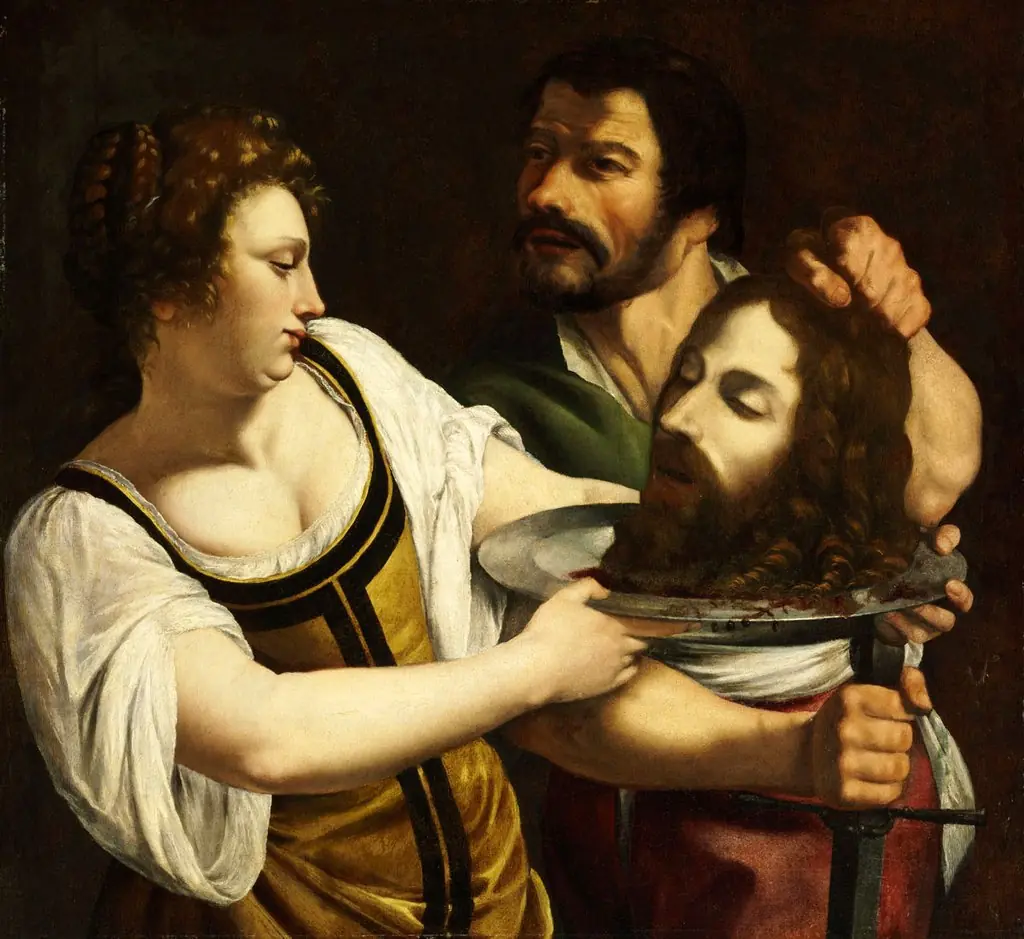 Salome with the Head of Saint John the Baptist
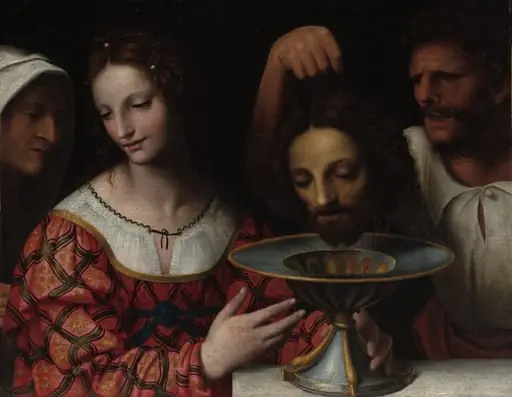 Salome with the Head of Saint John the Baptist
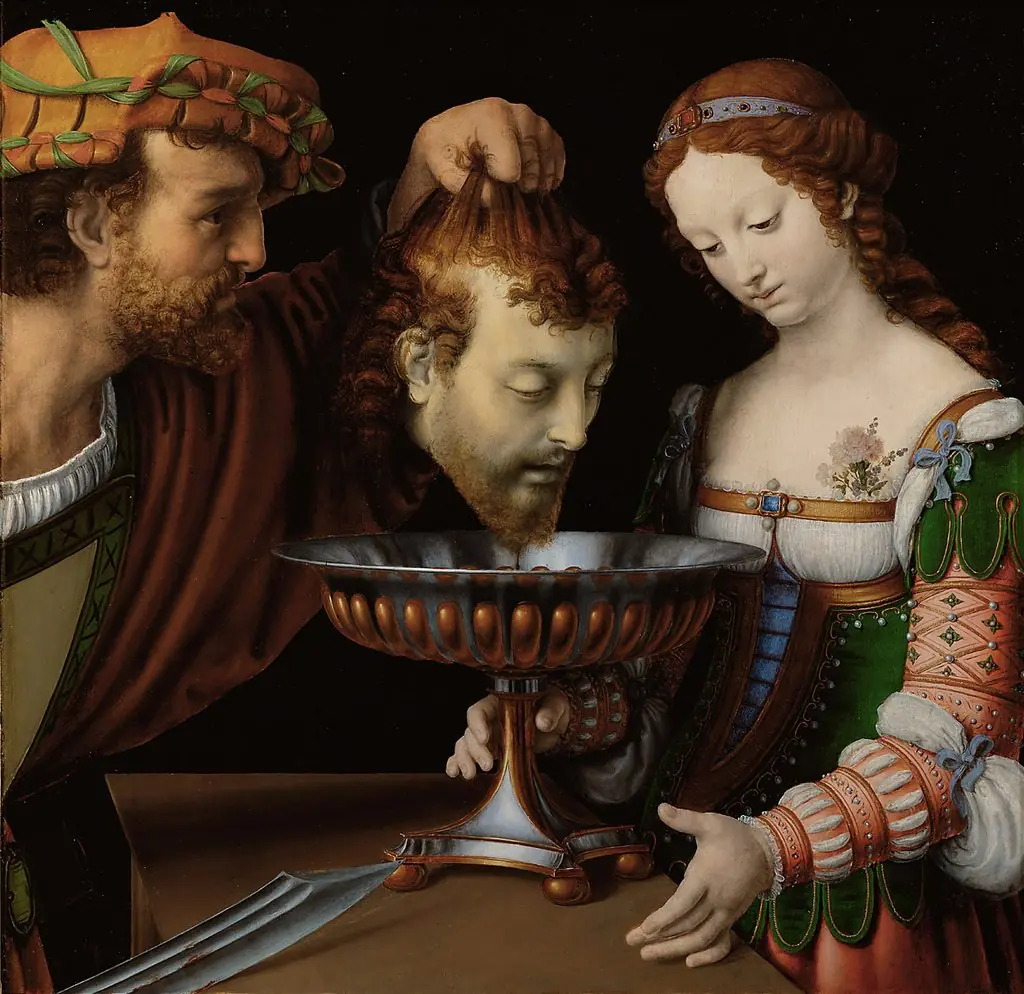 Salome with John the Baptist's head
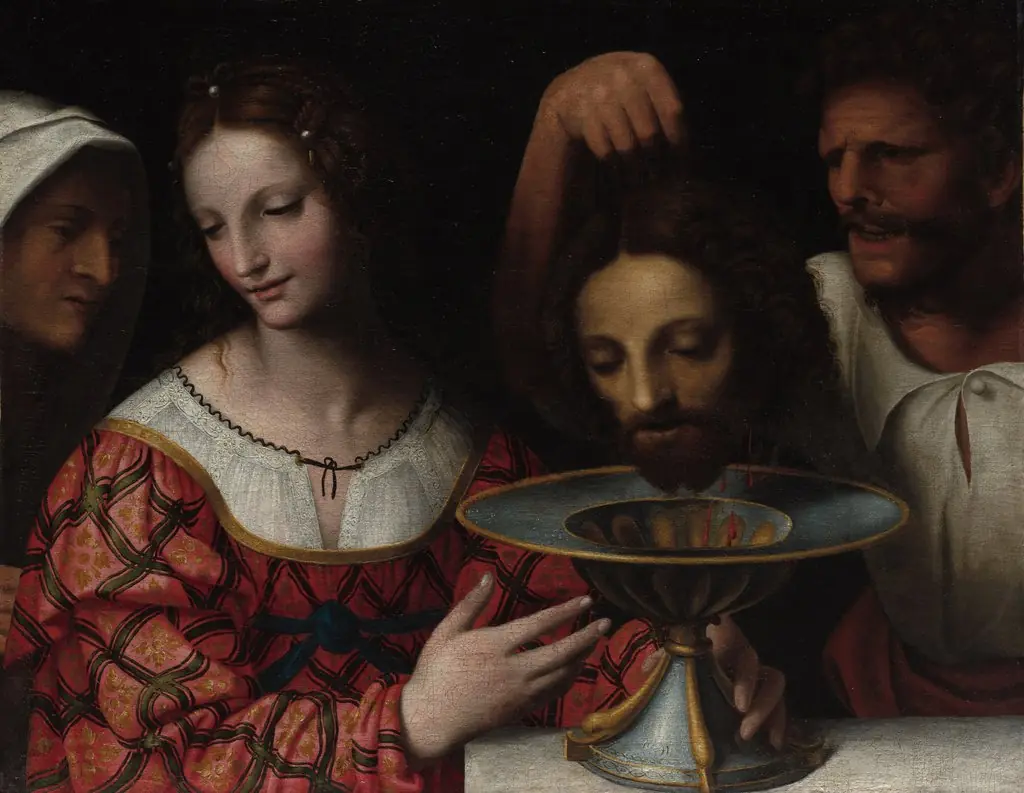 Salome with the Head of Saint John the Baptist
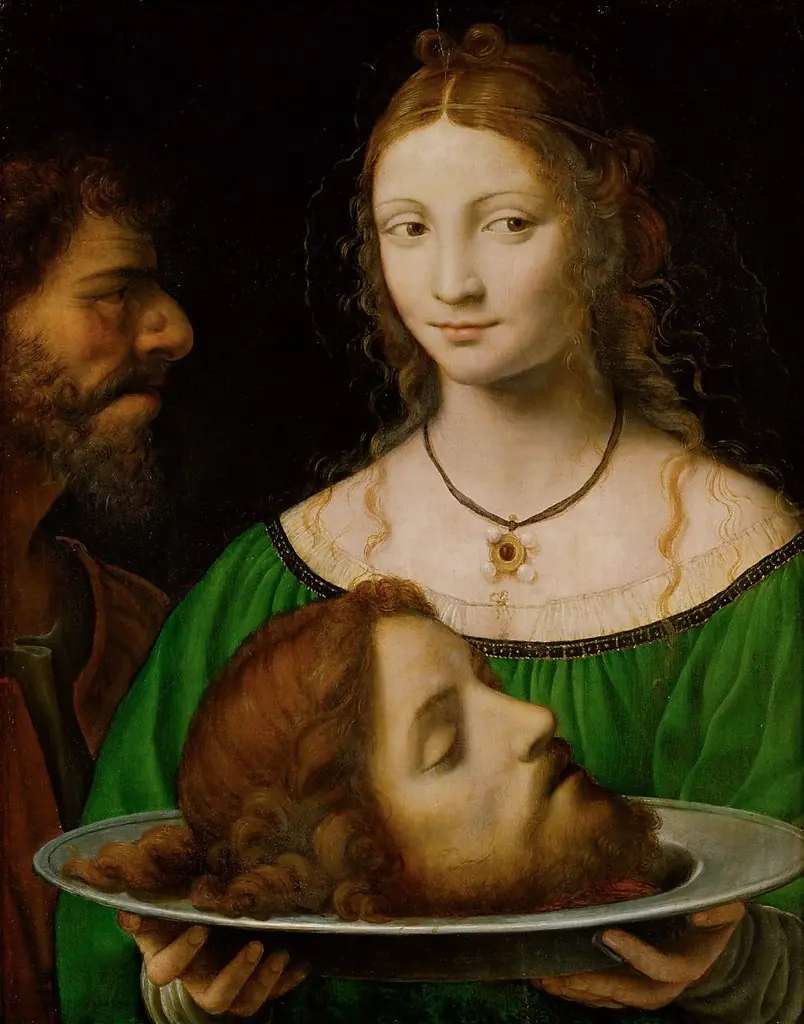 Salome with the Head of John the Baptist
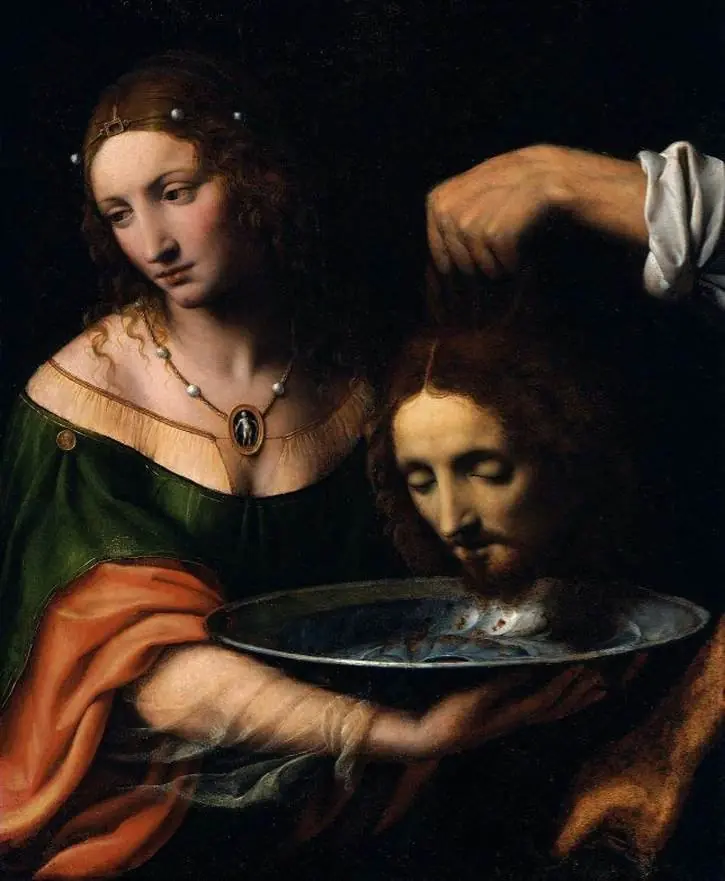 Salome with the Head of Saint John the Baptist
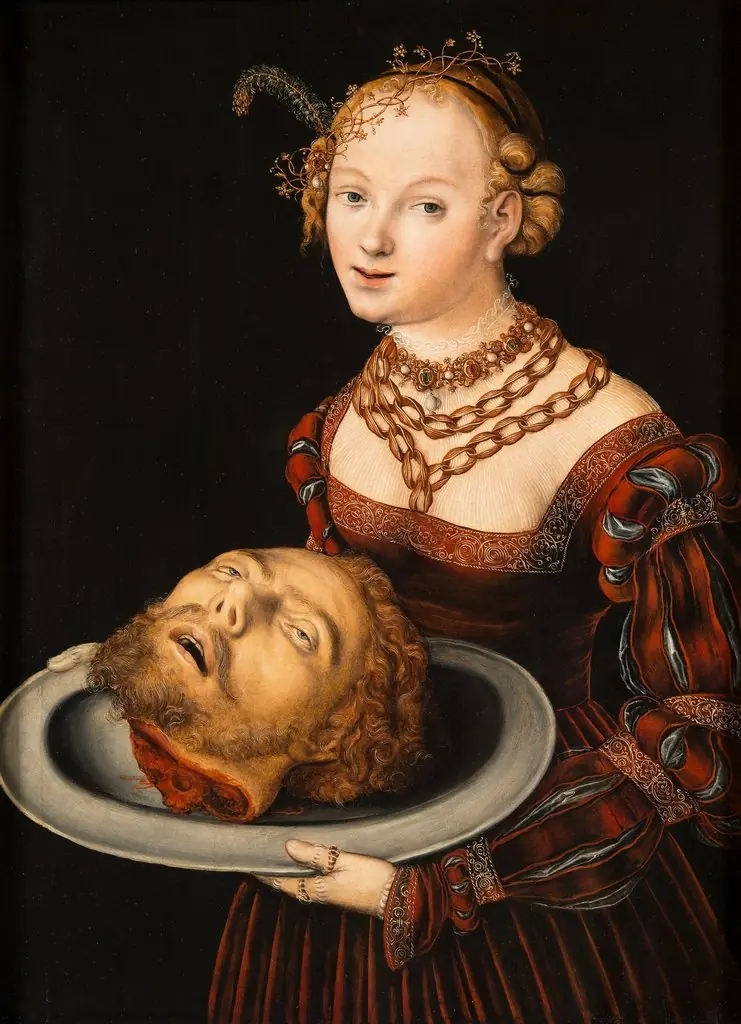 Salome with the Head of St John the Baptist
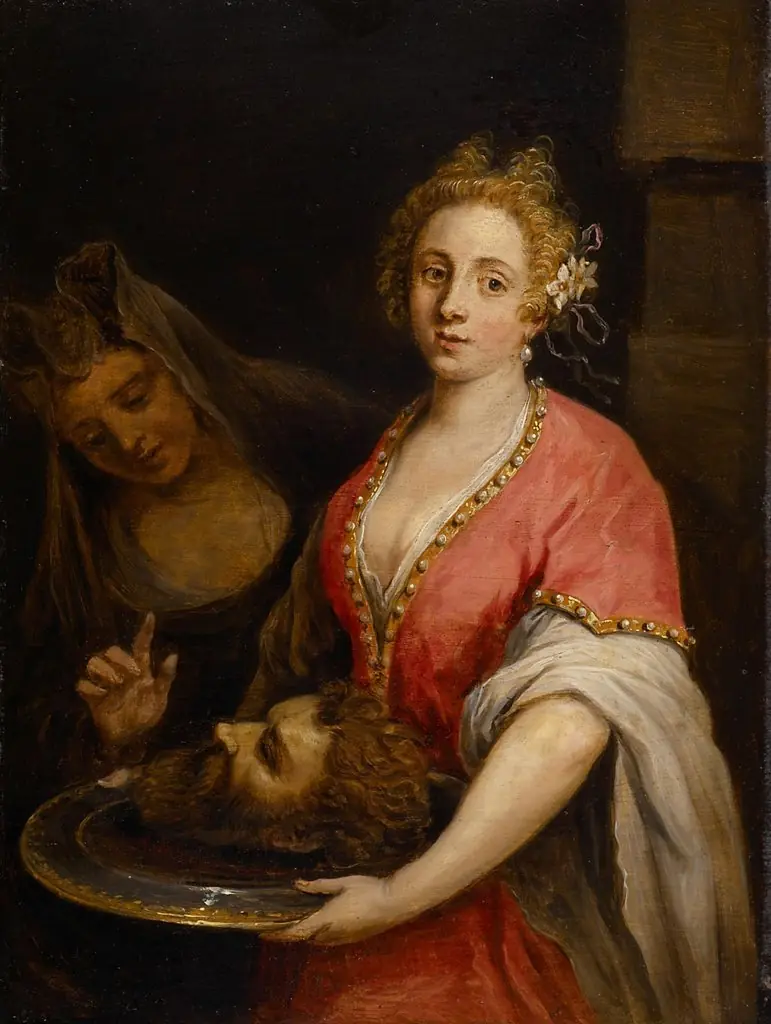 Salome with the Head of John the Baptist
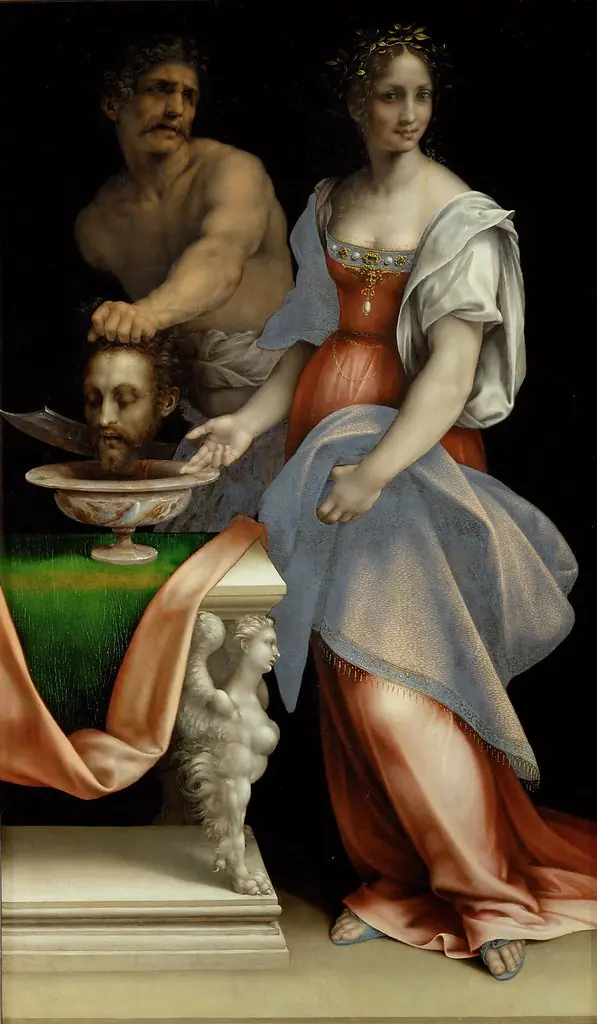 Salome with the head of John the Baptist
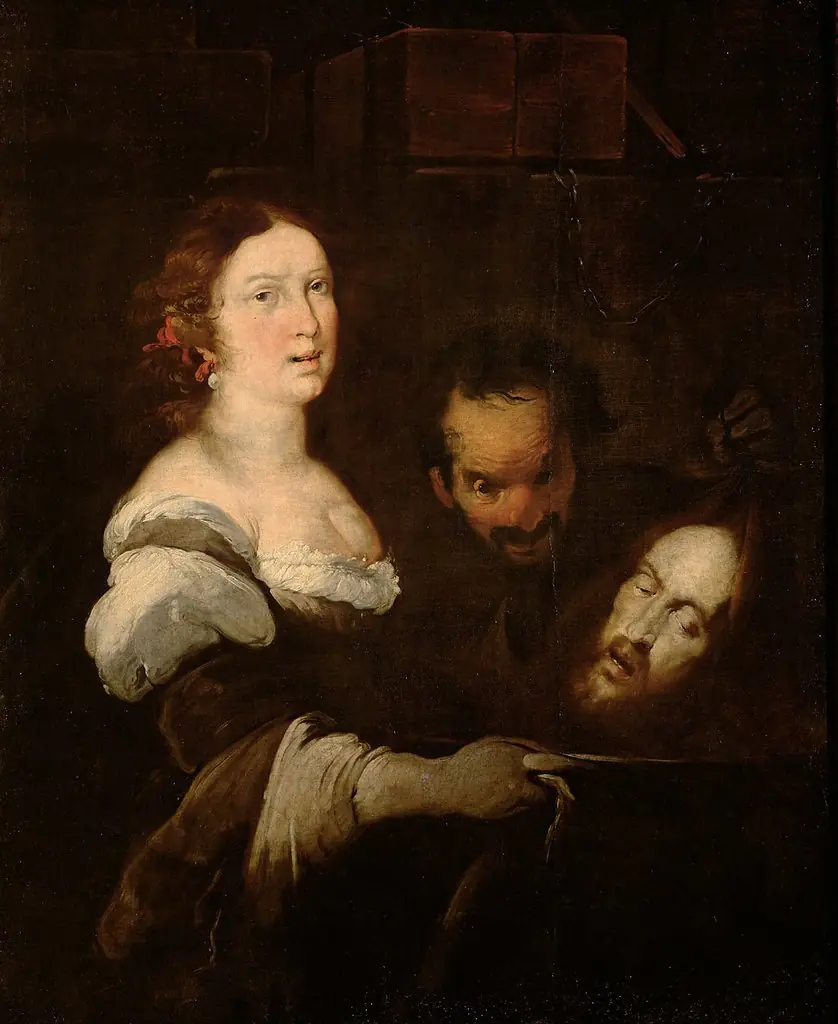 Salome with the head of St John the Baptist
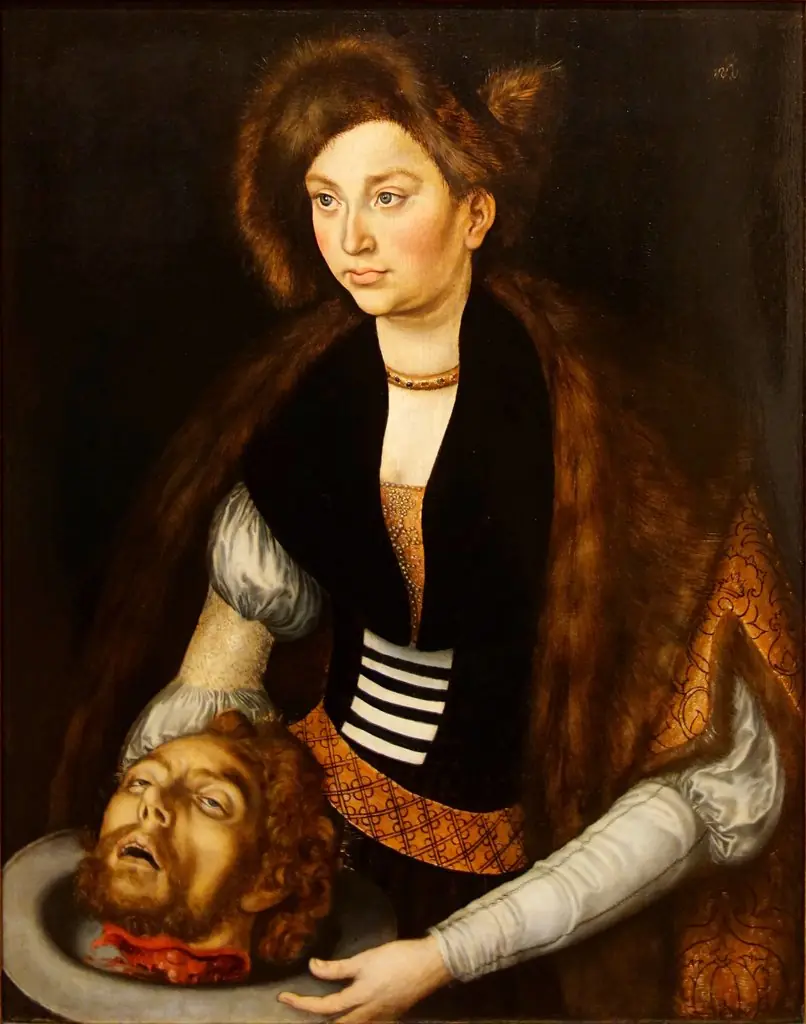 Salome with the head of Saint John the Baptist
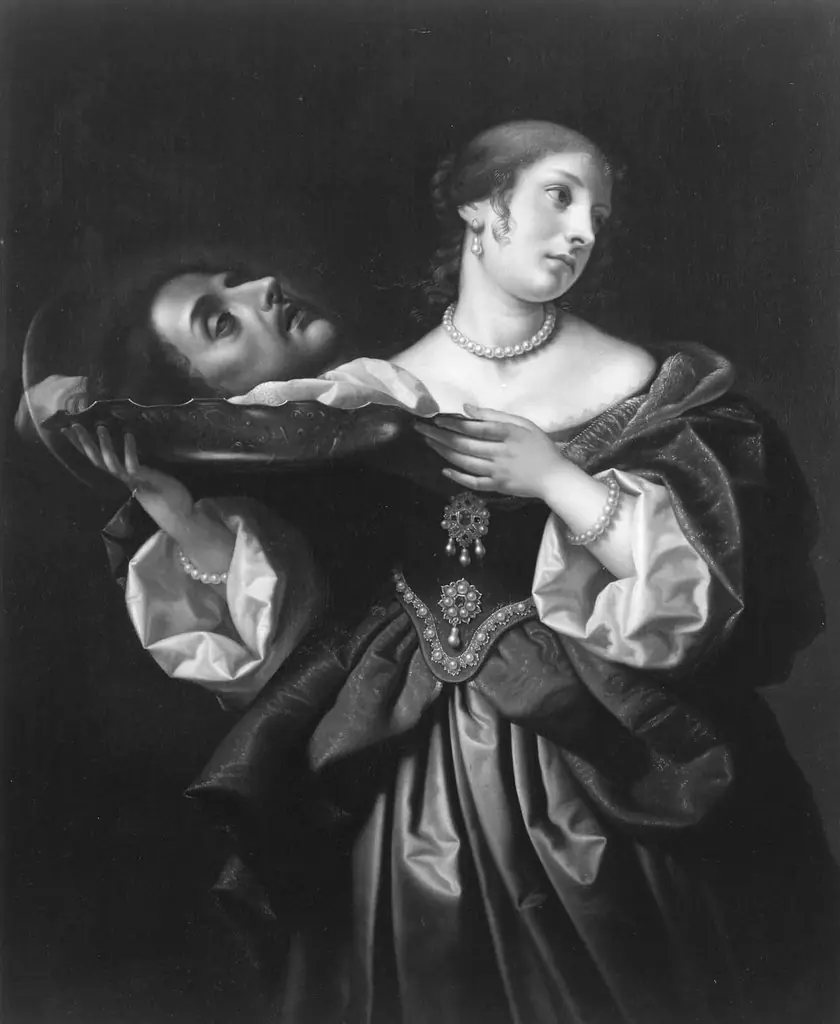 Salome with the Head of Saint John the Baptist