Artwork
The handmaiden again pleads for the death of the prince, from a Tuti-nama (Tales of a Parrot): Eighth Night
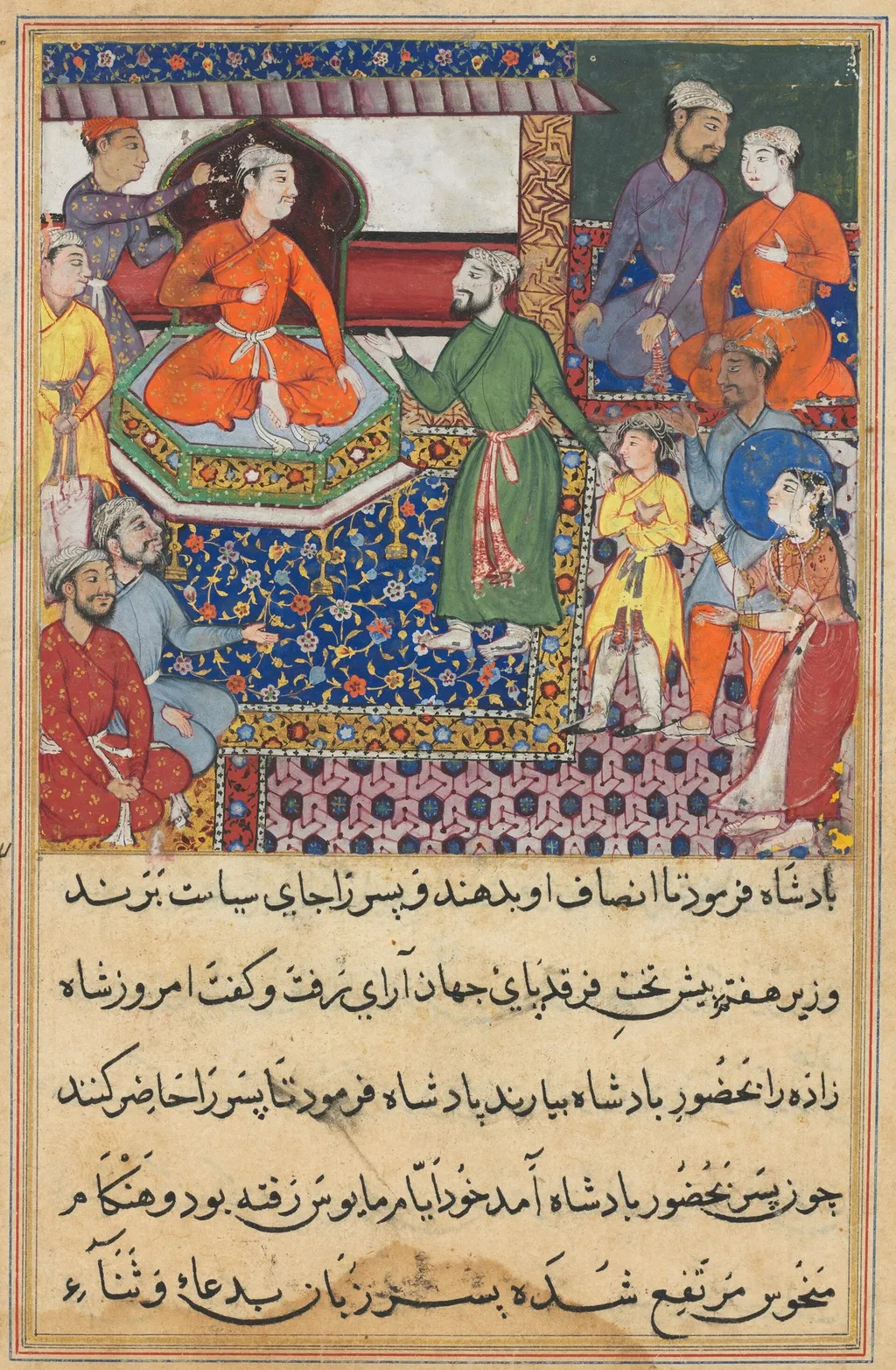
The handmaiden again pleads for the death of the prince, from a Tuti-nama (Tales of a Parrot): Eighth Night is an unspecified painting by the Mughal Painting artist Lalu. It dates from 1560 and is held in the collection of the Cleveland Museum of Art.
About this work
Overview
Created in 1560 by the artist known as Lalu, this miniature painting forms part of a manuscript illustrating the eighth night of the *Tuti‑nama* (Tales of a Parrot). It is presently conserved in the collection of the Cleveland Museum of Art.
Subject & Meaning
The scene depicts a handmaiden, dressed in a vivid orange garment, pleading once more for the prince’s death. She is seated on a raised platform, fan in hand, while a green‑clad man stands before her, suggesting a moment of dramatic dialogue within the narrative of the tale.
Technique & Style
Executed in the miniature tradition, the work employs bright pigments and intricate patterning. The floor is covered with geometric tiles, and the walls feature decorative borders. Figures are rendered in richly colored robes—orange, green, purple—against a blue‑and‑gold patterned backdrop, characteristic of Persian manuscript illumination.
History & Provenance
The painting has remained within the manuscript tradition of the *Tuti‑nama* and entered the Cleveland Museum of Art’s holdings through acquisition in the 20th century. Its authorship is attributed to Lalu, an artist active in the mid‑16th century Persian court.
Context
The *Tuti‑nama* is a collection of moral stories narrated by a parrot, popular in Persian literary culture. This particular illustration captures the emotional climax of the eighth night, reflecting the manuscript’s function as both a literary and visual vehicle for storytelling.
Artist & collection

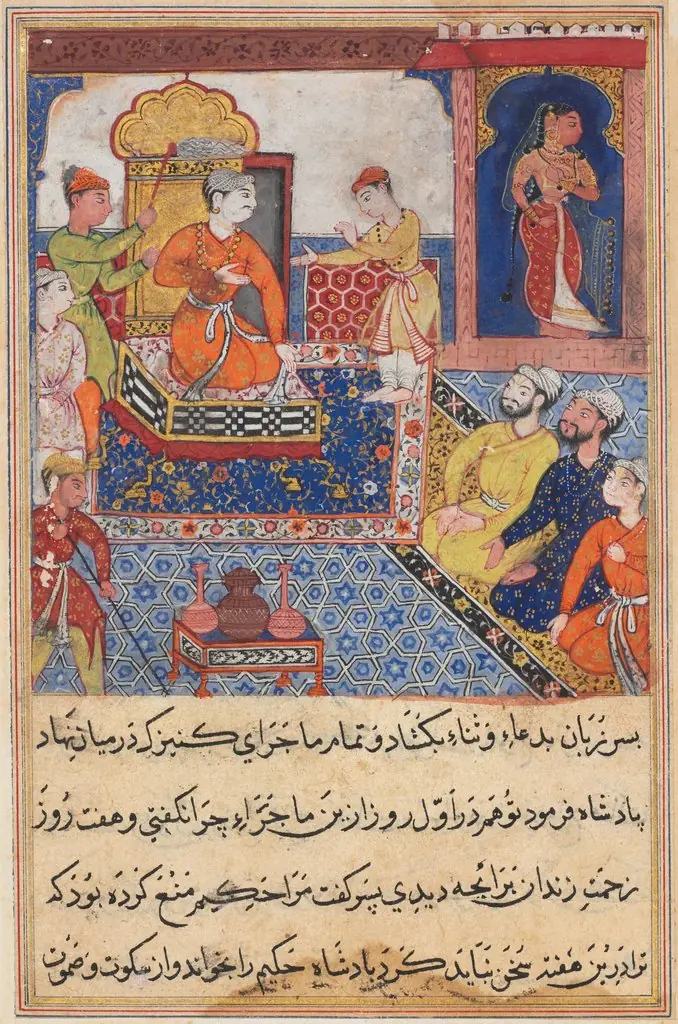 The young prince recounts his experiences to his father, the king, from a Tuti-nama (Tales of a Parrot): Eighth Night
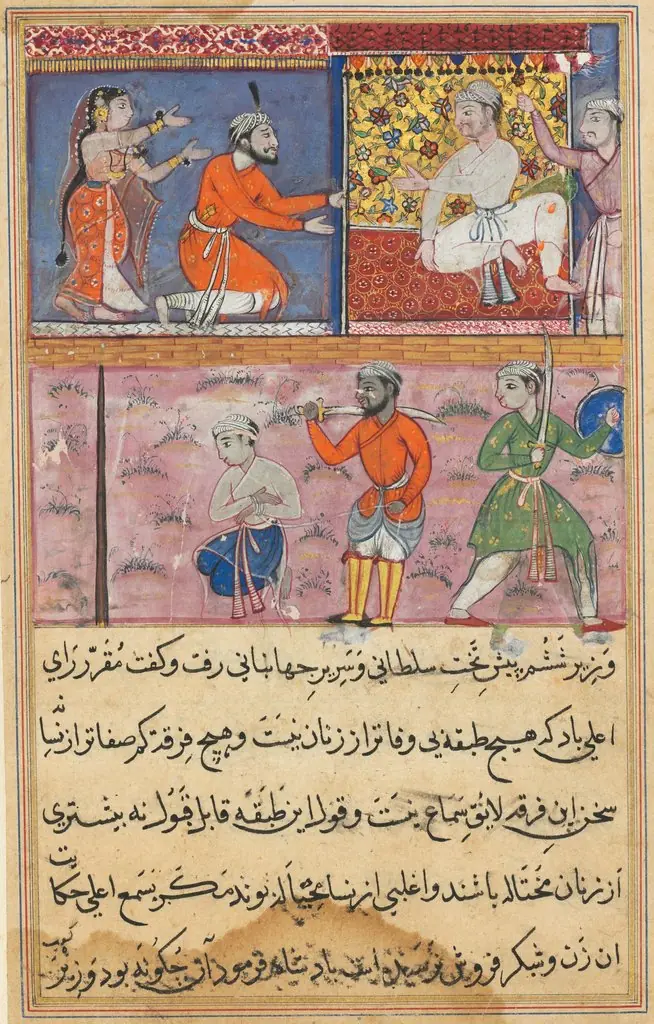 The prince sent back to the place of execution for the sixth time, from a Tuti-nama (Tales of a Parrot): Eighth Night
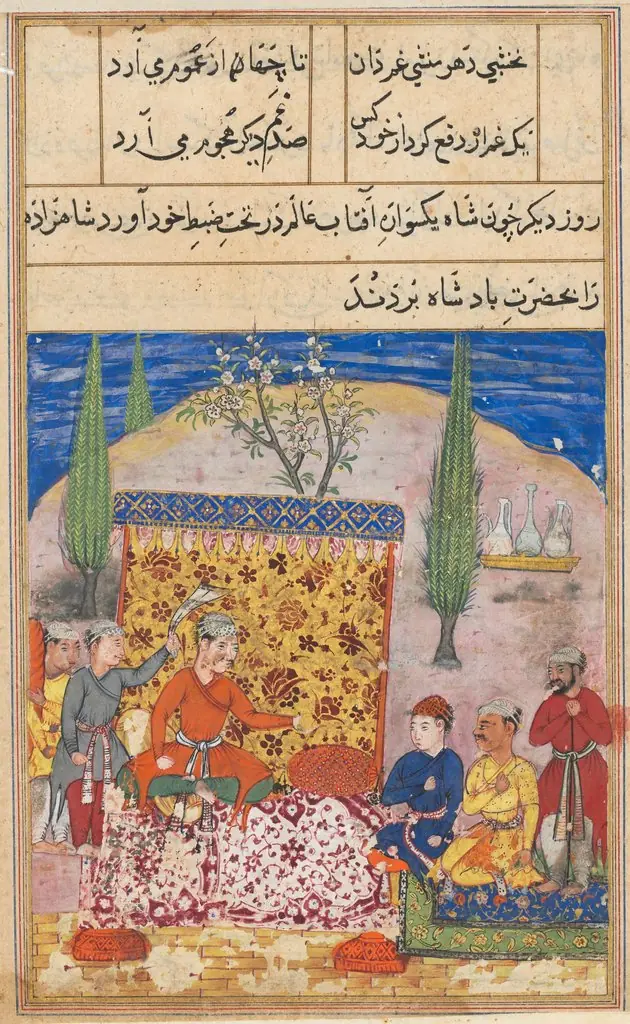 The young prince is presented to the king, his father, by his teacher, but refuses to speak, from a Tuti-nama (Tales of a Parrot): Eighth Night
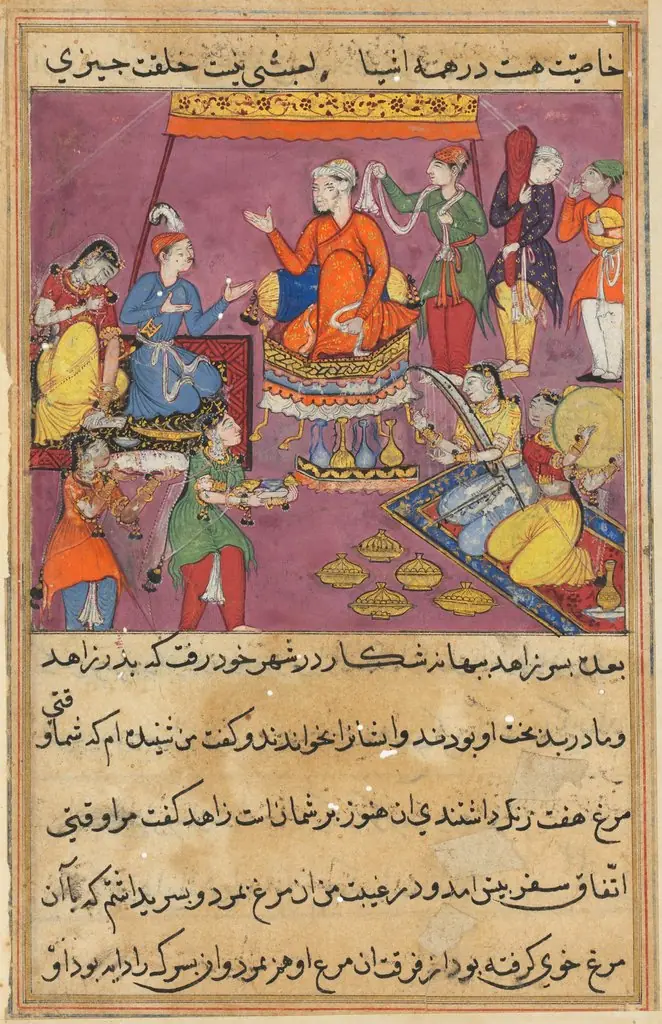 The king gives his daughter in marriage to the pious man’s son, from a Tuti-nama (Tales of a Parrot): Fifty-second Night
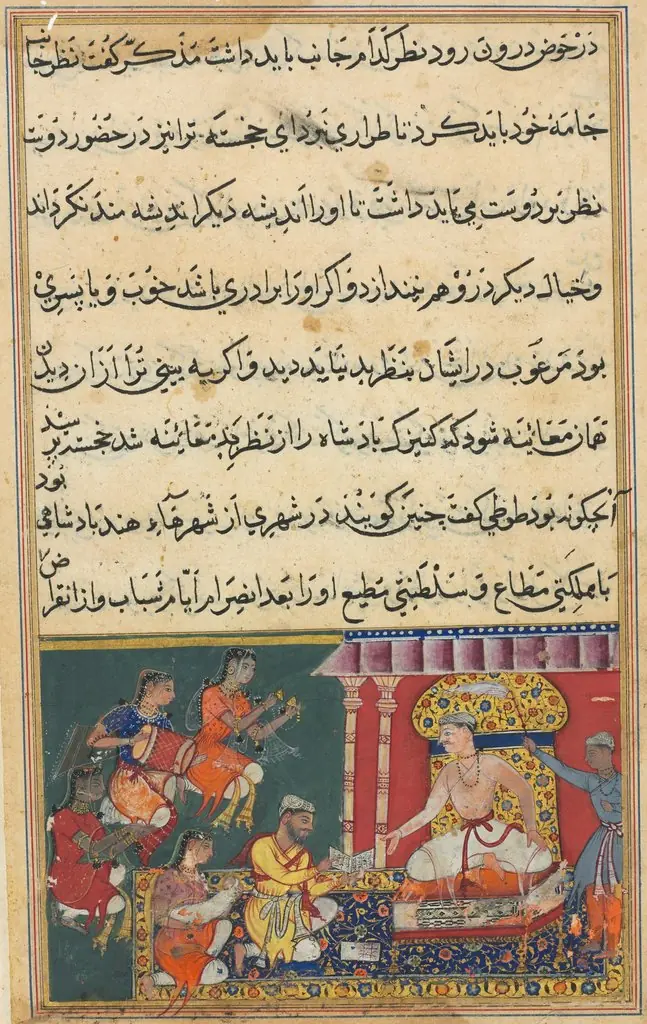 The astrologer predicts a calamity for the newly born prince in his thirteenth year, but one which he would be able to overcome, from a Tuti-nama (Tales of a Parrot): Eighth Night
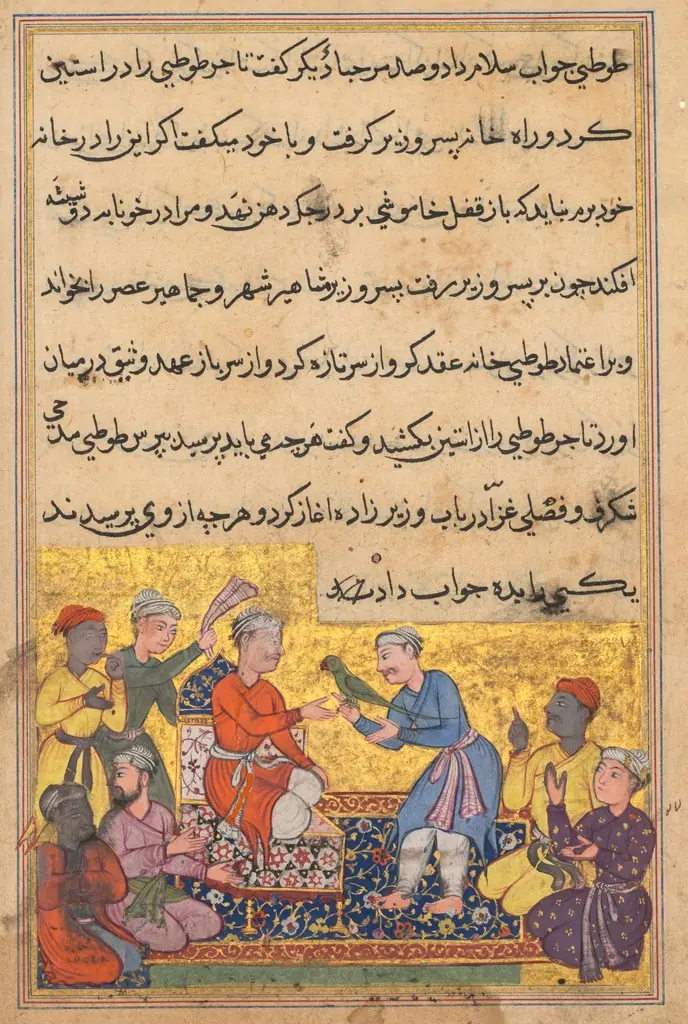 The magic parrot of the merchant talks to the vizier’s son, from a Tuti-nama (Tales of a Parrot): Tenth Night
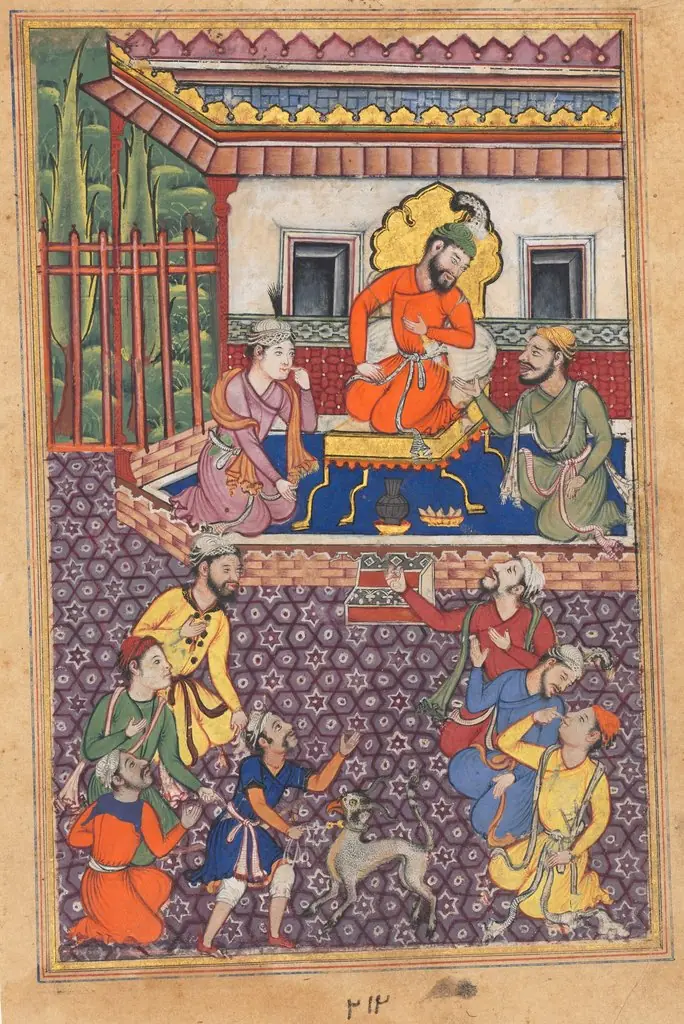 The court of the Raja of Ujjain, from a Tuti-nama (Tales of a Parrot): Forty-sixth Night
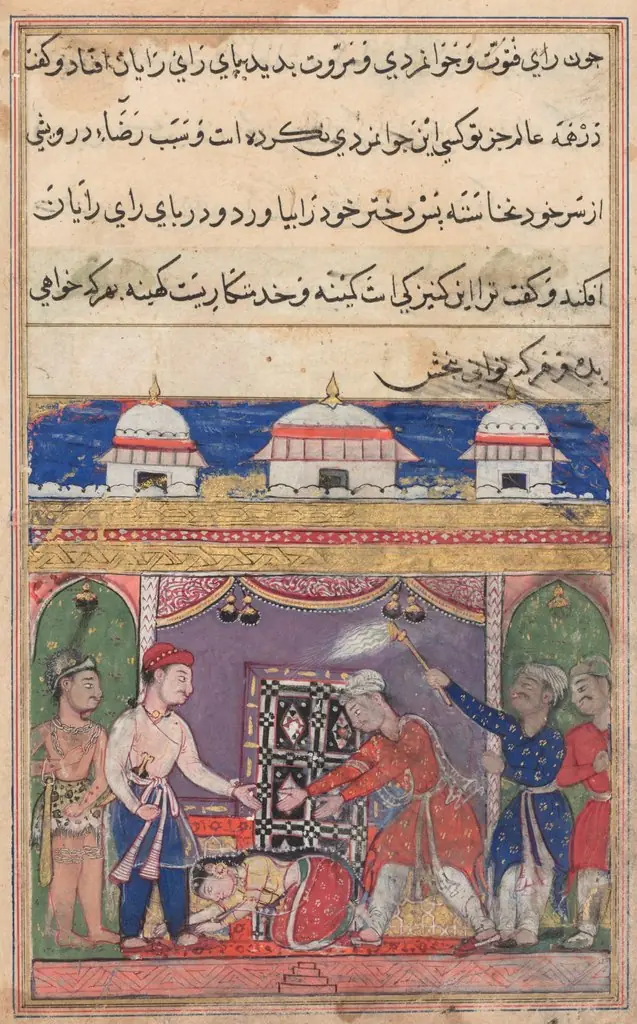 The king of Bahilistan offers his daughter to the King of Kings, from a Tuti-nama (Tales of a Parrot): Seventh Night
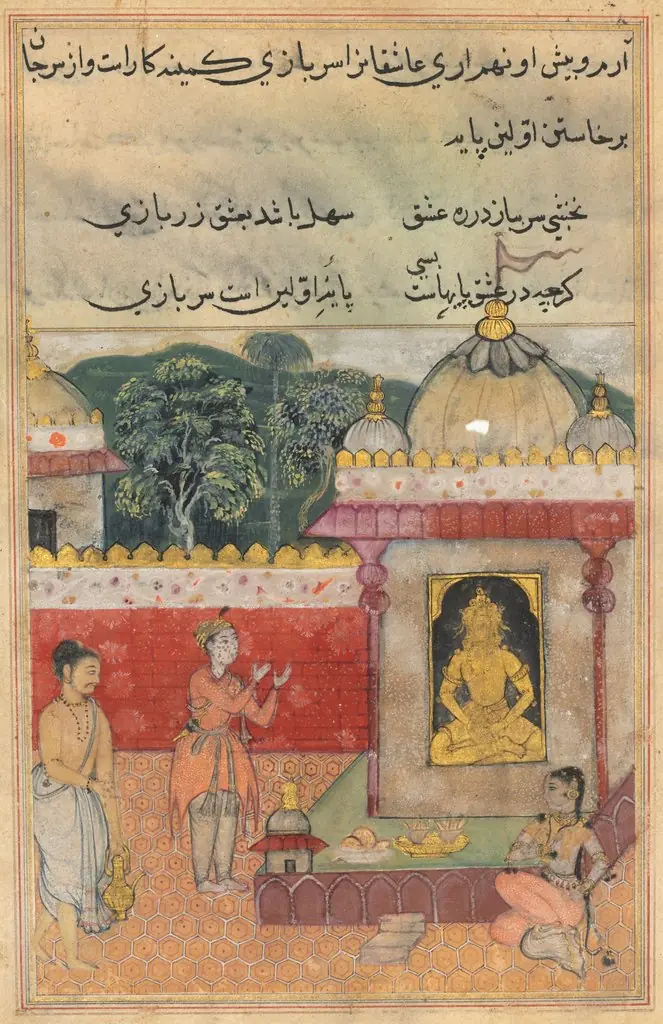 The Raja’s son vows to sever his head and offer it to the image if he is united with the princess he has seen in the temple, from a Tuti-nama (Tales of a Parrot): Thirty-fourth Night
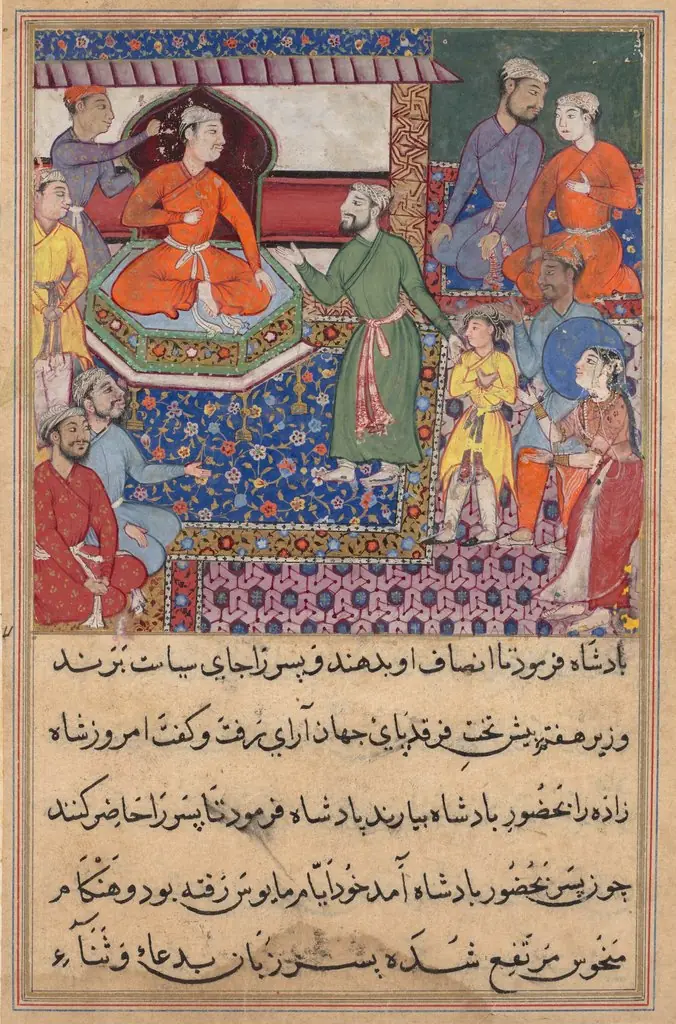 Page from Tales of a Parrot (Tuti-nama): text page
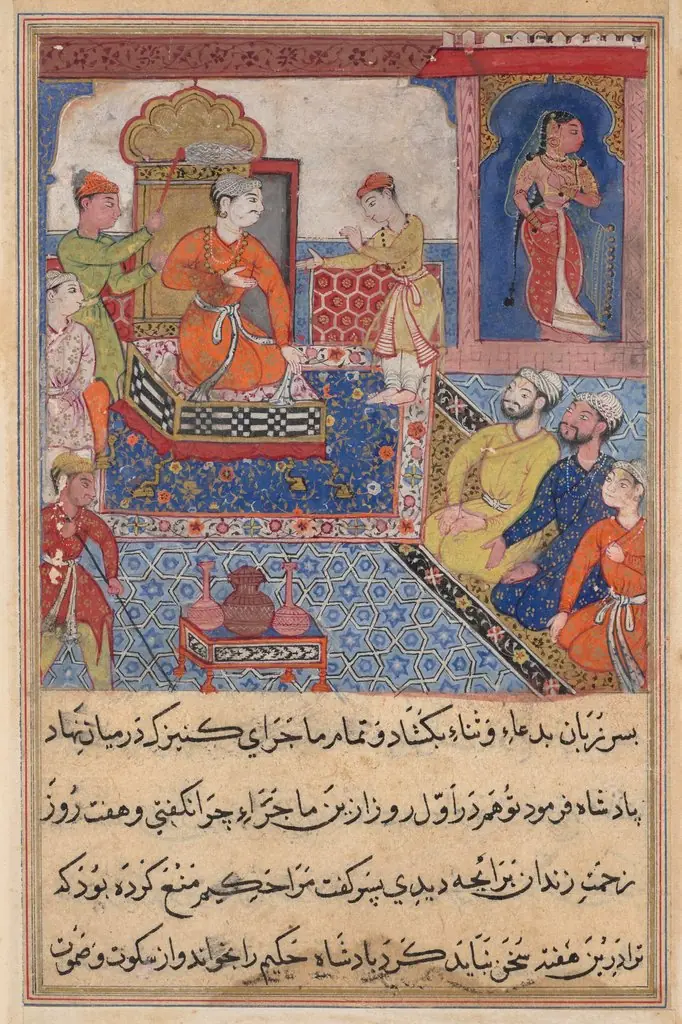 Page from Tales of a Parrot (Tuti-nama): text page
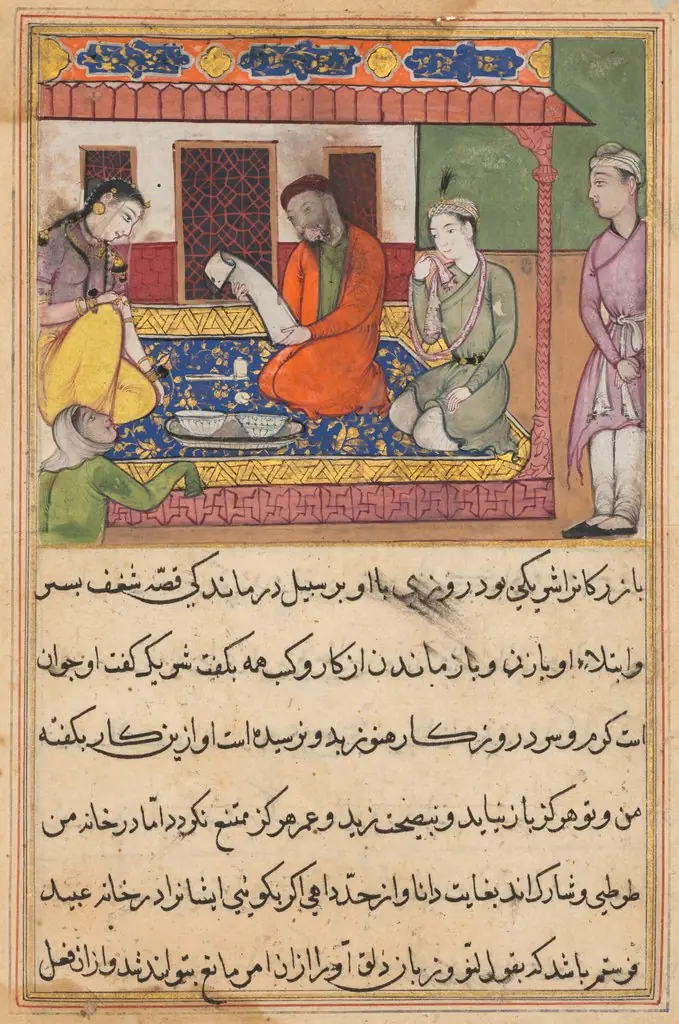 The marriage of ‘Ubaid, son of a merchant of Tirmiz, from a Tuti-nama (Tales of a Parrot): Forty-second Night
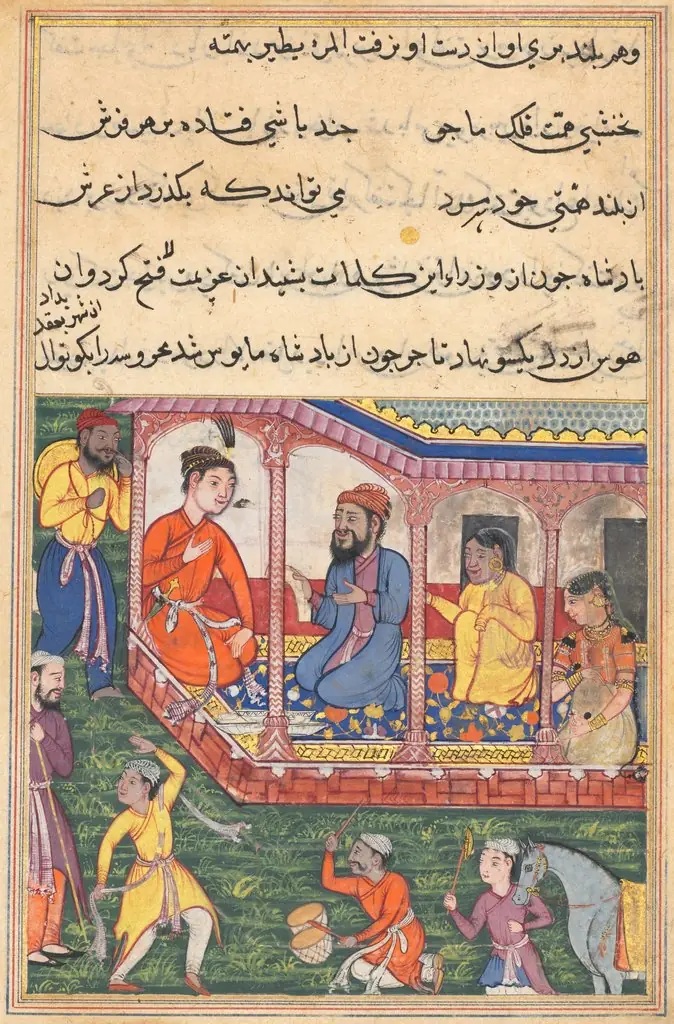 Mahrusa’s marriage to the prefect of the city, from a Tuti-nama (Tales of a Parrot): Thirty-sixth Night
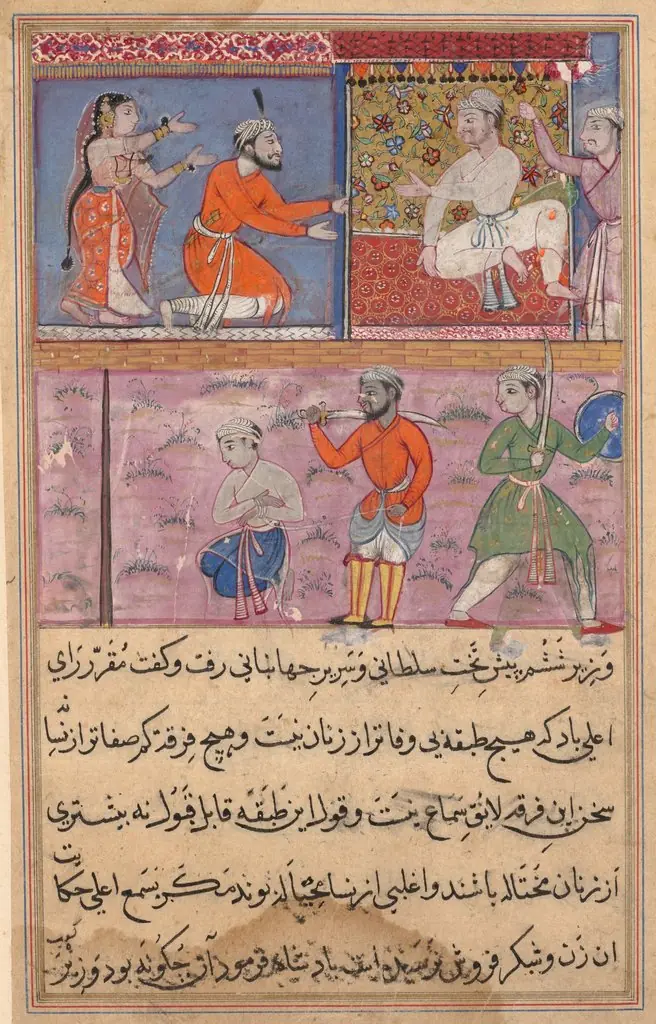 Page from Tales of a Parrot (Tuti-nama): text page
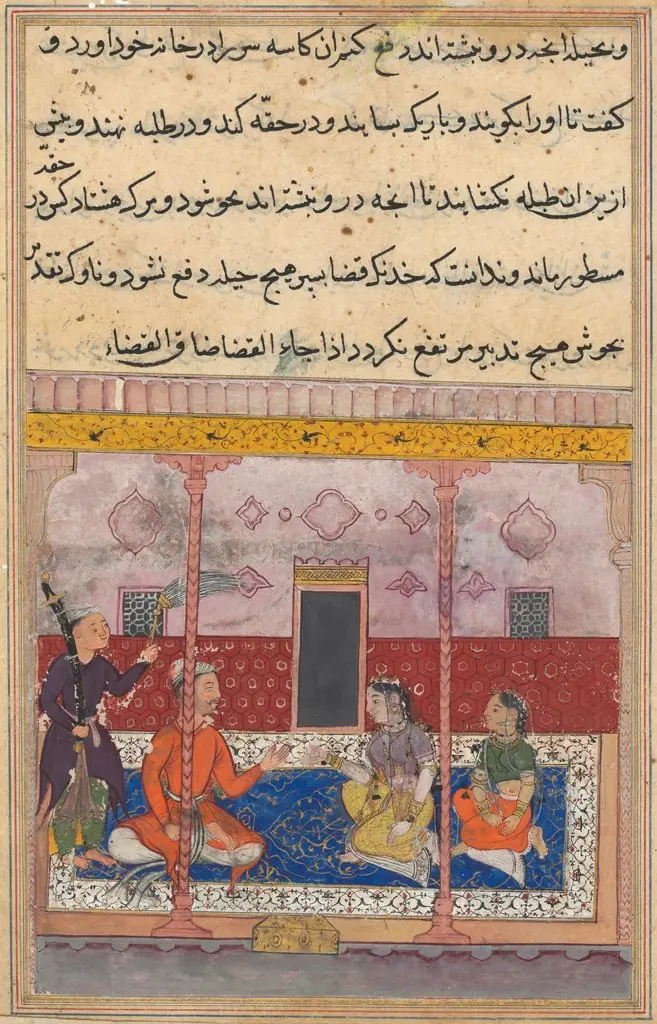 The merchant has the hateful skull ground and put into a box, from a Tuti-nama (Tales of a Parrot): Twenty-third Night