Artwork
Buna gro
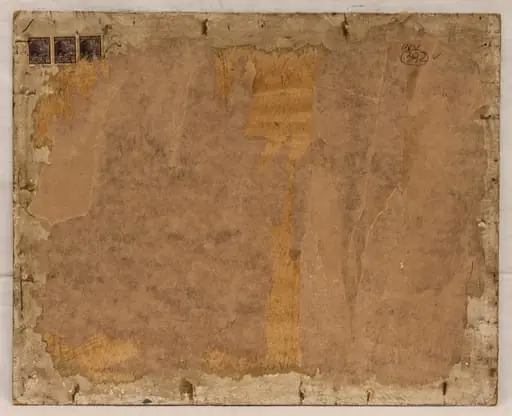
Buna gro is a drawing by K. Z. It is held in the collection of the "Dimitrie Gusti" National Village Museum. A fragment of faded brown paper, worn and stained, holds two indistinct pencil drawings.
About this work
Overview
A fragment of faded brown paper, worn and stained, holds two indistinct pencil drawings. One depicts a standing human form with arms at the sides; the other is a smaller, simplified silhouette. A strip of tape runs horizontally across the center, and marginal markings suggest archival use. The surface bears signs of age—fraying edges, smudges, and faint inscriptions nearly lost to time.
Subject & Meaning
The absence of background or annotation leaves their purpose ambiguous—perhaps personal notes, field documentation, or early attempts at figure study.
The figures lack detail or context, offering no clear narrative. Their simplicity and scale suggest observational sketches, possibly studies or informal records. The absence of background or annotation leaves their purpose ambiguous—perhaps personal notes, field documentation, or early attempts at figure study. Their anonymity underscores their function as ephemeral records rather than finished works.
Technique & Style
The drawings employ light, sparse pencil lines with subtle tonal variations, possibly achieved through stippling or light hatching. The shading is minimal, relying on dot-like marks to suggest form rather than outline. The technique is restrained, avoiding bold strokes, consistent with preliminary or utilitarian drawing practices common in archival or educational settings.
History & Provenance
The paper’s condition and taped repair indicate prior handling and storage. Handwritten labels, now barely legible, imply it was cataloged within a collection—possibly academic, ethnographic, or institutional. Its survival as a fragment suggests it was once part of a larger group, later disassembled or discarded, leaving only this worn remnant as evidence of its origin.
Context
In early 20th-century archival practices, such sketches often accompanied fieldwork or anthropological surveys, serving as quick visual records. The use of fragile paper and unassuming media aligns with low-priority documentation, where permanence was secondary to immediate utility. Similar fragments survive in museum archives, valued not for artistry but as traces of observation.
Legacy
Though unattributed and undated, the fragment endures as a quiet artifact of unseen labor. Its fragility and obscurity reflect the countless informal drawings made in service of documentation, rarely preserved yet essential to understanding how visual information was gathered and stored in pre-digital eras.
Artist & collection
Artist
You’d find K. Z. hunched over butcher paper in a cramped Łódź apartment, drawing with whatever was left on the table—ink, coffee, a lipstick stub—until the edges curled from spilled tea. The lines keep coming even when…
Museum
"Dimitrie Gusti" National Village Museum
Continue through works from the same source collection.
 La oglindă
 Motiv decorativ II
 Colectivistă din Somova
 Maica Domnului, Sfântul Nicolae, Sfântul Gheorghe, Sfântul Mihail
 Icoana îl reprezintă pe sfântul Gheorghe omorînd balaurul, într-o reprezentare caracteristică picturii târzii de la Nicula. Sfântul, călare pe calul alb,este plasat în centrul icoanei, tiparul fiind aproximativ același ca cel utilizat în perioada de înflorire a picturii pe sticlă la Nicula. Veșmintele sunt asemănătoare celor ale soldaților chezaro-crăiești, cizme înalte cu pinteni, tunică scurtă și largă, roșie, pantaloni bufanți, albaștri.Capul este descoperit,părul lung, negru, lăsat pe umeri.Chipul are trăsături butucănoase, nasul lung, gura mică, ochii negri, cu umbre gri. Nimb realizat cu bronz auriu. . În mână ține o suliță lungă terminată cu o cruce, cu care omoară balaurul, diform, verde, simbolizând zonele inferioare, ale păcatului, minimalizat ca dimensiuni pentru a accentua puterea binelui. Calul diform, are picioarele din față ridicate, coama și coada negre, șaua împodobită. Scena este încadrată de o ghirlandă de flori (ruje) Câmpul este policrom: alburiu între flori și ramă, roșu între chenarul de flori și umerii sfântului, și sub picioarele calului și ocru în rest. Icoana are caracteristicile specifice picturi târzii de la Nicula: câmpul policolor, culori discordante, abundența detaliului, decor floral abundent, sticla de proveniență industrială, folosirea bronzului în locul foiței de aur. Rama profilată, îmbinată oblic la colțuri, este vopsită cu cafeniu. Stinghia verticală din dreapta lipsește. Pe spate are un dos tot din lemn. Sfântul Gheorghe era considerat sfântul cel mai mare peste turme, câmpuri și hergheliile de cai. Se mai considera că descuie primăvara și leagă iarna.
 Icoana este pictată pe dosul unei bucăți de sticlă dreptunghiulară, în ax vertical; Sf. Dumitru, izvorâtorul de mir, care se prăznuiește pe 26 octombrie, este unul din sfinții reprezentați ca războinici, deși din viața lui nu se deduc fapte de arme. Semnificația este cea a războiului nevăzut cu patimile.În concepția populară Sf. Dimitrie este cel care dezleagă iarna, corespondentul Sf. Gheorghe care leagă iarna și dezleagă primăvara. Reprezentările lor sunt deasemenea asemănătoare, fie călare, Sf. Gheorghe pe cal alb și Sf. Dimitrie pe cal roșu. Aici Sf. Dimitrie 3/4, este redat ușor din semiprofil, în picioare, în mâna dreaptă cu o suliță iar în stânga avînd o cruce. Mantie roșie, lungă, cămașă verde închis, zale.Chipul este realizat în manieră naivă, expresiv.Părul lung, negru este revărsat pe umeri. Câmp bleu, cu un chenar din flori mari, roșii cu frunze în aceeași nuanță de verde pe care zugravul a mai utilizat-o. Inscripția este pe fond alb, într-un chenar dreptunghiular plasat în spatele aureolei. Pictura are caracteristicile specifice picturii niculene:stângăcia, simplitatea și primitivismul desenului; compoziția sumară, culorile intense. Rama- 4 șipci de brad profilate, culoarea lemnului natur.
 Peisaj
 Marină
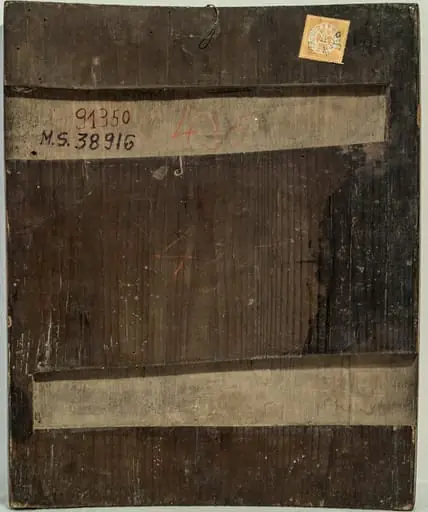 Sfânta Paraschiva încoronată este reprezentată frontal, 3/4, Nimbul trasat cu roșu depășește linia chenarului și partea superioară a coroanei. Tehnica iluminării treptate cu elemente specifice: accentuarea zonei ochilor, tonurile de pământ ale umbrelor. Tunica decorată cu motive fitomorfe ample incizate în stratul de foiță. Mantie închisă în față, cu decor linar și bordură lată cu motive geometrice 3 șiruri de incizii în grund). Pe cap, umeri lăsat pe spate, un maforion de culoare deschisă. În mâna dreaptă, Sfânta ține o cruce mică, rusească, (6 brațe)în stânga un rotulus desfășurat cu inscripția scrisă în limba slavonă: Cred în unul Dumnezeu… alte inscripții: pe chenar de o parte și de alta a nimbului: Chipul Sf. Mucenițe Parascheva Vineri, în colțul stâng al icoanei ѾOН pe nimbul cruciger al lui Iisus, reprezentat ca pe sfântul Keramion. Cromatica: Chenar roșu cu două linii galbene și mărginit cu brun; fond - foița metalică decorată prin incizare, cu chenar multiplu din motive geometrice reteate. Tip Krashnuskha. Pe spate, un timbru al miliței RPR.
 Icoai"(a
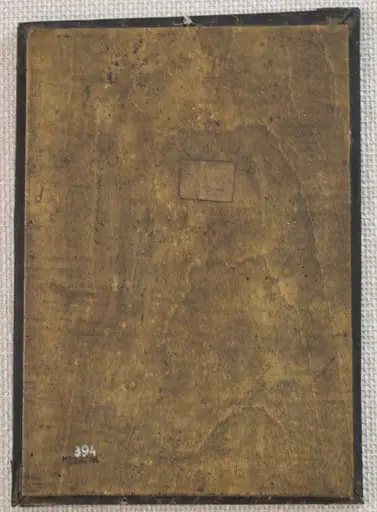 Icoana de factură catolică îl reprezintă pe sfântul Teodor Tiron (306 d. Hr) sărbătorit pe 17 februarie.Sf. Teodor înveșmântat ca oștean: coif cu pene, armura și mantie roșie. În dreapta ține un coif cu stânga sulița. În planul doi o biserică catolică. Pe fondul alb, de o parte și alta a sfântului câte tulpină cu o floare roșie. Cromatica: predomină roșul(inclusiv ca desen) albastru, bleu, negru, maro, auriu, verde deschis, verde închis, fond alb.Ramă îngustă, patru stinghiii îmbinate oblic la colțuri.
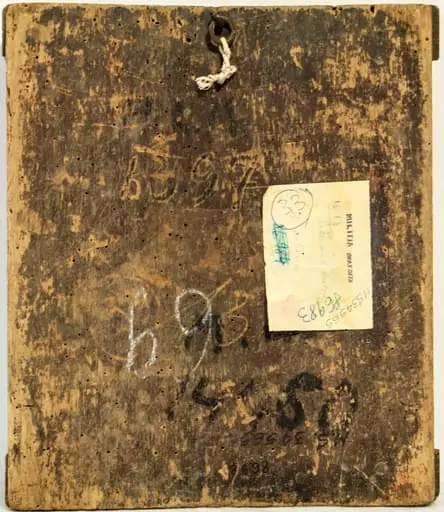 Icoana este încadrată de un chenar lat (ocru, delimitat de o linie grena). În centrul spațiului pictural sfântul în picioare, ținând un rotulus cu inscripții în limba slavonă în mâna stângă, cu dreapta binecuvântează într-un gest amplu, lateral. Maniera bizantină a redării personajului se completează cu peisajul în manieră romantică ce îl încadrează(un râu lat curgând în meandre printre coline înverzite, o luntre cu un vâslaș în josul râului, creste muntoase în depărtare). Chipul grav, redat cu minuțiozitate, cu multiple riduri sub ochi și pe fruntea înaltă, nas subțire și fin, mustață și barbă lungă până la brâu, executat cu multă migală în mici bucle, carnația măslinie, gura mică cu buze roșii. Înveșmântat cu cămașă grena cu drapaj, aurie, epitrahilul arhieresc negru cu motive roșii, felon vișiniu. Deasupra capului Arhiereului, depășind chenarul, este reprezentat Iisus Hristos cu nimb cruciger(mahrama Veronicăi, sfântul Keramion) Inscripția de pe rotulus scrisă în limba slavă veche are prima literă de culoare roșie, restul cu negru: "Nu vă întristați voi toți frații mei, să ne dea Domul Dumnezeu înțelepciune și vom găsi în El mântuirea", Pe spatele icoanei sunt incizate prin scobire cu dalta cifre arabe 1397 (?). Icoana prezintă strat de pictură și foița de fondul icoanei și a aureolei sfântului exfoliate, zgârieturi, porțiuni de pictură, pânză și grund lipsă (chenarul este distrus în proporție de 80 %), două găuri în zona capului unde ar fi trebuit să fie urechile.