Artwork
Ten Bamboo Studio Painting and Calligraphy Handbook (Shizhuzhai shuhua pu): Orchids
Ten Bamboo Studio Painting and Calligraphy Handbook (Shizhuzhai shuhua pu): Orchids is a print by the Baroque artist Hu Zhengyan. It dates from 1633 and is held in the collection of the Cleveland Museum of Art. This work is a single page from the Ten Bamboo Studio Painting and Calligraphy Handbook, a printed instructional volume dating to 1633.
About this work
You see a single orchid stem, ink-black on pale paper, with tiny purple dots for flowers.
This isn’t just a drawing—it’s one page from a 1633 how-to book printed with carved wood blocks. Each color was pressed separately, yet the lines line up perfectly. The book taught painters and calligraphers across China for centuries.
Look up *Mustard Seed Garden Manual of Painting* next.
Overview
This work is a single page from the Ten Bamboo Studio Painting and Calligraphy Handbook, a printed instructional volume dating to 1633.
This work is a single page from the Ten Bamboo Studio Painting and Calligraphy Handbook, a printed instructional volume dating to 1633. Rendered as a woodblock print, it depicts an orchid stem rendered in ink‑black on a light paper background, accented with minute purple spots that suggest blossoms. The piece exemplifies the handbook’s role as a practical guide for artists, combining illustrative drawing with printed instruction.
Subject & Meaning
The image presents a solitary orchid, a motif traditionally associated with elegance and scholarly refinement in Chinese art. By isolating the stem and flowers, the composition emphasizes the plant’s graceful form and the subtle interplay of line and color, offering a model for aspiring painters to study brush technique and the rendering of delicate botanical subjects.
Technique & Style
Produced by multicolour woodblock printing, each hue was applied in a separate impression, yet the blocks were meticulously aligned to achieve precise registration. The black ink outlines the stem with fluid brush‑like strokes, while the faint purple dots are added in a later pass, demonstrating the high level of technical control achieved in early‑17th‑century Chinese color prints.
History & Provenance
Printed in Nanjing, the handbook was widely disseminated throughout China and later reached Japan and Korea, influencing regional artistic practices. Its circulation contributed to the standardisation of painting techniques across East Asia, and surviving copies are now held in major museum collections that document the spread of printed art manuals.
Context
The Ten Bamboo Studio volume belongs to a broader movement of instructional manuals that emerged as color woodblock technology matured in the early 1600s. Alongside the later Mustard Seed Garden Manual (1679, 1701), it represents one of the most successful colour‑print editions in Chinese publishing history, reflecting both artistic and pedagogical ambitions of the period.
Artist & collection

Artist
Hu Zhengyan was a Chinese artist, printmaker and publisher. He worked in calligraphy, traditional Chinese painting, and seal-carving, but was primarily a publisher, producing academic texts as well as records of his own work.

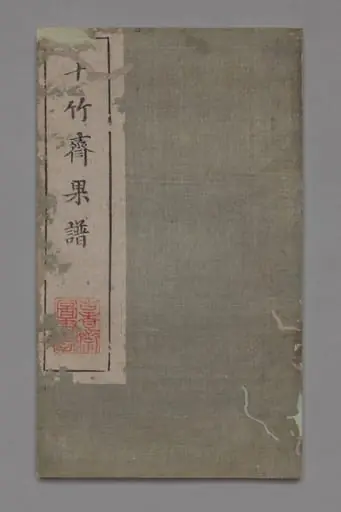 Ten Bamboo Studio Painting and Calligraphy Handbook (Shizhuzhai shuhua pu): Fruit
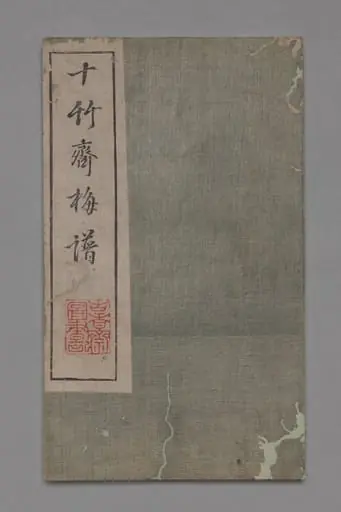 Ten Bamboo Studio Painting and Calligraphy Handbook (Shizhuzhai shuhua pu): Plum Blossoms
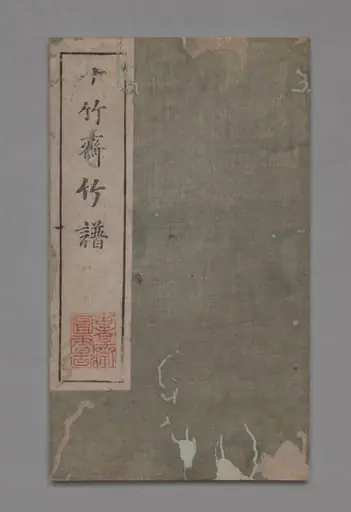 Ten Bamboo Studio Painting and Calligraphy Handbook (Shizhuzhai shuhua pu): Bamboo
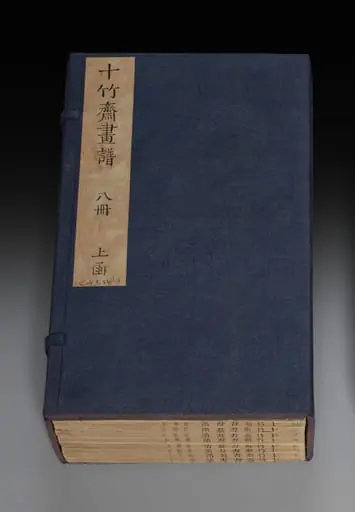 Ten Bamboo Studio Painting and Calligraphy Handbook (Shizhuzhai shuhua pu): Volume One
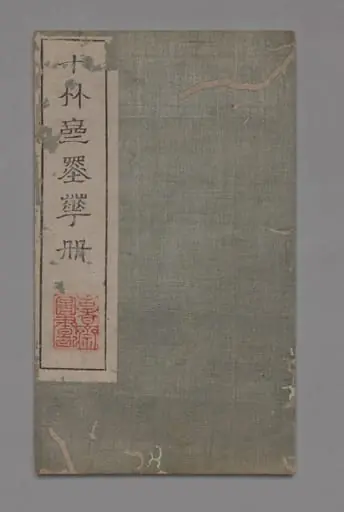 Ten Bamboo Studio Painting and Calligraphy Handbook (Shizhuzhai shuhua pu): Round Fans
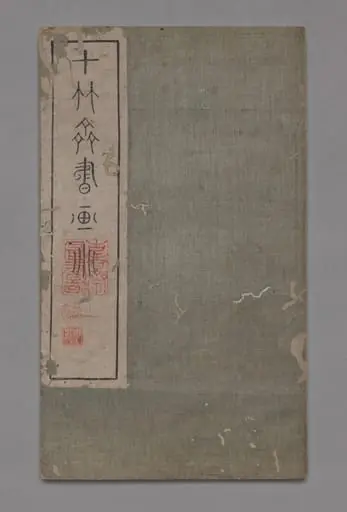 Ten Bamboo Studio Collection of Calligraphy and Painting: Miscellaneous
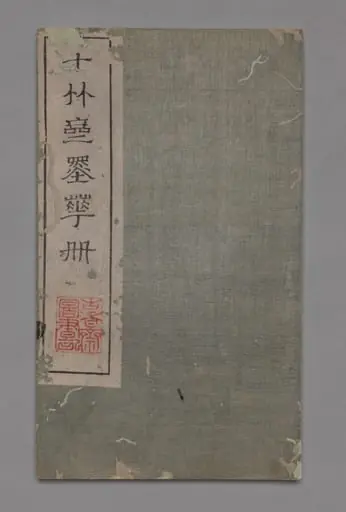 Ten Bamboo Studio Painting and Calligraphy Handbook (Shizhuzhai shuhua pu): Miscellaneous
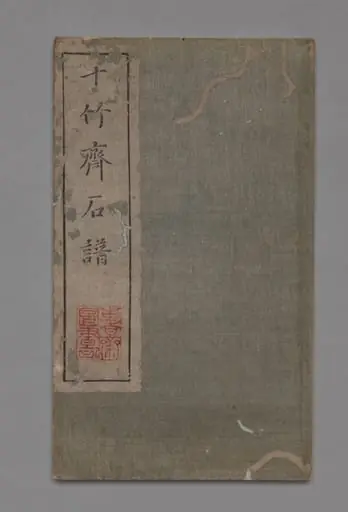 Ten Bamboo Studio Painting and Calligraphy Handbook (Shizhuzhai shuhua pu): Rocks
 Page from Tales of a Parrot (Tuti-nama): blank page
 Peisaj
 Icoana de factură catolică îl reprezintă pe sfântul Teodor Tiron (306 d. Hr) sărbătorit pe 17 februarie.Sf. Teodor înveșmântat ca oștean: coif cu pene, armura și mantie roșie. În dreapta ține un coif cu stânga sulița. În planul doi o biserică catolică. Pe fondul alb, de o parte și alta a sfântului câte tulpină cu o floare roșie. Cromatica: predomină roșul(inclusiv ca desen) albastru, bleu, negru, maro, auriu, verde deschis, verde închis, fond alb.Ramă îngustă, patru stinghiii îmbinate oblic la colțuri.
 Page from Tales of a Parrot (Tuti-nama): blank page
 Marină
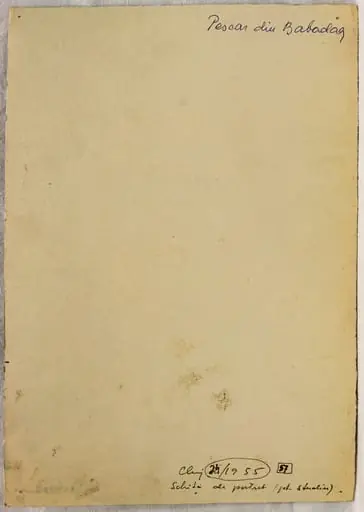 Pescar din Babadag (schiță de portret - pentru studiu)
 Motiv decorativ II
 Conglomerat chimic
 Natură statică
 Cafenea
 Cap de bărbat
 Fragment of an Arch (tracing from recto) (verso)