Artwork
Icoana este impărțită de o cruce neagră pe care este pictat Isus răstignit, deasupra cu Dumnezeu Tatăl iar in părți cu Sf. Constantin și Elena; sunt patru registre: Maica Domnului indurerată; Sf. Nicolae și Sf. Gheorghe cu balaurul.
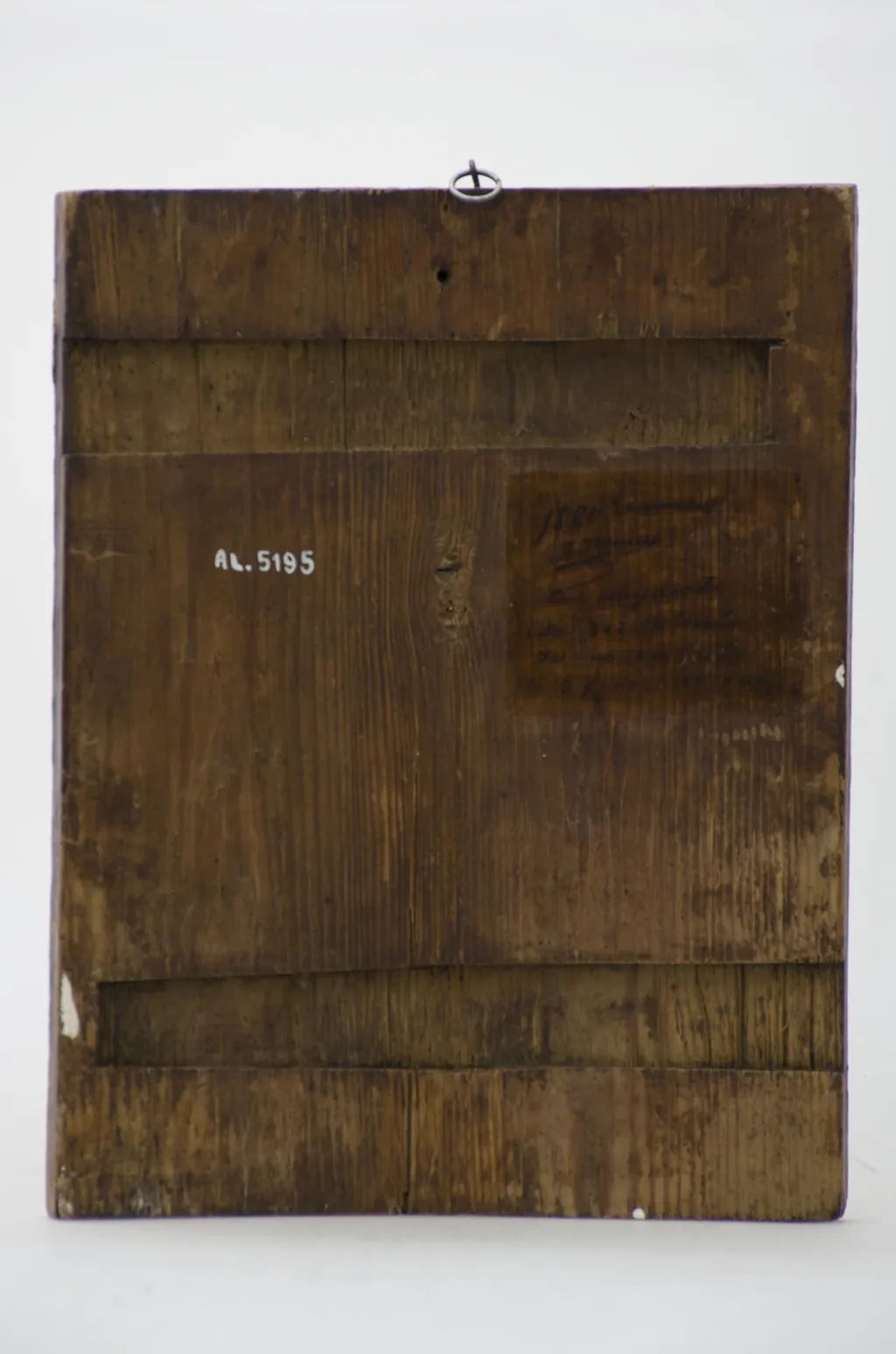
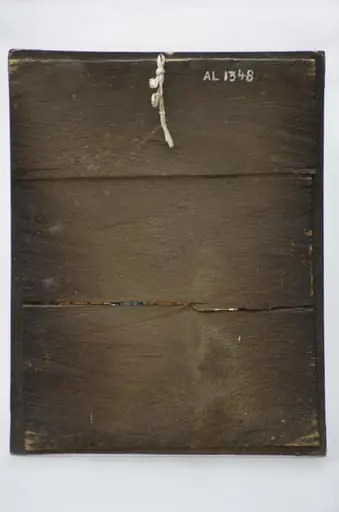
Icoana este impărțită de o cruce neagră pe care este pictat Isus răstignit, deasupra cu Dumnezeu Tatăl iar in părți cu Sf. Constantin și Elena; sunt patru registre: Maica Domnului indurerată; Sf. Nicolae și Sf. Gheorghe cu balaurul. is a drawing by Unknown. It dates from 1850 and is held in the collection of the ASTRA National Museum Complex. The object is a modest wooden panel, weathered and divided into horizontal boards that show slight irregularities.
About this work
Overview
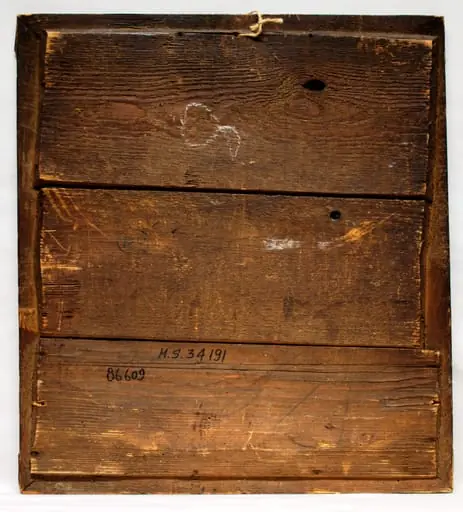
The object is a modest wooden panel, weathered and divided into horizontal boards that show slight irregularities. A small metal loop at the top suggests it was once hung. Surface markings include the inscription “AL 5195” and a faint, partially legible line of text, indicating cataloguing or archival notes.
Subject & Meaning
The panel depicts a divided iconography: a black cross bears the crucified Christ, surmounted by an image of God the Father. Flanking this central motif are figures of Saint Constantine and Saint Helena. Additional registers present the sorrowful Virgin Mary, Saint Nicholas, and Saint George confronting a dragon, reflecting common devotional themes in Eastern Christian art.
Technique & Style
Carved from plain wood, the panel’s surface is painted, though the pigments have faded with age, giving a muted palette. The composition follows a hierarchical arrangement typical of medieval icon panels, with a central crucifixion scene framed by subsidiary saints, rendered in a stylized, symbolic manner rather than naturalistic detail.
History & Provenance
A label reading “AL 5195” ties the panel to an archival inventory, though the precise origin remains undocumented. The metal hanging loop and the panel’s modest construction suggest it functioned as a portable devotional object, possibly used in a private chapel or by a lay confraternity before entering a museum collection.
Artist & collection

 Domestic Scene
 Giacomo and Cardinal Marco, investing Andrea, Abbot of San Zeno, with his Benefice
 The Nymph of Fontainebleau
 Portrait of a Woman
 Madonna and Child with Saints in the Enclosed Garden
 Venus and Minerva
 Family Group of Four on Sofa
 Wall painting from Room H of the Villa of P. Fannius Synistor at Boscoreale
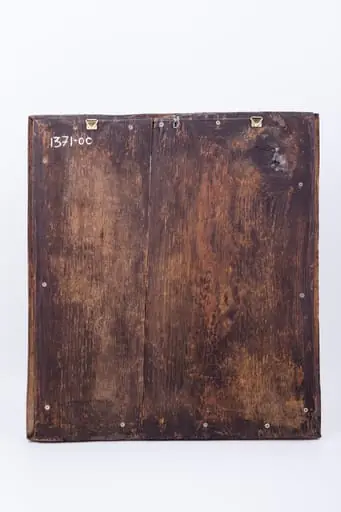
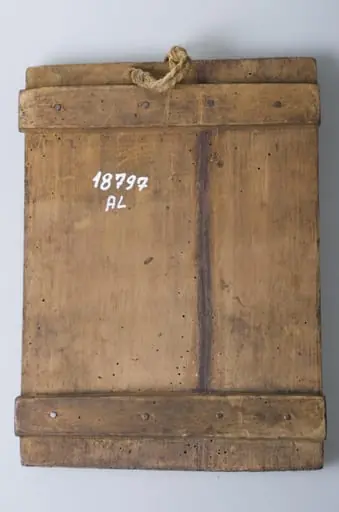 Icoană de formă rectangulară, pictată pe lemn în ulei, reprezentând tema „Izvorul tămăduirii”; Maica Domnului este redată în registrul superior, deasupra unei fântâni; în registrul inferior sunt redate două personaje care o venerează; imaginea este încadrată într-o ramă de culoare aurie înspre interior și albastră înspre exterior; pe verso-ul icoanei sunt prinși doi lați, bătuți în cuie; la partea superioară prezintă sistem de agățare cu funie.
 Icoana îi prezintă pe Mântuitorul Iisus Hristos și pe ucenicii, viitorii apostoli. Este Duminica Tomii, Venirea Domnului prin ușile încuiate, după Învierea cea de-a treia zi. Toma pipăie rana din coastă și urmele piroanelor, devenind din necredincios, credincios. Este pictată de Simion Zugrav din Laz. Este datată 1837. Chipurile sunt desenate fin, trăsăturile fiind expresive. Elementele arhitectonice, coloane și arcadele sun redate în detaliu, iar roșul vermillon al lor s-a păstrat în imaginea deteriorată. Cromatica este armonioasă: gri, bej, bronziu, roșu vermillon. Întreaga tematică iconografică este încadrată de un chenar decorativ fitomorf.
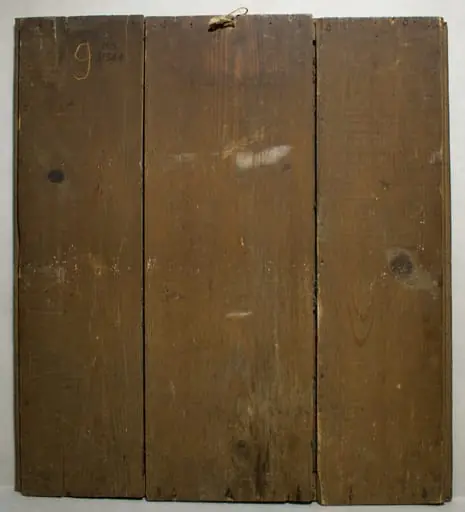 Zugrăvița a combinat cu inocență două teme iconografice (cea a Bunei Vestiri cu cea a Botezului), fenomen frecvent în icoanele Anei Deji.În prim plan, în picioare, un sfânt cu o ramură verde în mâna dreaptă înălțată binecuvintează un înger. Sfântul tânăr, cu părul lung, negru, barbă scută, mustăți. După poziție și trăsături ar putea fi asimilat Sf. Ioan din scena Botezului. Poartă un chiton roșu, asemănător blănii de cămilă și un himation verde.În jurul capului are o aureolă cu limbi de foc asemănător acelora din Pogorârea Sfântului Duh. Îngerul privește către sfânt, ținînd pe brațul stâng un ștergar cu vrâste verzi și roșii, iarăși asemănare cu scena Botezului. Îngerul are trăsături feminine, ochii mari, negri, aripi strânse, tunică roșie cu poale cafenii.Nu poate fi vorba de Botez deoarece lipsește Isus dintre cele două personaje iar decorul arhitectural din planul doi(o construcție cu mai multe caturi, cu intrări largi, cu portal semicircular, 4 ferestre la ultimul cat și acoperiș rotund de olane) nu se regăsește în scena Botezului. De sus coboară sfântul Duh, sub formă de porumbel roșu cu aripi cafenii, pe un fond verde într-un oval de nori alburii marcați cu linii roșii. În partea de jos,relief ușor vălurit, realizat din benzi late cu margini ondulate de culoare verde, roșie și cafenie.Restul câmpului- albastru ultramarin, decorat cu steluțe albe și roșii. Pe trei laturi este pictat un chenar din semicercuri suprapuse, primul cu roșu alternînd cu verde, al doilea ocru. Icoana ar putea fi asimilată Buneivestiri, dar în acest caz în locul sfântului ar trebui să fie un înger iar în locul îngerului Fecioara Maria. Rama este alcătuită din patru șipci drepte, îmbinate oblic la colțuri. Dosul este realizat din scândurele subțiri de brad, dispuse vertical și fixate în cuie.
 Maica Domnului este Împărăteasa Cerurilor, ținând în brațe Pruncul Iisus Hristos care cu mâna dreaptă ține pe genunchi Sfânta Evanghelie închisă, un hrisov înfășurat și ne-o arată pe Maica Domnului cu mâna stângă. Maica Domnului ni-L arată pe Mântuitorul Iisus Hristos cu mâna dreaptă, ca fiind Calea, Adevărul și Viața, deci este Hodighitria. Maica Domnului este înveșmântată în mantie cu maforion roșu vermillon cu broderie dantelată bronzie, pe margini, cu sacos albastru și verde, dungat cu linii albe paralele. Maica Domnului poartă coroniță de împărăteasă, salbă de aur și aureolă. Pruncul Iisus Hristos este înveșmântat în crem-bej, dungat cu alb, și auriu ocru-brun-bronziu, cu coroană și aureolă. În registrul superior îndepărtat, stânga și dreapta, sunt cei doi îngeri arhangheli Mihail și Gavriil, cu aripile verzi, așezând cu mâinile coronița de Împărăteasă pe capul Maicii Domnului. Lateral Maicii Domnului și Pruncului Iisus Hristos sunt două flori, una cu interiorul albastru, reprezentând-o pe Împărăteasa Cerurilor și cealaltă cu interiorul galben, de Lumină, reprezentându-L pe Mântuitorul. Fondul icoanei este cerul de culoarea albastru ultramarin, în registrul superior, galben-verde, în câmpuri paralele, alternativ-cromatizate, în registrul inferior. Cromatica, specifică Țării Oltului, este vie, luminoasă și armonioasă: roșu vermillon, albastru ultramarin, cobalt, bleu-ciel, alb, verde spanac-avocado, galben-ocru, bej, brun, brun-bronziu, auriu, negru. Icoana este de Șcheii Brașovului, Țara Bârsei - Țara Oltului. Inscripția din româno-chirilică se traduce MP IC XC Maica Domnului Iisus Hristos.
 Răstignirea lui Iisus Hristos plasată pe un câmp central sub formă de cruce, împarte spațiul pictural în patru casete dreptunghiulare, Iisus Hristos răstignit pe crucea cu 6 brațe (specifică ortodoxiei ruse), cu un veșmânt alb în jurul mijlocului, ochii închișiNimbul cu inscripțiile consacrate. La baza crucii, sugerat dealul Golgota și craniul lui Adam. Pe latura de sus un nor cu inscripția XC Cele 4 casete conțin următoarele scene: Stânga sus Maica Domnului cu Pruncul tipul Kazanskaia. Este reprezentată până la piept, nu se văd mâinile. Capul ușor înclinat spre Prunc. Maforion roșu, pe frunte și pe umeri stelele Fecioriei, albe, discrete.Iisus – Emanuel, binecuvintează cu dreapta, nimbul cruciger. Chiton albastru și himationgalben. Dreapta sus - Sf. Nicolae în veșminte de arhiereu, cărunt, cu barba rotundă capul descoperit. Nu se văd mâinile.. Înveșmântat cu sacos roșu cu drapaj galben, omofor lat, închis la culoare. Stânga jos - Sf. Gheorghe, oștean, călare pe un cal alb în poziție cambrată.Înfige, cu ambele mâini, sulița în gura balaurului, redat aici ca un șarpe negru, subțire. În oglindă, sfântul mucenic Dimitrie, în veșminte identice, călare pe un cal negru, cu o suliță în mâini. Fondul: brun pentru scena centrală, scenele de sus: brun roșcat, cu o bandă îngustă, aurită sus, niburile cu linie albă, scenele de jos: inferior bandă brună, pământul cu galben, cerul - verde închis, nimburile galbene cu linie discretă, albă pe margine. Chenarul marginal specific icoanelor tip krasnushka.Inscripții caligrafice cu negru. Inscripții cu llitere negre, caligrafice la scenele de sus, alb central. Caracter popular
 Scene din viața lui Iisus (Coborârea la iad și cele douăsprezece praznice împărătești)
 Mântuitorul Iisus Hristos, fiind răstignit pe Cruce, are în dreapta Crucii o scară, aducându-ne aminte de Scara Raiului. Mântuitorul Iisus Hristos Răstignit pe Cruce are o țesătură roz putred în jurul mijlocului și a coapselor. Crucea este brună. În registrul inferior sunt sulița, buretele îmbibat în oțet, uneltele și instrumentele de tortură mucenicească. Icoana are și elemente antropomorfe - craniul lui Adam. Fondul icoanei este cerul albastru regal și bronziu în spatele Crucii, prefigurând Lumina Învierii Domnului Iisus Hristos. Cerul este bogat ornamentat cu elemente astrale - soarele și luna, stilizate floral. În spațiul inferior, este un câmp galben solar de lumină. Cromatica este armonioasă: roz putred, albastru ceruleum, regal, gri antracit, galben solar, brun, crem, bej, bronziu, alb, negru. Icoana este din Nordul Transilvaniei, Nicula.
 Icoaerel
 Icoana îl reprezintă pe cuviosul Stelian în ipostaza consacrată: îmbrăcat în haine monahale, de factură athonită, ținînd în brațe, pe mâna dreaptă, un prunc înfășat în scutece, având aureolă(uneori pruncul apare cu însemnele lui Hrisos). Sfântul privește către prunc, mustățile și barba lungi, albe, chipul bine proporționat, ochii mari, expresivi, trăsăturile ușor vălurite, estompate.. Aureolele mari, după restaurare pictate cu galben, chenar roșu. Fond culoare verde crom, chenar îngust. Icoana a fost restaurată.
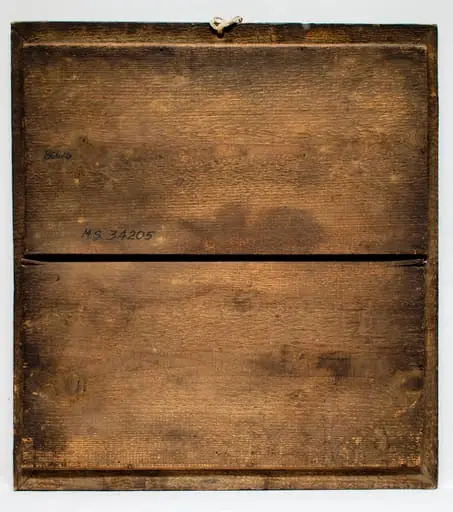 Icoambla
 Scena Cinei celei de Taină se desfășoară într-un interior sugerat de elemente arhitectonice, coloane, candelabru, candele. În centrul icoanei este Mântuitorul Iisus Hristos binecuvântând mâncarea, la masă, alături de ucenici și apostoli. Cu brațul stâng îl ține lipit de piept pe Ioan cel iubit. Pe masă sunt așezate un potir pentru vin și tacâmuri și farfurioare mici.Personajele au chipurile expresive, veșmintele personajelor și faldurile feței de masă, cât și draperiile sunt pictate cu măiestrie de pictor. Veșmintele sunt predominant roșii. Cromatica este armonioasă și echilibrată, pornindu-se gradual dinspre exterior înspre interior, de la albastru spre alb, ajungându-se la albul luminos al mesei celor dăruite. Compoziția este încadrată de elemente de arhitectură, coloane, arcade, creându-se, astfel, intimitatea Cinei celei de Taină. Totul este concentric, strângându-se în jurul Potirului. Elemente de arhitectură se întrezăresc printre cele 5 coloane. Se întrezărește o cruce formată din axa verticală Potirul și candela și cea orizontală - brațele Îmbrățișării Mântuitorului - Dragostea jertfelnică atotcuprinzătoare. Icoana este a lui Savu Moga, din Arpașu de Sus, Țara Făgărașului. Icoana este datată 1877. Inscripția din româno-chirilică se traduce Cina cea de Taină.
 Icoană cu tema. Fecioara și pruncul Isus, ținut în mâna dreaptă; sus un chenar cu flori. Cromatică: fond albastru; culori: negru; alb; verde; galben.